


West Yorkshire gives visitors two very different urban experiences within a 20 minute train ride of each other. Leeds, the region’s biggest and buzziest city, and Huddersfield, a smaller university town framed by the Pennine hills, each appeal to distinct kinds of travellers. Knowing which one fits your travel style can save you money, shape your itinerary and even change the pace of your entire UK trip. Here is a side by side look at how Huddersfield and Leeds actually feel on the ground, with real world examples to help you decide where to base yourself.
Get the latest updates straight to your inbox!
Getting There and Getting Around
If you are flying in, Leeds will almost always be the more straightforward base. Leeds Bradford Airport sits roughly 8 to 9 miles from Leeds city centre, with regular Flyer buses running between the terminal and Leeds railway station and bus station. A typical airport bus ride into Leeds takes around 30 to 40 minutes depending on traffic and costs only a few pounds, making it easy to land in the morning and be checked into a city hotel before lunch. From Leeds station, you can walk into the compact centre in under 10 minutes.
Huddersfield does not have its own airport, so arrivals usually route through Manchester or Leeds Bradford and then continue by train or coach. Direct trains between Leeds and Huddersfield typically take around 20 to 30 minutes, with the fastest services about 17 minutes and tickets often starting from under 10 pounds if bought in advance. Services usually run several times an hour, although ongoing engineering work on the Transpennine route can lead to weekend bus replacements in some periods, so it is wise to check timetables close to your travel dates.
Once you arrive, Leeds has the broader public transport network, with frequent city buses fanning out from the centre to suburbs like Headingley, Chapel Allerton and Roundhay. There is no tram or metro system, so journeys rely on buses and walking. In practice, most visitors stay in or around the central loop and can easily reach key attractions such as the Victoria Quarter, Kirkgate Market and Leeds Art Gallery on foot. In Huddersfield, the town centre is more compact still. The handsome neoclassical railway station opens directly onto St George’s Square, and most central hotels, bars and the university campus are within a 10 to 15 minute walk, with local buses covering outlying areas like Holmfirth or villages along the Colne Valley.
Atmosphere: Big City Energy vs Town‑and‑Hills Feel
Your overall experience will differ sharply depending on whether you choose Leeds or Huddersfield as a base. Leeds feels like a true regional capital, with tall office blocks, a dense retail core and a constant flow of commuters, students and shoppers. Walk along Briggate on a Saturday afternoon and you will meet high street chains, buskers, shoppers hauling bags from big name stores and groups on city breaks moving between cafes and bars. Night brings a rush of people into the Northern Quarter, Call Lane and the waterfront around the River Aire for cocktails, live music and late closing clubs.
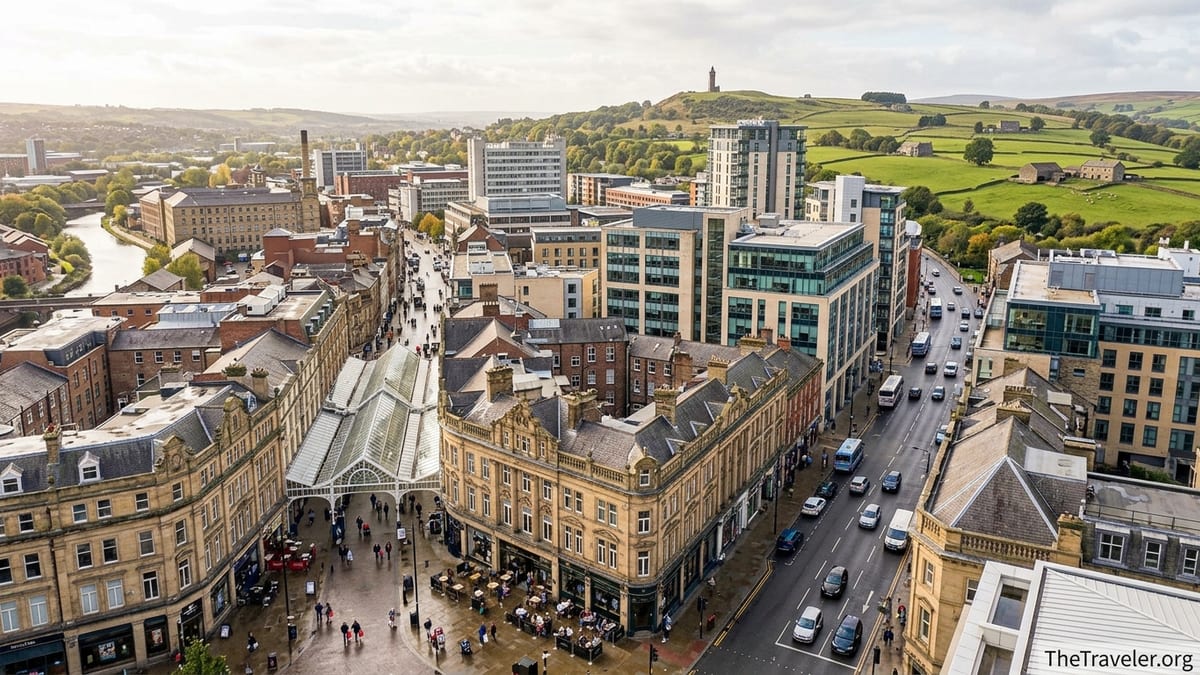
Huddersfield has a very different rhythm. It is a substantial town with impressive Victorian architecture, but the centre can feel much quieter, especially on weekday evenings. In term time you notice the student presence around the University of Huddersfield campus and along the Huddersfield Narrow Canal, with relaxed bars, reasonably priced eateries and coffee shops supporting a young crowd. Head a little out of the centre and the Pennine hills begin to dominate the skyline. From Castle Hill, crowned by the Victoria Tower, you look out over patchwork fields, mill towns and the urban centre below. That close contact with countryside is a key reason some travellers choose Huddersfield over Leeds.
If you crave constant buzz, late opening venues and the sense of being in a major city, Leeds will fit you better. If you prefer a slower pace, more local conversations and easy escapes to moorland and stone villages without giving up rail access, Huddersfield has the edge.
Culture, Shopping and Things to Do
Leeds offers a much wider range of urban attractions, which makes it ideal for culture seekers and shoppers. In the centre you can easily spend a day moving between the ornate glass‑roofed arcades of the Victoria Quarter, the vast Kirkgate Market with its hundreds of stalls selling everything from fresh Yorkshire produce to fabric and street food, and modern shopping complexes like Trinity Leeds. For culture, the Leeds Art Gallery, Henry Moore Institute and Leeds City Museum are all within a short walk, mostly with free entry, while the city’s theatres and music venues host touring West End shows, orchestral concerts and major bands.
Huddersfield’s cultural offer is more compact but has its own strengths. The Lawrence Batley Theatre stages drama, comedy and dance in a converted Georgian chapel, and there is a strong tradition of brass band music and choral performances in and around the town. Small independent galleries and creative spaces tap into the university’s arts departments, and local museums such as the Tolson Museum, set in a park east of the centre, explore the area’s textile and engineering heritage. Shoppers will find national chains and small independents around the Kingsgate Centre and Packhorse Centre, but the range is far narrower than Leeds, so fashion and design fans may prefer occasional day trips rather than basing themselves here.
For many visitors, the real cultural appeal of Huddersfield lies beyond the ring road. Short bus rides take you to Holmfirth, known as the setting for the classic TV series Last of the Summer Wine, and to stone‑built villages lining the Colne and Holme valleys. Canalside walks at Slaithwaite or Marsden, and attractions like the Standedge Tunnel visitor centre, combine industrial history with scenery. Leeds, by contrast, combines city attractions with day trips to stately homes such as Harewood House and the parkland of Roundhay Park, but you will usually need a bus or car to reach the greenest spaces.
Nature, Views and Outdoor Escapes
If time in the hills is central to your travel style, Huddersfield has a strong advantage. Castle Hill, just a couple of miles from the centre, offers a straightforward but rewarding hike. On a clear day you can see across the town to the Peak District and along the spine of the Pennines. The climb from the nearest bus stop takes around 20 to 30 minutes, and many locals bring a picnic or stop at nearby pubs for a post‑walk meal. Further afield, the moorland above Marsden or Meltham provides classic windy, wide‑open Yorkshire scenery, yet you can still be back at your town‑centre hotel for dinner.
Leeds does have green space, but it feels more like a city with parks rather than a town nestled into hills. Roundhay Park in north Leeds, one of the largest city parks in Europe, offers lakes, woodland and lawns, and is popular with families and runners. The riverside and canal paths along the Aire and Leeds and Liverpool Canal give gentle walking and cycling routes out of the centre, passing converted mills and modern apartment blocks. However, getting to wilder scenery normally requires a longer bus ride or a train journey out into Wharfedale or towards Ilkley, so it suits travellers happy to use Leeds as an urban base and day trip out rather than step directly onto moorland.
For photographers and landscape lovers, Huddersfield’s advantage is the immediacy of the views. Even from central streets you glimpse hills in the distance, and a ten minute drive can put you on a quiet country lane above the town. Leeds offers more urban contrast, with dramatic Victorian and contemporary architecture, reflected in the glass of office towers and the arcades. The choice comes down to whether your camera roll should lean towards skylines and street scenes or open moor and stone farmhouses.
Nightlife, Food and Student Vibe
Leeds is widely regarded as one of the north’s liveliest nightlife cities. On a typical Friday you will see after‑work drinks spilling onto pavements around Greek Street, cocktail bars along Call Lane warming up for the night and long queues forming outside popular clubs. The city’s student population from the University of Leeds, Leeds Beckett and others helps fill bars and live music venues midweek as well, so you can usually find something going on even on a Tuesday in term time. Dining runs from high‑end tasting menu restaurants to independent small plates spots and inexpensive curry houses around the student areas.
Huddersfield’s nightlife is more compact and more student‑centred. Around the town centre you find a mix of traditional pubs, sports bars and late bars that cater to university life, particularly near the campus and along streets feeding into St George’s Square. Drinks and meals often cost a little less than in Leeds, which is useful for budget travellers, but choice is limited. Locals often remark that if you want a full‑scale city night out with multiple venue options and late closing times, you are better off catching the early evening train into Leeds and returning by the last service or late bus.
Food wise, Huddersfield has a growing independent scene, especially for coffee, casual dining and global flavours at student‑friendly prices. You might pay around 8 to 12 pounds for a main course in a mid‑range restaurant or a few pounds for a takeaway lunch near the university. In Leeds, the central area mixes national chains with independent restaurants in converted industrial buildings and arcades. Expect to pay a little more overall, although budget options such as food courts, markets and casual chains keep costs down. Travellers who see eating and nightlife as key trip experiences will generally find more variety and late‑night energy in Leeds.
Budget, Accommodation and Value for Money
Both cities are generally cheaper than London or southern England, but there are meaningful differences between them. Leeds, as a major commercial centre, has a large range of hotels from international chains near the station and financial district to boutique properties in historic buildings and budget hotels on the fringes of the centre. On an average weekend, a mid‑range chain hotel in central Leeds might cost somewhere in the region of 90 to 140 pounds per night depending on season and events, with prices rising during big football matches, concerts or university graduation periods.
Huddersfield typically offers lower accommodation prices, reflecting its smaller tourism profile. Town‑centre business hotels and simple guesthouses can often be found for tens of pounds less per night than equivalent options in Leeds, particularly outside peak dates. This can make a noticeable difference on a longer stay. However, there are fewer upscale choices, so travellers seeking a high‑design boutique hotel or extensive facilities like spas and rooftop bars are more likely to find what they want in Leeds.
Daily costs also reflect the different scales of the two places. A coffee and cake in a Huddersfield independent cafe may run a little cheaper than in a high‑footfall Leeds arcade, and bus fares within each town are similar, with capped daily and weekly passes available across West Yorkshire. If you base yourself in Huddersfield but make frequent day trips to Leeds, remember to factor in repeated rail or bus fares, which can add up over a week. Conversely, staying in Leeds and making occasional trips to Huddersfield for walking or a quieter day may be cost‑effective if you plan to focus mostly on big city activities.
Who Should Choose Huddersfield, Who Should Choose Leeds?
Thinking about your own travel style is the most useful way to make the decision. Solo travellers or couples who enjoy a packed schedule of galleries, theatre, bars and shopping will almost certainly be happier basing themselves in Leeds. You can wake up near the station, spend the morning exploring Victorian arcades and Kirkgate Market, visit museums or take a riverfront walk in the afternoon, then move easily into a different bar or restaurant for each night of a long weekend. For visitors on a tight timetable, such as a three day city break, Leeds gives you more options in a small radius.
Huddersfield suits travellers who value access to nature, a slower pace and a sense of being in a regional town rather than a metropolis. Hikers, photographers and those touring by car often choose to stay here so they can be out on moorland or in the Holme Valley quickly each morning, yet still enjoy a choice of pubs and restaurants in the evening. Long‑term visitors, such as those on academic exchanges at the University of Huddersfield, appreciate the town’s manageable size and community feel while knowing that Leeds and Manchester are less than an hour away by train for big nights out or major concerts.
Families might split the difference. A family that loves museums, shopping and organised activities for children may lean towards a Leeds base, using easy rail links for a day in York or Harrogate. A family that hikes, picnics and explores small towns might find Huddersfield a more comfortable home base, especially if they rent a cottage on the outskirts with views over the hills. Because the two centres are so close, some travellers choose to spend a couple of nights in each to experience both atmospheres in a single West Yorkshire trip.
The Takeaway
There is no single right answer to the question of whether Huddersfield or Leeds is the better destination. Instead, each offers a distinct flavour of West Yorkshire life. Leeds delivers a classic big city mix of culture, nightlife and shopping, supported by strong rail and bus links and proximity to Leeds Bradford Airport. Huddersfield, meanwhile, offers Victorian town charm, a strong student presence and quick access to hill walks and stone villages, all at generally lower day to day costs.
If your ideal trip involves browsing arcades, trying new restaurants, seeing a show and staying out late without worrying about the last train, Leeds is likely your best base. If your ideal day starts with a hillside walk above the town and ends in a canal‑side pub or quiet local restaurant, Huddersfield may suit you more. Because a direct train between the two takes well under an hour and usually costs less than a typical London underground day travelcard, you can comfortably pick one as your base and treat the other as an extended neighbourhood to explore.
Whichever you choose, planning around your own habits and priorities will help you make the most of West Yorkshire. Think about how much you value nightlife versus nature, big brand shopping versus local markets, and international flight convenience versus quieter streets. With that clarity, both Huddersfield and Leeds can become rewarding stops on a wider journey through northern England.
FAQ
Q1. Is Huddersfield cheaper to visit than Leeds?
Generally yes. Huddersfield’s accommodation and everyday costs like eating out and going for drinks tend to be a bit lower than central Leeds, although prices vary by season and by individual venue.
Q2. How long does it take to travel between Leeds and Huddersfield?
Direct trains usually take around 20 to 30 minutes, with the fastest journeys under 20 minutes. Services are frequent most days, but engineering work can occasionally extend journey times or require bus replacements.
Q3. Which is better for nightlife, Huddersfield or Leeds?
Leeds has a much larger and more varied nightlife scene, with many bars, clubs and live music venues. Huddersfield has a smaller, more student‑focused nightlife that is lively in term time but much quieter overall.
Q4. Which city is closer to the airport?
Leeds is closer to Leeds Bradford Airport, around 8 to 9 miles away with direct bus services to the city centre. Huddersfield is normally reached by taking a bus or taxi into Leeds and then a train onward.
Q5. Is Huddersfield a good base for walking and countryside trips?
Yes. Huddersfield sits close to the Pennine hills, with Castle Hill, the Holme Valley and moorland areas like Marsden nearby, making it a strong base for walking and landscape photography.
Q6. Is Leeds walkable for visitors?
The central area of Leeds is very walkable. Most major attractions, shops, restaurants and bars are within a 10 to 15 minute walk of the railway station, although buses are useful for reaching parks and suburbs.
Q7. Which destination is better for shopping?
Leeds is better for shopping, with a mix of high street chains, designer boutiques in historic arcades and the large Kirkgate Market. Huddersfield has a smaller selection more suited to everyday needs than dedicated shopping trips.
Q8. Is Huddersfield safe for visitors?
Huddersfield town centre is generally considered safe, especially during the day. As in any town, visitors should use routine common sense at night, stay in well lit areas and follow local guidance.
Q9. Can I visit both Huddersfield and Leeds in one day?
Yes. The short rail journey means you can easily spend the morning in one and the afternoon in the other, for example combining a Leeds shopping trip with an evening meal and walk in Huddersfield.
Q10. If I only have one weekend, should I choose Huddersfield or Leeds?
If you want big city culture, busy nightlife and lots of dining options in a small area, pick Leeds. If you prefer quieter streets, lower prices and easy access to hills and villages, Huddersfield may be the better fit.