


Huddersfield is one of those Northern towns that quietly surprises visitors. On one hand you have a handsome Victorian centre, a major university and strong rail links between Leeds and Manchester. On the other you are minutes from steep-sided valleys, stone villages and the high Pennine moors. Choosing where to stay can shape your trip entirely, especially if you want to balance nights out in town with days spent walking in the countryside. This guide focuses on real neighbourhoods, real places to stay and realistic transport connections, so you can pick a base that suits how you actually travel.
Get the latest updates straight to your inbox!
Understanding Huddersfield’s Layout and Transport
Huddersfield sits in the foothills of the Pennines in West Yorkshire, roughly midway between Leeds and Manchester. The town centre lies where the River Colne and River Holme meet, with Victorian streets fanning out from Huddersfield railway station and the covered bus station a short walk away. Around this compact core are residential districts such as Marsh and Lindley to the northwest, Newsome to the south, and the Holme Valley and Colne Valley villages stretching out into increasingly rural surroundings.
For visitors, public transport is a genuine option rather than an afterthought. Huddersfield railway station lies on the TransPennine line, with frequent services to Leeds and Manchester and local trains west through the Colne Valley towards Slaithwaite and Marsden. Buses radiate from Huddersfield bus station to nearby villages including Holmfirth, Meltham, Marsden, Slaithwaite, Lindley and Denby Dale, which makes it possible to stay slightly out of town and still rely on buses for evenings back in the centre.
Journey times are short enough that many people comfortably treat Huddersfield as a hub. A bus from Holmfirth into Huddersfield typically takes around half an hour depending on stops, while trains from Slaithwaite and Marsden can reach town in well under 20 minutes. That means you do not have to choose between a town break and a countryside retreat; with a bit of planning, you can base yourself in a village such as Marsden or Holmfirth and still come into Huddersfield for dinner, theatre or the university’s events.
If you are driving, the town sits just south of the M62 with the A62, A629 and A640 feeding in from all directions. This makes it easy to combine Huddersfield with day trips to the Peak District, northern edges of the Midlands or the Yorkshire Dales. Parking in the compact town centre can be tight at busy times, so some visitors prefer to leave the car at village accommodation and use rail or bus for evenings in town.
Staying in Huddersfield Town Centre for Maximum Convenience
If you prioritise nightlife, restaurants and transport connections over views of fields, staying right in the town centre is the simplest choice. The streets around the railway station and up towards the university’s main campus are walkable, with plenty of cafes, bars and takeaways used by students and commuters. This area is especially practical if you are arriving by train late at night or leaving early in the morning.
Accommodation in the centre is dominated by chain and budget-friendly options in converted buildings, along with a growing number of serviced apartments aimed at visiting professionals and parents of students. Nightly rates can vary widely depending on events at the university or in nearby cities, but you can often find central hotel rooms in Huddersfield for considerably less than in Leeds or Manchester on the same dates. That makes the town centre a budget-conscious base for travellers who plan to day trip into the countryside rather than sleep there.
Food and drink options are strongest in and around New Street, King Street and the streets leading towards the university. Here you will find everything from simple curry houses and kebab shops to independent coffee bars and traditional pubs with cask ales. Because the centre is relatively compact, you can walk from most central hotels to dinner and back in under ten minutes, which is useful in winter when nights draw in early.
The main trade-off with a town-centre stay is the feel of the place. Like many northern towns, Huddersfield’s retail core has seen plenty of shop closures in recent years, so you may notice shuttered storefronts alongside handsome Victorian facades. If you are looking for picture-perfect village charm, this will not be it. What the centre does offer is practicality: easy arrivals, frequent buses, a quick hop to the countryside by car or train and no worries about getting back to your bed at the end of the evening.
Marsh and Lindley: Quiet Suburbs on the Edge of Town
Just northwest of the centre lie Marsh and Lindley, two suburbs that many locals recommend to newcomers who want somewhere quieter yet still close to town. Marsh sits roughly a 15-minute walk or short bus ride from the centre and has a feel that mixes student rentals with family streets. Lindley is a little further out, close to Huddersfield Royal Infirmary, with stone terraces, leafy roads and a small high street of cafes and bars that has grown in popularity among professionals and hospital staff.
For visitors, both areas work well if you prefer to stay somewhere that feels residential rather than overtly student-heavy, while still being within easy reach of the station and the bus hub. You might, for example, book a room in a small guesthouse off Halifax Road in Marsh or a short-term let in Lindley, then walk or take a regular bus into town for nightlife. In the other direction, you can quickly drive or bus out towards the M62 for day trips, without having to navigate the tight one-way system of the very centre each morning.
The benefit of Marsh and Lindley is also price. Because these are not picture-postcard tourist destinations, nightly rates for apartments and B&Bs are often significantly lower than rural hotels, especially on weekdays. A couple visiting to see family or attend events at the university might find a spacious apartment with parking here for a similar price to a compact central hotel room. The trade-off is that you will be relying on local buses or a short taxi back from the town centre if you stay out late.
From a countryside access point of view, these suburbs are best if you are driving. Within 15 to 25 minutes by car you can reach trailheads above Scammonden, the moors around Pole Moor, or canal-side walks near Slaithwaite and Golcar. Combine that with a comfortable, residential-feeling base and you have a good all-round choice for visitors who want a quieter night’s sleep but no more than a short hop into Huddersfield’s core.
Holme Valley & Holmfirth: Village Charm South of Town
South of Huddersfield the land rises into the Holme Valley, with Holmfirth as its best-known settlement. The town is famous among British TV viewers as a filming location for “Last of the Summer Wine,” and the setting is exactly what many visitors imagine when they think of Yorkshire: steep lanes, grey stone cottages and wooded hillsides cut by the River Holme. Holmfirth itself sits roughly six miles from Huddersfield, reached by a main road that winds through suburbs and fields, and acts as a small hub for bus routes into the surrounding villages.
For travellers who want a village base with independent shops, Holmfirth is an obvious candidate. Around the compact centre you will find traditional pubs with open fires, cafes that attract cyclists and walkers, and small restaurants that can be lively at weekends. Accommodation ranges from small hotels in converted stone buildings to self-catering cottages tucked into the steep side streets. Prices here are typically higher than a straightforward chain hotel in Huddersfield, but what you gain is atmosphere and doorstep access to valley and moorland walks.
If your priority is walking or cycling, a Holmfirth stay works well. From the town you can head up quiet lanes towards Holme village and the high moors by Holme Moss, or follow riverside paths that link a chain of reservoirs along the valley. In summer, visiting walkers often plan a loop that ends at a local pub for lunch before taking an afternoon bus or short drive back. With regular buses connecting Holmfirth to Huddersfield’s bus and rail stations, you can still plan evenings in town or train trips onward to Leeds or Manchester if you prefer to leave the car behind.
The compromise with Holmfirth and the wider Holme Valley is travel time. While the distance to Huddersfield is short, traffic can build up on the main road at peak commuting hours and bus journeys may take longer than the simple mileage suggests. If you are attending early morning events at the university or National Health Service facilities in Huddersfield, factor in extra time. For a long weekend focused on walks, food and occasional forays into town, however, Holmfirth strikes a very appealing balance between countryside feel and urban access.
Colne Valley Villages: Slaithwaite, Marsden and Canal-side Stays
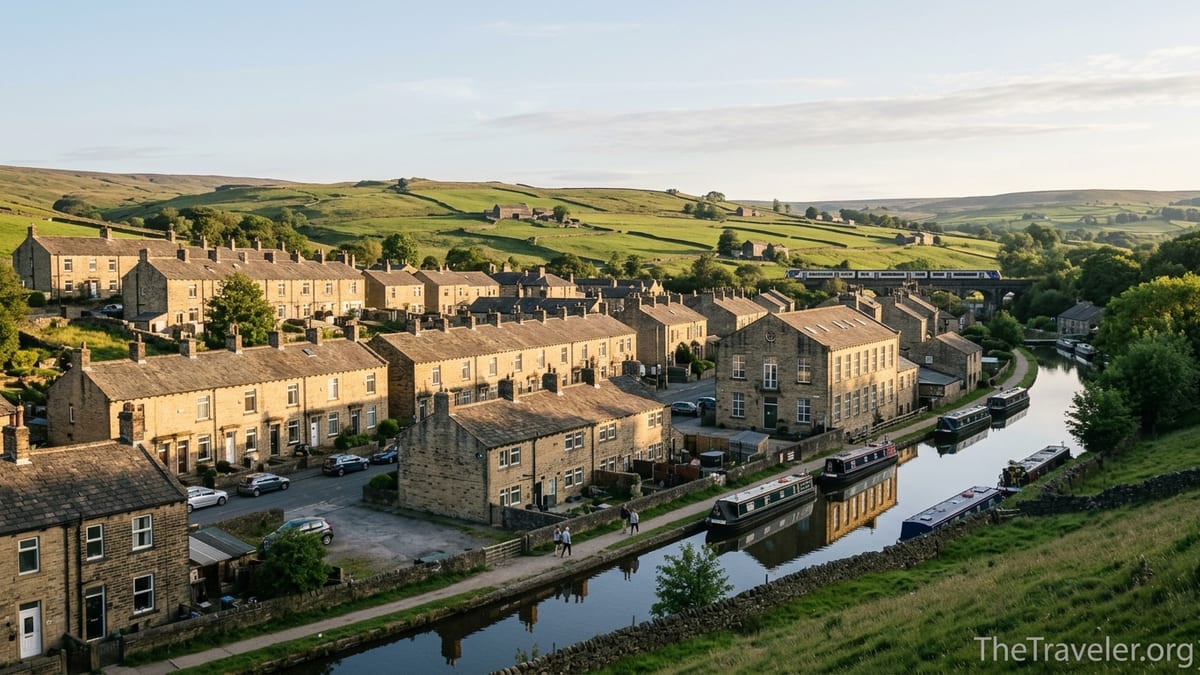
West of Huddersfield, the Colne Valley follows the River Colne and the Huddersfield Narrow Canal towards the Pennine watershed and the long Standedge Tunnel. Villages such as Slaithwaite and Marsden grew along these routes and are now popular with commuters and visitors who value both rail access and scenery. Trains from Huddersfield run along this valley, stopping at both villages before heading under the hills towards Manchester, and buses connect them back to Huddersfield throughout the day.
Slaithwaite, known locally as “Slawit,” has seen a noticeable revival in recent years, with converted mills, cafes and a small cluster of independent shops very close to the canal. Stay here and you could wake up in a modern apartment carved out of a stone mill building, step outside to a coffee roastery or riverside bakery, then walk along the towpath within minutes. The village train station puts Huddersfield, Leeds and Manchester within reach, while buses make it straightforward to get back in the evenings if you plan a longer walk out towards the moors.
Marsden feels more obviously like a gateway to the high Pennines. The village sits within a ring of steep hills, with gritstone edges and open moorland beyond. There are family-run guesthouses, pubs with rooms and self-catering cottages scattered across its streets, some right by the river and others up the slopes with panoramic views. Trains link Marsden to Huddersfield in a short hop, which means you can base yourself here for walking and still come into town for a concert or dinner without having to drive back over dark moorland roads.
For visitors deciding between the two, Slaithwaite tends to offer a slightly busier feel with its canalside regeneration, while Marsden leans more towards walkers, birdwatchers and those who want quick access to National Trust land near the Standedge Tunnel. In either case, you get a strong combination of village atmosphere, countryside walks from your door and realistic journey times back into Huddersfield for urban amenities. If you are visiting without a car, these villages may well offer the best overall mix of rural scenery and public transport convenience.
Newsome, Almondbury and South Huddersfield: Near Town, Close to Green Space
South of Huddersfield town centre, compact suburbs such as Newsome and Almondbury provide another set of options, often overlooked by visitors but valued by locals who want both views and quick town access. Newsome is a village-like district just a few minutes’ drive from the centre, close enough that some people walk or take short bus rides into town while still having fields and footpaths on the doorstep.
Accommodation around Newsome and the southern slopes tends to take the form of small apartments, terraced houses offered as short lets and occasional holiday units converted from older buildings. A visitor staying here might find themselves in a modern flat within a stone building, with views across the valley towards Castle Hill, yet still only a short ride from the railway station. This setup suits travellers who want more living space and a residential atmosphere instead of a standard hotel corridor.
Almondbury, perched on a hill to the southeast, has older stone houses, a village centre with a few shops and a more established feel. From some streets you can see across the town towards the Pennine hills, and footpaths lead down through woods towards the River Holme and up onto the plateau around Castle Hill. Buses link Almondbury to the centre, so it works as a base if you plan to mix days exploring nearby parks and woods with evenings at restaurants around the university quarter.
South Huddersfield suits travellers who prefer to be near, but not in, the bustle. You will likely rely on buses or a taxi for late-night returns, and you will not have the same density of cafes and bars on your doorstep as in town. Yet within a single day you could walk through Beaumont Park’s Victorian landscaping in the morning, drop into town for an afternoon exhibition, then head back to a quiet apartment looking out onto wooded slopes. For many, that balance is exactly what they are seeking.
Choosing Between Town, Suburbs and Countryside
With so many options clustered so close together, the real question when deciding where to stay around Huddersfield is less about geography and more about how you travel. If you are arriving by train for a short meeting or conference, a central hotel will let you wheel your bag from the platform to reception in minutes and step straight out to bars and restaurants after work. You will trade away village charm but gain maximum simplicity and the ability to catch early trains without worrying about buses or taxis.
If you are visiting for a long weekend with a partner or friends and plan to spend most of your days on footpaths, then places like Holmfirth or Marsden become more appealing. Here your days can start and end with hillside views, local pubs and quiet streets. Buses and trains back to Huddersfield make day trips manageable, but you will want to pay more attention to timetables, especially in the evening or on Sundays. A similar experience is possible in Slaithwaite or the smaller Holme Valley villages if you prefer to be somewhere less well known but still connected.
For families or groups who want more space and a quieter feel without giving up too much convenience, suburbs such as Lindley, Marsh, Almondbury or Newsome can be good middle grounds. Short-term lets and family-sized apartments are easier to find here, parking is often included or straightforward, and you are a single bus ride or short drive into the centre. This arrangement works well if, for example, one person has business in town while others want easy access to parks and local walks.
Whichever area you choose, it is worth considering your evening plans and how comfortable you are navigating local roads at night. Winter weather on the higher routes around Marsden or Holme Moss can be challenging for unfamiliar drivers, while in summer, late-evening bus services between smaller villages and Huddersfield may be infrequent. Planning your base around your likely patterns of activity will make the difference between a stay that feels effortless and one that involves more clock-watching than you hoped.
The Takeaway
Huddersfield may not be the first name on every tourist map, but its position at the meeting point of valleys, moors and main rail lines makes it a surprisingly flexible base. Stay in the town centre and you gain effortless transport connections and straightforward nights out, with the countryside just a short hop away by train, bus or car. Choose a village in the Holme or Colne valleys and you can step out of your front door straight onto old packhorse routes and canal towpaths, yet still reach the station or university events without too much planning.
Suburbs like Marsh, Lindley, Almondbury and Newsome sit in between, offering a residential feel and lower prices while keeping you close enough to the centre for an easy commute or evening meal. None of these areas is more than a short drive from the next, which means that even if you base yourself in one valley, you can spend the next day exploring a different one without packing up your bags.
The most important question is simple: what does your ideal day here look like from morning to night? If it starts with a coffee near a Victorian station and ends in a lively bar, the centre of Huddersfield is your friend. If it begins with mist lifting off reservoirs and ends in a stone pub with a log fire, Holmfirth, Marsden or Slaithwaite may be better suited. Fortunately, in and around Huddersfield you rarely have to pick only one side of that equation. With a little planning, town and countryside can both feel close at hand.
FAQ
Q1. Is it better to stay in Huddersfield town centre or in a nearby village?
It depends on your priorities. Town-centre stays are best for rail access, nightlife and early departures. Villages like Holmfirth, Marsden or Slaithwaite suit visitors who want walking and scenery on the doorstep, and are happy to ride a bus or train into town when needed.
Q2. Which areas around Huddersfield are best for walking without using a car?
If you are relying on public transport, Marsden and Slaithwaite along the Colne Valley, and Holmfirth in the Holme Valley, are strong options. All have regular connections to Huddersfield and walking routes that start close to village centres.
Q3. How long does it take to travel from Holmfirth into Huddersfield?
Bus journeys between Holmfirth and Huddersfield typically take around half an hour, depending on stops and traffic. Driving the same route can be a little quicker outside peak times, but you should allow extra time at rush hour.
Q4. Are Marsh and Lindley suitable areas for visitors without a car?
Yes, both suburbs have regular buses into Huddersfield and are close enough for a brisk walk or short taxi ride if you are carrying luggage. They work best if you are comfortable planning around bus timetables for evenings out.
Q5. What kind of accommodation can I expect in the Colne Valley villages?
In Slaithwaite and Marsden you are likely to find a mix of small guesthouses, pubs with rooms, converted mill apartments and traditional stone cottages offered as short lets. Amenities are more limited than in Huddersfield, but most visitors find enough cafes, pubs and small shops for a comfortable stay.
Q6. Is parking difficult in Huddersfield town centre?
Parking is available in public car parks and on some streets, but it can feel tight at busy times, especially near the station and main shopping streets. If you plan to drive daily, you may find it easier to stay in a suburb or village with on-site parking and come into town by bus or train when needed.
Q7. Which area is best if I am visiting the University of Huddersfield?
The university campus lies on the edge of the town centre, so central hotels and apartments are the most convenient. Nearby suburbs such as Newsome and Almondbury are also practical if you do not mind a short bus ride or walk up and down the hill.
Q8. Are there family-friendly places to stay close to both town and countryside?
Yes. Suburbs such as Lindley, Marsh and Almondbury have a family feel, easy access to parks and straightforward bus routes into Huddersfield. Holmfirth and some Holme Valley villages also appeal to families who prefer a village atmosphere, with the trade-off of longer journeys into town.
Q9. Can I explore the wider region from a base in Huddersfield?
Huddersfield’s position near the M62 and on the TransPennine rail line makes regional day trips realistic. From town or nearby villages you can reach Leeds, Manchester, parts of the Peak District and other Yorkshire market towns within an hour or so by car or train.
Q10. How many days do I need to enjoy both Huddersfield and the nearby countryside?
A long weekend of three nights is enough to sample the town centre, take at least one full day walk in the Holme or Colne valleys, and enjoy a slower day visiting local parks or mills. With five to seven nights you can explore multiple valleys and make day trips to nearby cities without feeling rushed.