


Huddersfield is not the sort of place you visit for blockbuster sights or tick‑box attractions. This handsome Yorkshire mill town excels in quieter ways: relaxed square‑to‑square wandering, characterful pubs, live performance, and access to some of northern England’s best countryside. Plan around what Huddersfield actually does best and the town quickly shifts from a vague dot between Leeds and Manchester to a rewarding base for a long weekend or more.
Get the latest updates straight to your inbox!
Getting There and Getting Your Bearings
Huddersfield’s first strength is how easy it is to reach and navigate once you arrive. The town sits on the TransPennine rail line, with frequent services linking it to Leeds in around 20 to 30 minutes and Manchester in roughly 35 to 45 minutes depending on the train you catch. For many visitors that means you can land in Manchester or Leeds Bradford airports, take a single connecting train, and be walking across the cobbles of St George’s Square an hour or two later without ever renting a car.
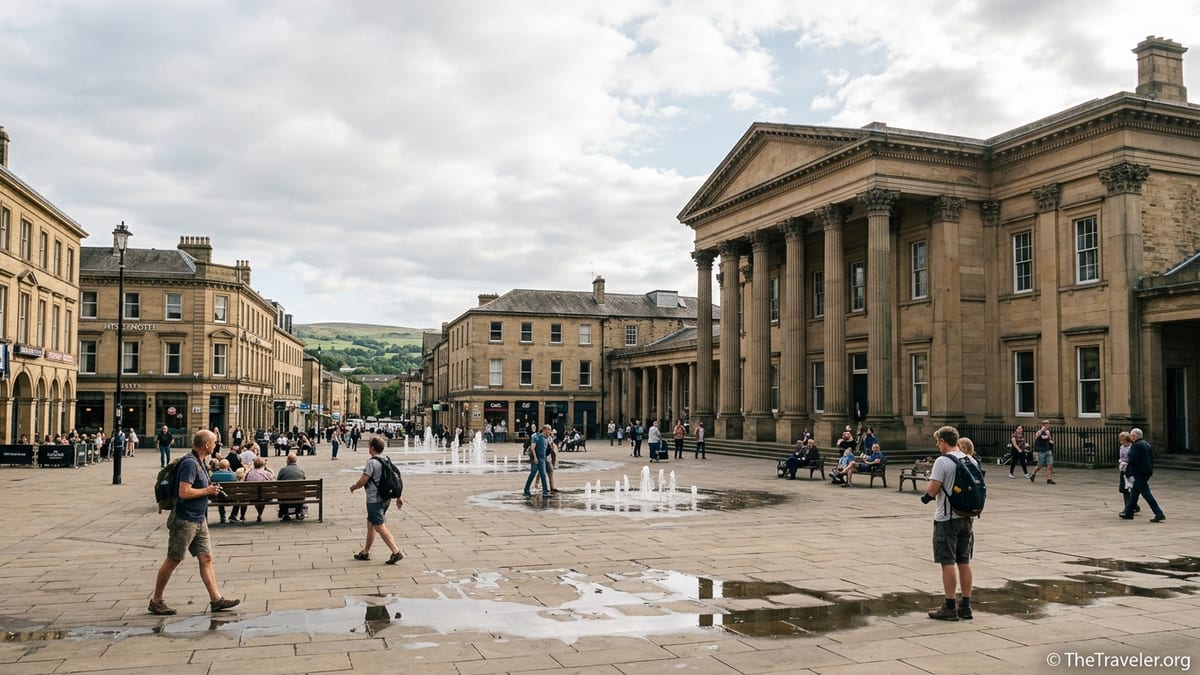
The railway station itself is a clue to the sort of town you are in. The grand neoclassical frontage that overlooks St George’s Square has been described as one of the most handsome station facades in the country, and there is a major upgrade project under way that will bring new platforms, electrified lines and better facilities. Step out of the station doors and you are already in one of Huddersfield’s best public spaces, with a hotel, pavement seating on sunny days and regular events that anchor the town’s social life.
From St George’s Square most of central Huddersfield is an easy ten‑minute walk. The compact grid of streets between the station, the Kingsgate Shopping Centre and the university campus holds most of what short‑stay visitors want: the Lawrence Batley Theatre, a growing cluster of cafes and indie bars, and the handsome Victorian town hall. You can comfortably manage the centre on foot, which means you can lean fully into the town’s beer and food strengths without worrying about driving home.
For travellers using Huddersfield as a base, buses fan out from the station and nearby stops to villages like Marsden, Slaithwaite and Holmfirth, as well as to Leeds and other parts of West Yorkshire. Day tickets on local bus networks are typically priced so that you can zigzag around the region for less than the cost of a single intercity rail fare, making it easy to spend one day in town and the next up on the moors without changing accommodation.
Victorian Character and Compact Town‑Centre Wandering
What Huddersfield does particularly well is give you a strong sense of place in a manageable footprint. Start with a slow loop from St George’s Square, where the station’s classical columns face fountains and open space that often host food stalls or community events. This is a natural first stop for coffee, either at the station’s own outlets or one of the independent cafes just off the square, and it sets the tone for the rest of town: solid stone buildings, a low‑key buzz and few of the chains that dominate bigger northern cities.
From the square it is a short stroll to Huddersfield Town Hall, an ornate late‑19th‑century building that still hosts classical concerts, local festivals and civic ceremonies. Even if you are not attending a performance, walking past in the early evening when the building is lit and people are gathering for a show gives you that satisfying feeling of dropping into local life rather than skimming the surface as a tourist.
To get a structured sense of the town’s heritage, the council publishes a Historic Buildings Trail that links landmarks such as the town hall, the Lawrence Batley Theatre and notable former mills. Follow even part of it and you will see how tightly Huddersfield’s past and present intertwine. Many of the mills and warehouses that powered the town’s textile boom now house offices, creative studios or student accommodation for the University of Huddersfield, which brings a large and visible student population into the centre.
The upshot for visitors is a town that feels both rooted and young. On a Saturday afternoon you might see families heading to a matinee at the Lawrence Batley Theatre, students spilling out of coffee shops off King Street, and older locals comparing notes in the indoor market over pastries. There are no single blockbuster buildings to plan your day around, but the pleasure is cumulative as you wander from one stone fronted street to the next and see how people actually use them.
Markets, Food Halls and Everyday Food Culture
If you want to understand what Huddersfield does best, block out time for its markets and evolving food scene. The town has long been known for its traditional indoor and outdoor markets, and these are now being reimagined through a major regeneration of the historic market hall and the former Queensgate Market building. The plans focus on creating a modern food hall with nearly 90 trading spaces, larger stalls than before, and a mix of permanent units and demountable pitches. For visitors this means that over the next couple of years the old concrete market complex is set to become one of the most interesting places in town to eat casual food and sample local producers side by side.
Even before that project fully opens, Huddersfield already punches above its weight in independent food. In the town centre you will find small cafes serving locally roasted Dark Woods coffee, whose roastery is based in the nearby Colne Valley, and bars pouring beers from Huddersfield’s own Magic Rock Brewing alongside other Yorkshire brewers. A typical lunchtime might mean a flat white and grilled cheese at a design‑led cafe tucked down an arcade, followed by a stop at a deli counter in the market for Yorkshire cheeses and pork pies to take back to your guesthouse.
Pricing is one of the practical advantages of eating in Huddersfield. A hearty plate of curry at a local South Asian restaurant, a style of food the town does particularly well thanks to its diverse population, often costs less than a comparable meal in Leeds or Manchester. The same is true of pub lunches and cafe breakfasts, where a full English or a stack of buttermilk pancakes is typically priced at a level that makes going out for brunch feel like an everyday treat rather than a splurge.
As the new food hall and market refurbishments come online, look for traders specialising in street‑food style dishes, from loaded Yorkshire puddings to tacos and falafel wraps, sharing space with traditional butchers and green‑grocers. For travellers this hybrid model is ideal: you can grab something hot to eat on the spot, pick up picnic supplies for a moorland walk, and get a feel for what locals actually buy and cook at home, all under one roof.
Theatre, Live Performance and Cultural Nights Out
For a town of its size, Huddersfield has a remarkably energetic cultural calendar, anchored by the Lawrence Batley Theatre just a few minutes’ walk from the station. Housed in a converted 19th‑century Methodist chapel, the theatre now runs three performance spaces, including a main house and more intimate studio stages. On any given week you might find contemporary dance, comedy tours, children’s theatre, spoken word or small‑scale touring drama, alongside shows produced by local companies.
If you are planning a trip, it is worth checking the theatre’s programme before you book your dates. Many visitors choose to build a weekend around a particular performance, arriving on a Friday afternoon, having an early dinner at one of the nearby restaurants, and then walking over to the theatre for a 7.30 pm curtain. The in‑house bar opens ahead of performances, so you can have a drink in the former chapel’s high‑ceilinged foyer while people‑watching and soaking up the pre‑show buzz.
Beyond the main theatre, Huddersfield’s live culture takes place in smaller venues and pubs. You might catch acoustic sets or jazz nights in back rooms, comedy open mics, or student bands playing in bars close to the university. The town also hosts larger events through the year, including festivals that draw on its strong brass band and choral traditions. These are not always heavily advertised to outsiders, so asking at your accommodation or checking local listings a week or two before you arrive can turn up nights out that feel decidedly non‑touristic.
One of the pleasures of an evening in Huddersfield is how compact everything is. You can leave a show at the Lawrence Batley Theatre, walk five minutes to a late‑opening bar or dessert place for a nightcap, and still be back at your hotel within fifteen minutes on foot. For solo travellers or those unfamiliar with northern towns, that walkable scale can make nights out feel more relaxed and manageable than in a much larger city.
Beer, Classic Pubs and Huddersfield’s Ale Culture
Beer is one of the things Huddersfield does outstandingly well. The town sits on what enthusiasts know as the Huddersfield Line ale trail, a stretch of railway dotted with acclaimed pubs at or near station platforms. In town, places like The Grove, a short stroll from the centre, have become destinations in their own right with lengthy lists of cask and keg beers, a rotating selection of guest brews and shelves of bottled and canned specialties. It is the kind of traditional pub where you can spend a quietly absorbing evening working through low‑strength bitters, strong stouts or rare Belgian imports while chatting with regulars.
Alongside stalwarts like The Grove, Huddersfield’s bars reflect the town’s brewery scene. Magic Rock Brewing, which started here before its beers spread across the UK, helped put Huddersfield on the craft beer map. Many local pubs and taprooms pour Magic Rock alongside other Yorkshire brewers, so ordering a pint of a locally brewed pale ale or IPA is an easy way to make your evening feel rooted in place rather than generic.
A typical beer‑focused night in Huddersfield might start in a central pub near the station, where commuters unwind after the Leeds and Manchester trains, before wandering up to a specialist ale bar. Expect prices that undercut the big cities by a noticeable margin, especially if you stick to cask bitters and milds rather than imported kegged beers. For visitors on a budget, this makes Huddersfield a particularly good place to explore British pub culture without feeling that every round is a major spend.
If you are allocating time for beer during your visit, remember that Huddersfield’s strengths are breadth and character rather than polished cocktail culture. You come here to find a back‑street pub with a fire lit in winter, a line of handpulls on the bar and a dog snoozing under someone’s stool, not to seek out rooftop terraces and nightclub queues. Planned with that in mind, an evening visiting two or three pubs can easily become a highlight of your trip.
Day Trips: Using Huddersfield as a Yorkshire Base
Another thing Huddersfield does extremely well is act as a springboard for wider Yorkshire and Pennine explorations. The rail and bus connections that make it easy to get here also let you fan out on simple day trips without changing hotels. To the east, Leeds is close enough that you can be browsing in its Victorian arcades or exploring the waterfront a half‑hour after boarding a train. To the west, trains climb over the Pennines to Manchester, giving you access to its galleries, shopping streets and stadiums while still sleeping somewhere quieter and usually cheaper.
More rewarding still are the smaller‑scale excursions into the surrounding countryside and villages. Buses run from Huddersfield up the Colne Valley to Marsden and Slaithwaite, former mill communities that now have canalside walks, cafes, bakeries and bars popular with both locals and weekend visitors from nearby cities. On a typical Saturday you might ride up to Marsden in the late morning, stroll along the canal or up towards the moorland edges, have lunch in a village pub, then drop back down to Huddersfield for theatre or drinks in the evening.
South of town, Holmfirth is another easy excursion. Best known as the filming location for the long‑running TV series “Last of the Summer Wine,” it now blends that nostalgic appeal with a growing food and drink offer and steep streets that climb up to views across the Holme Valley. From Huddersfield bus station the journey is short enough to make spontaneous visits easy: decide on a whim to head out, wander the riverside and perhaps catch live music at a local venue before bus‑ing back after dark.
These day trips illustrate one of Huddersfield’s hidden advantages: staying here often means you can afford a nicer room or apartment than you would in central Leeds or Manchester, while still having those larger cities and the Pennine landscapes at your fingertips. If you enjoy returning each evening to a town that feels lived‑in rather than purely touristic, Huddersfield functions as a comfortable hub from which to explore a much wider patch of northern England.
Practicalities, Seasons and Choosing the Right Base
Huddersfield’s strengths come into focus when you match them to your own travel style and the time of year. Autumn and spring are particularly good for visitors who want to combine town wandering with moorland walks, as the temperatures are usually cool but manageable and the hills that frame the town turn rich shades of brown, gold and green. Winter brings short days but also cosy pub evenings and the chance to see the Victorian streets under early darkness, while summer can be surprisingly lively thanks to outdoor events and the spillover of visitors exploring the Pennines.
Accommodation tends to cluster around the town centre and the ring road, with a mix of mid‑range hotels, guesthouses and serviced apartments. Prices often undercut comparable properties in Leeds by a noticeable margin, especially on weeknights outside big event periods. If your priority is easy rail access, staying within a ten‑minute walk of the station makes arrivals and departures almost effortless and lets you travel light, dropping bags quickly before heading straight back out to explore.
Cost wise, Huddersfield is generally kind to travellers. Day returns on local trains between Huddersfield and Leeds or Manchester typically come in well below the price of intercity journeys, and there are railcards and regional tickets that bring costs down further if you plan several trips. Local buses also offer day tickets that allow unlimited travel across large parts of West Yorkshire, ideal if you intend to string together several villages in one day.
One practical point to remember is that Huddersfield, like much of the TransPennine route, is currently affected by long running rail improvement works. These upgrades promise faster and more reliable services in the future, but in the short term they can mean weekend engineering closures, replacement buses and altered timetables. Before you travel, check current notices for the Leeds and Manchester lines, and build a little flexibility into your plans. Fortunately the town’s compact size and multiple bus options mean that even on days with disruption you can usually reach your intended pub, moor or theatre seat with only minor tweaks.
The Takeaway
The key to a satisfying Huddersfield trip is to stop expecting big city spectacle and instead lean into what the town does best. This is a place where arrival feels simple, the station square doubles as a living room, and the most memorable hours are spent moving at walking pace between markets, cafes, theatres and pubs. Its strengths are cumulative: the handsome Victorian stonework, the friendly bar staff in a specialist alehouse, the buzz before a show in a converted chapel, the ease of hopping on a bus to a valley village and being back in time for a late drink.
Used as a base, Huddersfield also quietly unlocks a much wider slice of northern England. Fast trains and buses radiate to Leeds, Manchester, Holmfirth and the Colne Valley, so you can dip in and out of city life and countryside while returning each night to a town that feels local rather than touristic. Add in reasonably priced food, drink and accommodation, and you have a destination that rewards travellers who value atmosphere and liveability over checklists.
Plan your visit around these core strengths and Huddersfield becomes far more than a name on the departures board. It turns into a place where you can settle into a routine for a few days, get to know favourite corners and faces, and leave feeling that you have experienced a working Yorkshire town on its own terms rather than through a filter of must‑see attractions.
FAQ
Q1. Is Huddersfield worth visiting if I only have one day?
Yes. With a day you can arrive by train, wander St George’s Square and the town centre, visit the market, fit in a theatre matinee or evening performance, and still enjoy a relaxed pub dinner.
Q2. How long should I stay in Huddersfield to use it as a base?
A three to four night stay works well. That gives you time for one full day in town, one or two day trips to places like Leeds, Manchester or Holmfirth, and an extra half day to follow your nose.
Q3. Do I need a car to explore Huddersfield and the surrounding area?
No. The town centre is easily walkable and there are regular trains and buses to nearby villages and cities. A car helps for very remote moorland walks but is not essential for most visitors.
Q4. What is the best time of year to visit Huddersfield?
Spring and autumn are ideal for combining town exploration with countryside walks, while summer is best for longer days and outdoor events. Winter offers cosy pub culture and lower accommodation prices.
Q5. Is Huddersfield a good destination for food and drink?
Yes. Huddersfield has strong everyday food culture, from markets and cafes serving locally roasted coffee to pubs and bars pouring Yorkshire beers and affordable restaurant meals.
Q6. How does Huddersfield compare to Leeds or Manchester for nightlife?
Huddersfield’s nightlife is smaller scale but can be very satisfying if you like pubs, live performance and intimate music venues rather than big nightclubs and late‑night districts.
Q7. Can I visit the Yorkshire countryside easily from Huddersfield?
Yes. Buses and local trains make it straightforward to reach valley villages like Marsden, Slaithwaite and Holmfirth, where you can access walks, canals and moorland scenery.
Q8. Is Huddersfield suitable for budget travellers?
Generally yes. Accommodation, meals and drinks often cost less than in nearby big cities, and public transport options mean you can avoid the expense of car hire and parking.
Q9. Are there any major attractions I should book in advance?
The main thing to book ahead is performances at the Lawrence Batley Theatre or large events at venues such as the town hall or local stadium, especially on weekends.
Q10. Is Huddersfield safe for solo travellers and evening walks?
Central Huddersfield is typically busy with students and locals, and many solo travellers feel comfortable walking between venues in the evening, using normal city‑centre awareness and precautions.