


Planning a beach day in Fort Lauderdale quickly leads to one big question: should you head for the leafy calm of Hugh Taylor Birch State Park or the classic oceanfront vibe of Fort Lauderdale Beach Park? Both sit along the same stretch of Atlantic shoreline, yet they deliver very different experiences when it comes to shade, parking value, crowds, and family facilities. This comparison guide breaks down the real-world pros and cons of each so you can choose the spot that actually fits your day, your budget, and your travel style.
Get the latest updates straight to your inbox!
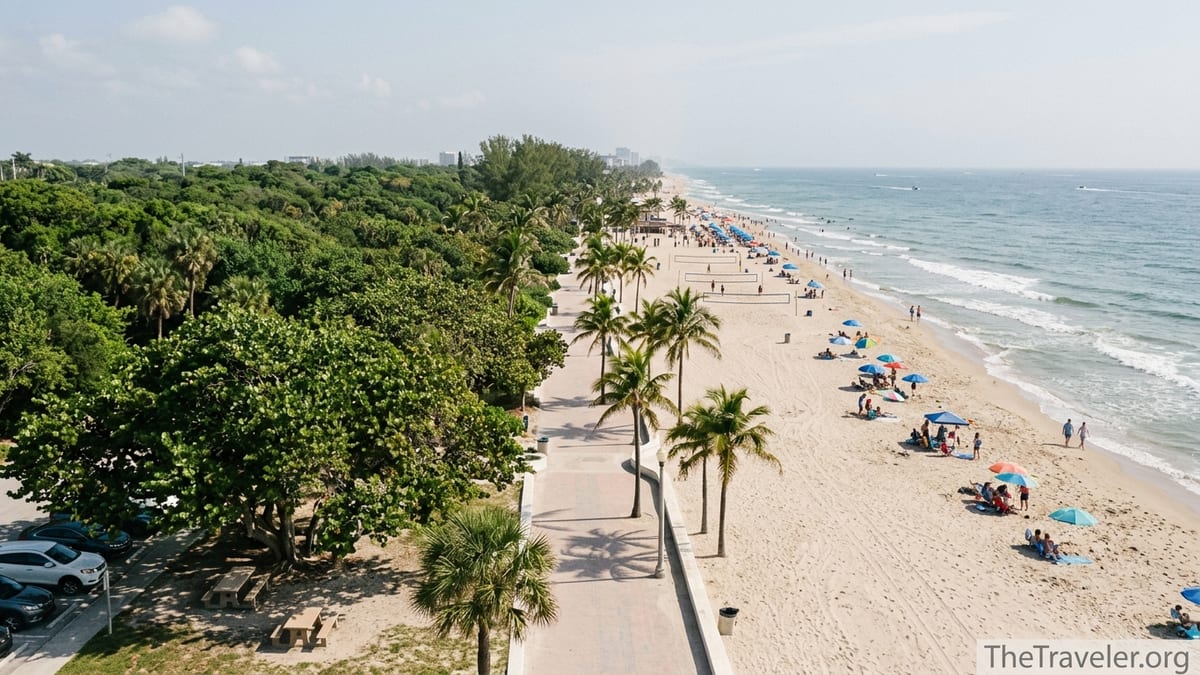
At a Glance: Two Very Different Beach Days
Hugh Taylor Birch State Park feels like a pocket of Old Florida wedged between the Intracoastal Waterway and A1A. Locals often describe it as Fort Lauderdale’s “Central Park,” with winding roads under live oaks, a freshwater lagoon, and walking trails that make you forget you are only a block or two from high-rise hotels and the Galleria Mall. The ocean is just across A1A, accessible from inside the park via a crosswalk or beach gate, so you can pair shaded nature time with full saltwater swimming in one outing.
Fort Lauderdale Beach Park, by contrast, is a traditional beachfront city park on the sand at the south end of the main strip, near the intersection of Seabreeze Boulevard and A1A. It is all about direct ocean access, volleyball courts, an open grassy area, grills, and a big playground just a few steps from the beach. If you picture the classic Fort Lauderdale postcard scene with rows of palms, people playing spikeball, and cruise ships floating offshore, this is the setting.
In practical terms, Hugh Taylor Birch is the better choice if you value shade, quieter surroundings, and a full-day flat-fee entry. Fort Lauderdale Beach Park works better when your priority is being on the sand as fast as possible, with easy access to the rest of the beachfront, nearby restaurants, and that lively, resort-town atmosphere.
For most visitors, the decision comes down to how much time you will spend at the car, the picnic table, and the playground versus in the surf and along the busy promenade. The following sections walk through the details that matter: parking costs, comfort in the heat, facilities for kids, and how each park fits different types of trips.
Parking & Costs: Flat-Fee Nature vs By-the-Hour Oceanfront
Hugh Taylor Birch State Park charges a per-vehicle entrance fee at the gate, which covers parking for everyone in the car for the entire day. As of mid 2026, Florida State Parks list a typical day-use rate for this park in the single-digit dollars per vehicle, with slightly higher totals for larger vans. That means a family of four or five arriving in one car can plan on a single, predictable cost for the day, whether they are staying two hours or eight.
This flat-fee structure stands in sharp contrast to the oceanfront metered parking system along most of Fort Lauderdale Beach, including at Fort Lauderdale Beach Park. City parking information and recent event notices show standard visitor rates of roughly a few dollars per hour in public beach lots and garages, with discounted rates for registered residents and occasional special event flat rates that can go into the mid-twenties for all-day parking during major festivals. In everyday terms, a six-hour beach day at Fort Lauderdale Beach Park can easily cost more in parking than a full day at Hugh Taylor Birch, especially for nonresidents paying the higher hourly rate.
The difference becomes very concrete for budget-focused travelers. For example, two friends visiting from out of state who want to spread out a long day with swimming, lunch, and a sunset walk might pay a modest single entrance fee at Hugh Taylor Birch and never think about the clock again. The same duo at Fort Lauderdale Beach Park would likely watch their phone for hourly parking charges and may leave earlier than they would like to avoid a big bill. On shorter visits of 1 to 2 hours, however, the beach park’s hourly system can be reasonable, especially if you are staying in a nearby hotel and only driving over for a quick dip.
Local residents can somewhat soften Fort Lauderdale Beach Park’s costs by using the city’s residential beach parking permit and associated discounted rates through the official parking apps. Visitors without those perks, including many hotel guests and cruise passengers looking for a beach day, usually find Hugh Taylor Birch the better value for anything more than a brief visit.
Nature, Shade, and Breathing Room
If you crave greenery and shade, Hugh Taylor Birch State Park has a clear edge. The interior of the park is densely planted with coastal hammock forest, including sea grapes, live oaks, and palms that cast deep shade over picnic areas, roads, and walking paths. The main park drive forms a relaxing loop popular with joggers and cyclists, and many parking spaces sit directly under or beside large trees. Even in mid-afternoon heat, it is usually possible to find a shaded table for lunch or a quiet bench overlooking the lagoon.
The park’s freshwater lagoon and mangrove areas create a very different mood from the open ocean across A1A. Visitors rent kayaks and canoes from the concession near the Beach Gate access and paddle along a calm, narrow waterway with mangrove tunnels and occasional views of boats cruising on the Intracoastal Waterway. Wildlife sightings are common: iguanas basking on branches, wading birds along the lagoon, and gopher tortoises in sandy clearings. It feels more like a nature preserve visit that just happens to include easy beach access.
Fort Lauderdale Beach Park has its own kind of beauty, but it is far more exposed. Palms and a few shade structures dot the grassy areas, yet the central experience here is open sun on sand. Most of the playground, volleyball courts, and picnic grills sit either in full sun or light, shifting shade depending on the time of day. For visitors sensitive to heat or traveling with very young children, this can be challenging by midday in summer, when sand temperatures soar and even shaded benches feel warm.
That said, some travelers actually prefer the bright, open environment of Fort Lauderdale Beach Park. Photographers and sun-lovers will appreciate unobstructed views of the ocean, sunrise, and cruise ships departing Port Everglades. Morning runners might start from the park and head north along the beachfront promenade with the light bouncing off the water, then cool down in the small grassy area before heading out to lunch.
Beach Access & Water Experience
Fort Lauderdale Beach Park offers the most direct traditional beach access of the two. You park in the adjacent lot or along nearby meters, walk a short distance across the promenade, and you are on the sand. Lifeguard towers typically dot this section of beach, and the swimming area extends north and south along the same continuous shoreline that defines Fort Lauderdale Beach as a whole. It is easy to set up chairs near the water, send the kids a few steps to the playground, or wander north toward the busier restaurant and bar zone along A1A.
Hugh Taylor Birch State Park’s relationship with the ocean is slightly less obvious but still practical. From inside the park, you can reach the beach via a designated crosswalk and access point on A1A. Many visitors park under the trees, spend time kayaking or biking, then walk through the beach gate with their towels and coolers. The beach across from the park is still part of the main Fort Lauderdale shoreline, but it tends to feel a touch quieter and more residential compared with the area immediately around Fort Lauderdale Beach Park, especially outside of peak holiday weekends.
One important difference is that Hugh Taylor Birch overlays a second water experience on top of the ocean: the calm lagoon. For travelers nervous about waves or for families with toddlers, the ability to paddle or let children play at the edge of a shallow, protected waterway can be a major plus. The lagoon is not a replacement for the ocean, but it adds variety that pure beach parks lack. For example, a family might spend the hottest hours of the afternoon renting a tandem kayak in the shade of the mangroves, then cross over to the beach later when the sun is lower.
For strong swimmers and surfers, however, the advantage leans back to Fort Lauderdale Beach Park. Its wide, open stretch of beach often has slightly more of the classic Atlantic surf feel, and the proximity to rental stands and beach shops along A1A means you can quickly pick up bodyboards, inflatables, or extra sunscreen. Those staying at hotels in the Seabreeze Boulevard area also appreciate being able to rinse off and be back in an air-conditioned room within minutes.
Picnics, Grilling, and Space for Groups
When it comes to picnicking, Hugh Taylor Birch State Park is hard to beat. The park was designed with day use in mind, and it shows in the number of picnic tables, grills, and shaded clearings spread throughout. Many visitors drive in, claim a table under the oaks near the lagoon, and spend the day cycling between the picnic area, walking trails, and the beach across the road. The all-day entrance fee structure makes this sort of slow, extended use feel natural.
Larger pavilions in the park can usually be reserved in advance for group events such as birthday parties, small reunions, or casual wedding gatherings. On any given weekend, it is common to see a mix of local families barbecuing, groups of friends playing music quietly under the trees, and tourists unpacking grocery-store snacks instead of eating at restaurants on A1A. From a practical standpoint, it is easy to keep a cooler in the shade, refill water bottles, and escape the midday glare without abandoning your picnic base.
Fort Lauderdale Beach Park also offers grills and picnic tables, but the setting is more exposed and the feel more urban. Picnic areas are close to the sand, which can be fantastic for groups that want to grill while watching beach volleyball or letting the kids shuttle back and forth between the water and the playground. However, shade is limited, and on busy weekends these spaces can feel crowded, with music from different groups overlapping and a steady flow of people walking by on their way to and from the beach.
For group trips trying to keep costs down, the difference in parking pricing between the two parks matters again. A local family hosting a birthday celebration with multiple cars might find that paying the state park entrance fee per vehicle at Hugh Taylor Birch still works out cheaper than several hours of metered parking for four or five cars at Fort Lauderdale Beach Park. On the other hand, a hotel-based group that plans to walk or rideshare to the beach might not care about parking at all, in which case the convenience of having grills right by the sand at the city beach park can outweigh the cost issue.
Families, Kids, and Accessibility
Both parks can work well for families, but they serve slightly different needs. Fort Lauderdale Beach Park is designed for straightforward beach days with children. The large playground sits only a short walk from the sand, with slides and climbing structures that appeal to school-age kids. Parents can set up chairs or a picnic nearby and keep an eye on children playing either in the playground or on the adjacent grass. Restrooms and outdoor showers are within easy reach, which is crucial when dealing with sandy toddlers and nap schedules.
Hugh Taylor Birch State Park is better suited to families who like a mix of light adventure and downtime. The interior roads create safe loops for older kids to bike or rollerblade under supervision, and the lagoon rentals offer a gentle introduction to kayaking or canoeing. Short walking trails give children a chance to spot lizards, birds, and turtles, which can break up the beach time nicely. The beach gate across A1A means you can still enjoy ocean swimming, but the park gives you much more flexibility to switch activities when kids get tired of the sand.
For accessibility, both parks provide paved paths and accessible restrooms, though experiences will vary depending on specific mobility needs. The relatively compact layout of Fort Lauderdale Beach Park, with most amenities clustered around the same general area, can be an advantage for visitors who prefer not to cover long distances. At Hugh Taylor Birch, distances between picnic spots, restrooms, and the beach gate are longer, so it is wise to drive within the park to choose a parking area close to the facilities you will use most.
In practice, many families visiting Fort Lauderdale for several days choose to sample both parks. They might spend one day at Fort Lauderdale Beach Park for the easy logistics and built-in playground, then allocate a second, less hurried day to Hugh Taylor Birch for shaded picnicking and lagoon exploration. This combined approach takes advantage of the strengths of each location.
Who Will Prefer Which Park?
Hugh Taylor Birch State Park tends to be the clear winner for travelers who prioritize value, nature, and a slower pace. If you are driving in from outside the immediate beachfront, traveling as a family or group, and want to stay all day without watching the parking meter, the flat-fee entry is a major advantage. Add in the dense shade, lagoon activities, and plentiful picnic areas, and the park feels almost like a resort day without resort prices, especially for people who bring their own food and beach gear.
This makes Hugh Taylor Birch particularly attractive to road trippers, budget-conscious families, and locals who treat it as their backyard park. Someone staying in a rental a few miles inland, for example, can pack a cooler, pay the entrance fee, and comfortably spend an entire Saturday rotating between paddling on the lagoon, reading in the shade, and taking swims in the ocean across the road without additional charges.
Fort Lauderdale Beach Park is better suited to visitors whose top priority is quick, direct access to the sand and the social scene along the beachfront. Hotel guests within walking distance, cruise passengers grabbing an Uber for a half-day stop, and couples interested in strolling the promenade and dining on A1A will appreciate how integrated the park is with the broader beach district. The playground, volleyball courts, and open grassy areas create a lively, communal vibe that many travelers associate with classic South Florida.
If your ideal day involves renting chairs on the sand, grabbing lunch from a beachfront cafe, and people-watching along the busy strip, Fort Lauderdale Beach Park delivers that experience with minimal friction. You may pay more for parking if you drive and stay long, but you gain instant immersion in the destination atmosphere that many visitors are seeking.
The Takeaway
Choosing between Hugh Taylor Birch State Park and Fort Lauderdale Beach Park is less about which is “better” and more about matching the park to your expectations for the day. On one side, Hugh Taylor Birch offers shaded roads, a calm lagoon, picnic tables under the trees, and a straightforward, usually modest entrance fee that covers everyone in your car from morning to evening. Beach access is still close at hand, but it is just one part of a broader nature-oriented experience.
On the other side, Fort Lauderdale Beach Park puts you directly on the city’s iconic sand with playgrounds, volleyball courts, and an easy connection to the restaurants, shops, and hotels that line A1A. Parking is metered and can add up over several hours, yet the convenience and energy are hard to beat if you want that classic resort-town feel and do not mind the sun and crowds.
For a calm, cost-effective, all-day outing with plenty of shade and space to spread out, Hugh Taylor Birch State Park is the smarter pick. For a shorter, high-energy beach session that plugs straight into the heart of Fort Lauderdale’s oceanfront scene, Fort Lauderdale Beach Park is likely to fit better. If your schedule allows, plan to visit both on different days. Experiencing the quiet, green side of the city at Hugh Taylor Birch alongside the vibrant beachfront of Fort Lauderdale Beach Park gives a much richer sense of what this stretch of Florida coast really offers.
FAQ
Q1. Which park is cheaper for a full day with a car?
For most visitors, Hugh Taylor Birch State Park is cheaper for a full day because its single vehicle entrance fee covers parking all day, while Fort Lauderdale Beach Park uses hourly metered parking that can add up quickly over several hours.
Q2. Which park has better shade and relief from the heat?
Hugh Taylor Birch State Park offers far more natural shade, with dense trees over roads and picnic areas. Fort Lauderdale Beach Park is mostly open sun with limited shade from palms and shelters near the grass and playground.
Q3. Is it easier to get onto the sand from one park than the other?
Yes. Fort Lauderdale Beach Park has the most direct sand access since it sits right on the beach. At Hugh Taylor Birch, you park inside the state park and then walk to the beach via a designated gate and crosswalk across A1A.
Q4. Which park is better for picnics and grilling?
Hugh Taylor Birch State Park is generally better for picnics because it has many shaded tables and grills spread across a large, leafy area. Fort Lauderdale Beach Park also has grills and tables, but they are closer together, more exposed, and can feel crowded on busy days.
Q5. Where should families with young kids go?
Families with very young children often like Hugh Taylor Birch for its shade, calmer lagoon paddling, and room to spread out. Families focused on playground time right next to the sand may prefer Fort Lauderdale Beach Park, which has a large play area steps from the beach.
Q6. Can I visit without a car and still enjoy these parks?
Yes. Fort Lauderdale Beach Park works especially well without a car if you are staying in a nearby hotel or taking a rideshare, since you can walk straight to the sand. Hugh Taylor Birch is also reachable by rideshare or bike, but its interior is more spread out, so having a car inside the park is more convenient.
Q7. Which park is better if I want a quiet, low-key day?
Hugh Taylor Birch State Park is the better choice for a quiet, low-key day. Its wooded interior and lagoon create a calmer atmosphere, while Fort Lauderdale Beach Park tends to feel livelier and more crowded, especially on weekends and holidays.
Q8. Are there rentals like kayaks or bikes available?
At Hugh Taylor Birch State Park, a concession near the beach access typically offers rentals such as kayaks and canoes for exploring the lagoon, along with other gear depending on season and operations. Fort Lauderdale Beach Park itself focuses more on open space, but commercial rentals for beach chairs and water gear are available from nearby private vendors along the main beachfront.
Q9. Which park is better for mixing beach time with nearby dining and nightlife?
Fort Lauderdale Beach Park is better if you want to combine beach time with dining, bars, and nightlife. It sits at the south end of the main beachfront strip, so you can easily walk to restaurants and cafes along A1A before or after your time on the sand.
Q10. If I only have one day in Fort Lauderdale, which park should I choose?
If your priority is value, shade, and a relaxed full-day outing, choose Hugh Taylor Birch State Park. If you want the classic Fort Lauderdale beachfront experience with quick sand access and a lively atmosphere, head to Fort Lauderdale Beach Park.