


More news on this day
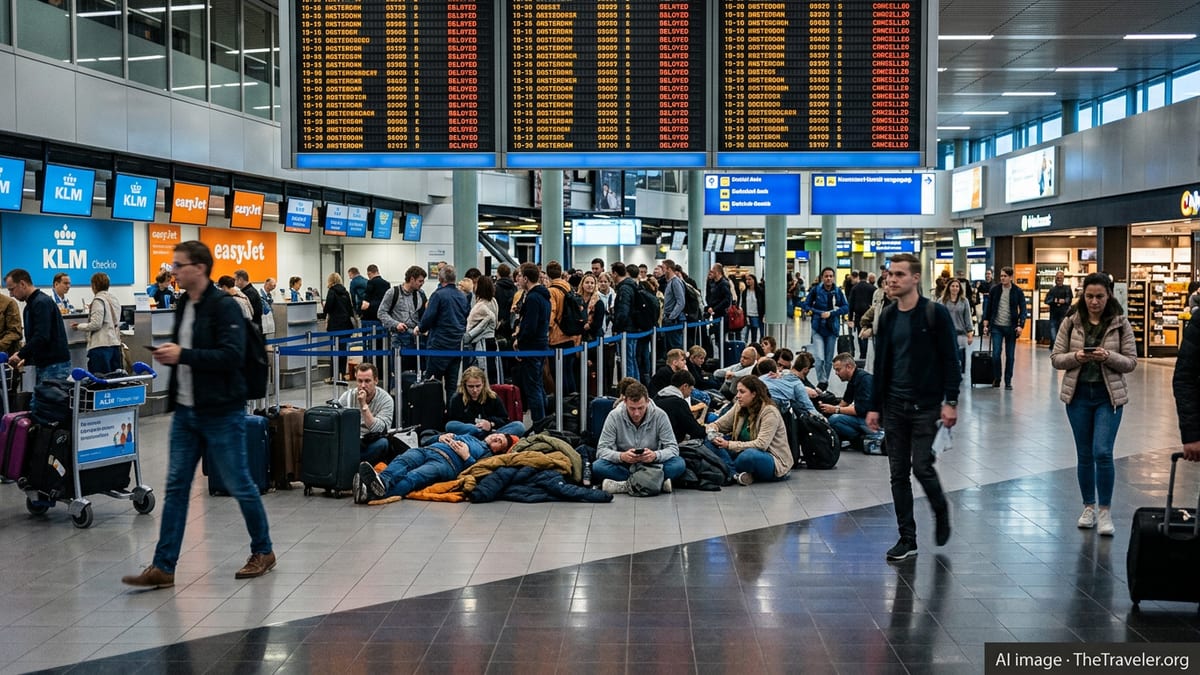
Hundreds of travellers were left stranded at Amsterdam Schiphol Airport on June 8 as rolling delays and cancellations across European and long haul networks hit services operated by KLM, Delta Air Lines, Lufthansa, Qatar Airways, Emirates and other carriers, with disruption spilling over to major hubs including Paris, London, Frankfurt and Zurich.
Get the latest news straight to your inbox!
Wide Network Disruption Across European Hubs
Publicly available flight tracking data for June 8 indicates that operations at Amsterdam Schiphol deteriorated through the day, culminating in at least 265 delayed departures and arrivals and 27 outright cancellations on services to and from the Dutch hub. The disruption affected a mix of short haul European and intercontinental flights, creating bottlenecks that quickly rippled across connected hubs.
Routes linking Amsterdam with Paris, London, Frankfurt and Zurich were among those reporting extensive schedule issues, with aircraft arriving late, missing planned slots and in some cases being withdrawn entirely. Knock on effects were visible at Paris Charles de Gaulle, London Heathrow and Gatwick, Frankfurt Main and Zurich, where additional delays built up as crews and aircraft failed to arrive on time from the Netherlands.
Unlike isolated weather events confined to a single airport, the latest problems at Schiphol fed into an already stretched European network. In recent weeks, reports have highlighted repeated days of elevated delays and cancellations across the continent, with Amsterdam frequently appearing among the hardest hit major hubs.
Major Carriers Hit, From KLM to Gulf and US Partners
According to live operational dashboards and media reports, the latest wave of disruption was concentrated among large network airlines that rely on Schiphol as a transfer point. KLM, Schiphol’s dominant carrier, registered a significant share of the delayed and cancelled services, affecting both intra European sectors and long haul flights to North America, Asia and the Middle East.
Alliance and codeshare partners were also affected. Delta Air Lines, which co operates transatlantic routes with KLM, experienced delays on services linking Amsterdam with major US gateways. Lufthansa reported issues on flights connecting Amsterdam to Frankfurt and Munich, adding pressure at its own hubs. Long haul operators including Qatar Airways and Emirates saw schedule disruptions on services between Amsterdam and Doha and Dubai, with delays cascading into subsequent departures from their Gulf bases.
Published coverage over recent months has already pointed to a challenging operational environment at Schiphol, with earlier episodes involving hundreds of delays and dozens of cancellations in a single day. Those previous incidents, driven by combinations of weather, staffing constraints and congestion, have highlighted how quickly disruption at the airport can spread through the networks of large carriers that operate multiple daily rotations.
Passengers Face Long Queues, Missed Connections and Overnight Stays
For passengers, the impact of the latest Schiphol disruption was immediate and highly visible. Airport information boards showed rows of delayed flights alongside cancelled services, while social media posts from travellers described long queues at airline service desks as people sought rerouting and accommodation.
With many of the affected routes serving major hubs such as Paris, London, Frankfurt and Zurich, missed connections became a significant issue. Travellers who had planned same day onward flights frequently found themselves rebooked onto next day services or routed through alternative cities, extending journey times by many hours. Others faced overnight stays in airport hotels or improvised arrangements in terminal seating areas while waiting for new itineraries.
Recent guideline documents for European airports emphasize the importance of clear communication and basic care for stranded passengers during large scale disruption, including providing meals, refreshments and access to accommodation where required. Observers noted that the scale of the June 8 disruption at Schiphol again tested the capacity of airlines and ground handlers to deliver these measures at short notice to large numbers of affected travellers.
Part of a Broader Pattern of 2026 European Flight Disruptions
The latest problems at Schiphol fit into a broader pattern of operational strain visible across European aviation in 2026. Industry tracking reports for the year to date have documented several days where more than a thousand flights across the continent were delayed and hundreds cancelled, with northern European hubs including Amsterdam regularly among the most affected.
Earlier in the year, heavy winter weather led to sustained cancellations and delays at Schiphol, creating multi day backlogs and leaving large numbers of passengers seeking rebooking. Separate incidents have seen baggage handling issues and stand shortages contribute to congestion, underlining the sensitivity of the hub to simultaneous pressures on infrastructure, staffing and air traffic management.
Analysts note that demand for air travel across Europe has remained strong, with load factors high on many routes and airlines operating tight schedules to maximize fleet utilization. In such an environment, even relatively short disruptions can quickly translate into network wide problems, as there is limited spare capacity to absorb delays or replace cancelled aircraft and crews.
What Travellers Can Do If Their Flight Is Affected
Consumer organizations advise that passengers facing delays or cancellations at Schiphol or other European airports should first verify their flight status through airline apps, websites or airport information screens before heading to the airport. When services are cancelled or heavily delayed, many carriers enable self service rebooking, which can be faster than queuing at service desks when disruption is widespread.
Under European air passenger protection rules, travellers departing from or arriving into the European Union on EU carriers may be entitled to assistance such as meals, refreshments and, where necessary, hotel accommodation during extended delays. In certain circumstances that are not related to extraordinary conditions, additional financial compensation may also be available. Travellers are generally advised to retain boarding passes, booking confirmations and receipts for any extra expenses incurred.
Given the recurring pattern of delays and cancellations at major hubs like Amsterdam, Paris, London and Frankfurt during 2026, some travel experts suggest allowing longer connection times, particularly during peak seasons or when transiting busy hubs with known congestion. While such precautions cannot eliminate the risk of disruption, they can reduce the likelihood that a single delayed sector will cause a missed long haul connection and an unplanned overnight stay.