


More news on this day
Southwest Airlines has expanded its fast-growing international partnership portfolio by adding Singapore Airlines as its eighth foreign partner, creating new one-ticket links between the carrier’s U.S. network and destinations across Asia, Europe, the Middle East, and Africa.
Get the latest news straight to your inbox!
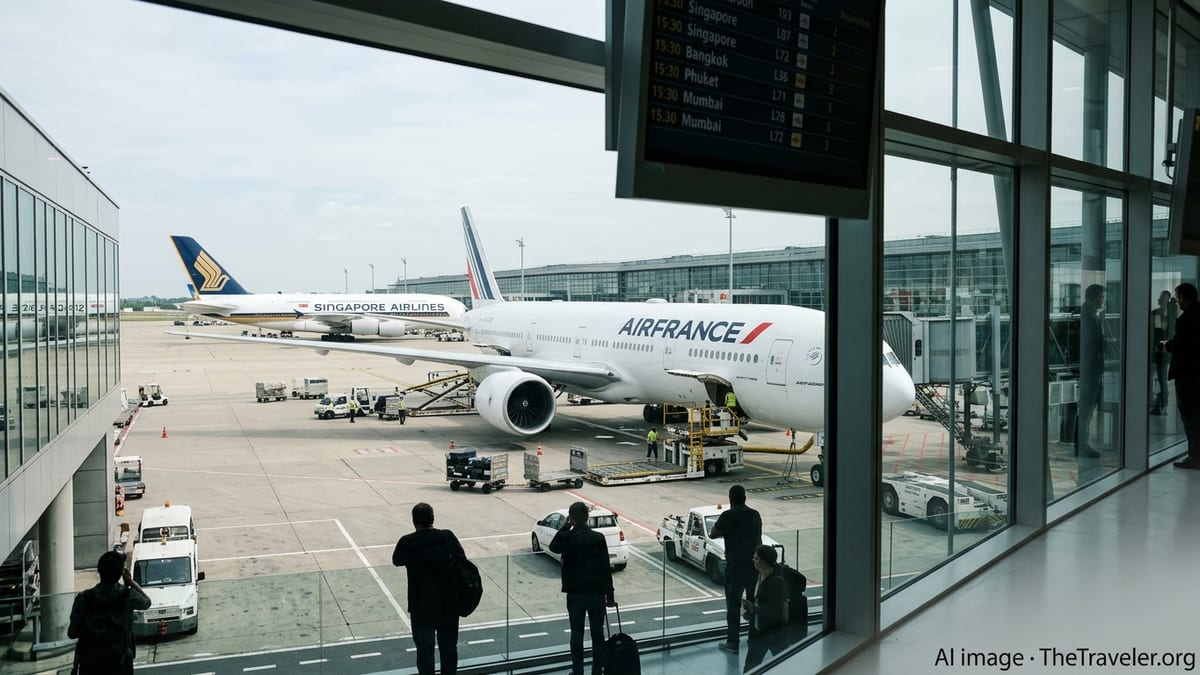
New Interline Deal Connects Domestic and Long-Haul Networks
According to publicly available information released on June 9, the arrangement is structured as an interline partnership, allowing customers to book single-ticket itineraries that combine flights operated by both airlines. The cooperation is designed to simplify journeys that begin on Singapore Airlines’ long-haul services and continue on Southwest’s predominantly domestic network.
Reports indicate that Singapore Airlines operates nonstop flights from its Singapore Changi hub to several shared U.S. gateways served by Southwest, including points on the West Coast and in Texas. From these airports, travelers can connect to Southwest’s extensive schedule serving more than 100 destinations across the continental United States, Hawaii, and parts of Latin America.
The interline model stops short of a full codeshare. Each airline continues to sell seats under its own flight number, while coordinating schedules and fares so that passengers can purchase combined itineraries through approved sales channels. Industry coverage notes that baggage, minimum connection times, and customer protections follow the rules set out in the interline agreement and each carrier’s conditions of carriage.
Southwest has framed the move as part of a broader strategy to give its largely domestic customer base access to more global destinations without operating its own long-haul fleet. For Singapore Airlines, the partnership offers additional feed into its U.S. gateways from cities that the flag carrier does not serve directly.
Eighth Overseas Partner Caps Rapid Expansion Strategy
Singapore Airlines becomes the eighth foreign carrier in Southwest’s relatively new global partnership portfolio. Public filings and recent announcements show that the Dallas-based airline has spent the past 18 months assembling a web of interline partners in Europe, the Middle East, and the Asia-Pacific region.
Earlier partnerships were launched with airlines such as Icelandair, China Airlines, EVA Air, Philippine Airlines, Condor, and Turkish Airlines, with All Nippon Airways later joining as another key Asian partner. These agreements typically center on a small number of U.S. gateways where Southwest operates dense schedules and the partner airline offers long-haul international services.
Company disclosures describe international alliances as a way to add “virtual” reach to Southwest’s network, allowing customers to connect to far-flung destinations while the carrier itself continues to focus on short and medium haul flying with a single Boeing 737 fleet. The addition of Singapore Airlines, consistently ranked among the world’s top long-haul carriers, is positioned as a further step in that strategy.
Analyst commentary suggests that Southwest’s growing roster of partners may help diversify revenue and boost traffic at key connecting airports. However, industry observers also note that interline arrangements require careful coordination on schedules, pricing, and operations to deliver a consistently smooth experience for transferring passengers.
What Travelers Can Expect From the New Partnership
According to published coverage of the agreement, the interline deal allows eligible journeys to be ticketed on a single itinerary, with passengers checking in once for both airlines when systems support it. Travelers starting on Singapore Airlines can purchase tickets that include onward Southwest flights within the United States, while some itineraries originating in U.S. cities may also route onto Singapore Airlines services.
Details on specific benefits, such as through-checked baggage or coordinated assistance during disruptions, are guided by industry-standard interline practices and each carrier’s internal policies. Public information indicates that the agreement is intended to deliver more seamless connections than separate point-to-point bookings, though it does not include joint frequent-flyer accrual or elite-recognition features associated with deeper alliances.
Booking pathways typically involve the long-haul carrier or select travel agencies packaging Southwest segments together with international flights. In other recent partnerships, Southwest’s flights have appeared in global distribution systems through intermediaries, enabling international carriers and travel sellers to issue combined tickets in local currencies that include U.S. domestic legs on Southwest.
Travel experts note that customers considering interline itineraries should pay close attention to connection times, baggage rules, and rebooking policies, which can differ from traditional alliances and codeshares. For many travelers, however, the primary benefit lies in added city-pair options and simplified ticketing for complex international journeys.
Implications for Key U.S. Gateways and Global Reach
The Singapore Airlines partnership is expected to strengthen several U.S. airports that already serve as important connecting points for Southwest. Publicly available information on the airline’s existing interline deals highlights cities such as Los Angeles, San Francisco, Seattle, Honolulu, and major inland hubs where long-haul partners operate.
By adding another premium Asian carrier into that structure, Southwest is likely to deepen traffic flows over these gateways, particularly for itineraries linking secondary U.S. cities with Southeast Asia, India, and beyond. Singapore Airlines’ own network also spans Europe, the Middle East, and Africa via its Singapore hub, which broadens the range of destinations effectively linked to Southwest’s domestic map.
Industry analysts view the tie-up as part of a wider shift in how non-alliance carriers and low-cost operators approach long-haul connectivity. Rather than joining one of the three major global alliances, Southwest is building a bespoke ecosystem of partnerships tailored to its schedule and fleet. Singapore Airlines, a cornerstone member of Star Alliance, has in parallel developed a large portfolio of bilateral deals outside its core alliance relationships.
As these arrangements mature, travelers flying to or from the United States may see an increasing number of itinerary options that pair a long-haul seat on a full-service international carrier with a domestic leg on Southwest, all under a single ticket. How quickly those options proliferate will depend on commercial performance and the operational complexity of integrating two very different networks and service models.