


More news on this day
Hundreds of travellers were left stranded across China on May 23 as operational data showed at least 318 flight delays and 35 cancellations hitting major hubs including Guangzhou, Shenzhen, Shanghai and Chengdu, disrupting schedules on China Eastern, Air China, Juneyao Airlines, Hainan Airlines and several other carriers.
Get the latest news straight to your inbox!
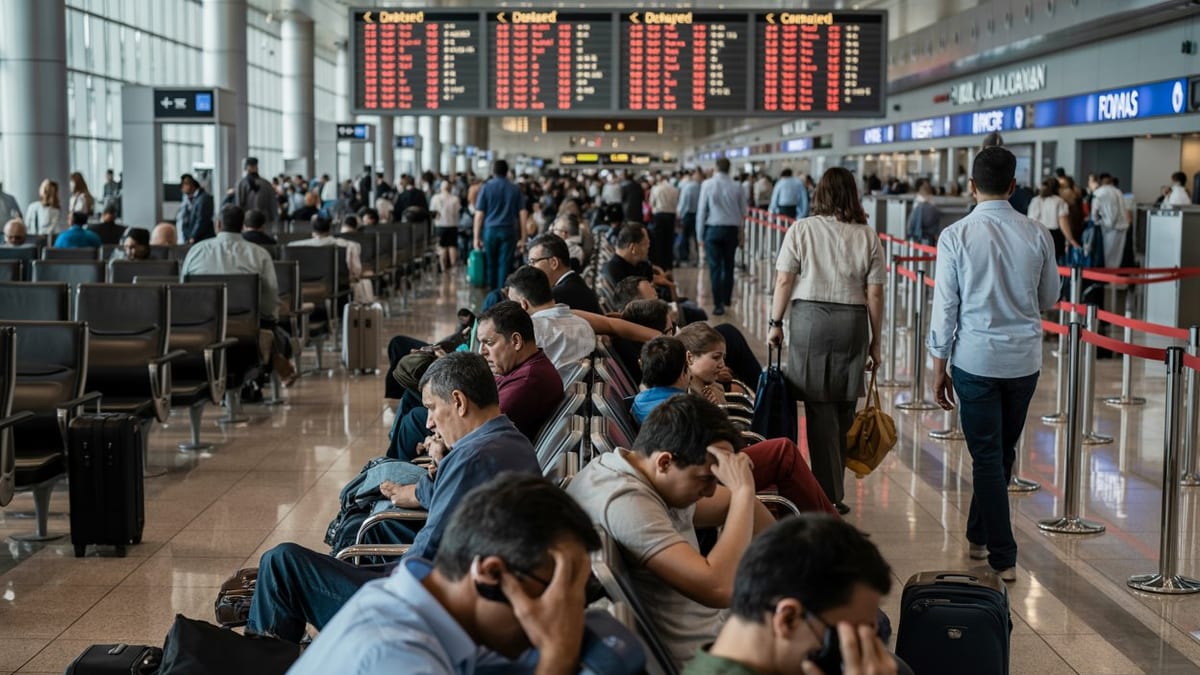
Wave of Disruptions Across China’s Busiest Airports
Real time tracking data and industry reports for May 23 indicate a fresh wave of disruption across China’s domestic aviation network, with congested departure boards at key coastal and inland hubs. Guangzhou Baiyun, Shenzhen Bao’an, Shanghai Pudong and Hongqiao, along with Chengdu’s airports and several regional gateways, all reported elevated delay levels through the morning and afternoon peak periods.
The pattern mirrors a series of recent bad days for Chinese aviation, when weather systems and air traffic control constraints have triggered large clusters of delays and cancellations nationwide. Earlier in May, one disruption event linked to severe storms and flow restrictions was recorded as affecting more than 1,400 flights in a single day at eight major airports, highlighting how quickly punctuality can deteriorate once bottlenecks form at a handful of hubs.
Data compiled today points to at least 318 delayed departures or arrivals combined with 35 outright cancellations concentrated at the country’s busiest airports. While those figures are lower than the most severe episodes seen this year, they are still sufficient to strand large numbers of passengers whose connections rely on tight domestic transfer windows.
Passengers travelling for business and early summer leisure trips appear to have been affected, with images and descriptions shared on social media pointing to crowded check in lines, long queues at transfer desks and passengers resting on luggage near departure gates as they await updated information.
Flagship Carriers Bear the Brunt
The disruption has fallen heavily on some of China’s best known airlines. Publicly available schedules and tracking boards show China Eastern, Air China, Juneyao Airlines and Hainan Airlines among the carriers with multiple delayed or cancelled sectors touching Guangzhou, Shenzhen, Shanghai and Chengdu.
China Eastern, which operates dense shuttle style services on city pairs such as Shanghai Guangzhou and Shanghai Shenzhen, is particularly exposed when congestion builds in the Yangtze River Delta and the Pearl River Delta at the same time. A delay or cancellation on morning departures can cascade into missed rotation slots later in the day, forcing the airline to consolidate services, reroute aircraft and adjust crew duties.
Air China and Hainan Airlines, both with sizable domestic networks feeding long haul routes, are facing similar challenges. When feeder flights into Shanghai or Guangzhou are pushed back or cancelled, passengers with onward international segments may misconnect, requiring rebooking and overnight accommodation. In parallel, medium sized carriers such as Juneyao Airlines and Shenzhen Airlines are seeing their own operations knocked off balance when shared airports impose ground holds or runway restrictions.
The combined impact across these networks explains how a headline figure of a few dozen cancellations and a few hundred delays can still translate into hundreds of travellers stranded in terminals, especially when they are relying on same day connections between domestic and international flights.
Weather, Airspace and Scheduling Pressures
While a definitive cause for every disrupted flight today is not yet available, recent patterns across China’s aviation system offer clues. Over the past three months, several major disruption days have been linked to fast moving storms, low cloud and cross winds affecting eastern and southern China, along with periodic airspace constraints that reduce available capacity on key corridors.
Industry analysis of earlier events in February and April described a “cocktail” of meteorological and operational factors: fog and rain in the north, thunderstorms in the south, and temporary airspace reservations that compress commercial traffic into narrower routes. When similar factors align over the Yangtze River Delta, the Greater Bay Area and Chengdu’s growing hub simultaneously, arrival and departure slots can quickly back up.
Chinese carriers have also been rebuilding capacity to match strong domestic demand while navigating shifting international traffic flows, including reduced services on some Northeast Asia routes. This has left little slack in the system on busy days. Tight turnarounds, full loads and busy airspace mean that a relatively small number of initial delays can ripple outwards, leading to missed crew duty limits or aircraft being out of position for later flights.
Reports from previous nationwide disruption episodes show that once the delay count climbs into the hundreds, it often takes several operational cycles before timetables fully normalize, even after weather improves or flow restrictions are lifted.
Knock On Effects for Travellers and Corporates
For individual travellers, today’s figures translate into missed meetings, abandoned weekend plans and unexpected overnight stays. Accounts circulating on traveller forums in recent weeks describe passengers arriving at Chinese hubs to discover last minute timetable changes or cancellations, sometimes with limited advance notice or unclear rebooking options.
Corporate travel managers and relocation specialists are also monitoring the pattern, as repeated clusters of delays and cancellations complicate planning for executive travel, project mobilizations and time sensitive cargo movements. Recent advisory notes from travel risk and visa service providers have urged companies routing staff through Shanghai, Guangzhou, Shenzhen and Chengdu to build in longer connection windows and to maintain “Plan B” itineraries, often involving high speed rail on parallel city pairs.
Travel management commentary following earlier disruption spikes emphasized that China’s regulatory framework tends to guarantee care in the form of meals, hotels and rebooking after long delays, but does not usually mirror European style cash compensation rules. As a result, the onus is often on passengers and employers to factor potential disruption into schedules rather than relying on post event payouts.
Today’s events are likely to reinforce those messages, especially for itineraries that combine domestic legs on Chinese carriers with onward long haul flights operated from Shanghai or Guangzhou to Europe, the Middle East and Oceania.
Practical Advice for Those Yet to Travel
With delays and cancellations still filtering through the system, travel experts recommend that anyone due to fly via Guangzhou, Shenzhen, Shanghai or Chengdu over the coming 24 hours monitor their flights closely and allow extra time at the airport. Airline apps, airport displays and Chinese civil aviation mini programs on major messaging platforms generally provide the most up to date gate and schedule information.
Passengers already holding tickets on China Eastern, Air China, Hainan Airlines, Juneyao Airlines and other affected carriers are encouraged by publicly available guidance to check whether flexible rebooking or refund policies apply on their routes. In previous disruption waves this year, several major airlines have temporarily relaxed change fees or allowed free date changes within specified travel windows, particularly where weather or air traffic control restrictions have been the primary drivers of delay.
Those with complex itineraries involving tight domestic to international connections may wish to consider retiming flights or overnighting at the hub rather than risking a misconnection late in the day. Travel risk briefings published after earlier disruption events suggest building at least six hours between critical legs when transiting China’s busiest hubs during periods of unstable weather.
For now, operational data indicates that the May 23 disruption is significant but not unprecedented in the context of China’s rapidly expanding and heavily utilized aviation network. However, for the hundreds of travellers sitting on departure hall floors or queuing at transfer desks today, it is another reminder that even short haul domestic flights can quickly become multi day odysseys when several of the country’s biggest hubs slow down at the same time.