


More news on this day
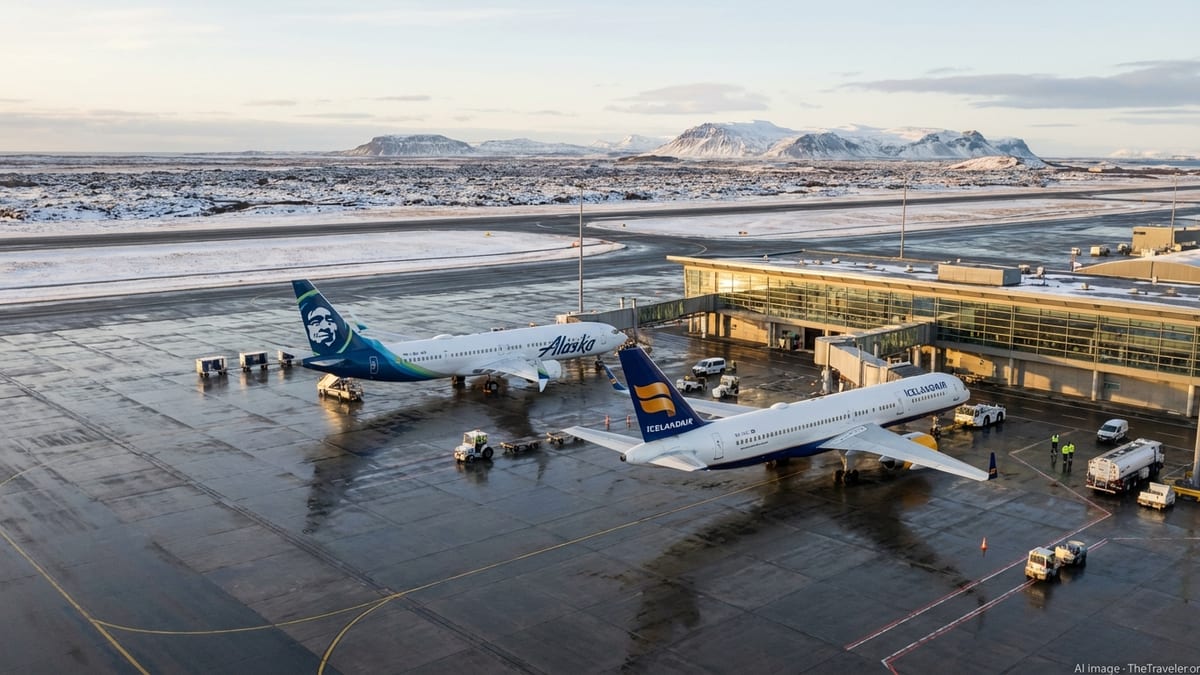
Travelers transiting Iceland’s Keflavik International Airport are facing disruption as a series of Icelandair cancellations and delays ripple across key transatlantic and European routes, affecting flights to Newark, Portland, London, Edinburgh, Oslo and other major destinations.
Get the latest news straight to your inbox!
Wave of Cancellations Hits a Busy Transit Hub
Keflavik International Airport functions as Icelandair’s primary hub, funnelling passengers between North America and Europe. Publicly available schedules and tracking data for late May 2026 show several Icelandair services scrubbed or heavily delayed across multiple days, creating knock-on disruption for connecting travelers. While some departures continue to operate on time, a cluster of cancellations is evident on routes that typically see steady traffic, including to Newark, London, Oslo and other major cities.
Monitoring sites that compile airline movement data indicate that Icelandair’s network through Keflavik remains extensive, but the recent pattern includes same-day cancellations on selected services and schedule changes announced only a short time before departure. The result is a patchwork of normal operations alongside isolated but impactful cancellations that can strand passengers mid-journey.
The situation is particularly significant because Keflavik is not only Iceland’s main international gateway, it is also a transfer point for travelers using Icelandair’s stopover model between North America and Europe. When a single flight is removed from the schedule, it can affect onward connections in both directions, compounding the disruption beyond the immediate route.
The latest disruptions follow a period in which Icelandair has continued to adjust its fleet and route map, while also contending with the usual mix of weather, operational constraints and airspace issues that can affect traffic in and out of Iceland. In such a tightly timed hub structure, even modest schedule changes can quickly be felt across the network.
Newark, Portland and London Among Most Affected Links
Newark, Portland and London are among Icelandair’s better-known destinations from Keflavik, and these routes illustrate how cancellations at the hub can reach well beyond Iceland. Flight listings for the Newark route show it as a key transatlantic link, with recent days featuring both scheduled services and, on certain dates, scrubbed operations that require passengers to be rebooked via alternative flights or airports.
On the Portland route, which is generally operated on a limited schedule, the removal of even a single rotation can have an outsized effect. Recent aircraft history data show at least one planned Keflavik–Portland service marked as canceled, underscoring how vulnerable lower-frequency routes are when operational pressures rise. With only a handful of departures each week, travelers booked on those flights have fewer same-day alternatives and often face extended delays or forced overnights when things go wrong.
London remains one of Keflavik’s busiest corridors, with Icelandair operating alongside other carriers to Heathrow and Gatwick. Traffic data from 2024 lists London among the top destinations served from Keflavik, and current schedules show multiple daily options. Yet disruptions on individual Icelandair services, including occasional cancellations or late departures, can still unsettle itineraries for travelers relying on tight connections to or from the United Kingdom.
Because these routes connect major financial and tourism hubs, changes reverberate quickly through travel plans. Passengers bound for onward flights in the United States or Europe may have to rebook complex itineraries, and some end up rerouted through alternative gateways such as Chicago, Copenhagen or Amsterdam when a direct Icelandair segment from Keflavik is withdrawn.
Impacts Felt Across Edinburgh, Oslo and Regional Europe
The disruption is not limited to transatlantic links. Edinburgh, Oslo and other European cities heavily integrated into the Keflavik hub are also seeing knock-on effects when Icelandair adjusts its operation. Published route overviews show that both Edinburgh and Oslo are regular destinations from Keflavik, with Icelandair and other carriers jointly supporting strong flows of point-to-point and connecting traffic.
When Icelandair cancels or significantly delays departures on these routes, passengers may lose same-day connections onward to North America, forcing itinerary changes and, in some cases, extra nights in Iceland. Given that some of these services run only once daily or a few times per week, the margin for absorbing disruptions is relatively small, particularly during busy travel periods.
Publicly available airport departure boards and flight-tracking sites indicate that, even on days when an Icelandair Edinburgh or Oslo flight is cancelled, many other services continue to operate on time from Keflavik. This creates a patchy picture at the terminal: some boarding areas remain busy while groups of passengers from a cancelled flight cluster around service desks, seeking rebooking and information.
Travel forums and social media posts in recent months illustrate the resulting frustration. Travelers recount receiving late-notice emails about route cancellations, being shifted to different airports than originally booked, or facing lengthy layovers in Keflavik while waiting for the next available departure on their route.
Passengers Navigate Rebooking, Rights and Compensation
For affected travelers, the immediate challenge is securing an alternative way to their final destination. Reports from passenger discussion boards show a mix of experiences: some customers are rebooked automatically onto later Icelandair flights or routed via partner airlines, while others describe needing to call customer service repeatedly or purchase replacement tickets out of pocket before seeking reimbursement.
Because Iceland is part of the European Economic Area, flights operated by Icelandair from Keflavik generally fall under European passenger-rights regulations, including provisions comparable to EU261. Online guidance and traveler accounts emphasize that, in certain circumstances, passengers on cancelled or heavily delayed flights may be entitled to care, assistance and monetary compensation, depending on the cause and length of the disruption and the notice period given.
Travelers also highlight the importance of keeping documentation. Boarding passes, booking confirmations, written notices of cancellation, and receipts for food, lodging and alternative transport can be essential when submitting claims. Some passengers posting about recent Icelandair disruptions report successful reimbursement for hotels and meals, while others say they are still waiting for compensation decisions or payment processing weeks after their trips.
Consumer advocates frequently recommend that passengers escalate unresolved cases to national enforcement bodies or alternative dispute resolution schemes where available. Several recent online discussions involving Icelandair cancellations reference this approach, with contributors outlining timelines, claim forms and template letters that others can adapt when seeking redress.
What Travelers Through Keflavik Can Do Now
With Icelandair’s hub structure at Keflavik remaining central to many itineraries between North America and Europe, travel planners are paying closer attention to how cancellations and delays might affect their routes. Trip-planning advice shared by experienced travelers increasingly stresses the value of longer connection times at Keflavik, especially in winter and shoulder seasons when weather and operational pressures can be more acute.
Many passengers now monitor their flights on multiple platforms, using both airline communications and independent tracking services to cross-check status in the days and hours before departure. This can provide early warning of schedule changes, giving affected travelers more time to contact the airline, adjust accommodation bookings or rearrange onward transport.
Some travelers also build flexibility into their plans by avoiding last-flight-of-the-day connections on critical legs, or by purchasing travel insurance that covers missed connections and schedule disruptions. Policies vary, but publicly available policy summaries show that some insurers explicitly address airline cancellation and delay scenarios, including additional accommodation and rebooking costs.
For those already en route through Keflavik, airport facilities and nearby accommodation can soften the impact of an unexpected stopover. Recent traveler reports describe making use of local hotels, shuttle services and geothermal pools in the surrounding area when forced to spend an extra night in Iceland. While such detours are seldom welcome, they have become a familiar part of the travel landscape for passengers caught up in the latest wave of Icelandair schedule disruptions at Keflavik.