


More news on this day
Thousands of airline passengers across the United States were left in limbo today as widespread delays and cancellations rippled through major hubs in Florida, Houston, Chicago, New York, Denver, Newark and San Diego, with live tracking data showing 4,395 flights delayed and 127 canceled within, into or out of the country.
Get the latest news straight to your inbox!
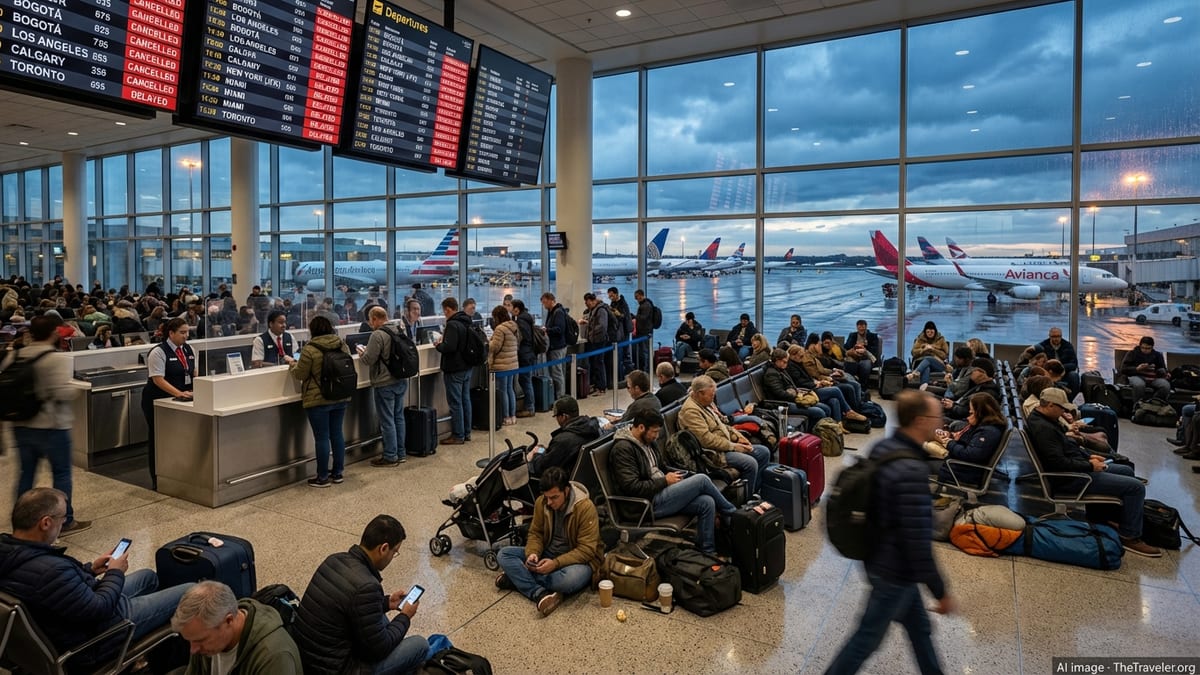
Nationwide Disruptions Hit Major U.S. Hubs
Publicly available tracking data indicates that the disruption has affected nearly every corner of the national air network, with Miami, Orlando and other Florida airports reporting heavy delays alongside Houston, Chicago O’Hare, New York’s LaGuardia and JFK, Denver, Newark and San Diego. The pattern suggests a systemwide strain rather than an isolated local issue.
Figures from real time monitoring platforms show that delays within, into or out of the United States climbed past 4,300 flights today, while cancellations topped 120. That level of interference translates into tens of thousands of disrupted journeys, as missed connections, rolling gate changes and equipment reassignments cascade throughout the day.
Travel industry coverage notes that these large disruption days are increasingly common on busy travel periods, when already tight schedules have little room to absorb even minor weather or air traffic constraints. Once a few early flights are delayed, later departures and arrivals at the same gates and with the same aircraft rapidly fall behind schedule.
Airports in the Northeast and along the Gulf and Atlantic coasts appear to be among the hardest hit, reflecting how congestion in a few busy air corridors can create knock-on impacts for flights across the country.
United, American, JetBlue and Regionals Bear the Brunt
Across the major carriers, United Airlines, American Airlines and JetBlue Airways show some of the highest numbers of delayed and canceled flights today, according to operational data compiled by flight tracking services. Regional operators that fly under big-brand banners, including Endeavor Air and Envoy Air, are also experiencing elevated disruption as they feed traffic into congested hubs.
Because regional affiliates typically operate shorter routes with multiple daily turns, even modest delays can quickly accumulate. When a morning leg arrives late, the aircraft and crew are often unable to depart on time for the next sector, leading to rolling delays that extend well into the evening.
Industry analyses of past disruption days have highlighted how network structure can amplify problems for certain airlines. Carriers with a heavy concentration of flights in weather-sensitive or congestion-prone airspace, including the New York and South Florida regions, tend to see more severe knock-on effects when conditions deteriorate or traffic management programs are introduced.
Public reports on on-time performance from the U.S. Department of Transportation also show that regional carriers such as Envoy and Endeavor, which operate on behalf of major airlines, historically record higher cancellation and delay percentages than some of their larger partners, reflecting the challenges of tight turnaround schedules and smaller fleets.
Weather, Airspace Constraints and Tight Schedules Converge
While no single cause fully explains today’s disruption, aviation data and historical patterns point to a familiar mix of contributing factors: localized weather, air traffic control initiatives and tightly packed airline schedules that leave little margin for recovery. Even non extreme weather such as low clouds, scattered storms or strong winds can trigger arrival and departure metering at busy hubs, slowing the rate at which aircraft can land and take off.
National Airspace System status maps show multiple active delay programs in key regions, where traffic is being regulated to maintain safety and manage runway or airspace capacity. When these programs are in effect, flights may be held at their origin airports or assigned later departure slots, generating late arrivals systemwide.
In recent years, federal transportation statistics have consistently cited airline-controlled issues, such as crew and maintenance, along with national aviation system constraints as leading causes of delays and cancellations. On heavy travel days, carriers often operate near maximum utilization of aircraft and staff, which means that any unexpected maintenance, crew timing issue or minor weather disturbance can quickly ripple through the network.
Analysts note that many airlines have rebuilt their schedules aggressively as demand recovered, and although this improves efficiency, it can also reduce resilience when confronted with the kind of multi airport disruption unfolding today.
Travelers Face Missed Connections and Limited Options
For passengers on the ground, the statistics translate into long lines, rapidly changing departure times and a shrinking set of rebooking options, particularly at already busy airports such as Newark, Chicago O’Hare and Denver. As flights stack up with delays, available seats on later departures become scarce, leaving some travelers marooned overnight.
Consumer advocacy information emphasizes that when delays are caused by weather or air traffic control constraints rather than issues within an airline’s control, carriers are generally not required to provide hotel or meal vouchers, although some do so voluntarily. That distinction often leaves travelers in congested hubs facing out of pocket expenses during extended disruptions.
Published guidance from the U.S. Department of Transportation urges passengers to monitor their flight status closely, sign up for airline alerts and consider proactive rebooking when it becomes clear that a connection is at risk. On days when more than four thousand U.S. flights are reporting delays, competition for alternative itineraries can intensify quickly.
Travel forums and recent news coverage also indicate that third party tools, including flight tracking websites and airport specific delay dashboards, can offer a broader view of systemwide congestion. When travelers can see that multiple hubs such as Florida’s main gateways, Houston, Chicago, New York, Denver, Newark and San Diego are all under strain, it can inform decisions about whether to attempt a connection, seek an alternate route or postpone a trip.
Strain Exposes Ongoing Vulnerabilities in U.S. Air Travel
The scale of today’s disruption underscores the sensitivity of the U.S. aviation system to concurrent stresses. With more than 4,395 flights delayed and 127 canceled within, into or out of the country, travelers are once again confronting how quickly normal operations can unravel, even without a single dramatic trigger event.
Transportation analysts have repeatedly called attention to the need for improved staffing, modernization of air traffic technology and more realistic airline scheduling practices to bolster resilience. Official performance reports show that, even in ordinary months, a significant share of delays are attributed to factors that can potentially be mitigated through better planning and investment.
For now, passengers caught in today’s disruption are relying on a patchwork of airline notifications, airport announcements and independent tracking websites to navigate their options. As traffic remains heavy across Florida, Houston, Chicago, New York, Denver, Newark, San Diego and other major hubs, the operational aftershocks are likely to persist into the late evening and potentially into tomorrow’s early departures.