


More news on this day
Air travel across parts of the Middle East remains volatile as new disruption at major hubs in the United Arab Emirates, Oman, Saudi Arabia and Egypt contributes to at least 435 flight delays and 18 cancellations, affecting carriers including FlyDubai, Air Arabia, Oman Air, Saudia and flyadeal, according to aggregated aviation data and recent regional travel reports.
Get the latest news straight to your inbox!
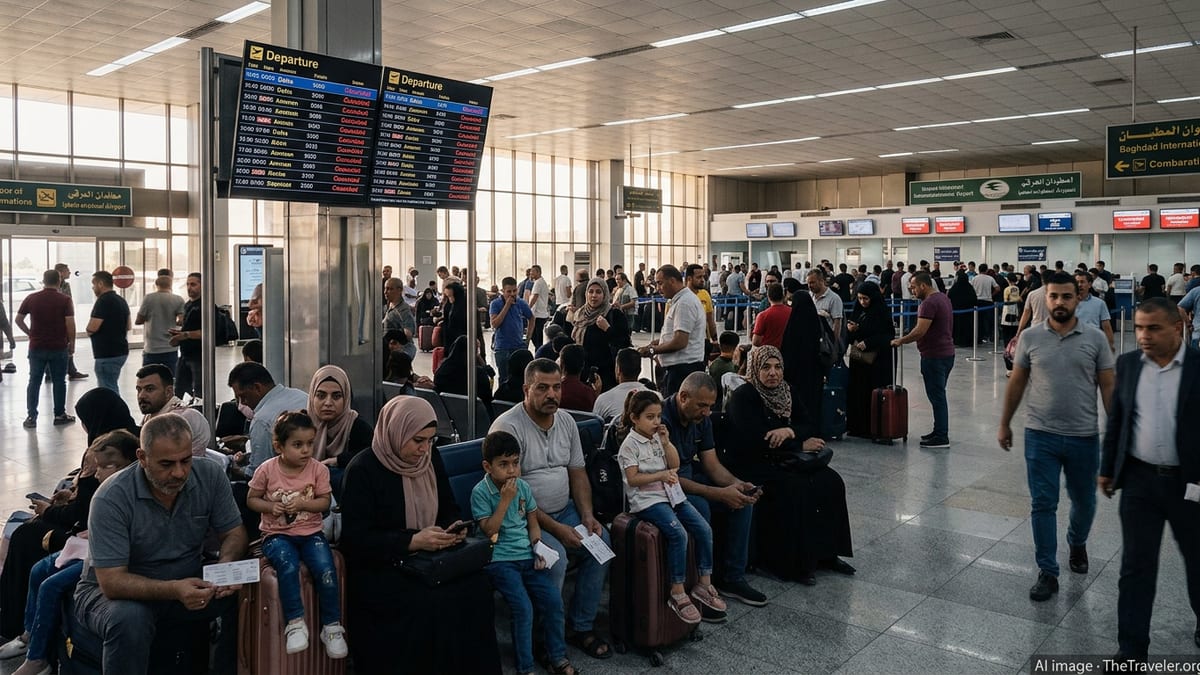
Fresh Wave of Disruptions at Gulf and North African Hubs
Recent operational data compiled from flight-tracking platforms and travel-industry reports indicates that airports in Dubai, Muscat, Jeddah and Cairo have been among the hardest hit in the latest round of schedule upheaval. The figures, drawn from multiple monitoring services, point to around 435 delays and 18 cancellations linked to these and other regional gateways over the past several days, underscoring how fragile connectivity remains across the Middle East.
Dubai International continues to shoulder a large share of the disruption. Coverage from aviation analysts notes that earlier episodes in April already saw Dubai and nearby Sharjah record more than 100 delays and over 30 cancellations in a single day as low cost and full service carriers struggled to reset networks after earlier airspace closures and rolling schedule changes.
In Oman, public updates on route suspensions show that Muscat has faced extended cancellations on several outbound corridors, compounding day of travel delays. Oman Air’s decision to prolong the suspension of at least seven routes into mid April, and the subsequent knock on impact on connections, has left fewer options for rerouting passengers when same day flights out of the Gulf are disrupted.
Saudi Arabia’s Red Sea hub at Jeddah and Egypt’s capital gateway in Cairo are also experiencing knock on effects. Regional travel alerts describe significant operational strain at Jeddah, particularly on busy religious and labor corridors, while Cairo’s departures board has periodically reflected clusters of late running services and a handful of outright cancellations as airlines rework routings around constrained airspace.
Airlines Under Pressure as Networks Remain Fragile
Low cost carriers FlyDubai, Air Arabia and flyadeal, along with full service operators such as Oman Air and Saudia, feature prominently in the current disruption picture. Publicly available disruption tallies for April highlighted more than 30 cancellations in the United Arab Emirates alone tied to FlyDubai and Air Arabia, with the aftershocks lingering into subsequent days as aircraft and crews rotated back into position.
Saudia and its low cost sister airline flyadeal have also been adjusting schedules in response to airspace closures and shifting demand patterns. Earlier operational statements from the Saudi group pointed to temporary suspensions on several regional routes, including services touching the United Arab Emirates and Jordan, with cancellations clustered around the period when multiple Middle Eastern countries restricted civilian overflights.
Oman Air’s route map has been notably constrained compared with pre disruption norms. Updates shared through aviation news outlets show extended cancellations on services linking Muscat with Dubai, Bahrain, Doha, Kuwait and other regional points. Industry observers note that Muscat often functions as a secondary connection point for travelers seeking to avoid congestion at larger hubs, so any cutbacks there can quickly ripple through to other carriers and airports.
For FlyDubai and Air Arabia, the operational stress has coincided with a sustained rebound in passenger demand. Travel desks and passenger forums describe heavily booked flights, limited spare capacity for re accommodation and, in some cases, short notice cancellations that leave travelers with few same week alternatives. This density of bookings magnifies the impact of every disrupted rotation, particularly on popular leisure and labor routes.
Airspace Restrictions and Operational Bottlenecks Drive Ongoing Volatility
The latest disruption figures arrive against a backdrop of unprecedented strain on Middle East aviation. Since late February, a series of airspace closures and conflict related risk assessments have forced airlines to cancel flights outright or operate longer, more circuitous routings. Analytical summaries from passenger rights organizations note that thousands of flights were canceled region wide during the initial shutdown period, with Dubai, Abu Dhabi, Doha, Muscat and key Saudi airports among the most affected.
Although some airspace has gradually reopened under restricted corridors, networks have yet to return to stable patterns. Carriers have been juggling altered flight paths that increase block times and fuel burn, tighter crew duty limits and the challenge of positioning aircraft where demand is strongest. Even small disturbances, such as localized weather or technical issues at a single hub, now tend to cascade quickly through regional networks that no longer have generous slack.
Operational bottlenecks at terminals are adding another layer of complexity. Reports from regional media and travel advisories mention periodic congestion at check in and security in Dubai and other Gulf hubs, particularly during peak departure banks. When combined with revised departure slots and last minute gate changes, this can delay boarding and contribute to a growing tally of late departures and missed connections, even on flights that ultimately operate.
Analysts tracking on time performance metrics point out that several Middle Eastern carriers entered 2026 with relatively strong punctuality records. However, the current environment of constrained airspace and geopolitical uncertainty has reduced the value of historical benchmarks, making near term reliability more difficult to forecast for passengers and corporate travel planners.
Impact on Travelers and What Passengers Are Being Urged to Do
The cumulative effect of 435 delays and 18 cancellations across the current disruption window is being felt most acutely by travelers in and out of Dubai, Muscat, Jeddah and Cairo who rely on tight connections or time sensitive itineraries. Consumer rights platforms report increased interest in delay and cancellation compensation tools, as passengers look to understand whether they qualify for refunds, rebooking or additional care such as meals and accommodation.
Public guidance from aviation and travel advisory organizations consistently emphasizes close monitoring of flight status in the 24 hours before departure and again on the day of travel. Passengers are being encouraged to rely on official airline apps, SMS notifications and airport information displays, rather than third party booking sites alone, to catch last minute schedule changes or cancellations.
Travel risk specialists also suggest building additional buffer time into itineraries connecting through Dubai, Jeddah, Muscat and Cairo while disruption indicators remain elevated. For long haul trips, some corporate travel policies are now recommending overnight layovers instead of same day connections, particularly when flying on carriers that have recently recorded clusters of delays or route suspensions in the region.
Where routes are canceled outright, publicly available airline policies generally highlight options such as full refunds, free date changes or rerouting via alternative hubs, subject to seat availability. However, with capacity already tight, passengers are being advised in widely circulated travel alerts to act quickly when automated notifications arrive, as rebooking options on near term flights can disappear within hours.
Outlook for Regional Aviation in the Coming Weeks
Forecasts from travel analysts and consultancy briefings suggest that volatility is likely to persist across Middle Eastern skies in the short term. While some corridors have reopened and airlines are gradually restoring frequencies, the underlying drivers of disruption, including security concerns and changing overflight permissions, remain fluid and subject to rapid revision.
In the United Arab Emirates, airport operators and carriers have signaled plans for incremental capacity improvements, such as additional self service facilities and refined scheduling, to absorb demand ahead of summer peak travel. Yet recent episodes of concentrated delays in Dubai and Sharjah demonstrate how quickly those buffers can be overwhelmed when airspace conditions shift or when other regional hubs, such as Muscat or Jeddah, experience renewed operational strain.
For Gulf and North African carriers such as FlyDubai, Air Arabia, Oman Air, Saudia and flyadeal, the immediate priority remains stabilizing day to day operations while maintaining connectivity on core routes. Network planners are expected to continue favoring flexibility, with short notice timetable changes and rolling updates to suspended destinations likely to feature in airline advisories well into the coming weeks.
For travelers, the emerging consensus across published guidance is that heightened vigilance and contingency planning are essential when flying through the region. With hundreds of delays and dozens of cancellations still possible on short notice, anyone planning journeys via Dubai, Muscat, Jeddah or Cairo is being encouraged to treat schedules as provisional, monitor conditions closely and build backup options into their plans wherever feasible.