


More news on this day
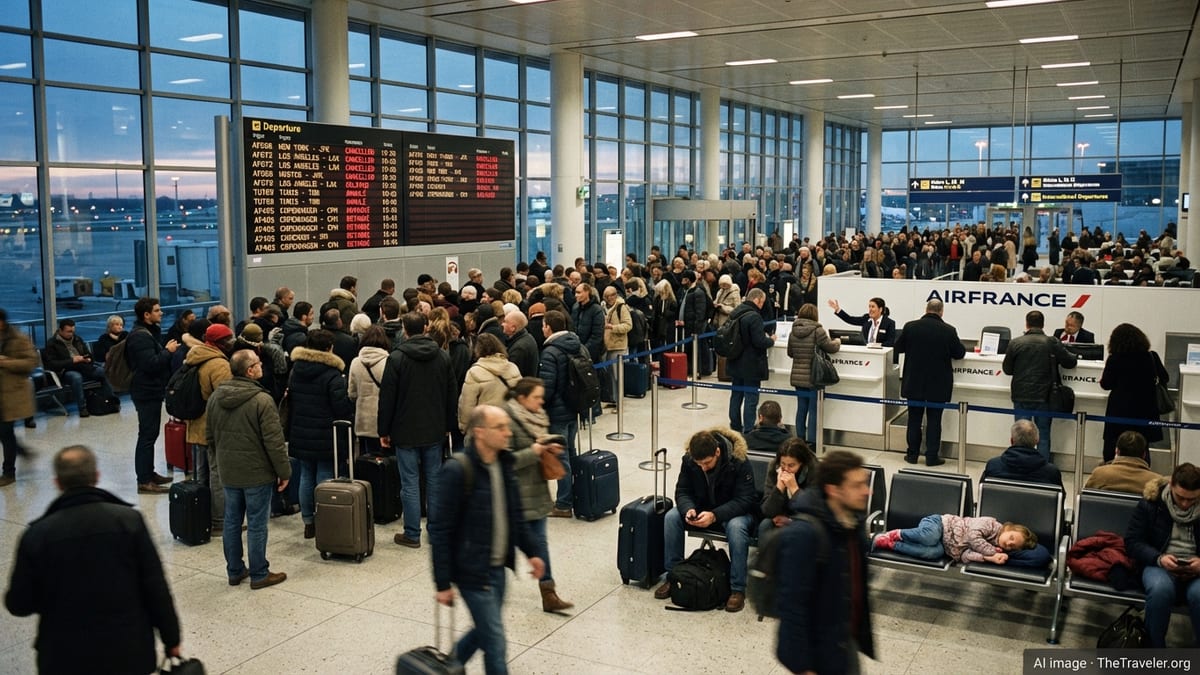
France is preparing for fresh travel turbulence in the busy summer build-up as ground staff at Paris Charles de Gaulle airport plan a one-day strike on 18 June, raising concerns over queues, delays and missed connections at one of Europe’s most important air hubs.
Get the latest news straight to your inbox!
Strike Call Puts Europe’s Second-Busiest Hub on Alert
Union groups representing ground staff at Paris Charles de Gaulle have jointly filed notice for a 24-hour walkout on 18 June, covering baggage handlers, check-in agents and other support roles across multiple terminals. Publicly available reports indicate the action is rooted in a dispute over working conditions, staffing levels and the impact of tighter security-related controls on employees who require airside clearance.
The strike date falls just as airlines ramp up frequencies for the summer peak, with traffic data from Paris airports showing passenger volumes already close to or above pre-pandemic levels. Charles de Gaulle handled more than 33 million passengers in the first months of 2026, according to company figures, underscoring how even short-lived disruption can ripple far beyond France.
Unions have framed the stoppage as a warning shot over what they see as unsustainable pressure on front-line staff. Travel-industry observers note that the dispute is also unfolding against a backdrop of regulatory changes to background checks and identity badges, which workers say add administrative strain in an already tight labour market.
Airport management has yet to publish a detailed contingency plan, but previous episodes suggest a likely mix of selective cancellations, retimed flights and reduced ground services designed to keep at least a core schedule operating during the strike period.
What Passengers Can Expect on 18 June
Based on recent strike patterns at major French airports, the most immediate impact for passengers on 18 June is expected at check-in, baggage drop and boarding gates. Reports from earlier actions this spring indicated that luggage handling and aircraft turnaround times are particularly vulnerable when ground teams are reduced, leading to aircraft departing out of sequence and longer waits at carousels on arrival.
Travellers transiting through Paris on short connections may face elevated risk of missed onward flights if bottlenecks form at security or boarding. Industry specialists point out that Charles de Gaulle has worked in recent years to improve minimum connection times, but those gains can quickly evaporate when staffing is disrupted at multiple points along the passenger journey.
Retail and catering services in the terminals could also be affected if shop and café staff participate or if access to secure zones is constrained. Some reports on previous strike days at Paris airports describe partially shuttered concourses and limited food options, particularly early in the morning and late at night.
French minimum-service rules in aviation typically limit the scope of outright cancellations by requiring a baseline level of operations, especially for long-haul and essential domestic routes. However, even when most flights operate, irregular staffing patterns can translate into rolling delays that build throughout the day.
Knock-On Effects for Wider European Summer Travel
The planned action at Charles de Gaulle comes hard on the heels of a series of air traffic control and airline-specific strikes that have already tested Europe’s aviation network in 2026. Earlier French stoppages involving controllers and airline crews prompted hundreds of cancellations and delays at Paris and Nice, and analysts warn that the system is entering the busiest part of the year with little spare capacity.
Industry data from Eurocontrol and other regional bodies over the last two summers show France repeatedly ranking among the top sources of delay minutes in European airspace, often linked to industrial action. Travel commentators suggest that another high-impact event at a hub as central as Charles de Gaulle could once again trigger diversions, capacity cuts and timetable reshuffles across the continent.
Low-cost and leisure carriers are seen as particularly exposed, since they typically operate tight turnarounds and highly utilized fleets. A single missed slot in Paris can cascade into delayed departures from regional airports hours later, complicating travel plans far from the original point of disruption.
Rail and road links into and out of Paris may also feel the strain if passengers pre-emptively shift from air to land-based alternatives. Recent French transport strikes have shown that when one mode is disrupted, others can quickly become saturated, particularly on key weekends at the start of school holidays.
Context: A Broader Wave of Labour Tensions in French Aviation
The Charles de Gaulle ground staff dispute is unfolding in a sector already unsettled by repeated clashes over pay, rosters and staffing levels. In April and May, a combination of air traffic control stoppages, cabin crew actions and local walkouts at regional airports triggered significant travel disruption across France, including at Paris-Orly and Nice.
According to published coverage, several unions argue that staffing has not kept pace with a rapid rebound in demand, leaving employees stretched and vulnerable to burnout. At the same time, airports and airlines are contending with higher operating costs, new environmental obligations and ongoing investment needs, all of which feed into tense collective bargaining rounds.
Security-related reforms are another flashpoint. France has tightened background checks and access rules for staff working in secure airport zones, in line with European directives. While officials present the measures as necessary for safety, labour groups say the more complex vetting process, shorter badge validity and administrative delays are exacerbating recruitment and retention challenges.
Observers note that last year’s so-called “Olympic truce,” during which large-scale strikes were largely suspended around major sporting events, limited the scope of aviation disruption in 2025. With that informal pause now over, union activism in the transport sector appears to be resurfacing more forcefully in 2026.
How Airlines and Travellers Are Preparing
Airlines serving Charles de Gaulle have begun adjusting planning assumptions for June, according to travel-industry briefings. Typical responses include securing additional handling capacity where possible, building longer ground times into schedules and identifying flights that could be proactively cancelled or consolidated if the walkout proceeds as announced.
Carriers are also expected to rely heavily on digital channels to push real-time updates about schedule changes, boarding times and baggage arrangements. Experience from past French strikes suggests that early, clear communication about which flights are affected can help reduce overcrowding in terminals and avoid unnecessary trips to the airport.
For passengers, publicly available guidance from consumer groups and travel bodies generally highlights three core strategies: monitor bookings closely in the days leading up to 18 June, allow extra time at the airport on the day itself, and have a backup plan for missed connections or late arrivals. Those with flexible tickets may consider moving their trips by a day on either side of the strike, particularly for non-essential travel.
Travel rights organizations also underline that, under European passenger protection rules, airlines have obligations to reroute or refund travellers when flights are cancelled, even when disruption stems from industrial action. However, compensation for delays or incidental expenses is often more limited when strikes fall outside a carrier’s direct control, so some passengers are turning to comprehensive travel insurance to fill potential gaps.