


More news on this day
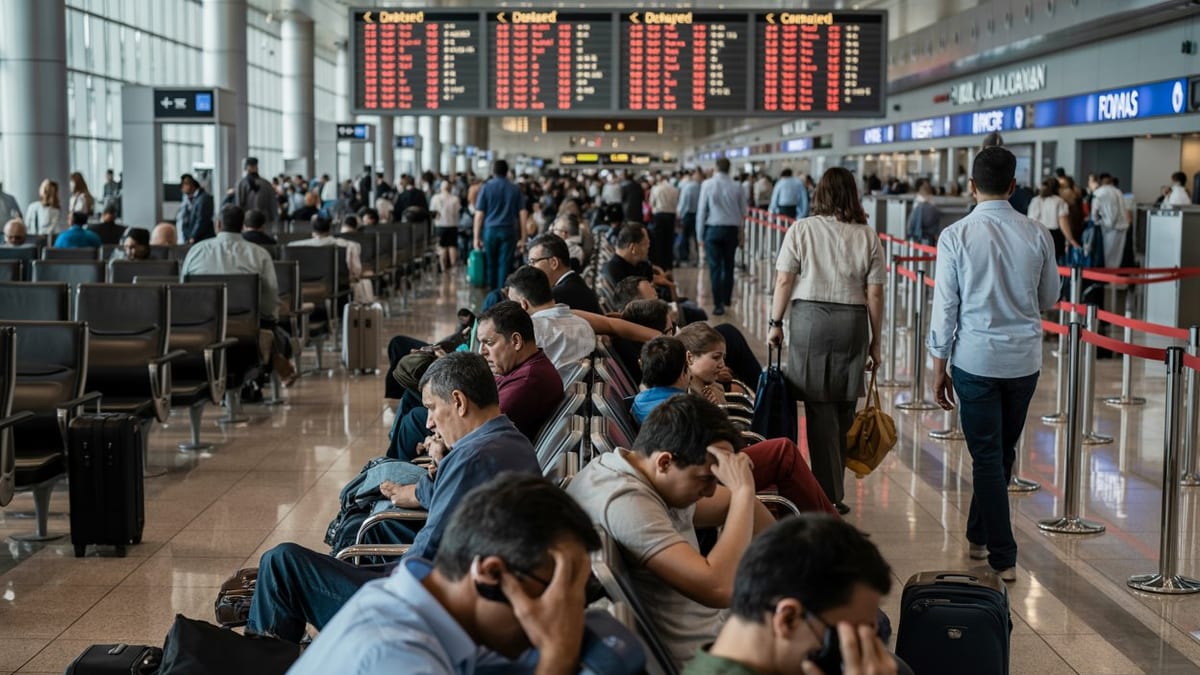
Travelers across the United Arab Emirates faced another turbulent day as a combined 218 flights were delayed and seven cancelled at Dubai International, Sharjah International and Abu Dhabi International airports, disrupting operations for Emirates, Etihad Airways, Air Arabia, flydubai and several international carriers.
Get the latest news straight to your inbox!
Ripple Effects Across Dubai, Sharjah and Abu Dhabi
Published reports and live flight status data indicate that the latest wave of disruption has affected services at all three of the country’s largest gateways, with Dubai International (DXB), Sharjah International (SHJ) and Abu Dhabi’s main hub each reporting clusters of delays and a smaller number of outright cancellations. The combined figure of 218 delayed flights and seven cancellations reflects movements across domestic and international routes, including long haul services linking the Gulf to Europe, Asia and North America.
At Dubai International, the world’s busiest airport for international passengers, schedules were already operating with limited flexibility after months of regional airspace restrictions and earlier operational bottlenecks. Recent summaries of airport performance show that DXB has been running a slimmer timetable than usual while gradually restoring capacity, leaving less margin to absorb knock-on delays when inbound flights arrive late or routing changes compress available slots.
Sharjah International, a key base for low cost operator Air Arabia, has also experienced elevated disruption in recent weeks. Earlier coverage described more than one hundred delays and a series of cancellations in a single day at Dubai and Sharjah, underscoring how even secondary hubs in the UAE are exposed when regional routes are tightened or when ground handling teams face surges in traffic. The fresh tally of delayed flights suggests that these pressures have not fully eased.
In Abu Dhabi, Etihad Airways and partner airlines have been working through their own backlog of schedule adjustments following weeks in which many services were either pared back or rerouted. Public flight trackers and airline advisories in mid May still showed scattered long delays on select Etihad services into and out of the capital, mirroring the broader regional pattern of gradual recovery punctuated by sudden spikes in disruption.
Lingering Impact of Regional Airspace Restrictions
The current problems are unfolding against the backdrop of a wider aviation shock that has affected much of the Gulf since late February, when security concerns and missile and drone incidents prompted a series of airspace limits across several states. Aviation authorities introduced temporary caps on foreign carrier frequencies to Dubai and other UAE airports, while major hubs briefly halted arrivals during periods of heightened risk.
Although the UAE has formally lifted the most stringent restrictions and declared its airspace fully open, publicly available information from airports and airlines shows that schedules have yet to return to pre crisis normality. Dubai Airports has reported a notable year on year drop in passenger volumes in the first quarter, attributing the decline in part to constrained airspace capacity and the need to keep contingency buffers in place along important corridors.
Industry briefings circulated to corporate travel buyers in early May still refer to a one rotation per day limit for many foreign airlines serving Dubai on certain dates, a measure designed to keep traffic predictable while regional conditions stabilize. That framework means that when a flight runs late, there is limited scope to add extra sectors, swap aircraft or recover the schedule the following day, increasing the likelihood that a localized issue will escalate into a prolonged delay or cancellation.
Reports on diversions in early May, when flights bound for the UAE were rerouted to neighboring countries during a security incident, highlight how quickly disruption can ripple through the system. Aircraft and crews displaced to alternative airports can take many hours to reposition, and downstream connections often miss their planned slots, feeding into the totals of delayed movements seen at Dubai, Sharjah and Abu Dhabi.
Emirates, Etihad, Air Arabia and flydubai Under Pressure
The four main UAE based airlines have each been hit in different ways by the latest operational challenges. Emirates, which relies heavily on seamless connections through its Dubai hub, has been operating a reduced but steadily expanding schedule, according to its publicly posted travel updates. The carrier has warned that flights remain subject to change at short notice, with customers advised to monitor their bookings and expect occasional retimings while the network is rebalanced.
Flydubai, the low cost sister airline to Emirates, has attracted particular attention from travel advisories and passenger reports after waves of delays and cancellations on some days in early May. Coverage focused on flydubai’s hub operations at Terminal 2 in Dubai, where aircraft rotations were compressed and some departures reportedly slipped by many hours as the airline worked through congestion and revised routings.
In Abu Dhabi, Etihad Airways continues to adjust its timetable as regional flight paths evolve. The airline’s online disruption guidance notes that certain services remain vulnerable to extended delays linked to technical checks and the knock on effects of earlier airspace closures. Some travelers have described long waits and repeated rebookings on Abu Dhabi routes, although others report relatively smooth journeys as more flights return to service.
Air Arabia, headquartered at Sharjah International with an Abu Dhabi based affiliate, has also been navigating slot constraints and a busy peak travel period. Sharjah’s earlier spike in delayed and cancelled flights showed how a concentrated low cost hub can quickly become congested when regional overflight options narrow, forcing airlines to adjust rotations or consolidate lightly booked services.
Passenger Experience: Missed Connections and Overnight Stays
For travelers on the ground, the statistical count of delays and cancellations translates into missed connections, unplanned hotel stays and disrupted itineraries. Accounts shared through public forums over recent weeks describe passengers arriving in the UAE to find onward flights to South Asia, Europe or Africa either heavily delayed or removed from the departure board entirely, with some rebooked up to several days later.
Travel risk briefings point out that the structure of the Gulf hub system can magnify disruption. Many itineraries depend on tight connections of less than three hours in Dubai or Abu Dhabi. When an inbound leg is delayed by even 60 to 90 minutes, connecting passengers may miss the last available onward service of the day, particularly on secondary routes that now operate only once daily under temporary capacity limits.
Insurance providers and relocation consultants have responded by recommending that corporate travelers and expatriates build extra buffers into their plans. Some guidance suggests selecting longer layovers, allowing additional days at the start of critical business trips, and ensuring that travel insurance includes coverage for extended delays, hotel costs and ticket reissuance when disruptions stem from security related airspace changes.
For leisure travelers, particularly those heading to or from South Asia during busy seasonal periods, the advice from many travel agencies is to monitor airline apps closely in the 24 hours before departure and to consider flexible tickets where possible. While most flights are still operating, the number of delayed movements across the UAE’s three major airports shows that journeys can take significantly longer than planned.
What Travelers Should Watch in the Coming Weeks
Industry analysts expect a gradual improvement in reliability if regional tensions do not escalate again and if air navigation authorities continue to restore more direct routings across key corridors. Recent statements from UAE aviation bodies and airport operators emphasize that airspace is open and that traffic volumes are climbing, even if total throughput remains below typical levels for this time of year.
Nevertheless, operational summaries and disruption briefings circulating in mid May still list the UAE among regions where travelers should build contingency time into their itineraries. Airlines remain cautious about over scheduling while they work through crew rotations, maintenance backlogs and the logistical impact of months of unusual routing patterns.
For now, the experience of passengers stranded at Dubai, Sharjah and Abu Dhabi, represented in the tally of 218 flight delays and seven cancellations, underlines that the recovery phase from a major regional airspace event can be uneven. Travelers booking through the UAE’s hubs over the next several weeks are likely to see improving conditions, but should also be prepared for lingering pockets of disruption as carriers and airports continue to recalibrate their operations.