


More news on this day
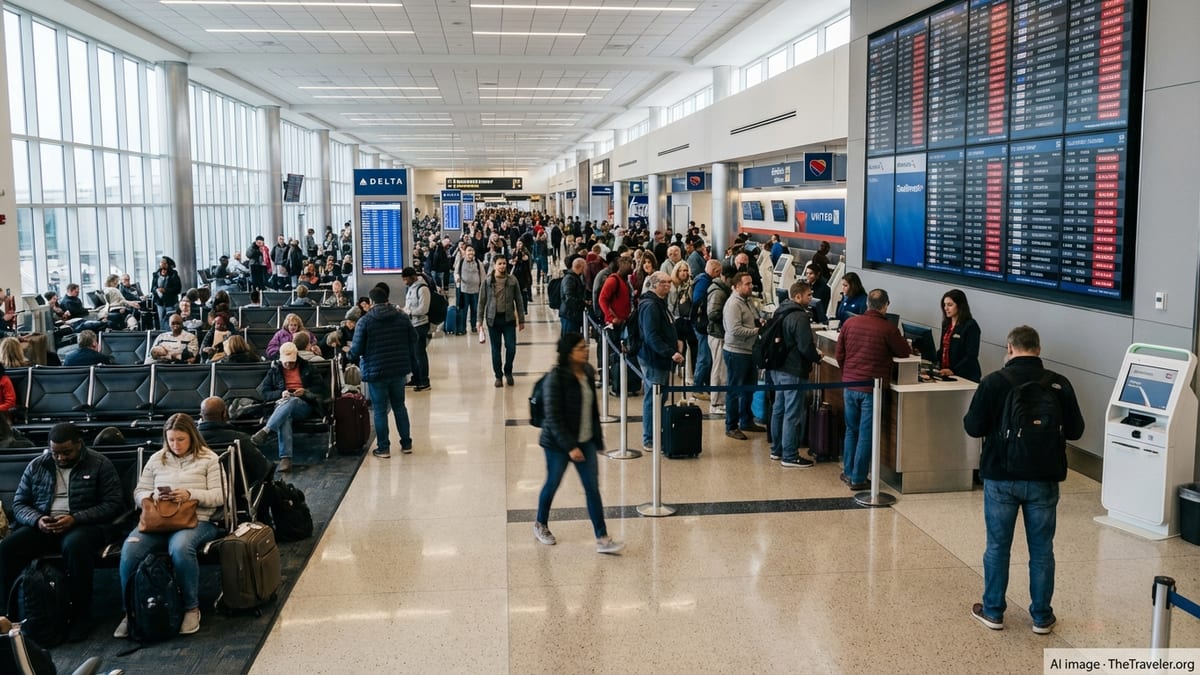
Washington Dulles International Airport in Virginia is facing significant travel disruption on May 17, with publicly available tracking data indicating around 40 to 50 departing and arriving flights running behind schedule across major domestic and international routes.
Get the latest news straight to your inbox!
Delays Hit Major Carriers and Key Routes
Operational data from flight tracking and schedule services show delays affecting a broad mix of airlines at Washington Dulles, including United Airlines, American Airlines, Delta Air Lines and several international partners. The disruption spans both departures and arrivals, impacting some of the airport’s busiest corridors such as services to New York, Chicago, Miami and European hubs including London and Frankfurt.
United, which maintains a large presence at Dulles, appears to be bearing a substantial portion of the disruption, with multiple late-running departures to domestic cities such as New Orleans and Charleston as well as long-haul services to Europe. Schedule tables and historical performance data indicate that routes from Dulles to Frankfurt and London are among those that have recorded elevated delay rates over recent seasons, heightening the impact when operations slow on a busy travel day.
American and Delta flights linking the Washington region with New York City and Chicago are also subject to knock-on effects when traffic bunches up at peak hours. Industry-wide reports note that congestion in the New York and Chicago airspace can quickly cascade across the network, complicating on-time departures from Dulles even when conditions at the field itself appear stable.
International connections are particularly vulnerable. Long-haul departures to London and Frankfurt, typically operated once or a few times per day, offer fewer back-up options if an aircraft or crew runs late. Passengers on these services may face more complex rebooking scenarios than travelers on higher-frequency domestic routes.
Capacity Constraints and Construction Add Pressure
Recent planning documents and performance analyses for Washington Dulles highlight a mix of structural pressures that can turn routine delays into broader disruption. Federal aviation reports show Dulles already ranks among US airports with relatively high average delay minutes per late flight, reflecting its role as a major hub with heavy banked traffic patterns and tight connection windows.
Separate federal capacity and construction impact reports point to ongoing and planned infrastructure projects at Dulles that are flagged as likely to reduce runway or taxiway capacity at certain phases. Even when works are carefully scheduled, reduced flexibility on the airfield can lengthen taxi times, restrict the number of movements per hour or limit options for resequencing aircraft when weather or traffic issues arise elsewhere in the system.
Regional air traffic control complexity also plays a role. Dulles shares the skies with Washington National and Baltimore/Washington International, and recent public documents about the Potomac terminal radar control facility underscore the dense volume of traffic funneled through the region. When flows to or from any of the three major Washington-area airports slow, controllers may need to meter departures and arrivals in ways that ripple through Dulles operations.
Analysts note that while a single late plane or crew can typically be absorbed into the schedule, a combination of dense schedules, capacity constraints and regional chokepoints can quickly produce the kind of multi-dozen flight disruption currently visible in tracking data.
Knock-on Effects for Passengers Across the Network
For travelers, the immediate impact is extended time on the ground at Dulles or at origin airports feeding into the hub. Passengers on delayed flights to New York and Chicago risk missing onward connections to destinations such as London, Frankfurt or Miami, which are often tightly timed within hub “banks” designed to maximize transfer options.
Travel disruption reports for the United States in the past year have consistently identified links between major hubs such as Chicago O’Hare, New York area airports and Dulles among the routes most exposed to delays. When any of these airports experience volume surges or weather-related slowdowns, missed connection rates can climb and rebooking demand can overwhelm available seats on later departures.
Long-haul passengers are particularly exposed. Travelers heading from Dulles to Europe who misconnect from feeder services may face multi-day wait times for replacement seats, especially during busy spring and summer travel periods. In some cases, rerouting through alternate hubs in the United States or Canada may be necessary, extending journey times by many hours.
Domestically, delays on high-demand corridors such as Washington to New York or Miami can spill over into evening schedules, as aircraft and crews arrive out of position for subsequent legs. Even flights that depart on time later in the day may encounter gate holds or airborne holding patterns if arrival flows remain constrained.
What Travelers Can Do During Today’s Disruptions
Consumer advocacy groups and air travel assistance services advise passengers flying into or out of Dulles to monitor their flight status closely when a wave of delays emerges across multiple carriers. Airline mobile applications, airport information boards and third-party trackers can provide updated departure and arrival times, although these may change frequently as operations evolve.
Public information from flight compensation and disruption specialists stresses that the cause of a delay often determines what remedies may be available. In the United States, there is no blanket legal requirement for compensation for delays, but carriers may offer meal vouchers, hotel stays or rebooking options depending on whether the issue stems from controllable factors such as maintenance or crew scheduling, or from weather and air traffic constraints that are typically categorized as outside airline control.
Travel experts often recommend that passengers with tight same-day connections, particularly to transatlantic destinations like London or Frankfurt, proactively contact their airline through digital channels or airport service desks if a significant hold is announced. In some cases, being rebooked onto an earlier alternative routing via another hub can reduce the risk of an overnight stranding.
For travelers yet to depart for Dulles, publicly available guidance suggests allowing extra time to reach the airport, as disruption days can produce longer lines at check-in, security and customer service counters. Those with flexible plans may consider looking at departures from other Washington-area airports if rebooking options are offered and ground transportation logistics permit.
Delays Highlight Broader Reliability Challenges
The cluster of late flights at Washington Dulles on May 17 adds to a broader picture of reliability challenges in the US air travel system. Recent nationwide performance snapshots have recorded thousands of daily delays across major hubs, as airlines and airports balance strong demand with infrastructure projects, staffing constraints and airspace congestion.
Historical metrics compiled by federal oversight bodies show that around one in three flights at Dulles has arrived late in recent years, with average delay times exceeding an hour for affected services. Separate disruption reports identify the Dulles to Frankfurt and Dulles to Newark routes among those with comparatively high percentages of delayed passengers, underscoring the vulnerability of both long-haul and short-haul operations that feed into crowded hubs.
Planned long-term investments for Dulles, including terminal expansions and concourse redesigns that are now under active discussion, aim to modernize the passenger experience and, over time, improve how aircraft and people move through the airport. However, these projects will take years to deliver and may intermittently constrain operations while construction is under way.
In the near term, passengers are likely to continue feeling the effects of days like today, when dozens of delayed departures and arrivals at a single hub reverberate across domestic and international networks. As travel demand remains strong, the margin for absorbing disruptions at Washington Dulles and other key airports remains tight, keeping punctuality in sharp focus for travelers making time-sensitive journeys.