


More news on this day
A Frontier Airlines pilot turned an hours-long weather delay into an impromptu pizza party after departing from Ronald Reagan Washington National Airport, ordering boxes of takeaway pizza to feed every passenger on board.
Get the latest news straight to your inbox!
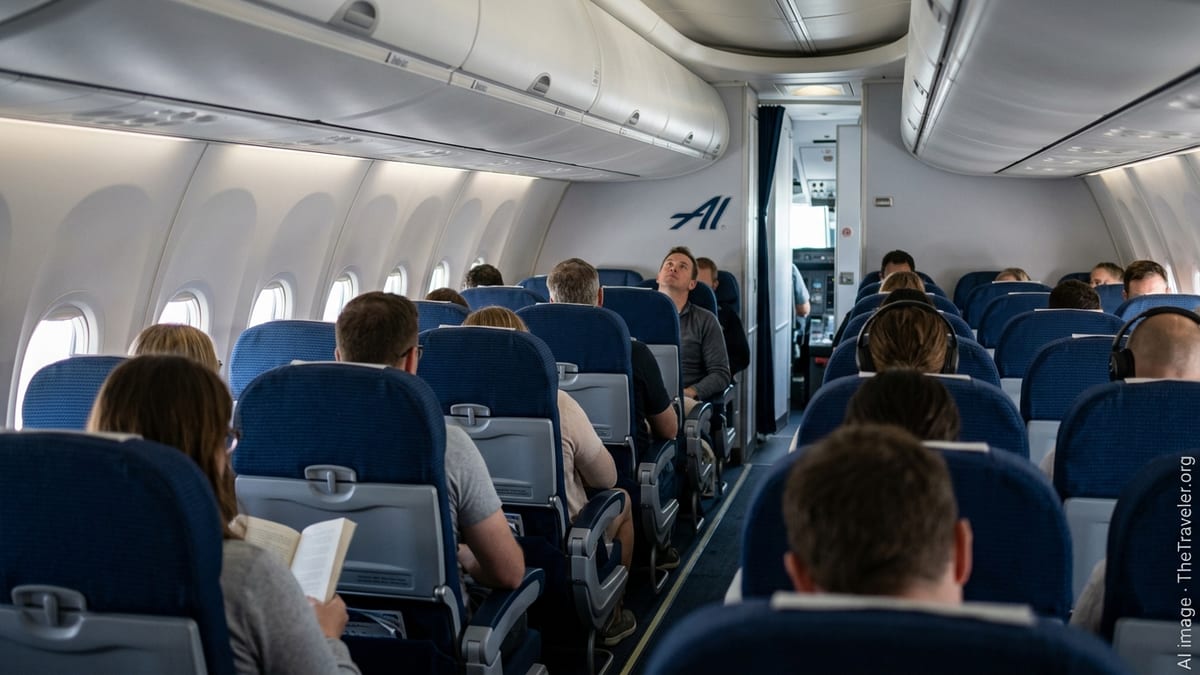
Storm Diversion Turns Routine Flight Into Viral Moment
The incident occurred on Frontier Airlines Flight 719, which departed Ronald Reagan Washington National Airport bound for Denver but was diverted hundreds of miles away to Cheyenne Regional Airport in Wyoming due to severe storms in the Denver area. Reports indicate the aircraft was already running late leaving Washington when deteriorating conditions near its destination forced the unplanned stop.
With passengers stuck on the ground in Cheyenne and unable to disembark while the airline waited out the weather and refueled the aircraft, the delay stretched on. According to published coverage, the pilot decided to act after it became clear that travelers would be confined to their seats for an extended period with limited access to food.
Instead of relying solely on standard snacks and soft drinks carried on board, the pilot contacted a local pizza outlet and arranged for dozens of pizzas to be delivered directly to the aircraft. Ground staff coordinated with the restaurant to clear the pies through airport security and get them out to the parked jet.
Witness accounts shared with news outlets describe the unusual sight of airline crew and airport workers carrying stacks of pizza boxes across the tarmac and up the aircraft stairs, transforming a tense delay into a shared moment of levity for the nearly full flight.
Dozens of Pizzas for More Than 150 Hungry Travelers
Reports indicate the pilot ordered close to 40 pizzas to feed roughly 160 passengers and crew members on the diverted flight. Passengers said boxes were opened along the aisle and slices passed row by row until everyone who wanted a piece had one.
Coverage of the episode notes that the pizzas were paid for out of the pilot’s own pocket, rather than charged to the airline. The delivery staff described the order as one of the largest they had handled, calling it highly unusual to be dispatched directly to an aircraft waiting on the ramp.
Social media posts from travelers captured photos of the pizza boxes stacked in the galley and crew members handing out slices. Many of those posts framed the gesture as a small but meaningful attempt to acknowledge the discomfort of an extended delay and show appreciation to passengers stuck in the situation through no fault of their own.
The spontaneous meal did not eliminate the wait, but it offered a welcome distraction. Passengers later told reporters that the atmosphere on board shifted from frustration to camaraderie as people chatted across the aisle and compared toppings while the storm system moved through Colorado.
Passenger Frustration With Delays Meets a Human Gesture
The pizza delivery resonated widely in part because it touched a nerve in ongoing public frustration over air travel delays in the United States. Washington’s Reagan National, one of the country’s most tightly constrained airports, has been cited in government testimony and transportation analyses as a chronic pinch point in the air traffic network, where congestion and weather disruptions can quickly ripple across the system.
When flights are held on the ground, federal rules require carriers to provide basic necessities such as water and access to restrooms after a set period of time. Beyond that, available information indicates the quality of the experience often depends on decisions made by individual flight crews and local station managers, including whether to hand out extra snacks or arrange more substantial food.
In this case, passengers portrayed the pilot’s decision to buy pizza as an example of the difference that small, discretionary gestures can make. Online reactions frequently contrasted the incident with accounts of delays in which travelers said they were left with minimal information and little more than a cup of water during lengthy ground holds.
At the same time, some commentators noted that such acts of generosity underscore how heavily airlines rely on front-line staff to manage customer expectations during disruptions, even when core operational issues like weather, airspace congestion, or staffing are beyond those employees’ control.
Part of a Broader Pattern of Goodwill During Disruptions
The Frontier diversion from Reagan National is not the only recent case in which a pilot has reached into a personal wallet to feed stranded travelers. Published coverage over the past decade highlights several similar stories, including a Delta captain ordering pizza during a storm-related ground stop in Atlanta and other crews arranging takeaway food for passengers diverted by weather or medical emergencies.
These episodes occur against a backdrop of broader scrutiny of how U.S. airlines handle irregular operations. Investigations and policy discussions have emphasized the importance of timely communication, access to food and water, and opportunities to deplane when feasible. Within that framework, individual crew initiatives such as ordering pizza stand out as memorable counterpoints to the more common narratives of frayed tempers and sparse amenities.
Industry analysts point out that while such gestures rarely change the length of a delay, they can significantly alter how it is remembered. A diversion that might otherwise be recalled as simply another frustrating interruption instead becomes a story passengers retell as a rare moment of hospitality at 30,000 feet or on a remote tarmac.
For airlines operating out of busy and delay-prone hubs like Reagan National, the viral attention around a pilot-funded pizza delivery also functions as informal advertising, showcasing a more personal side of air travel at a time when travelers often feel reduced to confirmation numbers and seat assignments.
A Small Slice of Positivity in a Crowded Travel Summer
The Reagan-origin flight’s pizza party circulated widely online at a time when domestic travel demand remains strong and forecasts point to crowded peak seasons across major U.S. airports. With limited room to expand capacity at Washington’s close‑in national airport, aviation planners have warned that even routine disruptions can cascade quickly, leaving flights stacked up on the ground or circling in holding patterns.
As airlines and regulators continue to debate long-term fixes for congestion and weather vulnerability, stories like the Frontier pilot’s pizza purchase illustrate how much of the passenger experience still hinges on individual choices in the cabin and cockpit. A delayed arrival time may look identical in an operations log whether or not pizza is served, but for those on board, the distinction can be significant.
For the travelers who left Reagan National expecting a standard evening flight to Denver and instead spent part of their journey sharing slices on the ground in Wyoming, the delay became an unexpected travel memory. While schedules eventually normalized and the aircraft continued on its way, the images of pizza boxes in the aisle offered a brief, lighthearted counterbalance to a summer of crowded gates and packed departure boards.