


More news on this day
Travelers at Philadelphia International Airport faced mounting frustration on Sunday as publicly available tracking data showed 28 delayed flights and at least one cancellation, disrupting a mix of domestic and international services operated by major U.S. carriers.
Get the latest news straight to your inbox!
Domestic And International Routes Affected Across Major Carriers
Flight-status dashboards for Philadelphia International Airport on May 17 indicated that delays were spread across both short-haul and long-haul routes, affecting passengers on American Airlines, Delta Air Lines, United Airlines, Southwest and several smaller operators. The pattern mirrors a broader uptick in operational strain reported at large U.S. hubs since the start of 2026, where tighter schedules and busy peak banks have left little room to absorb disruptions.
American Airlines, which uses Philadelphia as a key northeastern hub and transatlantic gateway, appeared to bear a sizeable share of schedule pressure, with a number of departures to major domestic cities and European destinations posting late departures or extended gate holds. Data from recent weeks already showed elevated average delay times on certain transatlantic departures from Philadelphia, adding to a sense of uncertainty for travelers relying on connections through the airport.
Other carriers were not spared. Delta Air Lines and United Airlines saw delays on services linking Philadelphia to major inland hubs, while Southwest experienced schedule slippage on popular short-haul leisure and visiting‑friends‑and‑relatives routes. For passengers, the mix of affected flights translated into missed connections, extended layovers and a scramble to rebook scarce seats later in the day.
The disruptions also touched both departures and arrivals, with some inbound flights from other congested U.S. hubs arriving late and creating knock‑on effects for the aircraft and crew assigned to subsequent legs. That ripple effect is particularly acute at airports such as Philadelphia that combine heavy domestic banks with long‑haul international departures clustered in the late afternoon and evening.
Operational Strain At One Of America’s Most Delay‑Prone Airports
The latest wave of delays landed at an airport that has long struggled with congestion. Publicly available federal analyses already describe Philadelphia International as one of the more delay‑prone large airports in the United States, with runway and airspace constraints interacting with dense hub schedules. A multiyear infrastructure and airfield‑configuration program remains in progress, with runway closures and phased works periodically limiting capacity during overnight and early‑morning windows.
Recent aviation activity reports for early 2026 show that the airport continues to handle heavy traffic volumes, with more than 1.8 million passengers moving through in a typical winter month and domestic flights accounting for the vast majority of that total. International traffic has also been recovering, particularly on transatlantic routes, further tightening banks around peak departure times and increasing the likelihood that small operational issues evolve into broader schedule disruptions.
Industry and academic analysis of U.S. flight‑delay patterns since the pandemic points to an evolving mix of causes, ranging from staffing imbalances in key technical roles to heightened sensitivity at security checkpoints and increasing weather volatility. When those factors interact with construction‑related capacity reductions or high‑density hub operations, airports such as Philadelphia can quickly tip into prolonged periods of delay.
Philadelphia’s role as a connecting hub amplifies these pressures. Missed or tight connections on eastbound evening departures to Europe can translate into complex reaccommodation scenarios, given that many long‑haul flights operate only once per day. As seen in recent days on some high‑profile transatlantic services, extended ground delays at origin can cascade into missed onward connections, hotel stays and last‑minute rebookings for travelers on both sides of the Atlantic.
Knock‑On Effects Across The U.S. Aviation Network
The disruptions in Philadelphia are unfolding against a backdrop of strain at other major U.S. gateways, feeding into a national network that has been operating close to its limits. Recent days have seen significant delay and cancellation totals at Chicago O’Hare, while coverage of New York’s LaGuardia Airport has highlighted triple‑digit delay counts and multiple cancellations in a single day. Those hubs are tightly linked to Philadelphia via dense shuttle‑style schedules, meaning irregular operations at one airport can quickly be felt at the others.
Federal aviation data and recent statements about capacity management at major hubs suggest that regulators and operators are attempting to head off a repeat of previous summers when chronic congestion translated into poor on‑time performance. Measures such as temporary limits on peak‑day operations at heavily trafficked airports are intended to reduce the risk of gridlock but can also concentrate pressure on secondary hubs when flights are rerouted or retimed.
For travelers connecting through Philadelphia on domestic itineraries, the immediate impact of today’s disruptions is most often measured in hours of delay rather than outright cancellations. Yet for international passengers, even modest schedule changes can have outsized consequences when onward flights operate infrequently or when regulatory frameworks on other continents impose strict limits on crew duty times and curfews at destination airports.
As congestion at one airport ripples into others, itineraries that rely on tight connections across several hubs are particularly vulnerable. This has been evident in recent weeks on routes linking Philadelphia to European gateways, where arriving late from a domestic feeder flight can mean a missed overnight departure and a forced 24‑hour wait for the next available seat.
What Today’s Disruptions Mean For Stranded Passengers
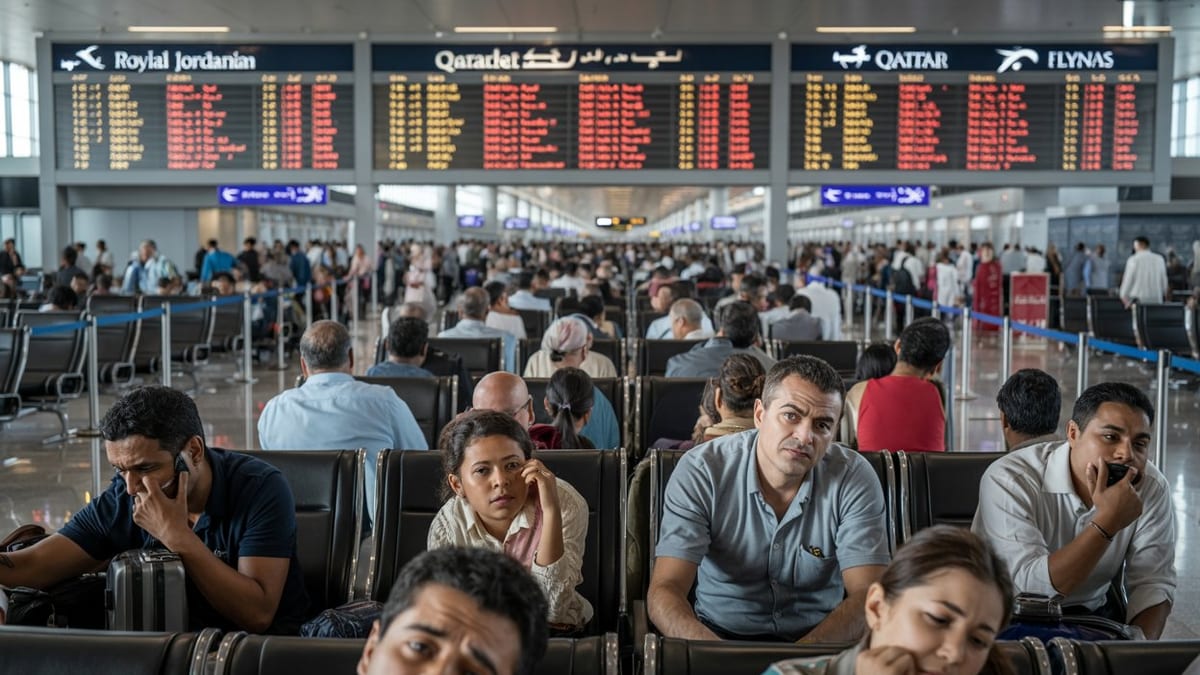
For those stuck in terminals at Philadelphia International Airport on Sunday, the operational jargon of capacity limits and network optimization translates into crowded departure halls, long customer‑service queues and difficult choices about whether to wait, rebook or reroute through another hub. Social media posts and traveler reports over recent days describe long delays on some overnight transatlantic services from Philadelphia, with passengers citing overnight waits, limited food vouchers and anxiety over missed events at their destinations.
Travel‑rights organizations and consumer‑advocacy groups generally advise passengers facing significant delays to document their experience carefully, keep boarding passes and receipts, and check airline policies for provisions on meals, hotel stays and refunds. In some cases involving flights to or from Europe, additional protections may apply under European Union regulations, especially where European carriers or EU airports form part of the itinerary.
Passenger‑rights information also notes that airlines may offer rebooking on later flights or alternative routes when cancellations occur, though options can be limited on peak‑travel days when most services are already heavily booked. At a hub such as Philadelphia, where many flights serve as spokes feeding larger banks, securing an alternative seat may require creative routing through other congested airports.
Against that backdrop, travel planners recommend allowing greater buffers for connections through delay‑prone hubs like Philadelphia, particularly on itineraries that finish with long‑haul or last‑flight‑of‑the‑day segments. The experience of stranded passengers this weekend underscores how quickly a small number of delayed departures and a single cancellation can unravel travel plans across a wide swath of the U.S. and international aviation network.