


More news on this day
Travelers across Germany experienced fresh disruption this weekend as four flights operated by Air Canada, Air France, United Airlines, and Lufthansa were suspended at the country’s key aviation hubs in Munich and Frankfurt, causing knock-on delays throughout the domestic and international network.
Get the latest news straight to your inbox!
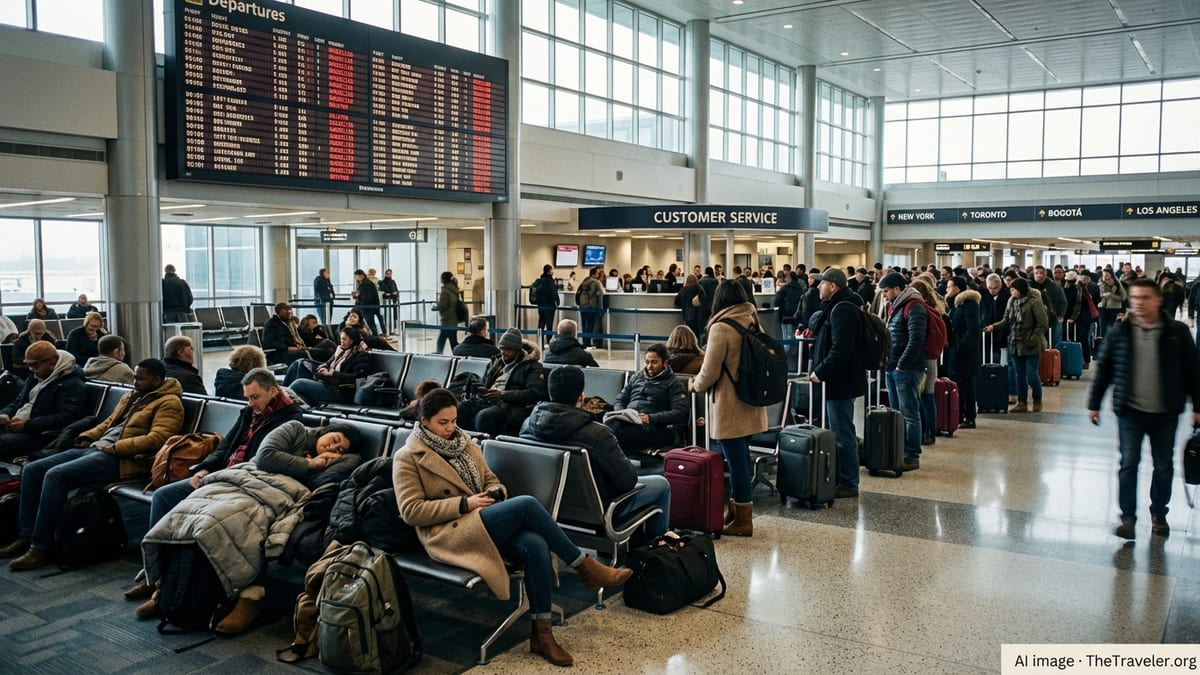
Fresh Wave of Cancellations at Germany’s Busiest Airports
The latest suspensions add to a year of recurring operational challenges at German airports, particularly at Frankfurt, the country’s largest hub, and Munich, its second-busiest gateway. Both airports serve as cornerstone bases for Lufthansa and key partners in the Star Alliance and SkyTeam networks, meaning that even a small number of cancellations can rapidly affect connecting traffic across Europe and beyond.
Publicly available flight-status data for mid-May shows targeted cancellations and delays on routes linking Munich and Frankfurt with other European and long haul destinations. Against this backdrop, the suspension of four flights run by Air Canada, Air France, United Airlines, and Lufthansa further tightened capacity, complicating rebooking options for travelers relying on these hubs for onward journeys.
Industry coverage indicates that disruptions at Frankfurt and Munich often ripple outward because many flights operate as codeshares. A cancellation by one airline can affect partner carriers sharing the same aircraft or time slots, leaving passengers on different ticket stocks facing similar delays, missed connections, or last minute rerouting.
While the current four suspended services account for only a fraction of daily traffic, they come at a time when airlines and airports are already working through residual backlogs from earlier strikes, staffing constraints, and technical issues in the wider European air traffic system.
Impact on Travelers Across Domestic and Long Haul Networks
The immediate impact for passengers has been longer queues at transfer desks, extended connection times, and rebooked itineraries that often route through alternative European hubs. According to recent reports on disruption patterns at Frankfurt and Munich, even limited cancellations can lead to hundreds of delayed flights in a single day as aircraft and crews fall out of position and must be reassigned across the schedule.
Travel and aviation trackers show that previous strike action and operational disruptions in recent weeks already led to significant cancellations at both airports, leaving many travelers with rebooked trips or unused vouchers that are now being brought forward as demand rises. The latest four-flight suspension fits into this broader picture of a system operating with little spare capacity to absorb additional shocks.
For international passengers flying on itineraries that combine North American and European sectors, the suspension of flights touching Munich and Frankfurt can mean missed onward legs to destinations in Central and Eastern Europe, the Middle East, and Africa. Publicly available information suggests that when hub operations are constrained, carriers frequently prioritize keeping long haul services running, which can result in short haul feeder flights being adjusted or canceled at short notice.
Domestic travelers within Germany have also reported challenges when trying to switch from affected flights between Munich, Frankfurt, and other cities onto alternative services. Limited remaining seat availability, particularly around weekends and holiday periods, has led some passengers to turn to rail links or overnight stays to complete their journeys.
Operational Pressures Behind the Suspended Flights
Published analyses of recent German aviation disruptions highlight several overlapping factors that can contribute to short notice cancellations. These include crew availability following earlier strike actions, aircraft positioning after previous days of irregular operations, and continuing bottlenecks in European air traffic control that can force airlines to thin out schedules on specific routes.
In earlier incidents this year, Lufthansa and partner carriers operating from Frankfurt and Munich faced large scale cancellations and delays following coordinated industrial action and system outages. Although the current event involves a much smaller number of flights, it appears against the backdrop of a still-recovering schedule where aircraft utilization and staffing rosters remain tightly balanced.
Reports from passenger rights organizations note that Frankfurt and Munich are particularly sensitive to operational disruptions because of their role as high density connecting hubs. When a small number of flights are suspended, it can trigger missed connections that cascade into additional schedule changes, even where other flights technically remain able to operate.
Aviation analysts also point to seasonal factors, including higher spring and early summer demand, as amplifying the effect of even limited cancellations. With planes flying close to capacity, rebooking an entire flight load of passengers onto alternative services becomes increasingly difficult and often stretches across multiple days.
Passenger Rights and Options Under European Rules
Consumer advocates emphasize that travelers affected by suspensions and extensive delays at Munich and Frankfurt may have protections under European passenger rights regulations, depending on the precise cause of the disruption. Under the established EU framework, passengers on flights departing from EU airports or operated by EU carriers are often entitled to care such as meals, refreshments, and accommodation during long waits.
If the underlying cause is considered within the airline’s control, compensation may also be available for significant delays or cancellations, subject to distance thresholds and notice periods. Publicly available guidance from passenger rights platforms notes, however, that events such as air traffic control restrictions, severe weather, or certain security-related issues can be classified as extraordinary circumstances, limiting eligibility for cash payouts while still obliging airlines to provide rebooking or refunds.
Travel specialists advise that passengers should retain documentation such as boarding passes, booking confirmations, and receipts for any unexpected expenses incurred while stranded or rerouted. These records can be useful when filing claims with airlines or through third party assistance services that help travelers navigate compensation procedures.
Given the complex interplay between airline responsibility and external factors in Europe’s congested airspace, passengers are encouraged to check both carrier policies and official guidance on their specific route and circumstances rather than assuming they are automatically eligible for a fixed compensation amount.
Advice for Travelers Using Munich and Frankfurt in the Coming Days
In light of the latest suspensions and the broader context of recent disruptions at both airports, travel experts recommend that passengers with upcoming itineraries involving Munich or Frankfurt build additional buffers into their plans. This can include allowing longer connection times between flights, avoiding the tightest possible minimum transfer windows, and considering earlier departures where flexibility exists.
Publicly available travel advisories often stress the importance of monitoring flight status closely in the 24 hours before departure through airline apps, airport information boards, and carrier notifications. Because some adjustments are made overnight as operations teams rebalance aircraft and crew, itineraries that appear confirmed one day may still experience schedule changes before check in opens.
For those with critical time-sensitive travel, such as onward cruises, events, or fixed tour departures, some analysts suggest evaluating backup options via alternative hubs like Amsterdam, Paris, or Zurich, even if that requires a modest detour. While these alternatives may not be immune to disruption, diversifying routings can sometimes reduce exposure to bottlenecks at any single hub.
As Germany’s two main gateways continue to adjust schedules and clear residual backlogs, travelers are likely to see pockets of irregular operations alongside largely normal traffic flows. The suspension of four flights involving Air Canada, Air France, United Airlines, and Lufthansa serves as another reminder that Europe’s aviation system remains vulnerable to localized problems that can quickly develop into multi airport challenges for passengers.