


More news on this day
Air travel across Europe faced another difficult day on May 17 as flight-tracking data pointed to 37 cancellations and at least 1,339 delays, disrupting operations at major hubs in Germany, the United Kingdom, France, Switzerland and Türkiye and affecting carriers including British Airways, Lufthansa, Finnair, SAS, Norwegian and Pegasus.
Get the latest news straight to your inbox!
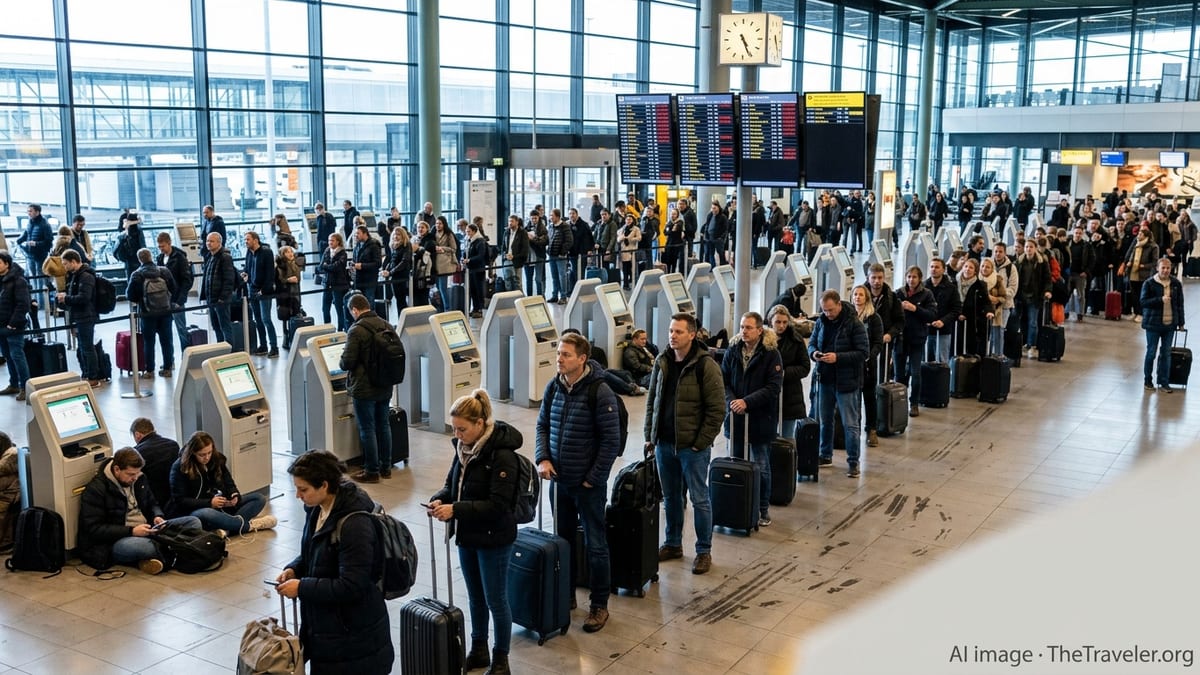
Major Hubs From Munich to Istanbul See Knock-On Delays
Publicly available aviation dashboards and regional media reports indicate that disruption has been concentrated around some of Europe’s busiest airports, with Munich, London, Paris, Zurich and Istanbul all reporting elevated levels of delayed and cancelled services. The figures for May 17 are lower than the continent’s worst recent disruption days but still high enough to create long queues, missed connections and operational challenges for airlines and airports alike.
In London, local coverage described terminals at Heathrow and London City under pressure after more than 400 flights were reported delayed or cancelled, leaving thousands of passengers facing extended waits and schedule uncertainty. The impact spread across both short haul and long haul networks, with services to European cities and transatlantic destinations all affected as airlines struggled to reset their timetables.
At the same time, flight-status tools tracking Istanbul and other Turkish airports recorded a growing list of late-running departures and arrivals, with some services arriving more than two hours behind schedule. Istanbul remains one of the busiest hubs in the Eurocontrol network, so even a modest rise in delays can quickly ripple across airlines using the airport as a connection point between Europe, the Middle East and Asia.
Data from Paris Charles de Gaulle and Zurich suggested more contained disruption but still showed a pattern of longer-than-usual average delays compared with recent days. While the overall number of outright cancellations at these hubs remained limited, the cumulative effect of successive late departures and arrivals complicated aircraft rotations and crew scheduling across several European carriers.
Airlines From Legacy Giants to Low-Cost Carriers Affected
The disruption on May 17 did not spare any particular category of airline. Full-service network operators such as Lufthansa, British Airways, Finnair and SAS appeared alongside low-cost and leisure-focused carriers including Norwegian and Pegasus in flight-status data listing late and cancelled services. This mirrors a broader trend in 2026, where operational stress has tended to cut across business models and route types.
For Lufthansa and its partners, the latest delays add to a challenging year that has already included large-scale disruption linked to industrial action in February and April. Earlier walkouts led to hundreds of cancellations at the group’s Frankfurt and Munich hubs, and analysts note that it can take weeks for aircraft and crews to be fully repositioned, leaving networks more vulnerable to fresh shocks.
In the UK, publicly available information suggests that British Airways has been managing a combination of jet-fuel supply issues earlier in May and knock-on operational constraints at Heathrow and Gatwick. While fuel pressures have reportedly eased, the fallout contributed to elevated cancellation counts in the first half of the month and increased sensitivity to any new disruption, including on May 17.
Nordic carriers have not been immune either. Finnair and SAS, which rely heavily on tight connection windows at their respective hubs, can see their schedules unravel quickly when en route delays push aircraft outside planned turnaround slots. Even if individual flights are only 30 to 40 minutes late, the cumulative effect on aircraft rotations across the day can leave some departures arriving at their destinations several hours behind schedule.
Causes Range From Weather to Network Strain
The specific causes behind the 37 cancellations and 1,339 delays recorded across Europe on May 17 appear to be mixed rather than driven by a single major event. Recent Eurocontrol and airport punctuality reports highlight how a combination of factors, from local weather conditions and airspace constraints to staffing shortages and late-arriving aircraft, has been weighing on on-time performance in early 2026.
Several airports, including London Heathrow and Paris Charles de Gaulle, have faced periods of low visibility, strong winds or heavy showers in recent weeks, which can trigger stricter separation rules between aircraft and temporarily reduce runway capacity. When this happens, flights may still operate but with longer gaps between take-offs and landings, generating queues both in the air and on the ground.
Operational reports also point to lingering staffing and resourcing challenges across parts of the aviation sector. Ground-handling teams, security screening and air traffic control units in some regions continue to adjust to higher traffic volumes after the winter period, and any bottleneck in one part of the system can push back departure times even when aircraft and crews are available.
Industry analyses note that tight scheduling practices can magnify the impact of relatively small disruptions. As airlines seek to maximise aircraft utilisation, turnaround times have in many cases been cut to the minimum, leaving limited slack in the system. When one flight arrives late, there is often little margin to recover the time before the same aircraft is due out again, increasing the likelihood of rolling delays throughout the day.
Passenger Impact and Rights Under European Rules
For passengers, the immediate impact of the latest wave of delays and cancellations has been measured in missed meetings, disrupted holidays and long hours spent waiting in terminals. Consumer advocacy organisations and specialist claims firms report that they have continued to see elevated volumes of enquiries in recent weeks, reflecting ongoing volatility in Europe’s air travel network.
Under European Union Regulation 261 and the UK’s retained passenger rights framework, travellers may be entitled to care provisions or financial compensation when flights are cancelled at short notice or arrive with significant delays, depending on the cause. Publicly available guidance emphasises that compensation is more likely when problems stem from airline-controlled issues such as crew or fleet shortages, and less likely when disruption is linked to extraordinary circumstances such as severe weather or airspace closures.
Travel advisors recommend that affected passengers keep boarding passes and booking confirmations, monitor airline communication channels closely and retain receipts for meals, accommodation or alternative transport arranged during a disruption. These documents can be important when submitting claims to airlines or, if necessary, escalating cases to national enforcement bodies or alternative dispute resolution schemes.
Observers also note that many travellers remain unaware of their rights, particularly when journey itineraries combine flights from multiple carriers or connect through non-EU hubs like Istanbul. In such cases, the applicability of EU or UK rules can depend on a combination of factors including the operating airline, the point of departure and whether the disruption occurred on an outbound or inbound leg.
Outlook for Summer Travel Across Europe
The latest figures on May 17 add to a pattern of recurring disruption that has characterised European aviation in early 2026. While punctuality reports for February and March indicated that many major airports were still operating with on-time performance rates above 70 to 80 percent, the number of days with large clusters of delays and cancellations has been higher than airlines would like as they look ahead to the peak summer season.
Analysts suggest that the coming months could prove challenging if traffic volumes continue to rise faster than improvements in staffing, infrastructure and air traffic management capacity. Recent industrial disputes in Germany and elsewhere have underlined how quickly a fragile equilibrium can tip into widespread disruption when additional pressure is placed on the system.
For now, travel experts generally advise passengers planning European trips in late spring and summer 2026 to allow extra time for connections, opt for longer layovers where possible and monitor their flight status closely in the 24 to 48 hours before departure. Booking earlier flights in the day, when networks are less affected by accumulated delays, may also reduce the risk of severe schedule changes.
Despite the latest wave of cancellations and delays, demand for air travel across Europe remains robust, supported by strong tourism and business traffic. Airlines and airports are under pressure to demonstrate that they can deliver more reliable operations as the busy summer period approaches, but the experience of May 17 suggests that travellers should continue to prepare for a degree of unpredictability in the months ahead.