


More news on this day
Hundreds of travelers were left stranded at Amsterdam Schiphol Airport in the Netherlands after a fresh wave of disruption saw around 255 flights delayed and 20 canceled, snarling services on busy routes to London, New York, Paris and other major hubs across Europe and North America.
Get the latest news straight to your inbox!
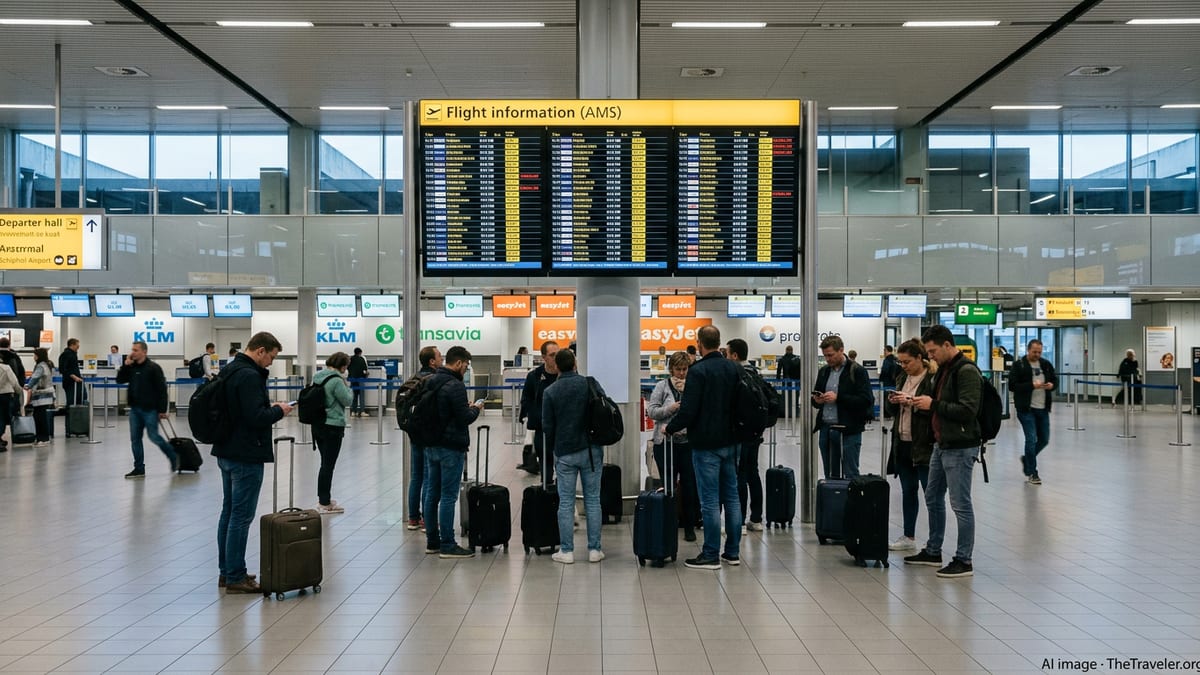
Heavy Disruption at One of Europe’s Busiest Hubs
Operational data from flight tracking and airport monitoring platforms for early June 2026 indicate that Amsterdam Schiphol, the Netherlands’ primary international gateway, has again become a focal point for regional aviation disruption. Recent figures show well over 250 delayed departures and arrivals and around 20 flight cancellations within a single operating day, a level of interruption that is significant for a hub handling more than a thousand scheduled movements daily.
The irregular operations have left departure boards filled with rolling delay notices and a cluster of cancellations, particularly affecting short haul links to major European capitals and selected long haul services. Passengers connecting through Schiphol have reported missed onward flights and unplanned overnight stays as aircraft and crews fall out of position.
While Amsterdam regularly absorbs minor schedule changes, the scale of the latest disruption has pushed the airport’s tightly timed bank of transfers under strain. Even a relatively small proportion of cancellations can generate large numbers of stranded passengers at a hub where many travelers are relying on narrow connection windows to reach destinations across Europe, Africa, Asia and the Americas.
KLM and Partner Airlines See Schedules Derailed
The disruption has hit flag carrier KLM and its transatlantic and European partners particularly hard. Publicly available operational summaries for early June point to KLM canceling a cluster of flights and suffering dozens of late departures and arrivals from its Schiphol base, with knock on effects on partner airlines using the hub for connections.
Long established transatlantic partners such as Delta, along with European carriers including British Airways and Lufthansa, have also experienced delays on services routed through or feeding into Amsterdam. Flights between Schiphol and London, New York and Paris feature prominently among those affected, reflecting the intensity of traffic on these corridors and their importance for both business and leisure travelers at the start of the peak summer season.
Published coverage of Europe wide disruption in recent days shows that Schiphol’s problems are part of a broader pattern of strain across the continent’s aviation network. Weather related constraints, capacity limits in crowded airspace and lingering staffing challenges at some airports and airlines have all combined to leave schedules more vulnerable to spikes in demand or minor technical issues than before the pandemic.
Passengers Face Long Queues, Missed Connections and Overnight Stays
For travelers caught up in the latest wave of disruption, the statistics translate into long queues at transfer desks, packed seating areas and uncertainty over when they will be able to continue their journeys. Reports from recent days describe connecting passengers arriving late into Schiphol only to watch their onward flights depart without them, with limited remaining capacity on alternative services.
Those whose flights were canceled outright have often found that rebooking options are constrained, particularly on heavily trafficked routes. At the height of the disruption, some passengers have had to wait until the following day or later to secure a new seat, prompting unscheduled overnight stays in airport hotels or nearby accommodation.
Baggage handling systems and ground operations have also come under pressure as aircraft arrive and depart outside their usual slots. Earlier episodes at Schiphol this year showed how quickly thousands of bags can become misaligned with passengers during periods of disruption. While the current issues have centered on delays and cancellations rather than a specific baggage system failure, travelers have nevertheless reported longer waits at carousels and concern about checked luggage making tight connections.
Causes Point to Operational Pressure Rather Than Single Trigger
Unlike previous crises at Schiphol linked clearly to winter storms, dense fog or isolated technical failures, publicly available data and analysis around the latest disruption point to a combination of operational factors rather than a single dramatic incident. Flight monitoring services show a pattern of rolling delays building through the day as early schedule slippage propagates across the network.
Industry commentators have highlighted the sensitivity of large hub operations to relatively small imbalances in aircraft and crew availability. When a morning wave of flights is delayed, later rotations can be pushed back or canceled altogether once crew duty limits are reached or maintenance slots are missed. At a hub such as Schiphol, where multiple airlines coordinate connections in tightly defined banks, this ripple effect can be felt across several carriers and alliance partners.
Recent months have also seen Europe wide strains from air traffic control restrictions, industrial action in parts of the region and high demand for leisure travel. These broader pressures provide the backdrop for the current situation at Schiphol, where a day of adverse conditions or tight capacity can quickly transform into a wider disruption that strands hundreds of travelers waiting for new itineraries.
What the Disruption Means for Upcoming Summer Travel
The timing of the latest delays and cancellations at Amsterdam raises concerns for travelers planning to pass through the airport in the coming weeks, as summer schedules ramp up and aircraft loads increase. Aviation analytics from early June suggest that European traffic volumes are edging closer to, and in some cases surpassing, pre pandemic levels, leaving less room in the system to absorb operational shocks.
Public travel guidance compiled in response to recent episodes at Schiphol and other European hubs recommends that passengers with upcoming trips allow additional time for transfers, avoid the tightest possible connection windows where alternatives exist and stay in close contact with their airline’s official channels for updates. Those on complex itineraries may benefit from monitoring real time flight tracking data on the day of travel to identify emerging bottlenecks.
Regulations governing passenger rights in the European Union, notably EC 261, continue to apply when flights are significantly delayed or canceled. Consumer advocates advise travelers to retain boarding passes, booking confirmations and receipts for meals or accommodation purchased as a result of disruption, to support any subsequent claims. With Schiphol again in the spotlight for irregular operations, such protections are likely to remain a central part of the conversation as the busy 2026 summer season unfolds.