


More news on this day
Hungary is preparing a far-reaching rail modernisation drive worth about €10 billion, with new tram-train links, battery-powered traction and metro-style extensions in Budapest at the heart of a strategy to cut road traffic and meet European climate targets.
Get the latest news straight to your inbox!
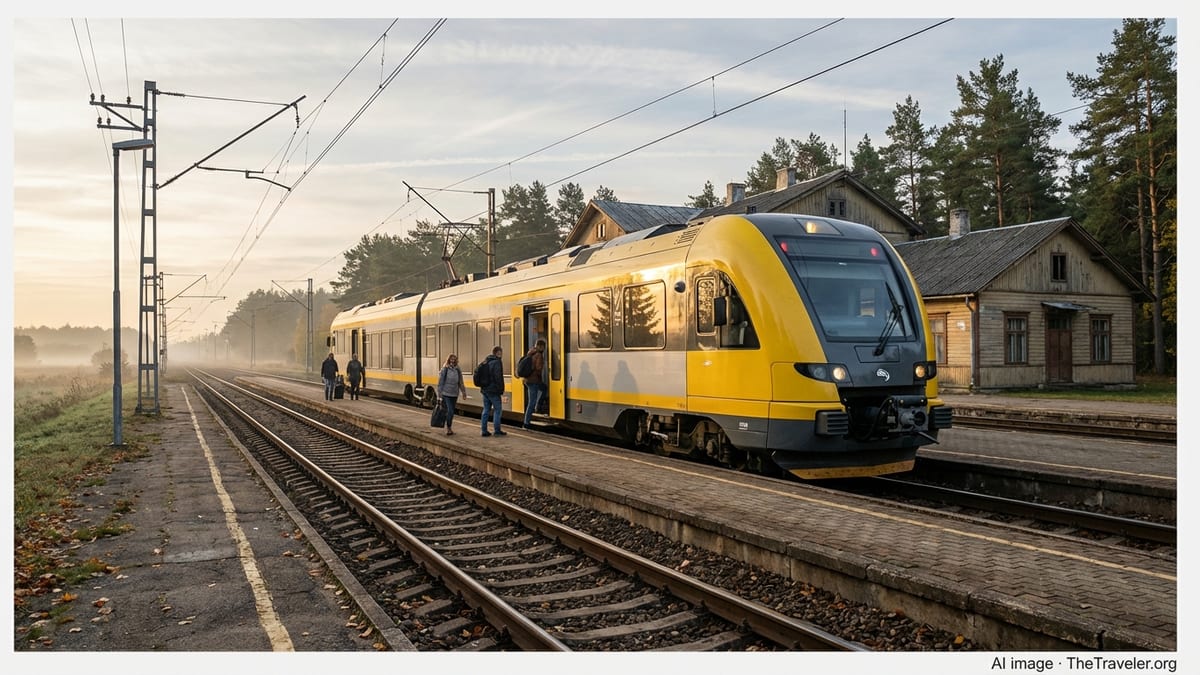
EU-backed funding unlocks next wave of Hungarian rail projects
Publicly available European Union documents show that Hungary’s revised recovery and resilience plan, endorsed by EU institutions in June and approved by member states in July 2026, allocates roughly €10 billion for reforms and investments, with rail at the centre of the transport component. The money combines grants and loans under the NextGenerationEU recovery facility, to be committed by August 2026.
The rail package is positioned to complement separate long-term schemes such as the Budapest to Belgrade corridor and national track renewals, shifting emphasis to passenger-focused regional lines, urban rail, and cross-border connectivity. Project descriptions in EU and Hungarian government material highlight modernisation of lines, new rolling stock and digital signalling aimed at raising line speeds and improving reliability for both commuters and long-distance passengers.
According to these public plans, Hungary’s authorities are seeking to align the new investments with the Trans-European Transport Network policy, focusing works on key passenger routes and suburban corridors around Budapest and regional hubs like Szeged. Upgrades are expected to be staged through the end of the decade, with early contract awards anticipated from 2026 as EU funds are unlocked.
Rail industry observers note that the scale of the programme is significant for a country of fewer than 10 million people, reflecting an attempt to accelerate the shift from road to rail in both daily commuting and intercity travel, while also updating infrastructure that in many cases dates back several decades.
Tram-trains move from pilot to network strategy
Hungary’s first tram-train system between Szeged and Hódmezővásárhely, which opened in late 2021, is widely seen as the proof of concept for the new investment wave. Public project summaries describe how that scheme links urban tram tracks in Szeged with upgraded heavy rail to Hódmezővásárhely, allowing through-running low-floor vehicles and removing the need for passengers to transfer between modes.
Official Hungarian project documents and subsequent government decisions outline plans to extend this model, with studies for additional tram-train style services and further improvements around Szeged. Discussions in transport planning circles increasingly frame tram-train technology as a way to serve small and mid-sized cities without the cost of full metro networks, using existing track beds and sharing infrastructure with conventional trains where feasible.
The new €10 billion rail envelope is expected to support at least two further tram-train style corridors, based on domestic planning material and references in national mobility strategies. Candidate routes that have attracted attention among transport specialists include links from Szeged toward Makó and other Csongrád-Csanád County towns, as well as potential hybrid operations on peripheral commuter lines into Budapest.
While final alignments and technical specifications have not yet been fully disclosed, policy papers suggest that future tram-train schemes would combine higher line speeds on interurban stretches with dense stop spacing in built-up areas, mirroring the operational pattern already seen on the Szeged tram-train. This approach aims to make rail attractive for short regional trips that today are largely made by car.
Battery traction and low-emission rolling stock gain ground
Alongside fixed infrastructure, the Hungarian plan gives growing prominence to alternative traction technologies. European Commission working documents on Hungary’s recovery plan and related investment annexes indicate that part of the funding will go towards decarbonising non-electrified lines, particularly secondary routes where full catenary installation would not be cost-effective.
Industry reporting and EU research calls point to battery-electric multiple units as a front-running solution for these corridors. Battery trains can draw power from overhead lines on electrified trunk sections, then operate on stored energy over unelectrified branches, which reduces infrastructure spending while cutting diesel use. This model is already being tested in several EU member states and is referenced in European transport funding programmes that Hungary is eligible to access.
In the Hungarian context, battery traction is seen as a way to sustain passenger services on lightly used rural lines that have historically faced the risk of closure. By pairing modern rolling stock with modest track and signalling improvements, planners expect to raise service quality without committing to full-scale electrification. Publicly available material on pilot studies indicates that candidate lines include regional routes in Transdanubia and the Great Plain, where shorter distances between junctions and branch termini favour battery operation.
Plans for low-emission rolling stock also extend to urban rail. Investment documents on Budapest’s tram, trolleybus and suburban rail networks reference upgraded power supply systems and the procurement of modern vehicles with energy-efficient traction equipment, regenerative braking and improved accessibility, supporting the city’s broader climate and air quality objectives.
Budapest pushes metro-style suburban rail extensions
The Hungarian capital is expected to be one of the main beneficiaries of the rail investment plan, especially through projects that blur the line between metro and suburban rail. Publicly available planning documents describe long-discussed proposals to connect and modernise the H5, H6 and H7 suburban rail lines, often known as HÉV, into a continuous north-south urban rail tunnel beneath central Budapest.
European Commission annexes linked to Hungary’s recovery funding refer to upgrades of these lines, including new power supply systems, station modernisation and partial segregation from road traffic. While the full cross-city tunnel remains a longer-term objective, early phases focus on renewing ageing infrastructure, improving frequencies and simplifying transfers to the existing metro network.
Parallel to the HÉV schemes, Budapest’s mobility plans envisage targeted tram extensions and capacity improvements on busy radial corridors. Enhancements to substations, overhead lines and signalling are intended to allow more frequent services, particularly on lines feeding into major interchange hubs and railway stations. Together, these measures would approximate metro-style service levels on surface corridors at a lower cost than building entirely new underground routes.
These urban projects are framed as essential for managing rising passenger numbers and supporting denser development along rail corridors. Studies on mobility in Budapest indicate that better-integrated tram, metro and suburban rail services can significantly increase access to jobs and services within 15 minutes of home, a key objective of local and EU transport policy.
Regional growth and tourism in focus along upgraded corridors
Beyond the capital, the €10 billion programme is closely tied to goals of regional development and tourism promotion. Transport and regional policy documents emphasise that many of the lines earmarked for upgrade serve university towns, spa resorts and heritage cities that rely heavily on domestic and cross-border visitors.
Upgrades on routes in southern Hungary, including those connecting Budapest with Szeged and onward toward Serbia, are expected to improve journey times and reliability for both everyday travellers and international passengers. Combined with tram-train extensions and refurbished stations, such improvements could make it easier for visitors to reach city centres without a car, supporting local efforts to reduce congestion and improve public space.
In central and western regions, better regional rail links are also seen as a tool to support smaller towns that have struggled with outmigration. By improving access to jobs and education in larger urban centres while maintaining convenient return trips, the rail investments aim to make rail a practical alternative to daily car commuting.
Travel industry observers note that, if delivered as outlined in public planning material, Hungary’s rail modernisation could reshape how both residents and visitors move around the country. The combination of tram-train services, battery-powered rolling stock and metro-style urban extensions positions rail as the backbone of a more climate-conscious mobility system, offering new possibilities for low-carbon tourism and everyday travel alike.