


More news on this day
Central Asia’s airports are stepping into the global spotlight as new rankings highlight the performance of teams at Almaty International Airport, Heydar Aliyev International Airport in Baku, and other key hubs across the region.
Get the latest news straight to your inbox!
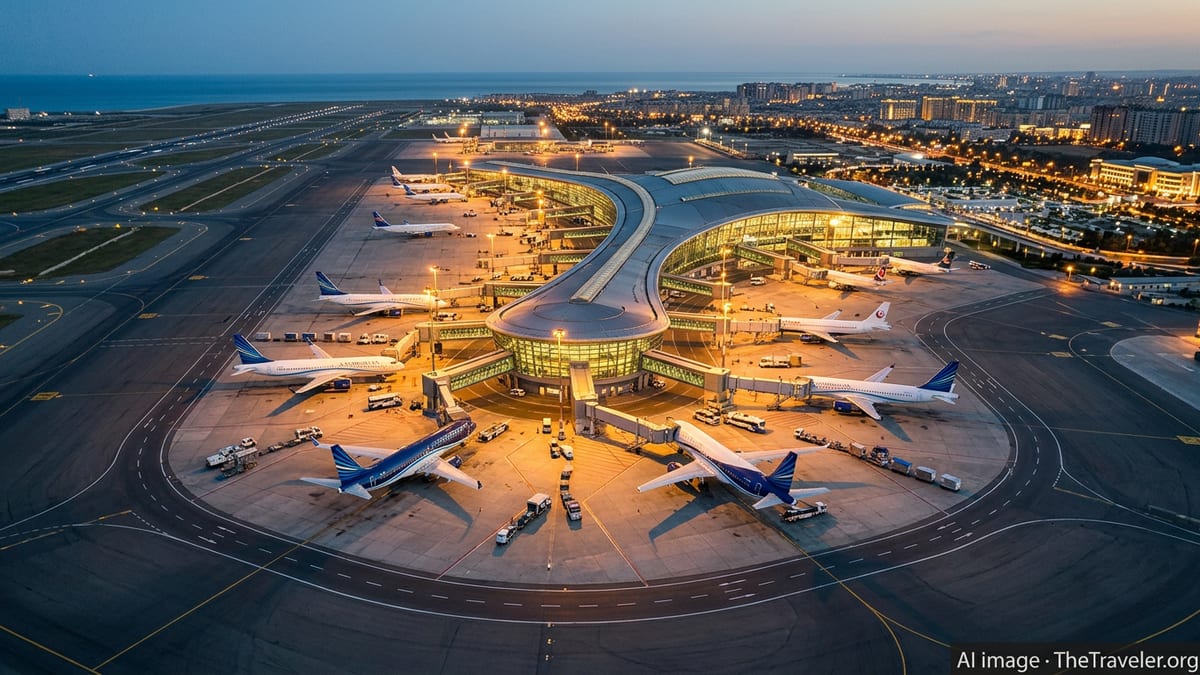
New Rankings Put Central Asian Airports on the Map
Publicly available data from the Skytrax World Airport Awards shows that Central Asian hubs are climbing global league tables, signaling a shift in how the region invests in aviation infrastructure and service. At the 2024 awards, Heydar Aliyev International Airport in Baku again secured titles for Best Airport in Central Asia and CIS and Best Airport Staff in Central Asia and CIS, confirming its role as a regional benchmark for service quality.
The same regional ranking highlighted the growing strength of Kazakhstan’s main gateways. Skytrax lists Nursultan Nazarbayev International Airport in Astana and Almaty International Airport among the top performers in Central Asia and the CIS, with Almaty placed third in the 2024 regional top five, behind Baku and Astana. This recognition coincides with a period of rapid passenger growth and renewed investment in terminals, technology, and customer experience at these airports.
While global headlines often focus on mega hubs in Asia or the Gulf, the latest awards cycle indicates that Central Asian teams are steadily gaining recognition in specialist categories, from regional leadership to staff service. The pattern suggests that airport operators across Kazakhstan, Azerbaijan, and neighboring states see high quality passenger experience as central to their competitive positioning.
Almaty International Airport Steps Up Its Game
Almaty International Airport, Kazakhstan’s busiest air gateway and currently the busiest airport in Central Asia, has been steadily expanding its role as a regional connector. Background data shows that Almaty has long held a leading position in traffic volumes, and in 2012 it was recognized within the Commonwealth of Independent States for achievements in the development of international airports. More recently, the opening of a new terminal and infrastructure upgrades have become focal points for the airport’s modernization drive.
Skytrax’s regional ranking for 2024 places Almaty among the top five airports in Central Asia and the CIS, reflecting both its traffic scale and improving facilities. The upgrade program includes a new international terminal designed to handle growing long haul and regional traffic, which observers note is critical as Almaty positions itself as a transit point between Europe, the Middle East, and East Asia.
Passenger feedback shared in public forums frequently references the contrast between Almaty’s older facilities and its newer infrastructure, underscoring how visible the transformation has become for regular travelers. The presence of a new terminal, expanded services, and more organized ground access is contributing to a perception that the airport’s team is catching up with its status as an economic and tourism gateway for Kazakhstan.
Heydar Aliyev International Airport Sets the Regional Benchmark
Heydar Aliyev International Airport in Baku has emerged as the consistent standard setter for Central Asia and the CIS in Skytrax rankings. According to the airport’s own published information and Skytrax award lists, Baku has been named Best Airport in Central Asia and CIS multiple times and has repeatedly taken the title for Best Airport Staff in the region. In 2024, it again secured both distinctions, and more recent coverage from 2026 reports that it has continued to top the regional rankings.
These accolades reflect both infrastructure and team performance. Sustainability and corporate reports from Azerbaijan’s aviation sector point to sustained investment in terminal design, digital services, and staff training. Passenger traffic at Heydar Aliyev reportedly increased from around 4.4 million in 2022 to more than 7.5 million in 2024, suggesting that the airport’s leadership in awards is aligned with strong demand growth and successful network expansion.
The airport’s recognition for staff service in particular has drawn attention to how its teams manage check in, security, and passenger support. Industry observers link these awards to a broader national strategy that positions Baku as a high quality transfer hub between Europe and Asia, with service culture and operational reliability treated as key differentiators.
Astana, Almaty and Baku Highlight a Regional Service Push
The Skytrax World Airport Awards for 2024 and 2025 create a picture of a region in transition, with several hubs competing for leadership. Kazakhstan’s transport authorities report that both Nursultan Nazarbayev International Airport in Astana and Almaty International Airport were recognized among the best in Central Asia and the CIS at the 2025 awards, underscoring how national policy has emphasized simultaneous development of both primary gateways.
For Astana’s airport, this has meant a focus on its role as a regional hub for domestic and international traffic, supplemented by service enhancements that previously earned it the Best Regional Airport in Central Asia and CIS title in 2022. For Almaty, the priority has been leveraging its position as Central Asia’s busiest airport by modernizing infrastructure and aligning staff operations with rising passenger expectations.
In parallel, Baku’s repeated top ranking for both overall performance and staff service reinforces the message that service quality is becoming a defining metric for success in the region. Together, these airports illustrate how operational teams, from check in staff to airside coordinators, are central to transforming once utilitarian Soviet era infrastructure into competitive, passenger oriented hubs.
What the Awards Reveal About Central Asia’s Aviation Future
The clustering of awards around Almaty, Astana, and Baku suggests that Central Asian aviation is entering a new phase of competition based on quality rather than simply capacity. Regional rankings show these airports moving ahead of peers in Central Asia and the CIS on passenger satisfaction, design, and staff engagement, signaling that airport teams are expected to deliver a consistently higher standard of service.
For airlines and passengers, this evolution carries practical implications. Stronger airport performance can support the development of transfer traffic, encourage new long haul routes, and make multi stop itineraries through Central Asia more attractive. With Heydar Aliyev International Airport repeatedly securing regional leadership titles and Almaty International Airport gaining prominence in the top tier of regional rankings, the groundwork is being laid for Central Asia to act as a bridge on an increasing number of intercontinental journeys.
As Skytrax and other global benchmarks continue to highlight airport teams rather than just buildings, the performance of staff at Almaty, Baku, Astana and neighboring hubs is likely to shape the region’s aviation reputation. The latest awards cycle indicates that these teams are no longer peripheral players in global rankings but central figures in a rapidly modernizing aviation landscape.