


More news on this day
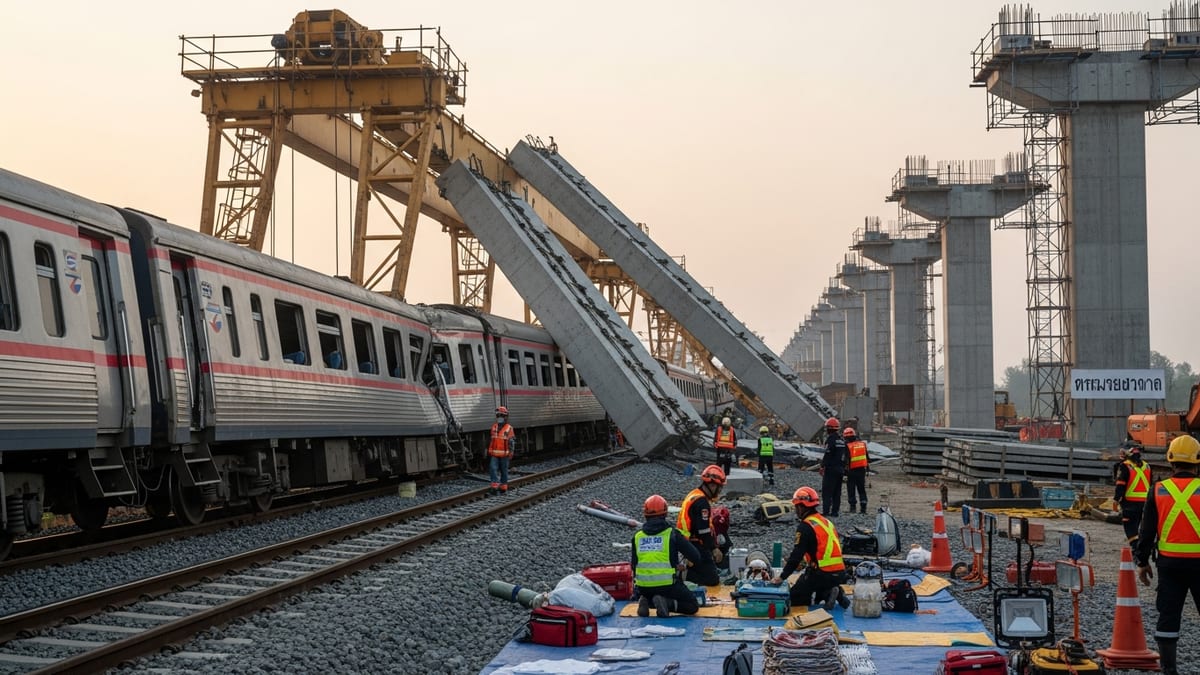
Sirens, mock casualties and flashing emergency lights transformed Kirkwood Community College into a sprawling disaster scene this week, as students took part in the institution’s largest emergency response simulation to date, designed to sharpen life-saving skills under intense pressure.
Get the latest news straight to your inbox!
Campus turns into a full-scale training ground
The latest exercise brought together students from emergency medical services, nursing, fire science and law enforcement programs, according to publicly available information from the college and local coverage of similar drills. Organizers framed the event as a capstone-style experience, building on classroom instruction and smaller lab simulations by immersing participants in a complex, multi-victim emergency.
Instead of confined classroom scenarios, students navigated hallways, parking lots and training facilities that had been staged to resemble the aftermath of a large incident. Mannequins, volunteer actors and realistic moulage makeup were used to create visible injuries and emotional stressors, challenging participants to prioritize care, communicate clearly and move patients safely.
Reports indicate that the scale of the drill was significantly larger than previous years’ exercises, reflecting growing emphasis across higher education on realistic, interdisciplinary emergency training. Similar initiatives at colleges and universities around the country have increasingly used mass-casualty and multi-hazard simulations to prepare future responders for real-world crises.
The Kirkwood event follows that broader trend, coupling the college’s existing healthcare simulation resources with outdoor staging and coordinated scenarios intended to test both individual skills and system-wide response.
Students practice life-saving decisions in real time
At the heart of the simulation was a series of rapid clinical decisions that students were required to make in real time. Participants practiced triage methods common to mass-casualty incidents, assigning priority levels, identifying the most critical injuries and moving patients to treatment zones under tight time constraints.
Publicly available descriptions of Kirkwood’s emergency medical and health programs highlight an emphasis on scenario-based learning and high-fidelity mannequins capable of simulating changing vital signs. In the large-scale drill, those tools were combined with dynamic prompts, such as evolving patient conditions or new hazards, to keep students adapting on the fly.
Faculty and training staff observed from the sidelines, tracking how teams handled airway management, bleeding control, basic life support and communication with simulated dispatch and hospital contacts. The goal, according to published materials on comparable college exercises nationwide, is to help students transfer textbook knowledge into clear, confident action when seconds matter.
For many of the participants, the event served as the most immersive test of their training so far, providing a controlled but intense environment where mistakes become learning opportunities rather than life-threatening errors.
Collaboration across programs mirrors real-world response
Organizers designed the scenario so that no single program could manage the incident alone. Nursing and EMS students focused on patient assessment and treatment, while fire science trainees simulated hazard control and extrication, and criminal justice or public safety students practiced scene management and crowd control.
This cross-program structure reflects how actual emergencies unfold, where firefighters, paramedics, nurses, law enforcement officers and hospital staff must coordinate under pressure. According to published coverage of similar simulations at institutions in other states, educators increasingly view this kind of joint training as essential for building communication habits and mutual understanding before students enter the workforce.
At Kirkwood, the exercise drew on the college’s broader emergency operations planning and safety training framework, which outlines how campus facilities and personnel would respond in a real incident. For students, working within that structure offered a glimpse of the protocols and command systems that govern large-scale emergencies beyond the classroom.
Observers noted that teams were encouraged to debrief between phases of the scenario, discussing what information they needed, how they divided tasks and where communication broke down. Those reflections are considered as critical as the hands-on component, helping future responders understand the importance of clarity and teamwork in stressful situations.
Simulation trend grows as communities seek resilience
The Kirkwood drill comes at a time when schools, healthcare systems and public agencies across the United States are expanding the use of immersive simulations to strengthen community resilience. Publicly reported exercises in recent months have ranged from mock hospital “code” events to disaster scenes involving chemical exposures, severe weather and mass-casualty incidents.
Training centers and academic programs increasingly highlight these simulations as key to preparing students not only to pass certification exams, but also to function effectively alongside experienced professionals from their first day on the job. By placing learners in realistic, chaotic environments before they graduate, institutions aim to reduce hesitation and error when real emergencies occur.
In many communities, these drills also support collaboration between campuses and local agencies. While the Kirkwood event was organized as an academic exercise, it aligns with regional and national efforts to ensure that future responders understand how to integrate with municipal fire, emergency medical and law enforcement systems.
The broader shift toward immersive training is supported by a growing body of research and practice suggesting that realistic, repeatable simulations can improve both technical performance and psychological readiness among participants.
From classroom skills to community impact
For Kirkwood students, the large-scale simulation marked an important bridge between classroom learning and the unpredictable realities of fieldwork. Participants drew on months or years of instruction in anatomy, patient assessment, emergency procedures and safety protocols, then tested those skills in a scenario designed to feel as close to real as possible without placing anyone at risk.
Public information about the college’s health and public safety offerings emphasizes a mission of preparing graduates to serve local communities in hospitals, ambulances, clinics, fire services and related roles. Exercises like this one give students a preview of the high-stakes situations they may encounter, from multi-vehicle collisions to industrial accidents and large public events.
By scaling up to its largest emergency simulation to date, the college underscored the importance it places on readiness and interprofessional collaboration. The experience also signaled to students that their classroom work has tangible consequences, as the skills they practice today may one day help stabilize a neighbor, coworker or stranger in crisis.
As students packed away stretchers, bandages and training equipment at the end of the drill, the mock casualties disappeared and campus life resumed its usual rhythm. Yet for many participants, the lessons from Kirkwood’s massive simulation are expected to remain, shaping how they react when a future alarm signals that the next emergency is no longer a drill.