


More news on this day
Croatian national operator HŽ Passenger Transport has placed a fresh order for six battery-electric multiple-units from local manufacturer Končar, reinforcing a multi-year program to modernize regional rail services and cut emissions on non-electrified lines across the country.
Get the latest news straight to your inbox!
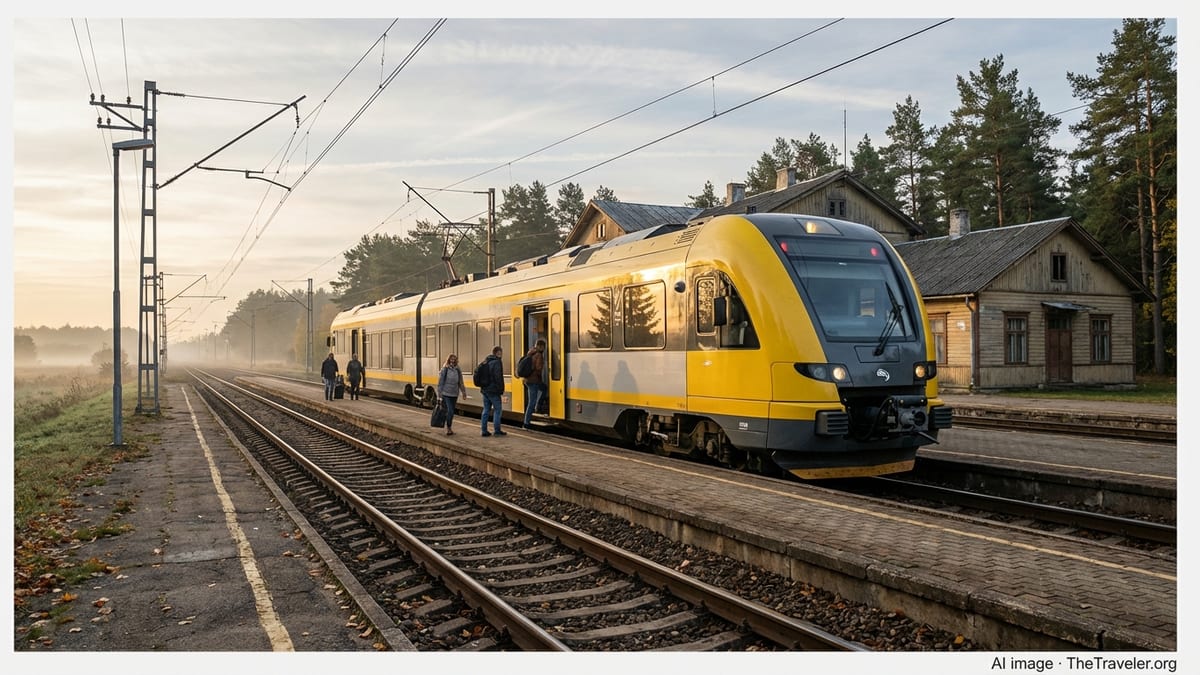
New contract expands Croatia’s battery train fleet
According to publicly available information from Končar and HŽ Passenger Transport, a contract was signed on 16 July 2026 for the purchase of six battery-electric multiple-units and the installation of a hybrid stationary charging point on the Croatian rail network. The deal builds on earlier prototype and pre-series battery train projects and signals that battery traction is moving from trial phase into regular fleet deployment.
The new units will be designed to operate both under existing 25 kV overhead wires and on non-electrified routes using high-capacity onboard batteries. This dual capability is expected to allow continuous electric operation on lines where full electrification would be costly or technically challenging, particularly in rural and coastal regions.
The contract also includes a hybrid charging installation, intended to top up traction batteries at a designated station on the network. Publicly available documents indicate that Croatia’s national investment plans envisage several such fixed charging points, enabling battery trains to cover longer non-electrified sections while limiting the need for new overhead lines.
Reports indicate that the six new battery-electric units will complement an existing fleet renewal program which has already delivered modern electric multiple-units for urban and regional routes. By adding battery-capable stock, HŽ Passenger Transport is seeking to extend similar comfort and accessibility standards to passengers beyond the electrified core network.
From prototypes to a broader battery-rail program
Croatia’s move toward battery trains began with prototype battery multiple-units developed by Končar for HŽ Passenger Transport, supported by national and European funding mechanisms. Earlier phases of the program focused on testing range, reliability and charging concepts on routes such as Zagreb to Bjelovar, where a first battery-electric unit entered regular service.
Government reports and sector coverage describe a long-term plan under which battery-powered and battery-electric multiple-units will progressively replace much of the remaining diesel multiple-unit fleet. Planning documents refer to the potential acquisition of dozens of additional units by the end of the decade, indicating that the latest six-train order is part of a wider staged rollout rather than a standalone purchase.
Previous contracts between Končar and HŽ Passenger Transport have covered electric, diesel-electric and hybrid multiple-units, including trains for the busy Zagreb to Split corridor. The addition of dedicated battery-electric units is presented in public material as the next technological step in this strategy, aligning with broader European efforts to decarbonize regional rail on partially electrified networks.
Rolling stock lists and official investment frameworks highlight battery trains and related infrastructure as eligible projects for green financing instruments. This positioning has helped underpin Croatia’s battery-rail developments, linking the HŽ Passenger Transport renewal program with national climate objectives and European Union transport policy.
Technical features and passenger experience
Končar’s latest generation of battery and battery-electric multiple-units, including those now ordered by HŽ Passenger Transport, are promoted in publicly available materials as offering performance comparable to conventional electric trains on electrified sections. While detailed specifications for the new batch have not yet been fully disclosed, earlier units have been described as three-car sets with a maximum speed around 120 kilometers per hour on battery power and higher speeds under overhead supply.
The trains are designed for low-floor, step-free access, with features such as wheelchair spaces, accessible toilets and retractable ramps to improve boarding at lower platforms. Information released about previous battery units also mentions air conditioning, passenger information systems and dedicated areas for bicycles, aiming to make regional services more attractive for both commuters and leisure travelers.
The hybrid stationary charging point included in the latest contract is expected to combine grid supply with local energy storage or auxiliary generation, so that high-power charging can be provided without overloading local distribution infrastructure. Similar concepts in other European rail projects allow trains to recharge during scheduled station stops, reducing dwell time impacts and keeping battery size within practical limits.
Published coverage of the Croatian program notes that regenerative braking will feed energy back into the batteries, improving efficiency on routes with frequent stops. Together with fixed charging installations, this is intended to provide sufficient range for typical regional diagrams, allowing diesel traction to be withdrawn from many services once the battery fleet has grown.
Financing and alignment with EU decarbonization goals
Croatia’s battery train acquisitions form part of a wider investment package in rail modernization supported by European Union funds. Policy documents and national plans identify new low- and zero-emission rolling stock as key to improving the share of rail in passenger transport while reducing greenhouse gas emissions.
Project descriptions indicate that funding envelopes cover not only the purchase of battery-electric multiple-units, but also complementary infrastructure such as charging stations, depot upgrades and digital systems to manage energy use. This integrated approach is intended to ensure that new trains can be deployed efficiently on targeted routes, rather than remaining underutilized due to infrastructure constraints.
By relying on a domestic manufacturer for its latest order, HŽ Passenger Transport is also reinforcing local industrial capacity in the rail sector. Končar markets its battery technology internationally, and the Croatian battery train fleet serves as a reference for similar applications in other countries with extensive non-electrified regional networks.
Analysts following European rolling stock trends point out that battery-electric multiple-units are increasingly seen as a cost-effective solution on medium-distance lines where full electrification would not be economically justified. Croatia’s latest order fits into this broader pattern, illustrating how smaller rail markets are adopting similar technologies to those now being rolled out in larger EU member states.
Implications for passengers and regional mobility
For passengers, the most visible result of the new order is expected to be quieter, more reliable trains on lines that historically relied on aging diesel units. Battery-electric traction significantly reduces noise and local air pollution, particularly at stations and in built-up areas, which is likely to improve the travel experience for both riders and communities along the routes.
Public information from Croatian authorities frames the broader fleet renewal as part of an effort to make rail a more attractive alternative to private car use, especially for daily commuting into regional centers and the capital. Improved timetables, higher comfort standards and better accessibility are all cited as factors that could encourage a shift toward public transport.
The new battery-electric multiple-units are expected to be deployed on selected non-electrified or partially electrified corridors where demand justifies investment but full overhead electrification is not planned in the near term. This targeted deployment strategy aims to maximize emissions reduction per euro spent, directing the most advanced rolling stock to lines where it can replace the most diesel mileage.
As additional battery units are delivered and charging infrastructure is expanded, observers anticipate that HŽ Passenger Transport will be able to restructure some regional service patterns, potentially adding more frequent or direct connections. The latest contract for six battery-electric multiple-units is therefore seen as another step in a gradual reconfiguration of Croatia’s regional rail network toward cleaner, more modern and more passenger-focused operations.