


For travelers who value time, privacy and flexibility more than frequent flyer points, chartering a private jet across Europe with GlobeAir can be a compelling alternative to commercial airlines. Based in Austria and operating one of the largest fleets of Cessna Citation Mustang very light jets on the continent, GlobeAir focuses on short‑haul business and leisure routes between major European cities and upscale leisure destinations. Here is how the experience works in practice, what it tends to cost, and how to decide if it fits your next European itinerary.
Get the latest updates straight to your inbox!
Who GlobeAir Is For and Where They Fly
GlobeAir is an Austrian charter operator that specializes in on‑demand private flights within Europe using a homogeneous fleet of four‑seat Cessna Citation Mustang jets. The typical customer is a small group of business travelers hopping between financial centers like London, Zurich and Milan, or leisure travelers heading to hard‑to‑reach airports in the Alps or on the Mediterranean that have limited commercial service. Unlike scheduled airlines, GlobeAir flights are fully bespoke: you choose your departure airport, time and routing within the operator’s network, and they quote a price for that specific trip.
The company focuses on routes of roughly one to three hours, which matches the range and comfort profile of the Mustang. Examples that GlobeAir itself highlights include Innsbruck to London, Vienna to Nice, and Zurich to Olbia in Sardinia, plus hundreds of secondary airports across France, Italy, Spain, Germany and the Balkans. A typical use case might be a two‑day business trip from Munich to Paris and back, timed to allow breakfast meetings on the ground instead of red‑eye flights and long security lines.
Because GlobeAir does not operate from a single hub, its jets are positioned around Europe and routed according to demand. This is why you will often see less common combinations such as Geneva to Ibiza on a Thursday evening in summer, or Hamburg to Bolzano at the start of the ski season. For travelers, this network flexibility means that if an airport is open to private traffic and within the aircraft’s range, there is a good chance GlobeAir can operate there, even if commercial options are sparse or non‑existent.
GlobeAir positions itself as a time‑saving “air taxi” rather than a long‑haul luxury airline. Most flights are under two hours and connect points that would otherwise require two or three commercial legs or a full day on trains and ferries. Think of weekend escapes to Corsica from Switzerland, last‑minute visits to manufacturing sites in northern Italy from Germany, or connecting remote corporate offices in places like Klagenfurt or Graz with major hubs such as Frankfurt.
How Pricing Works and What Flights Really Cost
Unlike commercial airlines that publish fixed fares, GlobeAir prices each charter individually based on distance, aircraft availability, positioning flights, airport fees and the time of day. The company quotes starting charter rates around the mid‑four‑figure euro range for shorter hops, and public materials in 2026 reference entry prices from roughly 4,000 to 5,500 euros for select sectors on their own booking pages. In practical terms, most one‑way charters on core European routes tend to price in the low‑ to mid‑thousands for the entire aircraft, not per passenger, with costs rising for peak days and complex routings.
To make this more concrete, a traveler searching sample itineraries might see indicative quotes in the region of about 5,000 to 6,000 euros for a same‑day, one‑way flight from Innsbruck to London on a weekday in winter, or around 4,500 to 5,500 euros for a summer weekend hop from Zurich to Olbia. Split across four passengers, that could bring the per‑person cost closer to 1,200 to 1,500 euros. While far above business class fares on many commercial routes, the comparison becomes more nuanced on niche city pairs where airlines require two or three connections or overnight stays.
GlobeAir also markets “empty leg” flights, which are repositioning sectors flown without booked passengers. These are offered at sharply reduced prices, sometimes falling into the high hundreds of euros for the entire aircraft on shorter routes when booked at the last minute. An example might be a repositioning flight from Milan to Vienna priced under 1,000 euros because the jet needs to reach Vienna for a paying charter. The trade‑off is limited choice of dates, times and routes: you fit your plans around the aircraft’s schedule, not the other way around.
For frequent flyers, GlobeAir’s jet card and membership products aim to provide more predictable hourly rates. Instead of requesting a one‑off quote each time, clients purchase a block of flight hours or a deposit balance and access fixed pricing across the network, subject to standard conditions. This model suits a law firm shuttling partners between London and Brussels every week, or a manufacturing group that needs regular trips from Stuttgart to plants in central and eastern Europe. For occasional travelers planning one or two European trips per year, ad‑hoc charter often remains the more flexible choice.
Booking a Flight: From Quote to Boarding
The practical experience of booking GlobeAir differs from buying a ticket on a regular airline. Travelers typically start by entering their preferred route and date into the company’s online search tool or contacting the sales team directly. Instead of instantly confirming a fixed fare, the system gathers details such as departure time, passenger count, luggage needs and any special requests, then generates a tailored quote. This process can be quick, but it is not as instantaneous as a low‑cost carrier’s website where you see dozens of daily departures at once.
Once you accept a quote, GlobeAir issues a charter agreement that outlines price, route, aircraft type, and key conditions such as cancellation rules. A deposit or full payment is normally required to secure the flight. Terms in GlobeAir’s own documentation note cancellation fees that increase as you approach departure, with a significant percentage of the charter price becoming non‑refundable within the last few days before take‑off. For instance, a traveler cancelling two days before a Friday morning Zurich to Nice flight may still owe a notable portion of the agreed amount, because the operator has already dedicated the aircraft and crew.
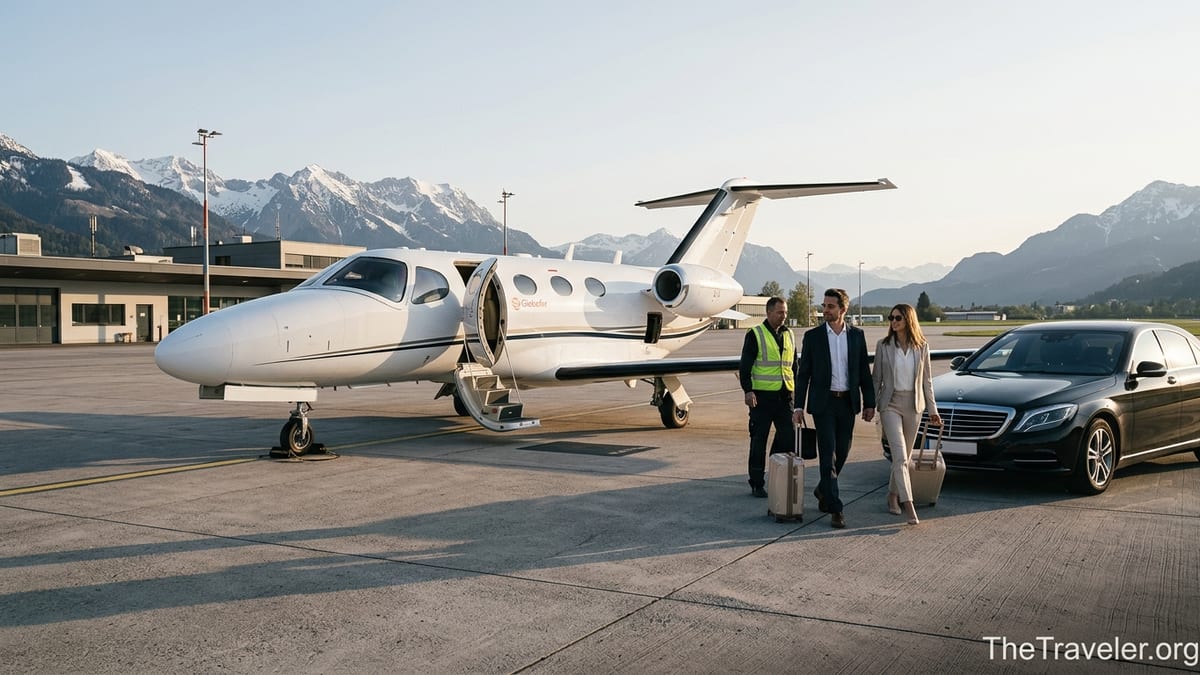
On the day of travel, one of the key advantages becomes apparent: GlobeAir passengers usually depart from the private jet terminal or general aviation facility rather than the main commercial terminal. At major airports like Paris Le Bourget, Milan Linate or London Biggin Hill, this often means arriving 20 to 30 minutes before departure, passing through a discreet security screening, and walking or being driven directly to the aircraft. There is no need to queue at check‑in desks, baggage drop or boarding gates, which can save one to two hours per leg compared to flying commercial at busy times.
Check‑in itself is simplified. You provide passport details in advance, but there is no boarding group or seat assignment. The flight waits for you and your group, within the agreed departure window, and any last‑minute adjustments such as leaving 15 minutes earlier can often be accommodated if air traffic control slots allow. For business travelers used to cutting it fine at airports, this flexibility is often one of the strongest reasons to charter.
Onboard Experience and Service Level
GlobeAir’s fleet is built around the Cessna Citation Mustang, a very light jet configured for up to four passengers plus crew in a typical business layout. Cabins are compact compared with larger private jets, but still provide more personal space than an economy seat on a commercial narrow‑body aircraft. Two pairs of facing leather seats with a central aisle allow face‑to‑face conversation or laptop work, and passengers can stow small bags within reach. The cabin height means most travelers cannot stand upright, so you move around in a slightly crouched position, which is manageable on 60‑ to 90‑minute flights.
The overall feel in flight is closer to riding in a comfortable, quiet SUV than a big airliner. Noise levels are lower than on many turboprop commuter planes, and because you are sharing the cabin only with your group, you control the atmosphere: work in silence, hold confidential calls, or travel with children without worrying about disturbing other passengers. Typical cruising altitudes above the main commercial traffic can sometimes result in smoother rides, although routes through the Alps and other mountainous areas can still bring moderate turbulence at times.
Service on board tends to be streamlined rather than lavish. On many sectors there is one pilot and one additional crew member, or two pilots with self‑service snacks and drinks set up in the cabin. Expect bottled water, soft drinks, coffee and a selection of light snacks as standard, with more elaborate catering such as sushi platters or hot meals available on request at extra cost. For example, a couple chartering from Geneva to Mykonos for a long weekend might pre‑order Mediterranean canapés and champagne to be loaded by the handling agent before departure.
Connectivity is an area where expectations must be realistic. Very light jets like the Citation Mustang are not always equipped with high‑bandwidth Wi‑Fi systems found on larger long‑range aircraft. Some GlobeAir flights may offer basic connectivity options depending on the specific tail number and route, but many travelers still treat the time onboard as offline, using downloaded documents and entertainment. If in‑flight internet is essential for your trip, you should confirm availability at the quotation stage rather than assuming it will be present.
Baggage, Pets and Special Requests
Because GlobeAir operates small jets, baggage capacity is more limited than with a commercial wide‑body aircraft, and careful planning is essential. The Citation Mustang offers a mix of nose and tail compartments that can typically handle carry‑on sized suitcases and soft bags for up to four passengers, but large hard golf cases or multiple rigid ski bags can quickly exceed the available volume. A family heading from London to Innsbruck for a week’s skiing, for example, might be able to bring four cabin‑size trolleys and soft ski bags, but find that four bulky checked‑size suitcases and four hard ski boxes simply will not fit.
GlobeAir therefore asks for detailed baggage information during the booking process, including dimensions and approximate weight. In some cases, the operator may suggest shipping oversized items separately with a courier or arranging a ground transfer for gear such as exhibition stands, music equipment or bulky sports items. Travelers accustomed to checking multiple large bags on commercial airlines should be prepared to rationalize what they bring when moving to a very light jet charter.
Pets are a major selling point for many private jet operators, and GlobeAir explicitly markets pet‑friendly flights. Dogs and cats can usually travel in the cabin with their owners rather than in a crate in the hold, provided they meet destination country regulations and have the necessary vaccinations, microchips and paperwork. A realistic scenario would be a couple flying from Brussels to Palma de Mallorca with a medium‑sized dog that sits on a blanket at their feet, making a relocation or extended holiday far less stressful than navigating commercial airline pet policies.
Special requests can range from onboard birthday cakes and branded headrests for corporate charters, to coordinating with chauffeurs and hotel concierges. GlobeAir’s marketing emphasizes concierge‑style support, and in practice this often means the operator liaises directly with your ground transport provider so that a driver is waiting planeside when you land at airports where apron access is permitted. For time‑critical itineraries, such as a morning meeting in Zurich followed by an evening speech in Vienna, these small touches can help keep the day running smoothly.
When GlobeAir Makes Sense Compared to Commercial Flights
Judging whether a GlobeAir charter is worthwhile depends on more than the raw ticket price. For straightforward routes like Paris to Rome or Frankfurt to Barcelona, even full‑flex business class on a major airline will usually undercut the cost of a private jet by a wide margin. However, there are many scenarios across Europe where the equation shifts in favor of charter, particularly when time, flexibility and group size are considered together.
One clear example is a three‑city business roadshow. Suppose a team of four executives needs to visit clients in Lyon, Bologna and Zagreb over two days, starting from Munich. Scheduled flights would likely involve indirect routings, overnight stays in hub cities and long waits between connections. With GlobeAir, they might charter a jet that departs Munich at 07:30, lands in Lyon at 08:45, continues to Bologna mid‑afternoon and finishes in Zagreb in the evening, returning to Munich the next day after morning meetings. The ability to string together bespoke legs in one continuous itinerary can save a full working day, hotel nights and driver hours.
Another scenario involves remote leisure destinations. Reaching small islands or mountain airports like Olbia, Bolzano or Sion from northern Europe often requires two or three commercial legs and long transfers. A family of four from Copenhagen planning a week in Sardinia could potentially fly commercial via Munich or Milan, but with checked bags, children and peak summer crowds, total travel time may stretch to 7 or 8 hours door‑to‑door. A direct GlobeAir charter, while far more expensive in euros, might reduce that journey to under three hours with minimal airport stress, which some travelers view as worthwhile for a once‑a‑year holiday splurge.
Finally, charter can be attractive when plans are fluid or high‑stakes. Entrepreneurs closing a funding round, doctors traveling to conferences with rigid schedules, or creative teams attending film festivals often cannot afford missed connections or last‑minute cancellations. While private jets are not immune to weather or air traffic control delays, the ability to adjust departure times, switch airports within a region, or reroute around disruption makes the experience more controllable than relying on a string of unrelated airline tickets.
Practical Tips for First‑Time GlobeAir Travelers
If you are considering your first flight with GlobeAir, a few practical steps can make the experience smoother. Start by being as flexible as possible with your dates and times when requesting a quote, especially if cost is a concern. Because aircraft position and availability drive pricing, shifting your departure by even a few hours, or choosing a less crowded airport in the same city region, can sometimes reduce the quote significantly. For example, opting for a morning departure from Milan Linate instead of a Friday late‑afternoon slot may avoid peak congestion and associated costs.
Be honest and precise about who is flying and what you are bringing. Provide full passenger names exactly as they appear on passports well before departure to avoid delays, and measure oversized items like skis or musical instruments rather than guessing. If you plan to bring a pet, share breed, weight and documentation details early so GlobeAir can confirm compliance with local regulations at both departure and arrival airports. It is far better to adjust plans a week before flying than to discover at the terminal that an item cannot be loaded.
Think through your ground transport at both ends. While private flights shorten time in the terminal, they do not automatically solve traffic outside the airport. Booking a reliable car service that knows the private terminal layout in cities like Paris, London or Rome can prevent last‑minute confusion. In smaller destinations such as Mykonos or Innsbruck, ask GlobeAir’s team or your hotel to coordinate a driver who can meet you at the aircraft steps if airport rules allow, which makes the overall journey feel seamless rather than fragmented.
Finally, remember that a charter is a contract for the entire aircraft, not a ticket on a scheduled service. If you need to change your plans, contact GlobeAir as early as possible to discuss options. Modest timing adjustments or date shifts may sometimes be accommodated with limited penalties when aircraft schedules allow, whereas same‑day cancellations will often incur substantial costs. Treat the booking with the same seriousness you would a major hotel or event reservation.
The Takeaway
Flying across Europe with GlobeAir is not a mass‑market product, and it is not priced like one. For most travelers, commercial airlines and high‑speed rail will remain the default options. Yet for small groups who place a premium on time, privacy and point‑to‑point flexibility, a GlobeAir charter can reshape what is possible in a single business day or a short leisure break. The ability to leave from a convenient local airport, board within minutes, and fly directly to smaller fields closer to your final destination can offset much of the headline cost, especially when days saved and hotel nights avoided are factored in.
Understanding how GlobeAir’s pricing, aircraft and operations work in practice is crucial before booking. Realistic expectations about baggage limits, onboard service and connectivity, along with careful planning around pets and special requests, will help ensure that your first charter experience feels efficient rather than stressful. Whether you are stitching together a demanding multi‑city itinerary or turning a complex family holiday journey into a simple two‑hour hop, GlobeAir offers a focused, Europe‑centric way to move quickly and discreetly across the continent.
FAQ
Q1. How far in advance should I book a GlobeAir flight across Europe?
Booking several weeks in advance usually offers the best choice of aircraft positioning and may yield more favorable pricing, but GlobeAir is designed to handle short‑notice requests as well, and can often arrange flights within a day or two if aircraft and crew are available.
Q2. How many passengers can travel on a typical GlobeAir jet?
The standard Cessna Citation Mustang configuration used by GlobeAir is designed for up to four passengers, making it ideal for a couple, a small family, or a compact business team rather than large groups.
Q3. What are realistic price ranges for common European routes?
While exact quotes vary, many one‑ to two‑hour flights within GlobeAir’s core network tend to price in the low‑ to mid‑thousands of euros for the whole aircraft, with some shorter off‑peak routes starting around the mid‑four‑figure range and more complex or peak‑time itineraries costing more.
Q4. Can I bring my dog or cat on a GlobeAir flight?
Yes, GlobeAir promotes pet‑friendly travel and typically allows dogs and cats to fly in the cabin, provided they meet health, documentation and destination country entry requirements that should be confirmed during booking.
Q5. How much luggage can we bring on a GlobeAir charter?
Baggage capacity on the Citation Mustang is limited and best suited to carry‑on sized suitcases and soft bags; a group of four can often bring one small trolley each plus a personal item, but multiple large hard cases or bulky sports equipment may exceed available space.
Q6. Is Wi‑Fi available on GlobeAir flights?
Some very light jets may offer basic connectivity, but GlobeAir’s core aircraft are not universally equipped with high‑bandwidth Wi‑Fi, so travelers who require internet access should confirm availability for their specific aircraft and route before finalizing a booking.
Q7. From which airports in Europe can GlobeAir operate?
GlobeAir focuses on short‑haul routes within Europe and can access many major and secondary airports, including dedicated business aviation fields like Paris Le Bourget and London Biggin Hill, as long as the runway and local regulations support very light jet operations.
Q8. What happens if I need to cancel or change my charter?
Charter agreements include tiered cancellation fees that increase as departure approaches, so changes made days or weeks in advance may incur modest costs, while same‑day cancellations can result in significant charges; contacting GlobeAir as early as possible usually yields the most flexibility.
Q9. Are GlobeAir’s empty leg flights worth considering?
Empty leg flights can be excellent value, sometimes offered at a fraction of normal charter rates, but they come with strict limitations on timing and routing, so they work best for travelers who can build their plans around an existing repositioning sector.
Q10. How does GlobeAir compare with commercial business class for comfort?
GlobeAir’s small jets offer more privacy and control than business class, with cabins tailored to groups of four, but less space to stand and move around; travelers trade large reclining seats and extensive inflight service for direct routes, flexible schedules and a highly personalized environment.