


I arrived at my first Four Seasons expecting to be mildly impressed and mostly unconvinced. The rates looked inflated, the photos impossibly polished, and the online praise a little breathless. It felt like the kind of brand people name-drop more than they genuinely enjoy. But a few hours after check-in, somewhere between a quiet upgrade, an unprompted gesture of care, and a sunset I watched from a pool lounger I hadn’t lifted a finger to claim, my skepticism started to unravel fast.
Get the latest updates straight to your inbox!
Walking In With All The Wrong Expectations
The idea of paying 900 to 1,500 dollars a night for a hotel room, which is a typical range at places like Four Seasons Resort Maui at Wailea in high season, can feel outrageous when you first see the numbers. It is easy to write the brand off as a status symbol for people who care more about labels than experiences. Before my first stay, I had seen Four Seasons mentioned in the same breath as private jets and designer shopping and assumed it was all one glossy, over-curated world.
Online, the contrast of opinions only fueled that perception. Some travelers praise Four Seasons as one of the most consistent luxury brands in the world, particularly in Europe and Asia, where service standards are exceptionally high. Others point to aging rooms in some North American properties or inconsistent renovations as proof that the brand trades on its name as much as its product. When you scroll through recent reviews of properties from Bangkok to Madrid, you find both glowing accounts of above-and-beyond service and frustrated reports of missed details.
That tension is what I carried in my head when I booked a stay at Four Seasons Hotel Madrid, the brand’s flagship in Spain housed in a restored set of historic buildings near Puerta del Sol. Recent guides list it with starting rates around 800 to 900 euros a night, positioning it at the very top of the city’s hotel market. It felt like the definition of “probably overrated.” Yet its location and the promise of thoughtful restoration were too tempting not to test personally.
By the time I walked into the soaring lobby, framed by original stonework and softened by contemporary art, I had my mental checklist ready: check-in times, staff warmth, room condition, and whether the experience actually felt different from other high-end chains like Ritz-Carlton or St. Regis. I told myself I was observing as a critic. Privately, I was sure the brand could not live up to its reputation.
The First Hour That Changed Everything
It took less than an hour inside the hotel for the story to shift. At Four Seasons Madrid, the check-in desk is tucked under a restored glass canopy in what was once a banking hall. Instead of a line of guests and a rope barrier, there was a member of staff waiting by the entrance, greeting us by name because they had matched our arrival time to a car they had arranged from the airport. That detail is small, but it set a tone: this was not about theatrics, it was about removing friction before I even thought to feel it.
Upstairs, we had booked a standard room. It was Madrid in late spring, a busy period with festivals and full flights from the United States. I expected the classic “city-view” that in many hotels translates to a wall or an air shaft. Instead, we were quietly upgraded to a room with a balcony overlooking the rooftops towards Gran Via. No speech about “special treatment,” just a simple, matter-of-fact explanation that they had a slightly better room available and wanted us to be more comfortable for our four-night stay.
The real surprise came about 20 minutes later. My partner mentioned in passing at check-in that he had a work call that evening and was anxious about the time difference. When we returned from a short walk, there was a tray in the room: a moka pot, local coffee, a handwritten note suggesting nearby quiet cafés with strong Wi-Fi for early mornings, and a printed list of time differences for New York, Los Angeles, and Singapore. None of that had been requested, and none of it appeared on a bill. It was clearly driven by a staff member listening closely and acting on information that most hotels smile at and ignore.
That moment felt like the inflection point. For the first time, the room rate started to feel less like a premium for marble and branding, and more like a fee for invisible labor and anticipation. It is hard to quantify, which is why it is also easy to dismiss before you have experienced it, but when you start adding up these touches, the value equation looks very different from the outside.
The Details That Quietly Justify The Price
Where Four Seasons begins to separate itself from other high-end hotels is in the consistency of these small, thoughtful actions throughout a stay. At Four Seasons Hotel Bangkok at Chao Phraya River, for example, much has been written about the architecture: terraced courtyards stepping down to the river, reflecting pools echoing the waterway, and modern Thai design elements woven into every corridor. What makes the experience feel understated rather than showy is how comfortably it all functions when you are actually living in it for a few days.
In Bangkok, breakfast is a good measure of that. Instead of a chaotic, crowded buffet, the morning set-up stretches along the river-facing restaurant with made-to-order dishes and a quiet, almost residential atmosphere. Staff remember coffee orders on the second day, suggest local fruits by name instead of generic labels, and casually point out which dishes are lighter if you are rushing to a morning massage or a boat transfer. For a property that regularly charges in the high hundreds of dollars per night, this lack of frenzy is both a luxury and a relief.
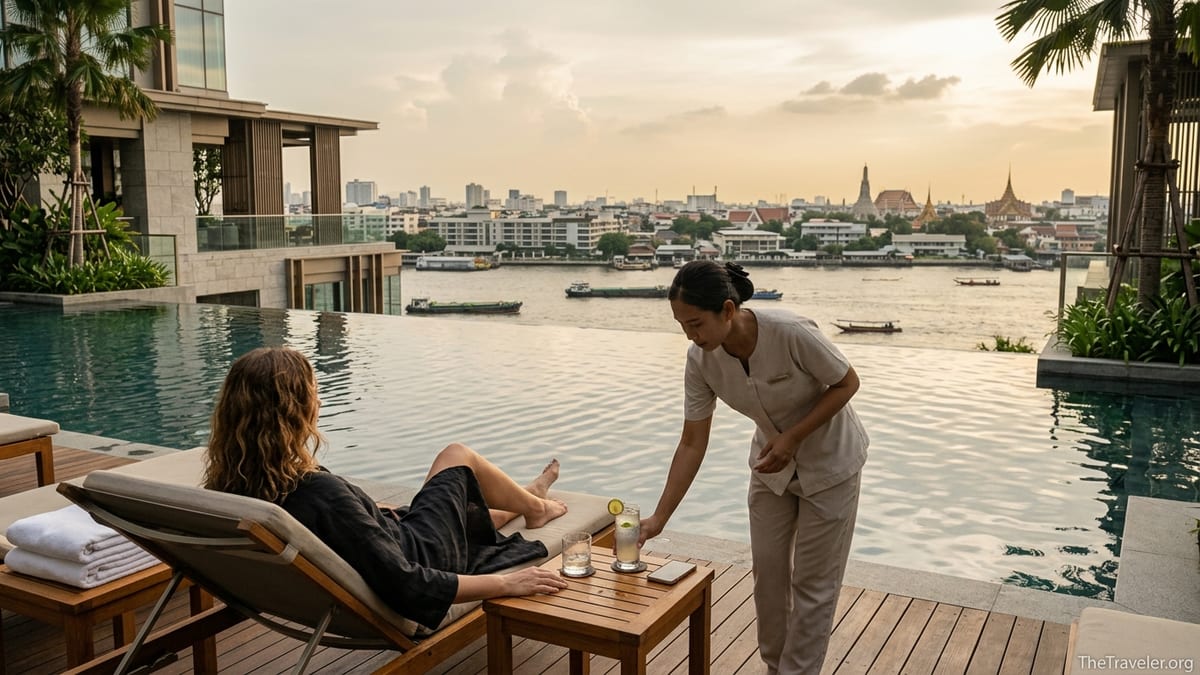
The same pattern shows up in resort settings like Maui. At Four Seasons Resort Maui at Wailea, you are paying not only for a large oceanfront room, which can easily start near four figures per night, but also for the way the resort shields you from the logistical headaches that often define beach vacations. Sun loungers are set up for you without scramble, sunscreen stations appear where you need them, and pool staff circulate with chilled fruit or ice water before anyone looks overheated. These are the sorts of services you rarely remember to ask for in advance, yet you notice immediately when they are absent.
Of course, not every guest experience at every property is flawless, and recent years have seen pointed criticism of certain Four Seasons hotels, particularly in parts of the United States where staffing shortages and high demand have made service wobbly. Travelers have reported underwhelming stays at newer properties in Florida or the Midwest, where room design lagged behind pricing. That reality is important, because it underscores that you are paying for a brand standard that each property must live up to. When a hotel hits that standard, it becomes clear how much work sits behind the scenes. When it does not, the premium feels brutally exposed.
Service Culture You Can Actually Feel
Luxury hotels often talk about “anticipatory service,” but in practice it is frequently limited to staff remembering your name or placing a chocolate on your pillow. At the best Four Seasons properties, it takes on a more practical and personal form that has little to do with theatrics and everything to do with removing friction from your day.
In Madrid, we experienced it in the way the concierge team handled reservations. Rather than handing over a list of trendy restaurants and leaving it at that, they asked about our usual dinner time at home, how comfortable we were eating late in a city where 10 p.m. is standard, and whether we preferred to walk or taxi. They then built a night-by-night plan that balanced tapas bars and more formal dining, all within a 15-minute radius of the hotel, and sequenced the bookings so that our jet lag and sightseeing plans actually made sense. When a storm rolled in one evening, they moved a terrace reservation indoors without fuss and texted us the change before we even checked the weather.
At Four Seasons Bangkok, guests describe similarly bespoke attention in the expansive wellness center. Rather than simply offering a spa menu, staff ask about energy levels after long-haul flights and recommend specific treatments and time slots to help reset your body clock. If you book a late-afternoon massage after flying from Europe, they might gently suggest pushing it earlier to avoid dozing off too early and waking up at 3 a.m. These suggestions sound obvious in hindsight, but they rarely appear unprompted in midrange hotels, where the focus is on filling slots rather than curating experiences.
This style of service does not feel like the old-fashioned formality that once defined luxury. You are unlikely to find white gloves and stiff greetings. Instead, it is a blend of warm but unobtrusive attention that adapts surprisingly well to different types of travelers. Families at resort properties talk about kids’ club staff remembering favorite games or snacks. Business travelers at city hotels quietly appreciate fast laundry turnarounds or a light meal appearing in-room when their flight lands at midnight. The brand’s value, in the best cases, lies in this culture of empowered staff who are encouraged to notice and act, rather than simply recite scripted niceties.
There is also something to be said for the training and support that allows staff to respond to problems quickly when they do arise. Even glowing reviews of Four Seasons properties often include small hiccups: a delayed luggage delivery, a missed wake-up call, a room not ready at the exact minute of arrival. What distinguishes a luxury experience is less the absence of any issue and more the speed and generosity of the solution. When extra nights are comped, spa credits added, or alternative rooms offered without argument, the overall impression remains one of care, not conflict.
Design, Sense of Place, And The “You Could Be Anywhere” Test
One of the easiest criticisms to level at big luxury brands is that they can feel interchangeable. You walk into a polished lobby in one city and could just as easily be in another country entirely. Four Seasons is not immune to this, and some properties, particularly older ones in North America, have been called out for dated or generic décor. Yet the newer generation of hotels shows a clear intent to ground each property in its location in a way that feels more curated than themed.
Four Seasons Hotel Madrid is a case study in this shift. The hotel occupies several restored historic buildings whose facades you can still trace as you move through the interior. Original columns and staircases have been preserved, and the art collection leans heavily on Spanish artists rather than generic international pieces. Room design incorporates local stone and warm neutrals that echo the city’s light rather than fighting it. When you look out from the rooftop restaurant or spa terrace and see the city’s skyline spread around you, there is no question where you are.
In Bangkok, the riverside property makes a similar effort. The layout stretches along 200 meters of the Chao Phraya, with pools and gardens arranged in tiers leading down to the water. Interiors reference Thai materials and motifs without leaning into cliché, while floor-to-ceiling windows frame views of passing boats and temple spires. You wake to the sound of river traffic rather than city horns, and step out directly onto a waterfront promenade that links you to nearby neighborhoods. It feels distinctly, inescapably Bangkok, right down to the way the humid air hits you as doors slide open.
Even in resort destinations that could easily blur together, the brand works to align with their settings. On Maui, the resort sits along the Wailea coast with open-air corridors that allow trade winds to move through the property and local flora dominating the landscaping. Public spaces are oriented toward the Pacific, but the design avoids the kind of all-white, hyper-minimal aesthetic that could belong to any tropical island. Instead, there is a softness in the color palette, a mix of local woods and fabrics, and artwork that nods to Hawaiian history rather than simply depicting sunsets.
This attention to sense of place matters because it is one of the biggest differentiators between an expensive hotel and an expensive experience that feels worth repeating. When you can sit in the lobby, restaurant, or pool area of a Four Seasons and pick up a dozen subtle cues about where in the world you are, the property stops feeling like a branded bubble and starts to feel like an extension of the destination itself.
When The Hype Is Not Deserved
To say that Four Seasons changed my mind is not to say that every property justifies its price on every night. Luxury travel in 2026 is operating against a backdrop of higher labor costs, inflation, and intense demand in certain leisure markets. In some Four Seasons hotels, particularly in parts of the United States and popular coastal regions, nightly rates have risen faster than the on-the-ground experience has kept pace, at least according to recent guest reports. Travelers describe paying over 1,500 dollars a night at certain new-build resorts only to find service stretched thin and amenities that feel more like a crowded beach club than an oasis.
There are also real differences between regions. Many seasoned guests say their best experiences have been in Europe or Asia, where hospitality training is deeply embedded in local culture and where Four Seasons hotels compete directly with smaller, ultra-luxury brands and palace-style independents. In those markets, the brand has an incentive to deliver something truly exceptional or risk being overshadowed by neighbors. In contrast, in destinations where the competition is more limited, the temptation to lean on brand power alone can sometimes show through.
The key takeaway for travelers is that Four Seasons is not a one-size-fits-all guarantee of perfection. Some properties are extraordinary, some merely very good, and a few are riding on their name more than they should. Before booking, it is worth reading recent, detailed reviews and paying attention to patterns: are guests repeatedly mentioning slow service at breakfast, tired rooms, or construction noise, or are they focusing on thoughtful staff, immaculate maintenance, and memorable local experiences?
If your dates coincide with a major event, school holiday, or festival, it may be worth adjusting expectations or considering alternative dates or properties. In places like Maui or Madrid, shifting your stay by even a few days into shoulder season can reduce rates substantially while preserving the same level of care and service. At these price points, timing and property selection matter as much as the logo on the door.
How To Decide If A Four Seasons Stay Is Worth It For You
The biggest mental shift for me came when I stopped viewing Four Seasons as a simple product and started thinking of it as a tool. The question changed from “Is this worth it in some universal sense?” to “Is this worth it for what I need on this specific trip?” Once framed that way, the answer became far clearer.
If you are traveling for a once-in-a-decade celebration, want to maximize limited vacation days without logistical stress, or are combining work and leisure with high stakes for both, the value of frictionless service can be enormous. In Madrid, having the concierge restructure dinner plans, line up timed-entry museum tickets, and arrange seamless airport transfers meant we spent virtually no time troubleshooting on our phones. The riverfront calm and wellness focus at Four Seasons Bangkok can be similarly transformative after a brutal haul from Europe or North America, especially if you are continuing on to islands or smaller cities afterward.
On the other hand, if you are visiting a city where you plan to be out from breakfast until late at night, barely using hotel amenities, a Four Seasons may not be the most efficient use of your budget. In that case, a well-reviewed boutique property or another high-end chain with lower rates might free up money for special meals, private tours, or an extra day in your itinerary. The brand’s premium makes the most sense when you are actually planning to inhabit the property, not just sleep there.
There are also ways to make a Four Seasons stay more attainable. Many properties offer better value in shoulder seasons, midweek, or on packages that include breakfast and spa credits. Booking through certain luxury travel advisors can unlock perks like room upgrades, early check-in, late checkout, and resort credits at no additional room cost. For a city break in Madrid or Bangkok, a three-night stay structured around these benefits can end up feeling significantly more generous than the base rate suggests.
The Takeaway
Four Seasons did not win me over with chandeliers, thread counts, or glossy branding. What changed my mind was far quieter: a pattern of small, human gestures that accumulated over the course of a stay until the price felt less like an indulgence and more like an investment in ease. In Madrid, it was the unsolicited coffee tray for a jet-lagged work call, the rebooked dinner reservation before the rain, the way staff spoke about the city as if they were personally responsible for our experience of it. In Bangkok and Maui, it was the riverfront calm, the unhurried breakfasts, the pool staff anticipating needs I had not voiced yet.
The brand is not perfect, and not every property or night will justify its rates. Some hotels clearly still need renovations or staffing reinforcements to match their price tags, and regional differences remain. But if you choose carefully, time your stay well, and actually lean into what the property can do for you, a Four Seasons experience can feel far from overrated. It can feel, unexpectedly, like the rare travel luxury where the memories linger longer than the bill.
FAQ
Q1. Is staying at a Four Seasons really worth the higher nightly rates?
It can be, especially if you value seamless service, strong sense of place, and plan to spend time using the hotel’s amenities rather than just sleeping there.
Q2. Which Four Seasons properties tend to offer the best overall experience?
Recent traveler feedback often highlights European and Asian city hotels, like Madrid and Bangkok, and established resorts such as Maui, as standouts for service and design.
Q3. How much should I expect to pay per night at a Four Seasons?
Rates vary widely, but many flagship city hotels start around the high hundreds of dollars per night, with resorts frequently entering four-figure territory in peak season.
Q4. Are there ways to make a Four Seasons stay more affordable?
Yes. Traveling in shoulder season, staying midweek, booking packages that include breakfast or credits, and using luxury travel advisors for added perks can all help.
Q5. How does Four Seasons compare to other luxury brands like Ritz-Carlton or Aman?
Four Seasons aims for consistency and warm, anticipatory service, while other brands may lean into grand historic properties, ultra-privacy, or a more formal style of luxury.
Q6. Are all Four Seasons hotels equally good?
No. Some properties are exceptional, some are simply very good, and a few feel dated or overstretched. Checking recent detailed reviews for your specific hotel is essential.
Q7. What kind of traveler gets the most value from Four Seasons?
Travelers on special-occasion trips, long-haul vacations, or complex itineraries, who appreciate high-touch service and plan to use spa, dining, and pool facilities, tend to benefit most.
Q8. Is Four Seasons family-friendly or better suited to couples and business travelers?
Most properties are designed to work well for all three, with kids’ clubs and family pools at resorts and strong business facilities and quiet spaces in city hotels.
Q9. How important is location when choosing a Four Seasons?
Very. Flagship city hotels often occupy prime central sites, like near Puerta del Sol in Madrid or along the Chao Phraya River in Bangkok, which can significantly enhance your stay.
Q10. What should I look for before booking a Four Seasons stay?
Focus on recent guest reviews, photos of rooms and public spaces, comments about service consistency, and whether the hotel’s strengths match how you plan to spend your time.