


There is a moment on a Niagara Falls boat cruise when conversation simply stops. It is not because people run out of things to say. It is because the falls are so loud that you can barely hear your own thoughts, let alone the person yelling inches from your ear. On a chilly spring afternoon, packed shoulder to shoulder on a wet deck in a blue poncho, I discovered just how overwhelming that roar can be.
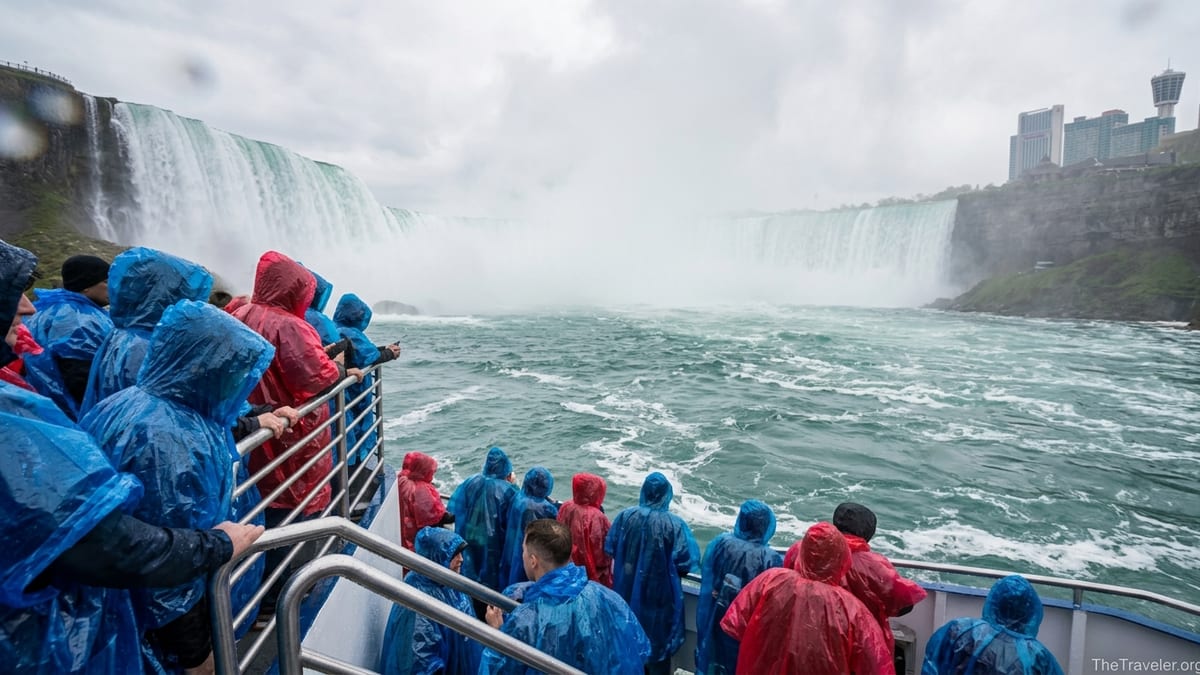
First Impressions from the River
The day started calmly enough. On the U.S. side, at Niagara Falls State Park, I joined the line for the Maid of the Mist boat tour just below the Observation Tower. Staff moved efficiently, handing out bright blue ponchos that snapped and crackled in the breeze. Adult tickets for the 2026 season were posted around 30 dollars, with children under 13 a bit less, which felt reasonable considering this was the signature experience of the park.
From the deck of the Observation Tower, the river looked controlled and almost serene. You could see the rectangular white and red catamarans of Niagara City Cruises sliding away from the Canadian shore, and the deeper blue Maid of the Mist vessels pushing off below. Both sides offer roughly 20 minute cruises that run regularly in season, usually from late April through October, depending on ice and weather. From above, it all seemed organized, almost gentle.
That impression dissolved as soon as the elevator doors opened at river level. From below, the Niagara River is louder, closer and more unpredictable. The walk down the gangway was a slow shuffle between tour groups: a family from Ohio debating whether their six year old would be scared, a pair of German backpackers comparing this to Iceland’s waterfalls, an elderly couple from Toronto who had crossed the Rainbow Bridge just for the afternoon. Everyone was calm, laughing, taking photos. No one yet needed to raise their voice.
When I stepped onto the upper deck and found a spot along the railing, the air smelled faintly of algae and metal, like most working harbors. The engines throbbed underfoot. You could still talk at a normal volume then, pointing out the American Falls to the left and the Canadian skyline ahead. The real sensory shock had not started yet.
Into the Mist and the Roar
The boat eased away from the dock and began tracing a slow arc past the American Falls and Bridal Veil Falls. At this point, it still felt like a standard sightseeing cruise. The narration came over the loudspeakers in clear, measured tones in English, then in a shorter version in a second language. Cameras clicked, people leaned against the railings, and a few kids tested how far they could stretch their arms out without their parents objecting.
As we moved toward the Canadian Horseshoe Falls, the atmosphere tightened. You could see the white wall of mist thickening ahead, like a storm cloud sitting directly on the water. The captain adjusted speed and angle, and the Maid of the Mist began to punch slowly into the spray. This is where the noise began to dominate. Conversation shifted from casual remarks to shouted comments. I tried to ask the man next to me where he was visiting from; he cupped his hands to his mouth and yelled something that sounded like “Pennsylvania” or possibly “Venezuela.” I nodded, pretending I had understood.
By the time we reached the heart of the horseshoe, the sound was a solid physical presence. You do not so much hear Niagara Falls at this distance as feel it. It is in your chest and the bridge of your nose, vibrating through the boat and into your bones. The guide’s narration cut off entirely. People’s mouths still moved, but their words were swallowed by the thunder of 600,000 gallons of water per second dropping just a few hundred feet away. Within that curtain of noise, it became oddly private. Surrounded by hundreds of people, I felt briefly alone, sealed inside my hood with the roar.
The mist turned to sideways rain. The free ponchos did an admirable job of keeping my torso dry, but my jeans and shoes were instantly soaked. The woman in front of me, clutching the rail, started laughing uncontrollably as the wind whipped her plastic hood flat against her face. A teenager nearby tried to film on his phone and gave up when his lens became a sheet of droplets. For about three minutes, none of us were doing anything but hanging on, squinting through the spray and absorbing the sensory overload.
Comparing the U.S. and Canadian Boat Experiences
From the river, you quickly see how similar the core experience is on both sides. Maid of the Mist sails from the New York shore with its muscular electric-powered boats and blue ponchos, while Niagara City Cruises operates a modern fleet from the Ontario shore with red ponchos and slightly larger catamarans. Both trace almost identical routes past the American and Bridal Veil Falls and into the arc of the Horseshoe Falls before retreating back downriver.
Practically, the differences show up before and after the cruise. On the U.S. side, buying a Maid of the Mist ticket means walking through Niagara Falls State Park, past food stands selling funnel cakes and lemonade, and often pairing the cruise with the Cave of the Winds boardwalk or the park’s simple hiking paths. On the Canadian side, Niagara City Cruises tickets are woven into the broader Niagara Parks system. Visitors often bundle their ride with attractions like Journey Behind the Falls or the Niagara Parks Power Station, and then wander back up to Clifton Hill’s neon arcades, chain restaurants and high-rise hotels.
Prices fluctuate slightly year by year, but in recent seasons you could expect standard adult tickets to sit somewhere around the 30 to 40 Canadian dollar range for Niagara City Cruises and a similar amount in U.S. dollars for Maid of the Mist, with family packages and attraction passes offering modest savings. It is not a budget activity if you are traveling with a family of five, but compared with helicopter rides or jet boat tours upriver, the cruises remain one of the most accessible “big ticket” experiences in town.
Noise-wise, however, there is no real distinction. Whether you board on the American or Canadian side, once the bow points into the horseshoe, the falls erase national borders, languages, and the sound of every loudspeaker and camera shutter on board. Any romance you have imagined, such as proposing mid-cruise or exchanging meaningful words in front of the cascade, should either be saved for the calmer approach or moved to one of the viewing platforms on shore.
How to Handle the Overwhelming Sensory Assault
Niagara’s boat cruises can be overwhelming even if you think you know what you are getting into. The combination of noise, crowds, closeness to the water, and constant spray means that sensitive travelers benefit from some preparation. Families with young children often pause near the boarding area, adjusting hoods and explaining that it will be “like a loud, wet roller coaster that does not move very fast.” Parents who packed small earplugs or soft over-ear protectors for toddlers were the ones whose kids looked most comfortable once the roar began.
If you are prone to sensory overload, consider skipping the top deck. The lower level, especially toward the rear, offers a slightly more protected experience. You still see the walls of water and feel the mist, but the overhanging structure and sidewalls blunt some of the spray and reduce the apparent volume. Standing near the center rather than at the rail also lessens the feeling of exposure as the boat noses in toward the falls.
Clothing choices matter more than you might think. On my cruise, people who wore quick-dry hiking pants and lightweight waterproof shoes simply looked more relaxed than those in heavy denim and porous sneakers. The ponchos are reasonably effective, but mist sneaks up sleeves and around hoods, and the deck quickly becomes slick. It is not unusual to step off the boat with damp hair, speckled glasses, and water running down your forearms. Packing a small microfiber towel and a dry pair of socks in your day bag can turn the post-cruise shiver into a minor inconvenience rather than a lingering misery.
For anyone with mobility issues, both operators make an effort to accommodate, but the combination of sloping gangways, wet surfaces and jostling crowds can be challenging. Elevators and ramps connect the boarding areas to street level, but wheelchairs and strollers require patience in the lines. If you or a travel companion needs extra time or space, arriving earlier in the day, when queues are shorter and staff are under less pressure, can make the experience smoother.
Timing, Weather and the Changing Character of the Falls
The season and time of day you choose for your cruise dramatically shape the experience. I went in mid May, early in the operating season, when the water was still frigid and the air temperatures hovered under 60 degrees Fahrenheit. The mist felt like needles on bare skin, and almost everyone clutched their ponchos tight. The pay-off was shorter lines and a more subdued party atmosphere on board.
In July and August, when both U.S. and Canadian schools are out, the whole riverfront hums with visitors. Boats on both sides fill to capacity and departures run every 15 minutes or so during peak hours. Under full sun, the spray turns into a warm, glittering haze. Photos from those trips tend to feature rainbows arching over the gorge, sunglasses askew, and people rolling their poncho hoods down around their shoulders. The roar of the falls does not change, but the mood shifts from bracing to exuberant.
Evening cruises offer a different kind of sensory overload. Niagara City Cruises runs illumination and fireworks departures from the Canadian side on many summer nights, timing their 40 minute outings to coincide with the nightly fireworks displays arranged by Niagara Parks. On those cruises, the noise of the falls competes with the crack of fireworks and the murmur of city traffic above. The falls themselves are lit in shifting colors, changing from white to blue to pink. Sound still dominates, but the darkness and artificial light create a dreamlike quality for those willing to trade some daytime visibility for nighttime spectacle.
Regardless of the schedule you choose, it is wise to build in a buffer of at least an hour on either side of your planned departure. Ticket lines, security checks and the simple process of moving several hundred people down elevators and along boardwalks take time. It is entirely possible, especially on summer weekends around U.S. Memorial Day, Canada Day or the Fourth of July, for boats to sell out for certain time slots, leaving late arrivals with fewer options. Booking in advance through official channels and showing up 30 to 45 minutes before your sailing time helps keep the frantic rush to a minimum.
Life On Board: Crowd Dynamics and Quiet Moments
Once you accept that conversation will be limited at the height of the cruise, the experience on board takes on a different character. Before and after that central plunge into the mist, passengers create their own small stories. On my trip, a multi-generational family from Michigan had clearly designated roles: the grandfather held a GoPro high to capture as much of the approach as possible, the parents tried to keep two small children from peering too far over the rail, and a teenager in the group took on the job of FaceTiming a cousin who could not make it. Nearby, a couple in their twenties traded turns holding each other’s phones and attempting the impossible task of keeping lenses dry.
The crew, practiced from repeating the same routine dozens of times per day, managed to be both brisk and surprisingly patient. They answered questions about where to stand for the “best soak,” pointed out the safest paths across the wet deck, and reminded people to hold onto railings when the boat shifted in the current. Life jackets remained stacked neatly in racks, a reassuring presence that few passengers actually noticed once the novelty of the ponchos and the view took over.
Despite the noise, there are flickers of quiet connection. As the boat pulls back from the horseshoe and the engines power up to fight the river’s pull, people collectively exhale. Conversations slowly resume at slightly hoarse volumes. Children announce how wet they are. Friends compare whose side of the boat got the worst of it. Strangers exchange photos, offering to capture each other’s drenched groups in exchange for one more snapshot of their own. It is in those minutes, as the roar slides from overwhelming to background, that you most clearly sense the shared nature of the experience.
By the time the boat swings past the base of the American Falls again and lines up with the dock, the sound of the water has receded enough that you can once again hear footsteps, engine vibrations, and the scrape of fenders against the pier. People peel off ponchos, some carefully folding them to reuse on a second attraction, others balling them up for the recycling bins. Hair is flattened, glasses fogged, mascara streaked. There is a universal look on faces, somewhere between relief and awe, that says: that was a lot.
Making the Most of Your Niagara Falls Cruise
Because the boat cruise is so intense, it works best as part of a broader visit rather than the only thing you do. On the U.S. side, pairing Maid of the Mist with the Cave of the Winds walkway below Bridal Veil Falls gives you both a river-level and boardwalk perspective. Cave of the Winds issues its own yellow ponchos and sandals and places you just a few yards from the torrents coming off the American Falls. The sound there is powerful but more localized, swirling around wooden decks bolted into the rock.
On the Canadian side, Journey Behind the Falls, accessed via elevators near Table Rock Centre, tunnels directly into the rock behind the Horseshoe Falls and leads to outdoor observation decks that hang near the cascade. The viewing portals inside the tunnel frame sheets of white water like moving windows. Combined with Niagara City Cruises, that experience allows you to see the same waterfall from in front, behind and below, a rare trifecta for any natural wonder.
Budget-conscious travelers can soften the financial impact of these attractions by seeking out combination passes sold by Niagara Parks in Ontario or by independent tour operators who bundle Maid of the Mist tickets with guided walks and park access in New York. While savings per person are modest, they can add up for families traveling with multiple children. Some full-day tours leaving from Toronto or Buffalo include round-trip transportation, timed cruise tickets and a run through other sights such as the Whirlpool Rapids and local wineries, trading independence for convenience and less time spent worrying about parking or schedules.
Food and drink options near the docks are practical rather than memorable. On the American side you will find simple concession stands selling hot dogs, pretzels and ice cream, while the Canadian side offers everything from grab-and-go counters to chain restaurants with floor-to-ceiling windows looking out toward the gorge. Given how wet and chilly you may feel after the cruise, planning a warm lunch or a hot coffee stop immediately afterward is more than just a small comfort; it resets your energy for the rest of the day.
The Takeaway
Niagara Falls appears constantly in photos and postcards, but nothing about its reality is subtle. The boat cruises put you directly in the path of that force, stripping away the sense of distance you get from viewing platforms and hotel windows. For twenty minutes, you are not just looking at a famous landmark. You are enduring it, embraced by its noise and spray.
I boarded Maid of the Mist expecting another scenic boat ride, the kind that lends itself to easy conversation and a few carefully framed images. Instead, I found myself gripping the rail, poncho snapping against my cheeks, unable to hear even my own thoughts. It was disorienting and exhilarating, a reminder that some places in the world still outmatch our expectations no matter how many times we have seen them on a screen.
If you go, accept that you will be wet, windblown and unable to communicate in full sentences for at least part of the journey. Bring a sense of humor, a willingness to shout, and clothing that forgives the weather. Whether you step aboard from New York or Ontario, the essence is the same: Niagara will swallow your voice, rearrange your senses, and hand you back to the shore slightly changed, with water on your skin and a new respect for the raw power roaring just beyond the rail.
FAQ
Q1. Which side is better for a Niagara Falls boat cruise, U.S. or Canada?Both sides offer a very similar core experience: a 20 minute cruise past the American and Bridal Veil Falls into the mist of the Horseshoe Falls. The U.S. side (Maid of the Mist) ties easily into Niagara Falls State Park, while the Canadian side (Niagara City Cruises) connects to a wider range of attractions and hotels. Your choice usually comes down to where you are staying and whether you have the documents needed to cross the border.
Q2. How loud is it on the boat near the falls?At the closest point to the Horseshoe Falls, the sound is intense enough that normal conversation is impossible. You will have to shout directly into someone’s ear for them to hear you, and even then it may be difficult. The noise eases on the approach and as the boat pulls away, but expect a few minutes where you can barely hear yourself think.
Q3. Will I get completely soaked even with the poncho?The complimentary ponchos keep most of your upper body reasonably dry, but your face, hair, lower legs and shoes are likely to get wet, especially on windy days. Think of the experience as similar to standing in a strong rainstorm for a short time. Wearing quick drying clothes and waterproof or water resistant shoes makes a big difference to your comfort afterward.
Q4. Is the Niagara Falls boat cruise safe for young children and older travelers?Yes, as long as everyone can handle wet decks, some jostling in crowds and the intense noise near the falls. Life jackets are available on board, and the boats are designed for stability in the river’s conditions. Families with very young children often stay on the lower deck toward the center, where there is a bit more shelter. Older travelers who use mobility aids may want to allow extra time for boarding and disembarking.
Q5. Do I need to book tickets in advance?Advance booking is strongly recommended during peak times such as summer weekends, holidays and school vacations. Same day tickets are often available, especially earlier or later in the season, but specific time slots can sell out. Buying tickets ahead through official channels gives you a set sailing time and reduces the risk of long waits or disappointment.
Q6. When is the best time of year to take a Niagara Falls boat cruise?Boat cruises typically operate from late April to late October, depending on ice and river conditions. Late spring and early fall offer cooler temperatures and lighter crowds, while July and August bring the warmest weather and the most vibrant atmosphere, but also longer lines. Winter visitors will not find the main cruises running, although other viewpoints and attractions remain open.
Q7. What should I wear and bring on the cruise?Wear layers you do not mind getting damp, quick drying pants or shorts, and sturdy shoes with good grip. Avoid heavy denim and smooth soled sandals. Bring a small bag with a microfiber towel, a dry pair of socks and a waterproof pouch for your phone. Sunglasses and a hat with a snug fit can help with glare and spray on sunny days, though you may need to adjust them under your poncho hood.
Q8. How long does the whole experience take from lining up to leaving the dock?The sailing itself is about 20 minutes, but you should allow 60 to 90 minutes in total during busy periods. Time is spent queuing for tickets if you have not prebooked, passing simple security checks, waiting for elevators, and boarding or leaving the boat. On quieter weekdays or in shoulder seasons, you may move through the process more quickly.
Q9. Can I take good photos or videos even with all the mist?Yes, but it requires a bit of strategy. Many travelers take most of their photos during the approach, before the boat reaches the thickest mist. Once in the heart of the horseshoe, lenses quickly become covered in droplets. Using a water resistant phone or camera, keeping a lens cloth in a pocket, and accepting that some shots will be imperfect helps. Some of the most memorable images are the candid, slightly blurred ones that capture the chaos of the moment.
Q10. Is the cruise worth the cost if I have already seen the falls from the lookout points?For most visitors, yes. Viewing platforms offer excellent panoramas and a sense of scale, but the boat cruise gives you an up close, physical encounter with the falls that cannot be replicated from land. The noise, the movement of the boat, and the feel of the mist combine into a brief but powerful experience that many travelers describe as the highlight of their time at Niagara.