


Few travel moments feel as purely thrilling as edging toward the base of Niagara Falls on a boat, the roar growing louder until the world is little more than white water and wind. Whether you board Maid of the Mist in the United States or Niagara City Cruises’ Voyage to the Falls in Canada, the classic “into the mist” ride is the defining experience of a visit here. This guide brings together the latest practical information on tickets, prices, timings, and on-the-ground tips so you can make the most of your time at one of North America’s most famous natural landmarks.
Understanding Your Boat Ride Options at Niagara Falls
There are two main boat operators at Niagara Falls, one on each side of the border, and they both follow a similar route into the mist below the falls. On the U.S. side in Niagara Falls, New York, you board the historic Maid of the Mist, which has been taking visitors into the gorge for well over a century and now runs modern all-electric boats from within Niagara Falls State Park. On the Canadian side in Niagara Falls, Ontario, Niagara City Cruises operates the Voyage to the Falls boat tour, the only large-boat operator on the Canadian side and the official partner of Niagara Parks.
Both experiences last roughly 20 minutes on the water and follow comparable routes: you cruise past the American Falls and Bridal Veil Falls before turning into the spray at the base of the Horseshoe Falls. In practice, most travelers describe the sensation on each boat as nearly identical. Where the differences matter is in practical details such as currency, ticketing systems, access from nearby hotels, and whether you plan to combine your ride with other attractions like Journey Behind the Falls in Canada or Cave of the Winds in the United States.
If you are staying in Ontario, Niagara City Cruises usually makes more sense: you can walk down from popular hotel clusters near Clifton Hill or Fallsview, buy timed tickets in Canadian dollars, and ride WEGO public buses that stop near the boarding plaza. If you are based in Niagara Falls, New York or driving in from Buffalo, the Maid of the Mist entry within Niagara Falls State Park is more convenient and can be bundled with other state park experiences or sightseeing passes sold on the U.S. side.
Travelers doing a full-day visit from cities like Toronto, Buffalo, or even New York City often choose based on tour itineraries rather than the boat experience itself. Many Toronto-based day tours include a reserved-time Voyage to the Falls ride, while eastern U.S. coach tours more often feature Maid of the Mist. Knowing that the core on-the-water experience is very similar means you can comfortably prioritize logistics and visa requirements when picking a side.
Current Tickets, Prices, and How to Book
As of mid-2026, standard adult tickets for Maid of the Mist are advertised from just over 30 U.S. dollars per person, with youth tickets for children roughly two-thirds of that price and kids five and under riding free with an adult. Prices can change without much notice, especially between seasons, so think of this as a ballpark figure rather than a fixed number. When you buy in person at the ticket office at Niagara Falls State Park, you typically pay the posted rate in U.S. dollars, and the price includes the short elevator ride from the rim down to the boat landing.
On the Canadian side, adult tickets for Niagara City Cruises’ Voyage to the Falls tend to be in the same general range once you convert from Canadian to U.S. currency, though the exact number will fluctuate with exchange rates. Children’s tickets are usually discounted, and kids under a certain age often ride free, mirroring the American side’s family-friendly policy. Beyond the core daytime cruise, Niagara City Cruises also sells special evening options like illumination or fireworks cruises at higher prices, which appeal to photographers and couples looking for a more atmospheric experience.
Buying tickets online in advance generally gives you two advantages. First, you avoid ticket-line uncertainty during busy summer weekends when midday walk-up lines for both boat rides can be long. Second, on the Canadian side you can often choose a timed entry, which lets you plan your day around a specific sailing and then fit activities like Journey Behind the Falls, the Niagara Parks Power Station, or a Fallsview dinner around that slot. By contrast, Maid of the Mist typically boards riders on a first-come, first-served basis, even with online tickets, so your ticket is valid for a given season rather than a specific departure time.
Third-party tour operators and package sellers layer their own pricing and inclusions on top of base ticket costs. For example, you might see packages advertised that combine a “first on the boat” Niagara City Cruises departure plus a guided walking tour and access to Journey Behind the Falls for well over 100 Canadian dollars per person. These can be worthwhile if you value guided commentary, transportation, and guaranteed timing, but independent travelers can usually recreate a similar day more cheaply by purchasing individual tickets directly from operators and using local transit or walking between sights.
Best Times of Year and Day to Ride
Niagara Falls boat rides are highly seasonal because of weather and river conditions. In a typical year, Niagara City Cruises on the Canadian side begins operating in spring, often sometime in April depending on ice melt and safety assessments, and continues through late autumn, sometimes into early November. Maid of the Mist on the American side usually starts a bit later in the spring, frequently around early May, and also wraps up in late October or early November. These dates can shift slightly with weather patterns, so if you are planning a shoulder-season visit in April or early May it is essential to check that operations have actually begun before you finalize a trip built around a boat ride.
Summer, especially from late June through August, is peak season. This is when the full breadth of tours and evening cruises run, the weather is warm, and long daylight hours make it easier to slot a boat ride into a busy day. The trade-off is heavier crowds. On sunny July Saturdays, it is not unusual to find substantial lines for midday sailings between about 11 a.m. and 3 p.m., particularly on the Canadian side, which draws large numbers of day trippers from Toronto and multi-night visitors staying in the dense hotel district above the gorge.
If you want the classic sunlit boat experience without intense crowds, look at shoulder periods like late May, early June, and mid-September. Local tourism boards and tour companies routinely promote early June and September as sweet-spot weeks: most attractions are running at full pace, average daytime highs are comfortable for being out on deck, and school holidays or major Canadian long weekends have not yet pushed visitor numbers to their peak. A midweek visit in these months can mean far shorter lines, more space at the railings on board, and easier last-minute ticket purchases.
Time of day also shapes the feel of your ride. First departures of the morning are ideal if you prioritize calmer scenes and shorter waits; many visitors who queue up around opening time report boarding quickly and enjoying a relatively relaxed ride with uncrowded views. Early evening cruises on the Canadian side, especially illumination or fireworks departures, feel completely different: the falls are lit in color, the air might be cooler, and the mist catches spotlights instead of direct sun. If you have a full day, consider one daytime ride and one evening vantage point from the shore rather than trying to do both rides, as the on-the-water route itself is similar.
What to Expect on Board and How to Prepare
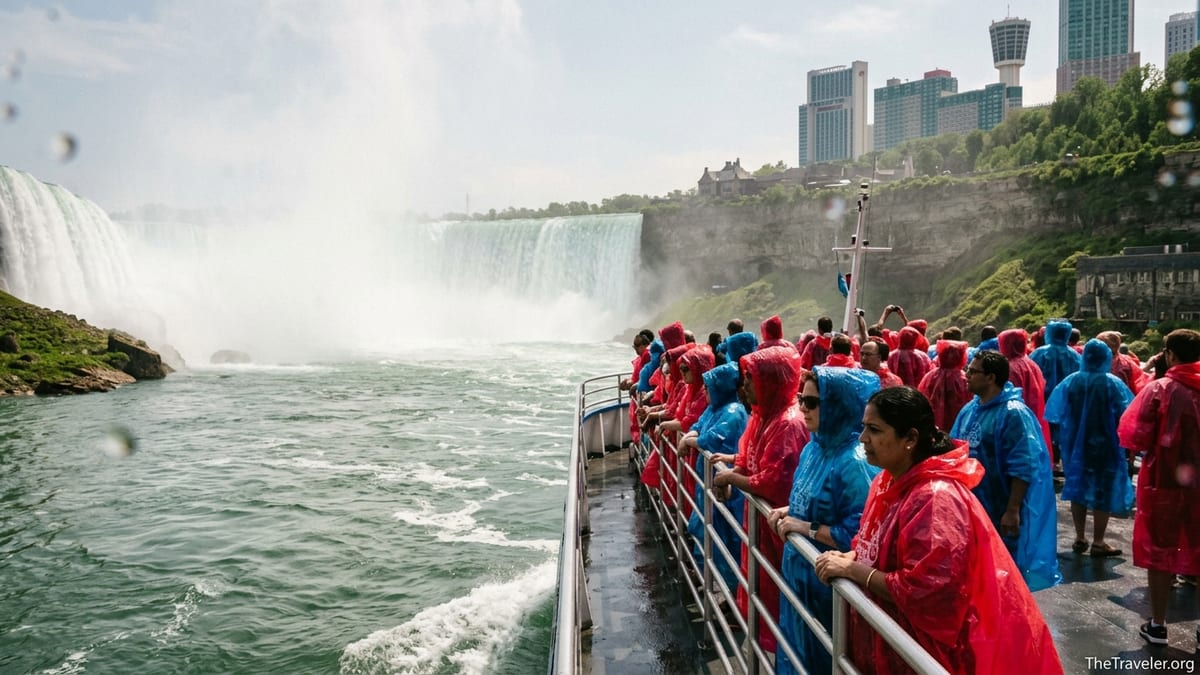
Regardless of which side you depart from, prepare to get wet. Both Maid of the Mist and Niagara City Cruises hand out thin, recyclable ponchos before you board: blue on the U.S. side and typically red on the Canadian side. These ponchos do a reasonable job of keeping your torso dry, but the open areas around your face, arms, and legs mean that you should expect damp hair, mist-sprayed shoes, and occasional gusts of water. If you wear glasses, bring a soft cloth to wipe away droplets; if you carry a camera or phone, consider a simple waterproof sleeve or case to avoid constantly worrying about spray.
On a typical departure, boarding involves walking down ramps or using elevators from the rim to the dock, scanning a paper or mobile ticket, and then stepping onto the boat via a short gangway. Once on deck, you can move freely between the front, back, and sides, with some passengers heading for the upper deck railings for maximum exposure and others sheltering behind glass in interior sections. The captain will steer past the American Falls and Bridal Veil Falls first, then swing toward the horseshoe curve of the Canadian Horseshoe Falls, where the engine idles and the boat lingers amid roaring water and heavy mist before turning back.
The sensation of being that close to the falls is intense rather than frightening. You will feel strong wind created by the falling water, hear constant thunder, and sometimes see only white mist for several seconds at a time. Families regularly bring children, and both operators design their decks to be stable and accessible, including railings high enough for safety and crew members helping at boarding points. People with limited mobility can remain on lower decks and still get memorable views, though upper decks provide the most dramatic angles for photography as long as you are comfortable with stairs.
Temperatures on the water can feel noticeably cooler than on shore, particularly in spring and autumn or on cloudy days. Even in July, standing in a wet poncho in strong wind can feel chilly. Bring a light fleece or long-sleeve layer you do not mind getting damp, and wear quick-drying clothes instead of heavy denim. Footwear matters more than many first-time visitors expect: simple sneakers or walking sandals that can handle water are ideal, while leather dress shoes or smooth-soled sandals can become slippery on wet decks. Operators keep safety in mind, but your own clothing choices will strongly influence comfort.
Planning from Each Side: U.S. vs. Canada
On the American side, your boat ride usually sits within a broader visit to Niagara Falls State Park. Many visitors park in one of the state park lots or walk over from downtown Niagara Falls, New York hotels. From there, you can combine Maid of the Mist with viewpoints on Goat Island, the Cave of the Winds experience at Bridal Veil Falls, and shorter walks to overlooks along the gorge. For travelers driving in from Buffalo or the rest of upstate New York, this side can feel more straightforward because you stay within one country, pay in U.S. dollars, and avoid border lines.
On the Canadian side, the experience feels more urban and resort-oriented. High-rise hotels cluster along Fallsview Boulevard and near Clifton Hill, and many offer falls-facing rooms that look directly down on the gorge. From this hotel zone, it is a downhill walk or short WEGO bus ride to the Niagara City Cruises main ticket plaza and boarding area. Visitors frequently pair a Voyage to the Falls ride with Walks along the Niagara Parkway, a visit to the Table Rock Centre beside Horseshoe Falls, and indoor attractions such as the Niagara Parks Power Station and its tunnel to a river-level viewing platform.
Transportation logistics may shape your choice. If you are in Toronto without a car, day tours that include transportation and a scheduled Voyage to the Falls departure are common; some include extras like a winery stop in the nearby Niagara-on-the-Lake region. If you are flying into Buffalo Niagara International Airport and renting a car, staying on the New York side and driving 30 to 40 minutes to the park is often easier. Cross-border trips are rewarding but require you to factor in immigration lines at the Rainbow Bridge or the Whirlpool Rapids Bridge and ensure you have the necessary passports or visas for both Canada and the United States.
Families traveling with young children or older relatives sometimes prioritize the side with simpler walking distances from their accommodation to the dock. For example, staying in a midrange hotel near Clifton Hill can put you within 10 to 15 minutes on foot of the Niagara City Cruises boarding area, while certain U.S. hotels near the state park allow a similar walking time to the Maid of the Mist elevators. In both cases, check whether your hotel offers shuttle services or discount packages that include boat ride vouchers, especially during peak season promotions.
Money-Saving Strategies, Passes, and Packages
Although the stand-alone boat tickets on either side are not cheap, they are also not extreme compared with other major attractions in North America. Where costs add up is when you start adding multiple viewpoints, meals, parking, and family tickets. Looking for passes and packages can trim your total budget. On the Canadian side, the park system regularly markets attraction passes that bundle Voyage to the Falls with experiences like Journey Behind the Falls, the Niagara Parks Power Station, and the Butterfly Conservatory. When these are on sale, the per-attraction cost often drops compared with booking each individually.
In the United States, seasonal passes or combination tickets sometimes link Maid of the Mist with Cave of the Winds, aquarium visits, or trolley rides within the state park. Local tourism offices and official visitor centers in Niagara Falls, New York, periodically promote bundles targeting families or coach groups. Ask whether these passes really fit your priorities: if you only have a half-day and mainly want the boat ride plus one other activity, a full bundle might not represent real value compared with paying individually.
Third-party agencies and online tour marketplaces also sell combination tours, for example a guided half-day that includes hotel pickup from central Toronto, a Voyage to the Falls ticket, time at the Table Rock viewing complex, and a stop at a Niagara Peninsula winery. These tours can run around or above the low hundreds of dollars per person, depending on season and inclusions like meals. For travelers without a car or those who prefer not to navigate border crossings on their own, this premium can be reasonable; independent travelers comfortable with driving and using local transit can achieve similar itineraries for noticeably less.
Simple on-the-ground habits also save money. Street and garage parking close to prime viewpoints in Niagara Falls, Ontario and Niagara Falls, New York can be expensive, especially during summer weekends. In Canada, using WEGO day passes to connect from less-central parking or from your hotel to the boat dock can reduce both stress and cost. On the U.S. side, arriving early or later in the day can make it easier to secure lower-cost parking further from the busiest lots, then walking into the park. Eating at casual local spots a few blocks away from the most tourist-heavy areas rather than directly beside the falls also keeps your food budget under control.
Weather, Safety, and Practical Tips on the Day
Weather is the single biggest variable that shapes what your Niagara Falls boat ride feels like. On warm, calm July afternoons, the mist can feel refreshing and pleasant, and riders often emerge with damp but smiling faces. On blustery April or October days, the combination of wind, spray, and lower temperatures can feel bracing. Forecasts along the Niagara River can shift, but paying attention the evening before your ride and choosing a departure time accordingly helps. If a cold front is due in late afternoon, aiming for a late-morning ride often yields warmer, more comfortable conditions.
Operators prioritize safety and regularly adjust or suspend sailings in extreme conditions, such as severe thunderstorms, very high winds, or unusual river states. While full cancellations on peak-season days are relatively rare, short pauses of 20 to 60 minutes when lightning is in the area do occur. If you have a timed ticket for a specific Voyage to the Falls departure during unsettled weather, build flexibility into your schedule rather than stacking nonrefundable reservations back-to-back. Tour companies that include the boat ride in a larger itinerary may shuffle the order of activities in response to last-minute weather advisories.
Most travelers can safely enjoy the ride, but if you are sensitive to motion, standing on an outdoor deck close to the centerline of the boat can reduce any sense of movement compared with standing at the bow. People with hearing sensitivities might consider bringing earplugs; the engine noise is moderate, but the constant roar of the falls at close range can feel overwhelming for some. If you are traveling with small children, set expectations in advance that they will get very wet and that you may step inside the sheltered portion of the deck if they feel uncomfortable once the boat turns fully into the mist.
Finally, think through what you carry with you. Bags and backpacks are allowed, but anything you bring on deck is likely to be sprayed. A compact crossbody bag with a zipper, containing only essentials like passports, a small wallet, and a phone, is often easier to manage than a full daypack. If you must carry important documents and electronics, seal them in a simple plastic pouch or dry bag inside your main bag so that even if your outer layer gets damp, the contents stay protected. These precautions matter more during colder months, when drying out takes longer and wet clothes can quickly compromise your comfort for the rest of the day.
The Takeaway
Choosing and enjoying a Niagara Falls boat ride is less about finding the “better” operator and more about matching the experience to your broader travel plans. Maid of the Mist in New York and Niagara City Cruises’ Voyage to the Falls in Ontario both deliver the essential thrill of drifting into the roar and spray at the base of the falls. Differences lie mostly in logistics: which currency you prefer, which side’s attractions you want to explore, how you are arriving, and whether an evening fireworks cruise or a simple daytime sailing fits your budget and schedule.
By checking current operating dates, booking tickets in advance during peak months, and timing your ride for early morning or shoulder seasons if you want thinner crowds, you can avoid the most common frustrations. Packing quick-dry layers, secure footwear, and simple protection for phones and cameras keeps the focus where it belongs: on the elemental drama unfolding around you. Build your day so that the boat ride anchors a wider itinerary, whether that means pairing it with cliffside viewpoints, power station tours, or a leisurely dinner overlooking the gorge.
Handled thoughtfully, your 20 minutes on the water will feel far longer in memory. The combination of wind, sound, and shimmering spray is what many travelers remember first when they think back on Niagara. With a bit of planning around tickets, timing, and practical details, you can step on board confident that you have done the background work, leaving you free to simply lean into the mist and watch one of the world’s great waterfalls from its most thrilling vantage point.
FAQ
Q1. Do I need to book Niagara Falls boat ride tickets in advance?
Booking ahead is strongly recommended in peak season, especially for Niagara City Cruises’ timed departures and any special illumination or fireworks cruises, while early or late-season visitors may find walk-up tickets more feasible.
Q2. Which is better: Maid of the Mist or Niagara City Cruises?
The core on-the-water experience is very similar, so the better choice usually depends on where you are staying, which side’s other attractions you want to see, and what visa or border requirements apply to your trip.
Q3. How long does the Niagara Falls boat ride take?
The standard Maid of the Mist and Voyage to the Falls rides each last about 20 minutes on the water, with additional time needed for queuing, boarding, and riding elevators or ramps to and from the dock.
Q4. What should I wear on the boat ride?
Wear quick-drying layers, comfortable shoes with good grip that can get wet, and avoid heavy fabrics like thick denim; ponchos are provided, but you should still expect your hair, arms, and footwear to get damp.
Q5. Can young children go on the boat rides safely?
Yes, families regularly bring young children, and both operators are designed to be family-friendly, though parents should prepare kids for loud noise, blowing mist, and the possibility of feeling cold or overwhelmed near the base of the falls.
Q6. Are the boats accessible for travelers with limited mobility?
Both sides use elevators or ramps to reach the docks and have lower-deck viewing areas suitable for many visitors with mobility challenges, but it is best to check the latest accessibility details with operators if you use a wheelchair or scooter.
Q7. When is the best time of year to take the boat ride?
Late spring through early autumn offers the fullest schedules and warmest conditions, with late May, early June, and September often providing a good balance of favorable weather and manageable crowds.
Q8. What happens if the weather is bad on the day of my cruise?
In light rain or normal mist, rides typically continue, but in severe storms or very high winds departures may be delayed or canceled, in which case operators or tour companies will offer guidance on rebooking or refunds according to their policies.
Q9. Can I bring my camera or phone on the boat?
Yes, most visitors do, but you should protect electronics with a simple waterproof case or pouch and be prepared to wipe away spray frequently, especially when the boat turns into the heaviest mist near Horseshoe Falls.
Q10. Is one day enough to do the boat ride and see other Niagara Falls highlights?
One well-planned day is enough to include a boat ride plus several key viewpoints and one or two major attractions on either side, though travelers who can spend a night or two will find it easier to see both countries and enjoy evenings by the falls.