


More news on this day
Singapore is enjoying a temporary boost in connecting traffic as airlines skirt conflict-affected Middle East airspace, but industry analysis from IATA indicates the uplift for the city-state is likely to be short-lived once routes normalize and capacity constraints ease.
Get the latest news straight to your inbox!
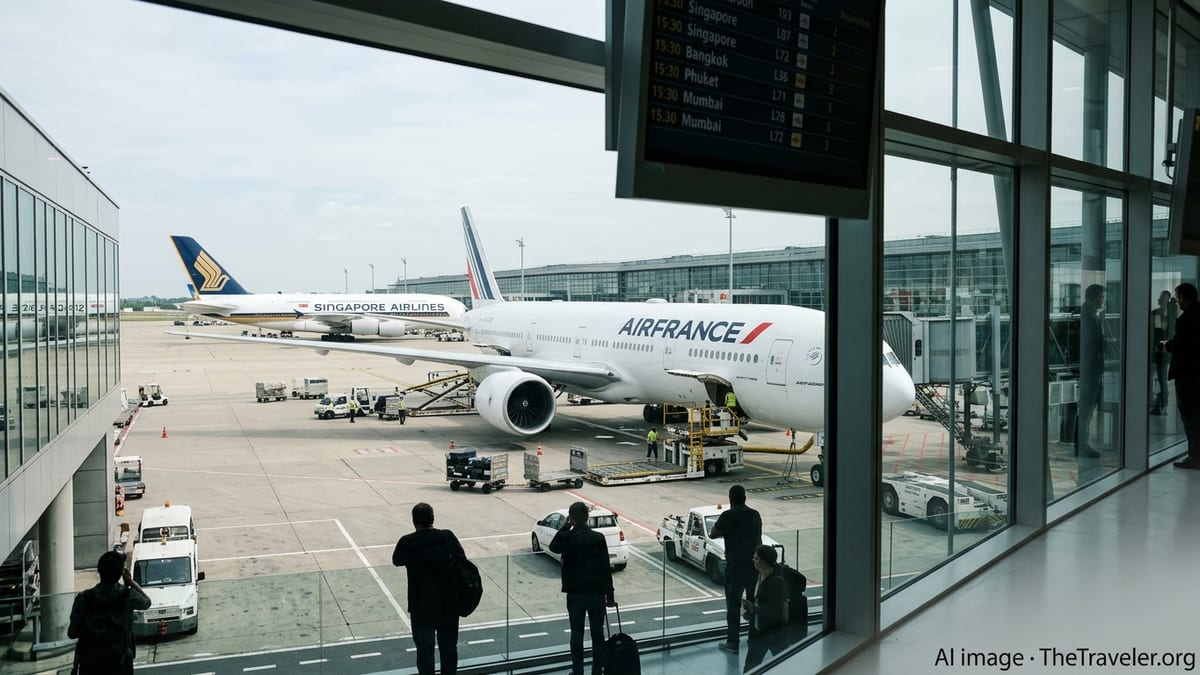
Middle East conflict reshapes global flight paths
Recent conflict in the Middle East has led to widespread airspace closures and operational suspensions across parts of the region, forcing airlines to redraw some of the world’s busiest long-haul corridors. Traffic that once flowed seamlessly through major Gulf hubs has been disrupted, with carriers diverting flights or cancelling services altogether as they navigate safety advisories and shifting military dynamics.
According to publicly available information from the International Air Transport Association (IATA), the Middle East has functioned as a “critical bridge” between Europe, Africa and Asia, concentrating large volumes of transfer traffic at airports in the Gulf. When that bridge is constrained, the knock-on effects ripple through airline schedules, pushing carriers to seek alternative routings and hubs that can absorb displaced demand.
Analysts tracking these changes report that airlines have adopted a mix of strategies, from adding fuel and flying longer tracks around closed airspace to retiming services or consolidating frequencies. While essential for safety and continuity of operations, these measures are increasing flying time and fuel burn, tightening aircraft and crew utilization, and pushing up unit costs across several long-haul markets.
With parts of regional airspace still subject to closure or heightened restrictions, the network shock has yet to fully unwind. IATA’s latest global outlook frames the situation as a major constraint on profitability in the Middle East, while simultaneously creating short-term opportunities for other hubs that can provide reliable alternatives on Europe–Asia and Asia–Africa flows.
Singapore emerges as an alternative Europe–Asia bridge
Singapore is one of the key beneficiaries of the current disruption, as rerouted passengers and cargo seek stable, well-connected transfer points outside the Gulf. Changi Airport’s extensive links across Southeast Asia, North Asia, Australia and Europe position the city-state as a natural alternative for itineraries that once relied on Middle Eastern hubs for one-stop journeys between Europe and Asia.
Published commentary on Singapore Airlines’ recent performance highlights this trend, noting that the carrier and its low-cost subsidiary Scoot are well placed to capture some of the displaced transfer traffic. With Gulf carriers reducing or reshaping their schedules, connecting flows that might previously have transited through Dubai, Doha or Abu Dhabi are being rebooked over Singapore on long-haul services to Europe and regional connections across Asia-Pacific.
Industry observers point out that this traffic shift is particularly evident in premium long-haul markets, where business travelers and higher-yield leisure passengers prioritize reliability and one-stop connectivity. Longer flight times caused by rerouting via alternative corridors also increase the appeal of well-timed overnight services and seamless transfers, an area where Changi and its home carriers have long invested in schedule coordination and airport experience.
Beyond passenger travel, Singapore is also seeing incremental benefits in air cargo. Trade flows between Asia and Europe remain robust, and reports on cargo network adjustments indicate that airlines are experimenting with new routings and frequencies that make use of Singapore’s position within established Asia-Pacific supply chains. Even modest changes in hub choice can translate into higher throughputs for logistics operators, ground handlers and related services clustered around the airport.
IATA warns gains are real but temporary
Despite these immediate advantages, IATA’s latest economic assessment stresses that the uplift for Singapore and other alternative hubs is transitory in nature. The association’s analysis of the Middle East’s role in global aviation emphasizes that the region’s geographic positioning and infrastructure depth remain highly competitive once airspace and operational conditions stabilize.
Publicly available IATA material describes the current rerouting as a response to an external shock rather than a structural realignment of traffic flows. The fundamental drivers that built the Gulf hubs into major transfer centers, including proximity to large population centers, efficient long-haul fleet deployment and favorable tax environments, are expected to reassert themselves over time. As a result, IATA projects that displaced transfer traffic will gradually shift back toward traditional Middle East gateways when restrictions ease.
The same analysis also points to global capacity constraints and high fuel prices as limiting factors for how far any one hub, including Singapore, can capitalize on the disruption. With aircraft deliveries lagging demand and maintenance and supply chain bottlenecks still evident, airlines have limited ability to add new services or significantly upgauge existing routes at short notice. That reality caps the permanent market share gains that alternative hubs can achieve from rerouting alone.
In this context, Singapore’s current boost in transfer volumes is framed as a temporary upside in a challenging operating environment rather than a lasting reset of aviation geography. IATA’s projections suggest that once Middle East carriers restore capacity and direct routings through the region become widely available again, much of the displaced traffic will rebalance toward pre-disruption patterns.
Cost pressures and longer journeys for travelers
For travelers, the rerouting patterns that benefit Singapore come with trade-offs. Travel advisories, airspace closures and operational workarounds have lengthened flight times on some Europe–Asia routes, particularly those that previously took advantage of efficient, direct tracks via the Gulf. Aviation specialists quoted in recent coverage explain that detours can disrupt optimal use of jet streams, sometimes requiring aircraft to fly across or against prevailing winds instead of with them.
These changes add fuel consumption and scheduling complexity, increasing the likelihood of missed connections and tighter aircraft rotations. Analysts expect that elevated fuel prices, combined with longer routings, will contribute to upward pressure on fares in affected markets, even as airlines and airports seek to keep itineraries as competitive as possible. Passengers may face more crowded peak flights on resilient hubs such as Singapore, along with shifts in departure times as carriers reconfigure their timetables.
At the same time, the broader network impact is not uniform. Some itineraries now see improved connectivity through Singapore compared with their previous Gulf routings, particularly when traveling between secondary Asian cities and select European destinations. Travel industry commentary notes that airlines and global distribution systems are actively testing schedule combinations to minimize total journey times and preserve attractive connection options.
For corporate travel planners and frequent flyers, the evolving pattern underscores the importance of flexibility. As Middle East airspace conditions change and carriers progressively restore or modify their schedules, hub preferences and routings offered in booking tools are likely to keep shifting. Singapore’s enhanced role in today’s itineraries may remain visible for some time, but IATA’s outlook indicates that it should be seen as a tactical adjustment rather than a permanent rerouting of global aviation flows.
Implications for Singapore’s aviation strategy
The temporary windfall from Middle East rerouting aligns with Singapore’s long-standing strategy of positioning itself as a resilient, high-connectivity hub in Asia-Pacific. IATA’s dedicated report on the value of air transport to Singapore underscores the sector’s importance to the local economy, including its role in supporting trade, tourism, productivity and high-value services. Any incremental transfer traffic or cargo volumes therefore provide a short-term boost to aviation-linked employment and business activity.
However, the same data sets highlight how exposed a hub can be to external shocks. The pandemic had already shown the vulnerability of a model heavily reliant on international connectivity, and the current Middle East disruptions are reinforcing the need for diversified traffic flows and robust contingency planning. For policymakers and industry stakeholders in Singapore, the present surge in rerouted demand is likely to be read as both a validation of existing infrastructure investments and a reminder that long-term growth depends on stable geopolitical and economic conditions beyond the city-state’s control.
As Middle East operations eventually normalize, the challenge for Singapore will be to convert today’s temporary gains into lasting competitive advantages. That may involve deepening partnerships with airlines in Europe, South Asia and the Pacific, refining schedules to lock in new transfer flows where commercially viable, and continuing to enhance the passenger and cargo experience at Changi. IATA’s signal that the current boost is only temporary suggests that such efforts will be crucial if Singapore is to sustain a larger share of global aviation traffic once direct Gulf routings resume at scale.
For now, Singapore stands as one of the clearest examples of how quickly global air networks can reconfigure around geopolitical risk, and how rapidly those configurations may shift again when conditions improve. The city-state may not retain all of the traffic diverted from the Middle East, but its performance during this period is likely to strengthen its reputation as a dependable alternative when disruptions arise.