


More news on this day
Hundreds of airline passengers across Europe and Mexico faced unexpected overnight stays and missed connections as at least 66 flights were canceled and more than 560 delayed, disrupting services on carriers including KLM, Volaris, easyJet, British Airways, Air France, Norwegian Air Sweden and Austrian Airlines.
Get the latest news straight to your inbox!
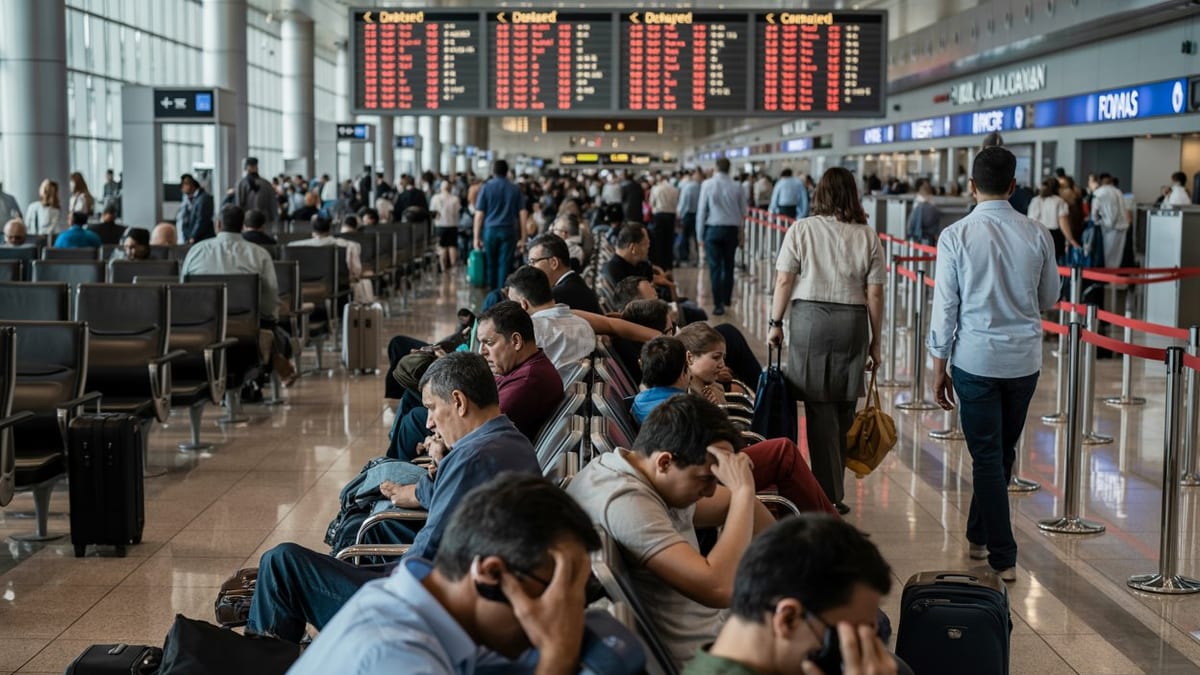
Disruptions Stretch From Amsterdam To Mexico City
Flight tracking data for Tuesday shows a sharp uptick in cancellations and delays affecting major hubs in the Netherlands, the United Kingdom, France, Austria and Mexico, alongside secondary airports handling intra-European services. Aggregated statistics from global trackers indicate that at least 66 scheduled flights operated by a mix of European and Latin American airlines were canceled, while around 564 services suffered delays of more than 15 minutes. The impact was most visible at congested transfer airports such as Amsterdam Schiphol, London Gatwick and Paris Charles de Gaulle, where even a modest rise in disruptions can cascade through tightly timed schedules.
Publicly available boards for Amsterdam, London and Paris showed clusters of delayed departures on short-haul routes operated by KLM, easyJet, British Airways and Air France, with some departures pushed back by more than an hour. In Mexico, Volaris flights serving domestic and cross-border routes recorded a series of late departures, adding to queues at check-in and security. In Austria, Vienna International Airport reported scattered cancellations and rolling delays on services branded by Austrian Airlines and its Star Alliance partners, affecting both regional and long-haul itineraries.
While the absolute number of canceled flights remained a small fraction of the total daily schedule, the geographic spread of today’s disruption meant that inconvenience was magnified for travelers navigating onward connections. Missed links at large hubs forced rebookings onto already busy later flights, leaving some passengers stranded overnight or rerouted through alternative cities in Europe or North America.
Travel data firms note that these disruptions come on a day when overall global cancellations number in the low hundreds, suggesting that the 66 flights dropped from schedules and the hundreds of delayed departures represent a noticeable spike concentrated in specific markets. That concentration helps explain why the disruption felt more intense for passengers departing from or transiting through the Netherlands, Mexico, the UK, France and Austria.
Multiple Airlines See Schedules Knocked Off Course
Network carriers and low cost airlines alike were affected. In Europe, KLM and Air France experienced cancellations and a series of rolling delays on intra-European routes that typically serve as feeders into their long haul operations from Amsterdam and Paris. Historical punctuality reports for these airlines show a pattern of generally high completion rates, which underscores how even a modest swing in daily performance can produce visible disruption across their networks.
British Airways and easyJet, two of the dominant players at London area airports, also recorded delays on popular leisure and business routes to continental Europe. Previous operational statistics compiled by European airports show that both airlines usually complete the vast majority of planned services, but days with dense schedules and constrained airspace can quickly push average delay minutes higher. Norwegian-branded operations, including Norwegian Air Sweden, saw lateness on select Nordic and Mediterranean routes, while Austrian Airlines reported issues on flights touching Vienna and other central European destinations.
In Mexico, Volaris, which focuses heavily on point-to-point and cross-border traffic, appeared among the carriers with a higher number of delayed departures. Data from live flight boards highlighted knock-on effects at connecting airports in the United States, where late inbound arrivals compress turnaround times and increase the risk of further schedule slippage.
A review of historical punctuality tables from European hubs indicates that days featuring similar clusters of delays often share common stress factors such as weather patterns, air traffic control constraints or technical and staffing challenges at individual airports. Today’s numbers line up with that broader trend, showing how issues affecting a few dozen flights at the start of the day can ripple outward as aircraft and crews fall behind rotation.
Possible Drivers: Weather, Airspace And Operational Strain
The precise mix of causes behind today’s cancellations and delays varied by region, but aviation analysts typically point to a familiar set of drivers when disruptions spike across several countries at once. Weather remains one of the most common triggers, with low visibility, strong winds or thunderstorms around key hubs prompting tighter separation between aircraft and slowing the rate at which departures and arrivals can be handled. Even relatively short-lived weather events can force airlines to trim schedules or hold aircraft on the ground, particularly at already busy airports.
Air traffic management constraints can also play a significant role. Public airspace updates for Europe show recurring capacity reductions linked to staffing and sector closures, which require rerouting traffic through narrower corridors. These constraints increase flight times and reduce the flexibility airlines have to make up lost minutes in the air, locking in delays that might previously have been recovered.
At the airline level, operational strain can emerge from tight fleet planning, maintenance demands or crew availability. If an aircraft goes out of service unexpectedly, or if a crew reaches duty time limits because of earlier delays, carriers may be forced to cancel individual legs to keep the broader network stable. Historical performance data from several of the affected airlines illustrates how such localized operational issues can flare into broader schedule disruption when network buffers are already thin.
Industry observers note that this week’s disruptions are part of a wider pattern of volatility in global aviation, as airlines operate near capacity on popular routes while still rebuilding resilience lost during earlier downturns. Under those conditions, a confluence of weather, airspace bottlenecks and resource pressures can quickly translate into the sort of multi-country disruption seen today.
Impact On Travelers And Their Rights
For passengers, the immediate effects were long queues at service desks, extended waits in departure halls and a scramble to secure alternative connections. At airports from Amsterdam and Paris to Mexico City and Vienna, travelers faced uncertainty over whether they would reach their destinations the same day. Those with tight onward itineraries, including cruise departures and rail connections, were among the most affected.
Consumer advocacy organizations highlight that travelers impacted by cancellations or long delays within or departing from the European Union, the United Kingdom and several other jurisdictions may be entitled to assistance and, in some cases, compensation. Under established passenger rights frameworks, airlines are generally expected to provide food and refreshments during extended waits, hotel accommodation when overnight stays are required, and rebooking on the next available flight. Monetary compensation can be available when disruptions are not caused by extraordinary circumstances and when minimum delay thresholds are met.
Guidance from travel rights platforms stresses the importance of retaining boarding passes, confirmation emails and any written notice of disruption, as these documents are often required when submitting claims. Passengers are also advised to keep receipts for meals or accommodation purchased while stranded, since some airlines will reimburse reasonable expenses if assistance at the airport proves insufficient.
However, the process of securing compensation can be time consuming, and outcomes depend heavily on the reason for the disruption and the specific regulations that apply to the route in question. As today’s events demonstrate, passengers do not always receive clear information in real time about the underlying causes of cancellations and delays, which can complicate later claims.
What Travelers Can Do On High-Risk Days
With live data sites and airport boards showing that days with several hundred delays are becoming more common during busy travel periods, analysts increasingly recommend that passengers build additional resilience into their plans. Booking earlier departures, allowing longer connection times and avoiding the last flight of the day on critical legs are among the tactics often suggested to reduce the risk of being stranded when disruption strikes.
Monitoring flight status through airline apps and airport information screens can also provide early warning of trouble. Many carriers, including KLM, Air France and British Airways, encourage travelers to enable push notifications so that gate changes, delays and cancellations are flagged as soon as they are entered into the system. Having this information early can give passengers more time to request rebooking or explore alternative routes.
Travel specialists also point to the value of flexible tickets and comprehensive travel insurance on routes that pass through congestion-prone hubs. While these options typically come at a higher upfront cost, they can offer greater freedom to change plans at short notice and may cover some of the expenses associated with prolonged disruption.
Today’s wave of cancellations and delays across Europe and Mexico underlines how quickly routine travel can unravel when multiple pressure points align. For airlines and airports, the figures are a reminder of the need to continue investing in resilience, while for passengers they serve as a prompt to plan for the unexpected every time they fly.