


More news on this day
Multiple departures from Seoul’s Incheon International Airport recently left without some passengers’ checked baggage, after a disruption in the baggage screening flow reportedly prevented normal movement of luggage from check-in belts into the airport’s automated handling system.
Get the latest news straight to your inbox!
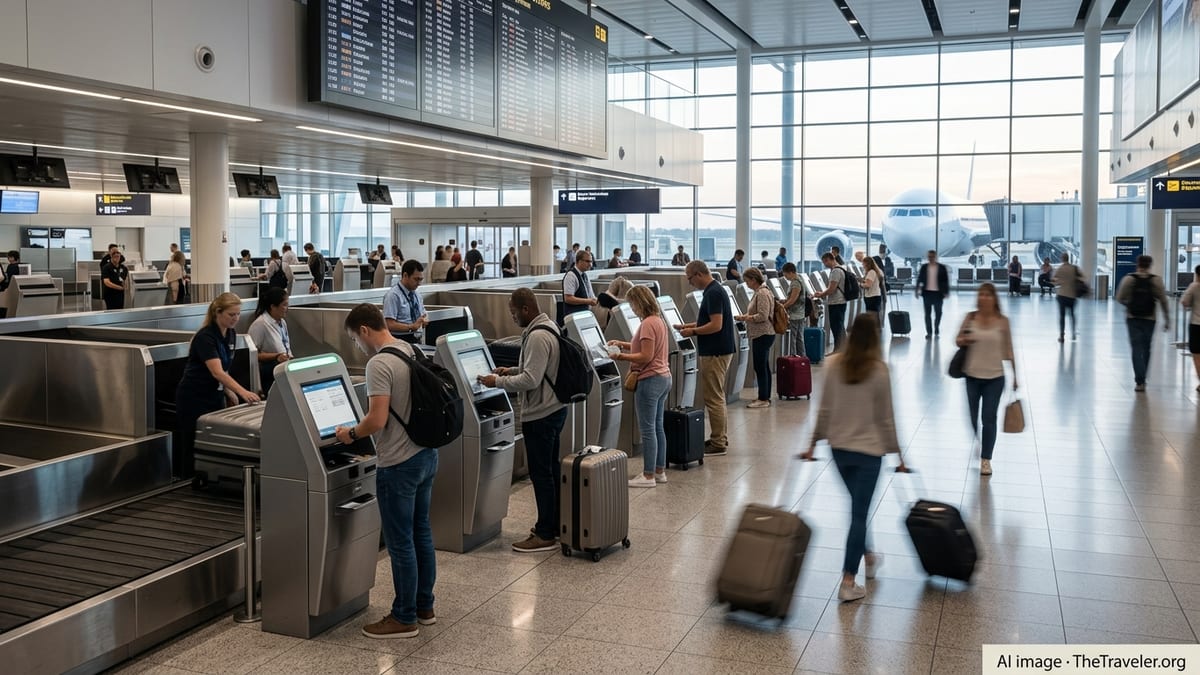
What happened and which flights were affected
Published coverage in South Korea indicates the incidents involved Jin Air flights departing from Incheon’s Terminal 2 on two separate mornings in early September 2026. The reports describe a total of 26 checked bags that did not make it onto nine aircraft: 16 bags across four Jin Air flights on September 4, and 10 bags across five Jin Air flights on September 10.
The affected flights were described as morning departures, largely on short-haul routes to Japan, including cities such as Tokyo and Fukuoka. In both instances, the aircraft departed while some checked items remained behind, creating a mismatch between passengers and their bags that typically triggers downstream tracing and delivery.
Coverage also suggests the issue may not have been limited to a single carrier. Some reporting indicates other Terminal 2 airlines experienced similar baggage handling problems around the same period, raising the possibility that the disruption reflected a broader pinch point rather than a one-off loading error.
Why bags can miss flights at an airport built for automation
Incheon is widely known for an automated baggage flow in which checked luggage is transported and sorted by flight through an integrated baggage handling system. In this case, reporting points to a failure upstream of sorting: delays in baggage security screening that prevented normal operation of the conveyor belts at the check-in counters, which would slow or stop bags from entering the main automated system in time for departure.
When baggage screening throughput lags behind the pace of check-in, bags can queue before X-ray or secondary inspection. If a flight’s cut-off time for loading is reached while items are still waiting for clearance or transfer, the aircraft can depart on schedule and the bags are left behind for later movement, even if other bags for the same flight made it through earlier.
Publicly available descriptions of the airport’s operations emphasize that screening, transport, and sorting are interdependent. A bottleneck in one area can cascade quickly during peaks, particularly during morning banks of departures and during periods when connecting flows and originating passengers overlap.
What passengers can expect when checked bags do not arrive
In the reported incidents, passengers were notified that their bags had been left behind and arrangements were made to move the luggage on later flights. That pattern is consistent with standard practice in baggage irregularities, where airlines use the next available service to the destination and then coordinate delivery or pickup once the bag is scanned into the arriving station’s system.
For travelers arriving without their checked items, the practical first step is typically to file a baggage irregularity report at the airline’s service counter in the baggage claim area. Incheon’s own guidance for baggage issues directs passengers to report problems at lost baggage information counters near the carousels and to work directly with the operating airline for next steps, particularly once a traveler has left the airport.
Timelines can vary based on flight frequency and destination, but the key operational detail is that delayed bags generally move only after they clear screening requirements and are matched to a subsequent flight. Travelers may be asked to provide a local address, hotel information, and contact details for delivery coordination, or to return to the airport for collection depending on the airline’s process at the destination.
Peak travel pressure and Terminal 2 staffing questions
The timing has drawn attention because it occurred ahead of a heavy domestic holiday travel stretch in Korea. Published coverage has pointed to concerns about whether screening resources at Terminal 2 are sufficient during peak departure periods, particularly when traffic builds quickly in a narrow morning window.
Some reporting has linked the disruption to staffing constraints in security screening operations, including a change in support arrangements between terminals that could affect how quickly screening lanes handle surges. While the precise operational cause can be complex, the common thread in the coverage is that screening delay, not aircraft loading error alone, appears to have been central to bags missing flights.
The episodes stand out because they were described as clustered and repeat occurrences rather than isolated mishandles. Even at airports with strong performance metrics, repeated misses over a short span can signal a capacity mismatch at specific times of day, especially when flight banks, staffing rosters, and screening equipment utilization are tightly synchronized.
What travelers can do now when flying out of Incheon
For passengers departing Incheon, especially on morning regional flights, the most effective mitigation is time and timing. Arriving earlier than usual for baggage drop creates margin if screening queues form behind the scenes, even after a bag disappears onto the belt. Travelers using Terminal 2 should also pay attention to airline guidance on recommended arrival times and check-in cutoffs, since bag acceptance deadlines can be earlier than passenger boarding times.
Keeping essentials in carry-on remains a practical hedge: medication, electronics, one change of clothes, and any critical items for the first night. Another step that can help is placing contact details inside the suitcase in addition to the external tag, and using an approved tracking device where permitted, which can provide the traveler with additional visibility if a bag is routed later than the passenger.
Finally, travelers who are connecting onward soon after landing should consider how tight schedules amplify disruption when bags are delayed. When a connection is unavoidable, choosing longer buffers or routing through destinations with multiple daily flights can make it easier for airlines to forward delayed baggage quickly, reducing the time a traveler is separated from checked items.