


More news on this day
India’s religious rail tourism is receiving a fresh boost as the Sabarmati Jammu Tawi Express, long a key link between western India and Jammu, now runs through to Shri Mata Vaishno Devi Katra, giving pilgrims a through connection to one of the country’s busiest Hindu shrines without changing trains at Jammu Tawi.
Get the latest news straight to your inbox!
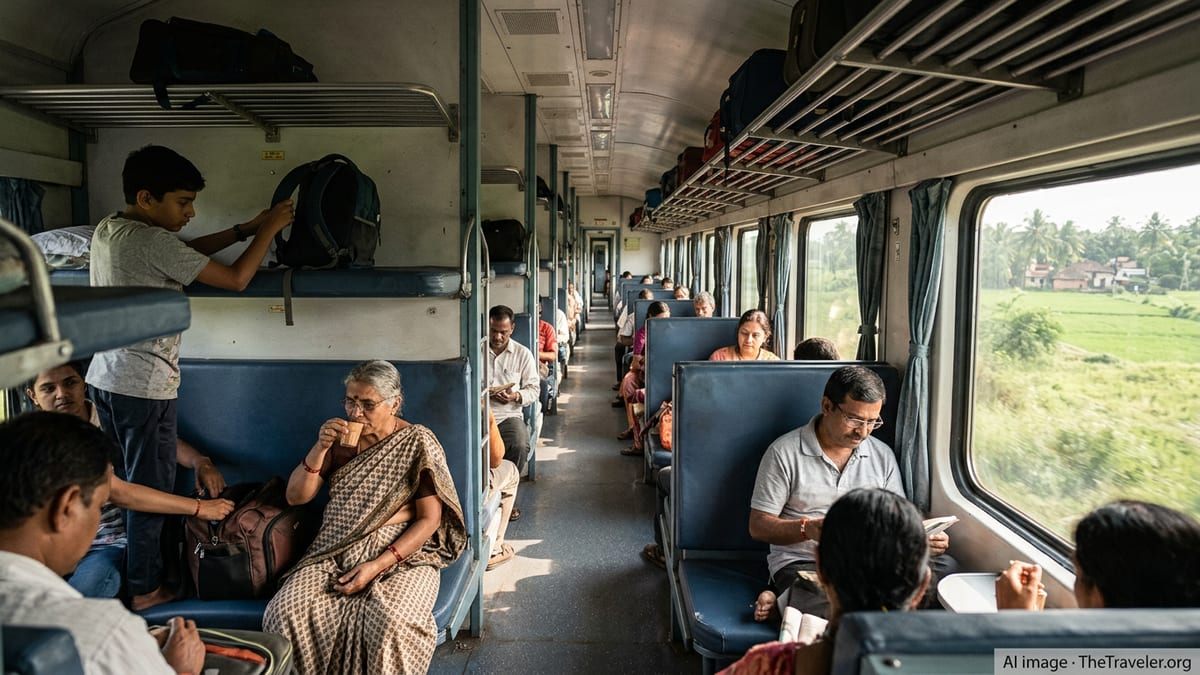
Direct Sabarmati–Katra Link Reshapes Pilgrimage Corridor
Publicly available timetable data shows that the Sabarmati Shri Mata Vaishno Devi Katra Express, numbered 19415, now operates from Sabarmati near Ahmedabad to Katra in Jammu and Kashmir, with the route extended beyond Jammu Tawi to the dedicated pilgrimage terminal of Shri Mata Vaishno Devi Katra. The train covers roughly 1,700 kilometres over three days, shifting from its earlier focus on Jammu as the terminus to a direct foothill access point for the Vaishno Devi shrine.
Rail schedule platforms indicate that the service departs Sabarmati in the late evening and arrives at Katra early on the third morning, incorporating a stop at Jammu Tawi before climbing through Udhampur to the elevated Katra terminus. The change effectively converts what used to be a two-stage journey for many pilgrims from Gujarat and Rajasthan into a single continuous rail trip.
The route extension aligns with Indian Railways’ broader emphasis on strengthening religious tourism corridors by pushing more long distance services to terminal stations like Katra and Ayodhya. Industry observers note that Vaishno Devi remains among India’s most visited pilgrimage sites, so any new direct connectivity from populous western states can translate into significant incremental traffic.
Travel planners report that through-coach access is particularly attractive for group tours and elderly devotees, who traditionally faced overnight breaks or complex connections when switching from long haul expresses at Jammu to regional services for the final leg to Katra.
Route, Key Stops and Journey Profile
According to published route charts, train 19415 departs Sabarmati and runs north via Mahesana, Palanpur and Abu Road before entering Rajasthan. It then threads through Falna, Marwar Junction, Beawar and Ajmer, continuing onward through Kishangarh, Phulera and Jaipur to reach Bandikui and Alwar. The alignment provides a new direct Katra link for both western Gujarat catchments and a wide swathe of central and northern Rajasthan.
Beyond Alwar, the train proceeds via Rewari and Bhiwani into Haryana and then crosses Hisar and Sirsa to reach Bathinda in Punjab. From there it continues through Firozpur, intermediate stations such as Sultanpur Lodhi and Jalandhar City, and then on to Beas and Amritsar. The overnight northbound segment allows passengers from multiple regional hubs to board for the final run into Jammu and Katra.
On the last leg, timetable data shows an early morning halt at Jammu Tawi before the train continues to Udhampur and then to Shri Mata Vaishno Devi Katra at an elevation of more than 800 metres. The total travel time from Sabarmati to Katra is listed at just under 33 hours, positioning the service as an all-rail alternative to fragmented bus and flight combinations for budget-focused travellers.
Rail travel analysts point out that by touching major junctions in Gujarat, Rajasthan, Haryana and Punjab, the extended service effectively consolidates demand from several states into a single weekly pilgrimage train. This concentration can improve load factors while reducing the need for multiple shorter sectoral services.
Pilgrimage Demand and Rail Tourism Upswing
Tour operators focusing on religious circuits report a visible uptick in interest for rail-based packages to Vaishno Devi originating in Ahmedabad, Jaipur and intermediate cities since the Katra extension became available on schedules. The ability to reserve end-to-end berths from Sabarmati or Ajmer through to Katra is being marketed as a hassle-free option compared with multi-modal journeys that involve transfers at Delhi or Jammu.
Travel portals tracking rail search volumes indicate that inquiries for Ahmedabad, Sabarmati and Rajasthan origin trains to Katra have risen, coinciding with the introduction of the Sabarmati–Katra direct run and a separate Ahmedabad–Katra special. This has contributed to an overall strengthening of India’s domestic religious tourism market, which has been steadily recovering and expanding after pandemic-era disruptions.
Budget pilgrims from western India traditionally relied on a combination of overnight trains to northern junctions followed by buses through the Jammu hills. The direct Sabarmati–Katra link cuts out one or more surface transfers, lowers the risk of missed connections and simplifies planning for large family groups, which are typical on Vaishno Devi journeys.
Industry commentators suggest that the extended route may also encourage first-time rail pilgrims, including younger travellers who might otherwise have opted for short-haul flights to Jammu paired with road travel. With dynamic pricing on air routes often pushing up last-minute fares, a confirmed sleeper berth to Katra offers a predictable cost structure that appeals to cost-conscious passengers.
Economic Ripple Effects Along the Corridor
Local businesses along the extended corridor are beginning to respond to the increased pilgrimage throughput. Stations such as Abu Road, Ajmer, Jaipur, Bathinda, Jalandhar and Amritsar already serve as important rail nodes, and additional pilgrim traffic to Katra creates opportunities for hotels, eateries and travel agents to bundle stopover experiences and side trips.
Tour planners in Rajasthan and Gujarat are packaging the Sabarmati–Katra journey with visits to Ajmer Sharif, Jaipur’s heritage circuit and, in some cases, Amritsar’s Golden Temple, positioning Vaishno Devi as part of a multi-faith, multi-city itinerary. The through train to Katra reduces logistics complexity for such extended circuits, since luggage and group coordination can be managed within a single rail booking.
For Jammu and Kashmir, easier access from western India adds a fresh catchment of visitors not only to the Vaishno Devi temple but also to nearby destinations such as Patnitop and the Kashmir Valley, which many pilgrims visit after completing their trek. Travel trade associations expect this to translate into higher hotel occupancy rates and increased seasonal employment in the wider region.
Analysts also note that increased rail patronage on long distance pilgrimage routes can support the case for further infrastructure upgrades, including station modernization, improved last-mile connectivity at Katra and enhanced safety features on the mountain sections between Udhampur and Katra.
Capacity, Frequency and Future Connectivity
Rail databases list the Sabarmati–Shri Mata Vaishno Devi Katra Express as a weekly mail or express service, operating with reserved seating and sleeper accommodation. While the current frequency limits flexibility for last-minute travellers, the train’s presence on the timetable marks a structural step in knitting western India more tightly into the Vaishno Devi rail network.
Travel analysts observe that if sustained high occupancy is recorded from Gujarat and Rajasthan, it could bolster the case for additional days of operation or the introduction of supplementary specials on the corridor, mirroring patterns seen on other popular religious routes in India. The consistency of demand across festive peaks and off-season months will be a key factor watched by planners.
The Sabarmati–Katra extension also fits into a wider pattern of services that now originate as far afield as Jamnagar, Mumbai and central India for Katra, giving devotees multiple rail options with varying journey times and fare levels. For passengers in and around Ahmedabad, however, the direct Sabarmati train has quickly become a flagship choice for reaching the pilgrimage town by rail.
As Indian Railways continues to prioritise connectivity to religious destinations, industry observers expect more long distance trains to be either extended to or newly routed through Katra. The performance of the Sabarmati Jammu Tawi Express on its longer run to Shri Mata Vaishno Devi Katra will likely serve as a bellwether for future expansions of India’s pilgrimage rail map.