


More news on this day
Indian Railways is accelerating a wide-ranging overhaul of how waste is handled on trains, combining high-capacity onboard systems, upgraded toilets and stricter solid-waste protocols to keep coaches cleaner while cutting the environmental impact of long-distance travel.
Get the latest news straight to your inbox!
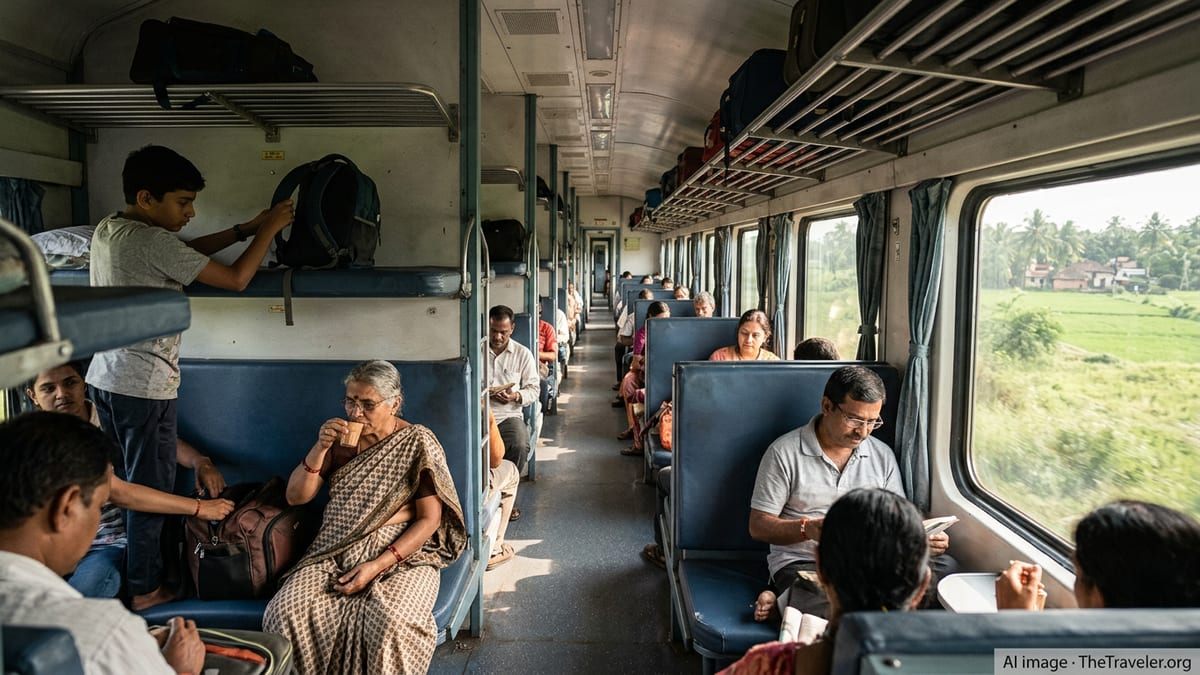
New focus on end-to-end onboard waste handling
Publicly available information shows that Indian Railways is moving from ad hoc garbage collection toward a system that follows waste from the passenger’s seat to final disposal. Railway Board guidelines issued in late 2023 and reinforced in 2024 spell out how Onboard Housekeeping Service teams and pantry car staff must now collect garbage in bags, store it safely inside the train and offload it only at designated stations with infrastructure to receive it. The approach is designed to prevent littering along the tracks and reduce unsanitary dumping at small halts.
Recent guidance highlights that high-density trains with pantry cars and long-distance services generate the most solid waste, particularly food packaging, plastic bottles and disposable plates. The new instructions call for larger-capacity bins in coaches, sealed storage of filled bags and closer coordination with stations that have compactors or municipal tie-ups. According to reports summarising these measures, the aim is to create a clear chain of custody for onboard waste instead of relying on informal, coach-by-coach practices.
Reports on policy implementation indicate that Environment and Housekeeping Management wings are being used to monitor how effectively these steps are followed across zones. This creates a feedback loop in which data from trains and stations can be used to adjust bin capacities, staffing levels and the number of collection points on heavily used routes.
High-capacity toilets and bio-vacuum systems change the baseline
On the liquid-waste side, Indian Railways has already completed one of the most visible shifts in onboard sanitation by phasing out direct discharge toilets and replacing them with bio-toilets across the broad-gauge fleet. According to annual reports and technical updates, this transition has eliminated large volumes of untreated effluent on tracks, while reducing corrosion and maintenance costs.
More recent initiatives focus on higher-capacity and more efficient toilet systems. Coverage from Eastern Railway and other zones in 2024 describes a growing use of bio-vacuum toilets, which combine biological treatment with vacuum flushing to reduce water consumption and move waste quickly into sealed holding tanks. These systems are designed to cope better with the heavy usage patterns seen on popular long-distance trains and premium services.
Government technology briefings also highlight work on automated toilet-waste collection systems that are intended to be simpler to maintain and more economical than some legacy bio-toilet designs. While several of these technologies remain in testing or early deployment, they point toward a higher-capacity model in which each coach operates as a contained unit, designed for efficient suction, storage and transfer of liquid waste at maintenance depots.
Solid-waste SOPs push segregation and larger onboard capacity
A recently circulated Standard Operating Procedure for solid waste management in Indian Railways frames the system as a “bulk waste generator” that must comply with national rules on segregation and processing. The document, reflected in public summaries, places new emphasis on separating wet and dry waste at the point of generation, including inside trains, and on providing distinct bins for different streams where space allows.
Long-distance coaches are being equipped with multiple dustbins, often color-coded for biodegradable and non-biodegradable waste, while pantry cars are instructed to use sturdier bags and larger storage areas to accommodate peak loads. The SOP also encourages the use of higher-capacity bins at coach ends and near vestibules, where passenger footfall is greatest, so that waste can be collected before it reaches aisles or berths.
Reports on implementation note that the same framework extends to railway colonies, hospitals, workshops and production units, but the visibility is highest on flagship trains. By aligning onboard practices with city-level solid-waste rules, the railway system can hand over segregated waste to municipal partners or private processors with less manual sorting, cutting the time and cost required once garbage leaves the train.
Linking trains to station-based processing and recycling
The effectiveness of any high-capacity onboard system depends on what happens when trains reach major stations. Press releases and audit documents indicate that Indian Railways has been installing plastic bottle crushing machines at hundreds of large stations, with more than 500 locations equipped in recent updates. These machines are intended to handle the surge of PET bottles arriving from trains and station platforms, compacting them for downstream recycling.
Some divisions have also commissioned waste-processing units, including composting plants and small biogas facilities, to deal with biodegradable fractions collected from trains and catering units. Where such facilities exist, onboard segregation and sealed-bag collection make it easier to divert food waste from landfills into treatment plants.
Railway Board communications describe formal arrangements with municipal authorities in several cities for the regular lifting of segregated waste from station premises. This is a critical link in ensuring that garbage offloaded from high-capacity onboard systems does not simply re-enter mixed municipal streams without processing.
Cleaner travel as a key part of passenger experience
Parliamentary committee reports on cleanliness and hygiene have repeatedly identified onboard garbage and toilet maintenance as decisive factors in how passengers rate their journeys. In response, rail authorities have scaled up Onboard Housekeeping Service coverage to well over a thousand train pairs on busy routes, combining mechanised cleaning at depots with en-route attention to toilets, vestibules and doorways.
These services are increasingly tied to the new waste-handling rules. Staff are instructed to collect litter more frequently, empty coach bins before they overflow and ensure that sealed bags are offloaded only at nominated stations. Publicly available guidance emphasises that adherence to these routines is as important to passenger comfort as punctuality or catering quality.
As rail corridors add higher-speed services and premium products, waste-management capacity is expected to grow alongside passenger volumes. The current wave of policies, new toilet technologies and station-based treatment facilities suggests that cleanliness inside trains is being treated as a core operational issue rather than an ancillary service, with onboard waste systems emerging as a central component of that shift.
Press Information Bureau: Recent solid waste management measures
Guidelines on systematic management and disposal of train garbage
Eastern Railway bio-toilet and bio-vacuum toilet initiatives
Parliament document on plastic bottle crushing machines and EnHM wings