


More news on this day
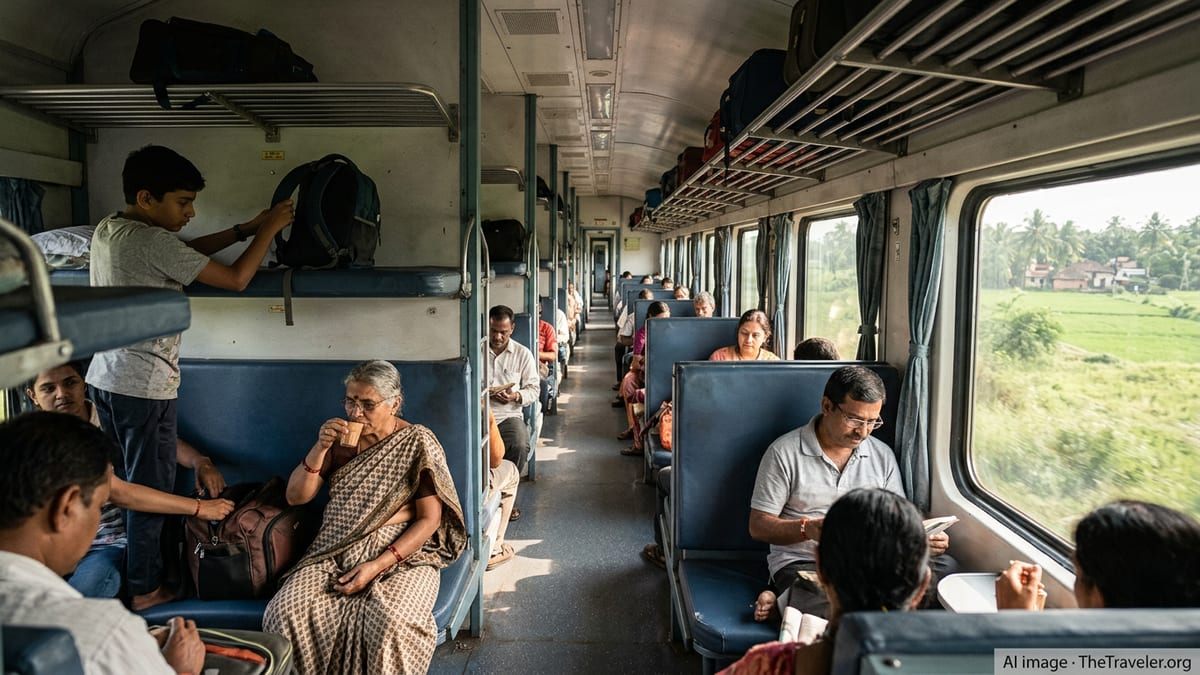
Indian Railways is riding a new wave of demand in August 2026, with traffic estimates and recent monthly trends pointing to millions more passengers on board as expanded services and upgraded routes deepen connectivity across the country.
Get the latest news straight to your inbox!
August Builds on a Year of Steady Passenger Growth
While official audited figures for August 2026 will be released with a lag, publicly available traffic data for the preceding months shows Indian Railways entering the period on a strong upswing. Ministry-linked datasets indicate that total passenger traffic in June 2026 stood at roughly 638 to 639 million journeys nationwide, above the 623 to 624 million recorded in June 2025, continuing a pattern of mid single digit year on year growth in volumes.
Industry coverage of July 2026 performance points to a further step up, with published summaries citing more than 633 million passengers carried that month compared with just over 621 million in July 2025. Analysts tracking the system note that, taken together, this implies that Indian Railways was already moving close to 21 million passengers per day at the start of the August travel window, before accounting for any seasonal spikes driven by festive travel or university reopening schedules.
Using these trends as a guide, transport economists expect August 2026 to register another month on month rise in passenger journeys, potentially adding several million more riders compared with August 2025. That would put the rail network on course for one of its strongest first half performances in recent years, especially on the back of suburban and non suburban segments both registering growth.
Crucially, the latest traffic indicators follow a longer recovery in passenger numbers from the pandemic era. Background data shows Indian Railways carrying nearly 6.9 billion passengers in 2023 to 2024, and the trajectory through mid 2026 suggests the system is now consistently operating above those levels in monthly terms, reinforcing its role as the country’s primary long distance and regional mobility backbone.
New Trains and Routes Widen the Rail Network’s Reach
The rise in passengers through August 2026 is closely tied to the ongoing expansion and upgrading of services. Over the past two years, Indian Railways has steadily introduced premium services such as Vande Bharat and Amrit Bharat trains on key intercity corridors, which have reshaped travel choices on routes linking metros with fast growing tier two and tier three cities.
Reports indicate that these newer trains, which offer shorter journey times and upgraded onboard amenities, have helped attract travelers who might previously have preferred buses or low cost flights on certain sectors. At the same time, conventional express and superfast services continue to handle the bulk of demand, particularly on long haul routes across the northern and eastern zones and dense commuter belts around Mumbai, Kolkata, Chennai and Delhi.
Route electrification has also played a background role. Official review documents show that Indian Railways is approaching full electrification of its broad gauge network, which has allowed more frequent and faster services on sections that previously depended on diesel traction. Combined with the gradual commissioning of dedicated freight corridors, this is beginning to free up capacity on mixed use trunk lines, making it easier to timetable additional passenger services and reduce congestion in and out of major junctions.
In parallel, reclassification and upgrading of stations according to passenger footfall and revenue has led to targeted investments in mid sized hubs. Many of these locations have seen improved platforms, better waiting facilities and more integrated bus connectivity, making rail a more attractive option for first time or occasional travelers, especially in smaller cities where air connectivity remains limited.
Digital Platforms and Pricing Shape Demand Patterns
Digital booking channels remain a central driver of how and when Indians travel by train. The IRCTC e ticketing platform continues to handle the vast majority of reserved ticket bookings, with August 2026 journey dates having opened gradually from early June. Observers note that on popular festival and long weekend dates, reserved categories on trunk routes tend to reach waitlist levels within minutes of booking windows opening, a pattern that underlines robust underlying demand.
At the same time, the composition of passengers is shifting. Business media and policy analyses over the past financial year highlight that passenger revenue is growing faster than volumes, largely because a bigger share of travelers are booking air conditioned and premium classes. This trend has been reinforced by the rollout of semi high speed services and dynamic pricing on select trains, which nudge higher income travelers toward better quality rail options while still keeping the system’s base fares relatively low.
Experts point out that the long standing cross subsidy between freight and passenger segments remains intact, with freight earnings providing a majority share of internal revenue. Even so, the strong volume base in August and surrounding months helps support overall financial stability of the system by boosting non suburban passenger earnings and ancillary revenues from catering, tourism products and station retail.
For travelers, the combined effect of digital booking, data driven scheduling and more granular fare structures is a network that feels both more accessible and more stratified. Budget conscious passengers continue to rely on unreserved and sleeper classes, particularly on overnight and migrant worker routes, while a growing middle class is increasingly visible in chair car and higher tier compartments on busy intercity corridors.
Freight Reforms Create Space for More Passenger Services
Behind the scenes, changes in freight operations are also helping unlock additional capacity for passenger trains. Official statistics for the first quarter of the 2026 to 2027 financial year show Indian Railways achieving freight loading of more than 419 million tonnes up to June, with July 2026 alone handling over 141 million tonnes and registering a year on year growth rate of about 9 percent.
This performance has been boosted by more efficient loading of coal, iron ore, fertilizers and foodgrains, alongside new flows in so called balance other goods. Concentrating heavy freight on dedicated corridors and rationalized time slots is gradually reducing interference with daytime passenger paths on key trunk routes, particularly in the eastern and western segments of the network.
Policy documents on railways finances for 2026 to 2027 underline that freight is expected to continue providing around two thirds of internal revenue, but also emphasize the need to grow passenger earnings in a sustainable way. The combination of strong freight loading and rising passenger volumes in months like August 2026 is seen by analysts as an early indication that this balancing act is starting to work, with the network leveraging both markets without sharply raising base fares.
Infrastructure planners argue that as more sections of the dedicated freight corridor system are completed and as logistics parks and multimodal terminals come online, scope will widen further to add new passenger services on existing routes. This could be especially significant for populous states where current demand often outstrips the number of seats available in peak seasons.
Connectivity Gains Reach Smaller Cities and Tourism Circuits
Another dimension of the August 2026 surge is its geographic reach. Recent travel patterns show that growth is no longer confined to a handful of metropolitan corridors. Suburban and non suburban segments have both posted gains, reflecting stronger commuter flows into regional hubs and renewed interest in long distance leisure and pilgrimage travel as more special and seasonal trains are scheduled.
States with large hinterlands and rapidly urbanizing district headquarters appear to be benefiting in particular. Expanded connectivity to tier two and tier three cities through new express services and better timed connections is drawing passengers who might otherwise have relied on long haul buses or informal services. Reports from various zones highlight higher occupancy in AC chair car and sleeper coaches on such routes, particularly over long weekends.
Tourism circuits are another standout. With domestic tourism continuing to recover, rail linked destinations ranging from hill stations and coastal towns to heritage cities are seeing fuller trains in the August travel window. The ability to offer relatively low cost, overnight connectivity from major metros remains a competitive strength for Indian Railways, especially for family and group travel where total trip cost matters as much as travel time.
Taken together, these developments indicate that Indian Railways is not only moving more people in August 2026, but also extending the benefits of enhanced connectivity to a wider spread of communities. For millions of passengers, the network’s growing capacity, improved services and broader reach are translating into more options for work, study and leisure across India’s vast geography.