


More news on this day
Travelers on Air India’s Bhopal to Delhi service experienced unexpected disruption when flight AI1886 diverted to Jaipur following a mid route technical alert, prompting extended delays and onward rebooking.
Get the latest news straight to your inbox!
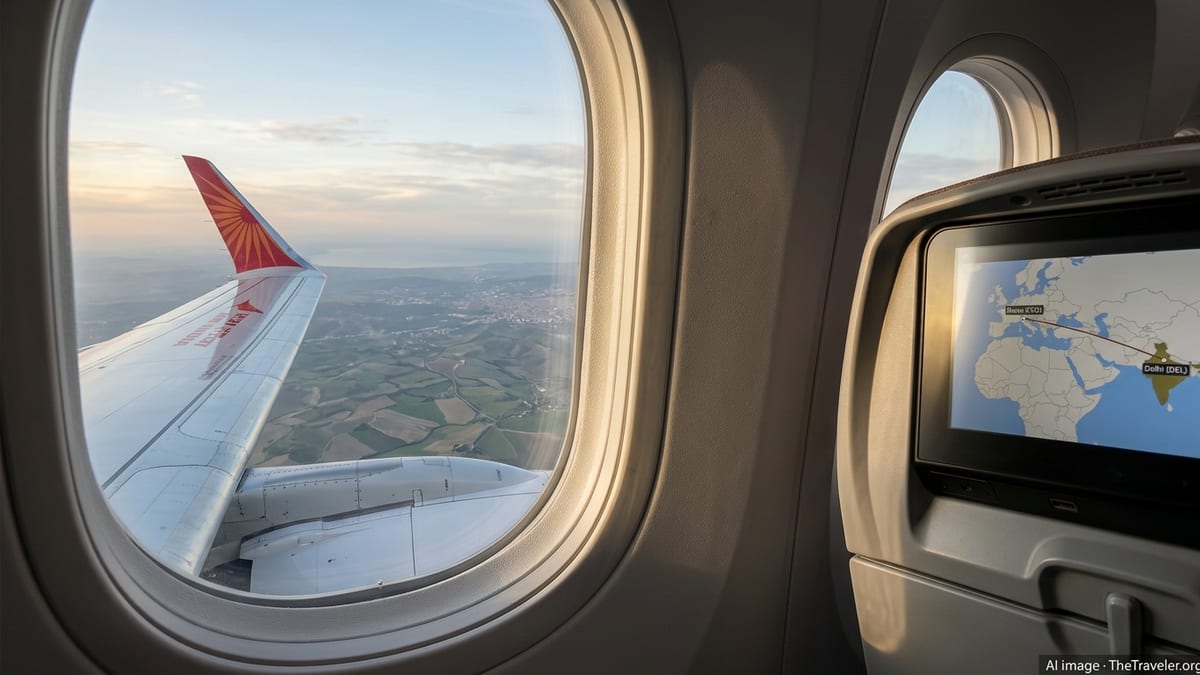
Technical Alert Forces Mid Route Diversion
Preliminary operational information indicates that Air India flight AI1886, operating on the Bhopal to Delhi route, received a technical alert while en route and diverted to Jaipur as a precaution. The aircraft proceeded to land safely at Jaipur, where it was met by ground crews for checks before passengers were able to disembark.
Publicly available flight tracking data shows that the service departed Bhopal on schedule before altering course away from its planned approach into Delhi and routing instead toward Jaipur. The flight’s diversion added significant time to the journey for those on board and disrupted early morning and mid day connections onward from the capital.
According to published coverage, initial assessments point to a systems related warning rather than a major in flight emergency. In such circumstances, standard operating procedures typically require flight crews to opt for the nearest suitable airport so that trained engineering teams can investigate the cause of the alert on the ground.
There were no immediate reports of injuries arising from the diversion, and available information suggests that the landing at Jaipur took place under normal operational control, with the aircraft taxiing to a remote stand for inspection.
Passenger Impact On The Bhopal Delhi Corridor
The disruption has highlighted once again how sensitive the Bhopal to Delhi air corridor is to even a single unexpected aircraft withdrawal, particularly during busier travel periods. With limited nonstop frequencies between the Madhya Pradesh capital and the national capital, the diversion of AI1886 reduced capacity on a route that caters to government traffic, business travelers, and students.
Reports from trip monitoring platforms and social media posts from affected travelers describe missed same day connections from Delhi to domestic destinations such as Mumbai and Bengaluru, along with to some international gateways. Several passengers indicated that they were offered onward rebooking on later departures from Delhi once the airline was able to reposition them, while others opted for refunds or alternative carriers.
Some travelers also reported longer waits at Jaipur as arrangements were made either for a replacement aircraft or for buses and connecting flights. These accounts underline how a precautionary diversion can quickly ripple across an airline’s schedule, especially when crews reach their regulated duty time limits before the disrupted flight can continue to its original destination.
For Bhopal based passengers, the incident adds to a series of recent disruptions on flights serving central India, including weather related diversions into alternate airports and delays linked to operational constraints at major hubs.
Safety Protocols And India’s Diversion Practices
Aviation safety procedures in India emphasize conservative decision making when cockpit alerts arise, even if the exact technical trigger is still being evaluated. Publicly accessible regulatory material and past incident reports show that pilots are encouraged to prioritize a timely landing at a suitable alternate airport once a technical concern is flagged, in order to minimize risk to passengers and crew.
Jaipur is frequently used as an alternate for Delhi bound flights because of its relatively close proximity, long runway, and ability to accommodate a range of narrow body and wide body aircraft. Previous events involving both domestic and international carriers have seen services bound for Delhi routed to Jaipur when confronted with adverse weather, equipment warnings, or airspace congestion.
In the case of AI1886, initial indications suggest that routing to Jaipur allowed the crew to comply with these established protocols while avoiding more extended holding patterns around Delhi. Industry analysts note that, although diversions are inconvenient for travelers, they are intended to err on the side of caution and are a visible part of the systemwide emphasis on safety.
Once on the ground, airline engineering teams generally undertake checks to clear any fault messages before deciding whether the same aircraft can continue, or whether passengers should be transferred to a substitute jet. That process can stretch for several hours, especially if parts, tools, or specialist technicians need to be positioned.
Operational Fallout For Air India’s Network
The diversion of AI1886 adds fresh pressure on Air India’s already tightly scheduled domestic network. The airline has been in the midst of a multi year fleet and operations revamp, but day to day rotations on core routes such as Bhopal to Delhi often still operate with little slack. When one aircraft and crew are removed unexpectedly from the roster due to a diversion, subsequent legs can experience rolling delays.
Tracking of later departures on the same aircraft type and route pattern suggests that several flights experienced schedule changes in the hours after the AI1886 diversion. These included minor delays on services departing Delhi, as aircraft and crews were reassigned to cover gaps created by the disruption.
Travel industry observers point out that while Air India has introduced more spare capacity on some trunk routes, secondary cities remain vulnerable to knock on effects from irregular operations. When unexpected technical alerts occur, the priority is safe handling of the affected flight, but the result can be missed connections and extended ground time for travelers at both ends of the route.
Consumer advocates routinely advise passengers on network carriers in India to build buffer time into itineraries involving tight domestic to international connections via Delhi, particularly during monsoon season or peak travel periods when air traffic and weather related delays are more likely.
What Disrupted Passengers Can Expect Next
For passengers affected by the AI1886 diversion, the immediate priority is reaccommodation to their final destinations. Published airline policy for irregular operations typically includes options such as free rebooking on the next available Air India service on the same route, or, in some cases, re routing via alternative hubs within the carrier’s network at no additional fare.
Travelers documented receiving notifications about revised departure times and boarding gates once new flight plans were confirmed. Others reported contacting customer service to adjust onward segments, especially when international departures from Delhi were at risk of being missed due to the extended ground stop at Jaipur.
Standard practice in similar situations may involve refreshments or basic assistance at the diversion point, although the precise level of support can vary based on the length of the delay, airport facilities, and the timing of the disruption within the day. Travel insurance policies that cover missed connections and delays may also provide some compensation for additional costs incurred, such as hotel stays or alternative transport.
With technical investigations ongoing into the alert that triggered the diversion, further operational details may emerge in official summaries at a later stage. For now, the AI1886 incident serves as another reminder of how quickly an ordinary domestic hop between Bhopal and Delhi can turn into a multi stage journey when safety protocols dictate an unscheduled stop in Jaipur.