


More news on this day
Hundreds of flights across Indonesia’s busiest airports have been disrupted, with publicly available data indicating 439 delays and 16 cancellations affecting services by Garuda Indonesia, Batik Air, Citilink and several other carriers across Jakarta, Surabaya, Makassar, Medan, Denpasar and Manado.
Get the latest news straight to your inbox!
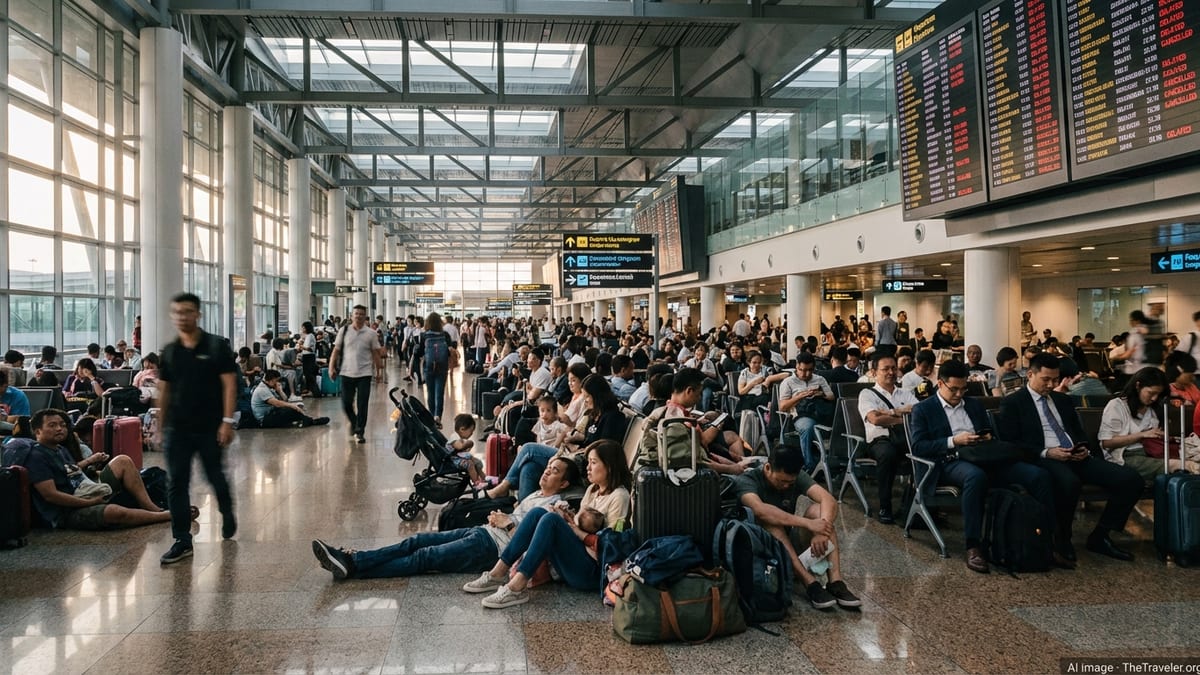
Widespread Disruptions Across Indonesia’s Air Network
The latest disruption has hit some of Indonesia’s most heavily used aviation hubs, including Jakarta’s main airports, Surabaya’s Juanda International Airport, Denpasar’s Ngurah Rai International Airport in Bali, as well as Makassar, Medan and Manado. Together, these airports handle a large share of domestic connectivity across the archipelago, meaning schedule changes in one hub can quickly cascade into delays elsewhere.
Operational data compiled from airport and airline trackers indicates that 439 flights have been delayed and 16 cancelled across these six cities. The figures suggest that the problems are system wide rather than confined to a single route or operator, with knock on effects for both domestic travelers and international visitors using Jakarta, Denpasar or Surabaya as gateways.
Early snapshots of departure boards showed clusters of late services on trunk routes such as Jakarta to Surabaya, Jakarta to Medan and Surabaya to Denpasar, which are commonly served by multiple Indonesian airlines. The scale of disruption has prompted many passengers to miss onward connections or to rebook at short notice, adding pressure to airline customer service and airport ground handling.
While the exact trigger for the disruption has not been fully detailed in publicly available reports, the pattern of delays and cancellations across several hubs suggests a combination of operational constraints, congested airspace, and possible weather or technical factors affecting scheduling reliability.
Garuda Indonesia, Batik Air and Citilink Among Affected Carriers
The disruption has affected both full service and low cost operators. Garuda Indonesia, the country’s flag carrier, is a key player on domestic trunk routes linking Jakarta, Surabaya, Medan, Denpasar and Makassar, and operates a mix of narrowbody and widebody aircraft across these corridors. Tracking platforms show irregular operations on several Garuda services into and out of major hubs, contributing to the overall tally of delays.
Batik Air, part of the Lion Air Group and a significant presence on routes such as Jakarta to Surabaya and Jakarta to Medan, is also listed among the carriers experiencing knock on schedule changes. The airline typically runs dense schedules on high demand routes, and even small disruptions can quickly multiply across its network when aircraft and crews are not able to return to base on time.
Citilink, the low cost subsidiary of Garuda Indonesia Group, is another carrier operating intensively between Jakarta, Surabaya, Denpasar, Medan, Makassar and Manado. Publicly available route maps and timetables highlight how Citilink links secondary cities to the main hubs, so any congestion at the larger airports can trigger schedule adjustments, aircraft swaps or cancellations on thinner routes.
Additional Indonesian airlines that frequently operate at these airports, including other low cost and regional carriers, appear in delay statistics as well, highlighting the interconnected nature of the country’s aviation system. When a hub experiences crew or aircraft rotation issues, competitors often face corresponding congestion in shared terminals and airspace.
Impact on Passengers and Domestic Connectivity
The scale of the disruption is particularly significant because it affects both point to point domestic journeys and multi leg itineraries that rely on tight connections. Travelers passing through Jakarta, Surabaya or Makassar to reach destinations in eastern Indonesia, such as Manado, or onward to Bali through Denpasar, have reported extended transit times and missed onward flights in recent disruptions documented in public forums and travel reports.
Indonesia’s geography means air travel is often the only practical way to move between islands in a reasonable timeframe. Delays and cancellations on busy corridors such as Jakarta to Medan or Surabaya to Denpasar can therefore have outsized impacts on business trips, family visits and tourism itineraries, particularly during peak travel periods.
Passengers caught in the schedule changes are frequently required to navigate rebooking rules that differ between full service and low cost carriers. Garuda Indonesia generally markets more flexible options as part of its premium positioning, whereas lower cost operators may apply stricter change fees or offer more limited compensation, depending on fare type and conditions.
Travel discussion boards and consumer feedback channels often highlight that irregular operations in Indonesia can lead to long queues at check in and customer service desks, with travelers encouraged to monitor their flight status in real time and build additional buffer into itineraries that involve tight domestic connections.
Key Airports Strain Under Operational Pressures
The affected airports serve distinct roles in Indonesia’s air transport network. Jakarta’s Soekarno Hatta functions as the primary national gateway and hub for both Garuda Indonesia and several competitors, while Halim Perdanakusuma airport takes a smaller share of domestic traffic. Surabaya’s Juanda International Airport is a critical secondary hub, connecting East Java with destinations across the country.
Denpasar’s Ngurah Rai International Airport in Bali is a major leisure gateway, with heavy volumes of international visitors transferring onto domestic flights supplied by Garuda Indonesia, Batik Air, Citilink and other carriers. Any operational issues in Denpasar can quickly spill over to domestic feeder routes that connect Bali to Medan, Makassar, Jakarta and Surabaya.
Makassar’s Sultan Hasanuddin International Airport, Medan’s Kuala Namu International Airport and Sam Ratulangi International Airport in Manado each serve as regional connectors for eastern and northern Indonesia. These airports play an important role in linking smaller cities and islands to the national air network and are heavily used by both local residents and domestic tourists.
Reports indicate that when delays accumulate across these hubs, airlines often need to adjust aircraft rotations, which can result in aircraft arriving late for subsequent sectors or being reassigned entirely. This can push marginally delayed flights into more substantial delays or isolated cancellations when operational limits are reached.
What Travelers Should Watch in the Coming Days
With the current figures pointing to 439 delayed and 16 cancelled flights across Jakarta, Surabaya, Makassar, Medan, Denpasar and Manado, travelers planning to fly in or out of Indonesia in the near term are likely to encounter residual effects as airlines work to restore normal schedules. Publicly available timetables and booking portals suggest that flight loads on key domestic routes remain high, meaning spare capacity to re accommodate disrupted passengers may be limited during peak hours.
Airline advisories and airport updates typically encourage passengers to check their flight status before leaving for the airport, arrive earlier than usual for check in, and be prepared for possible gate or schedule changes. For itineraries involving connections, particularly those linking domestic segments with international long haul flights, a longer layover window can provide additional protection against missed onward journeys.
Travel industry observers note that Indonesia’s aviation sector has been working to balance rapid growth in passenger numbers with infrastructure and operational constraints. Periods of concentrated disruption, such as the one reflected in the latest delay and cancellation figures, highlight the importance of resilient scheduling, adequate staffing and clear communication with passengers when irregular operations occur.
For now, the latest operational data portrays a stressed but functioning network, with airlines adjusting their schedules in response to day to day conditions. Travelers flying with Garuda Indonesia, Batik Air, Citilink or other Indonesian carriers through Jakarta, Surabaya, Makassar, Medan, Denpasar and Manado are advised to stay alert to updates as carriers and airports work to stabilize services.