


More news on this day
Hundreds of passengers faced missed connections and improvised overnight stays after a fresh wave of disruption at New York’s LaGuardia Airport coincided with at least 110 flight cancellations and 211 delays across the United States and Canada, affecting major carriers including United, American, Delta, JetBlue, Frontier and Southwest alongside regional operators Endeavor Air, Republic, Mesa and Jazz.
Get the latest news straight to your inbox!
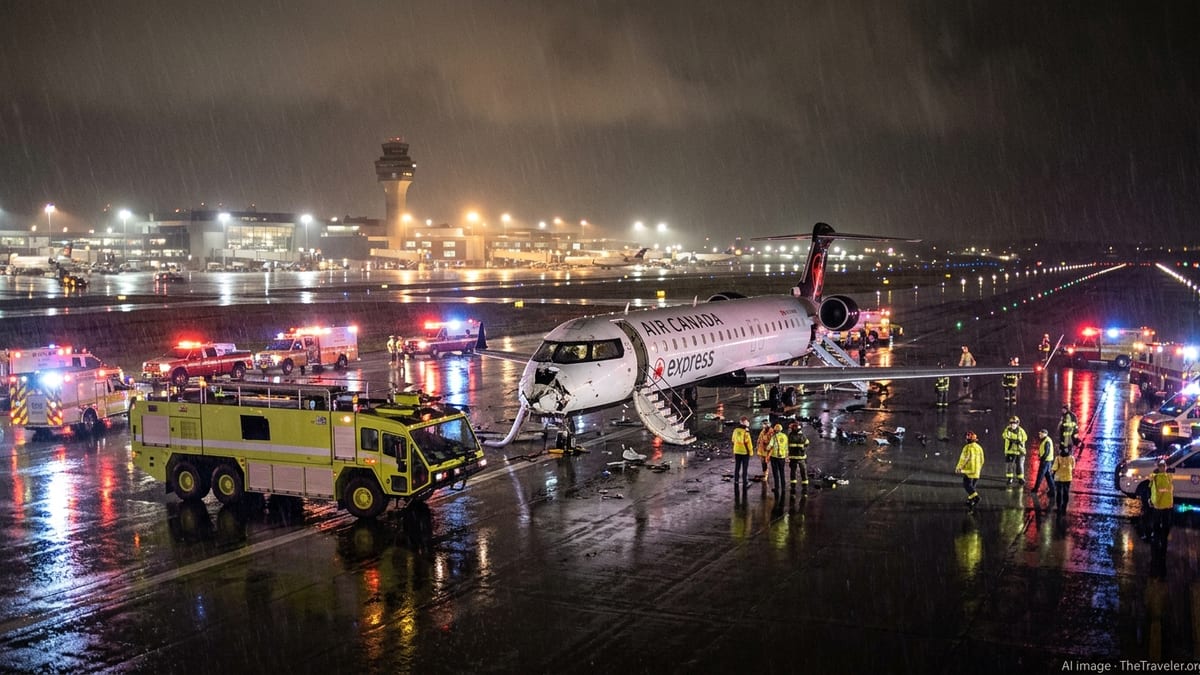
Fresh Turmoil at a Congested New York Gateway
Publicly available tracking data indicates that LaGuardia once again served as a flashpoint for broader network disruption, with delays and cancellations rippling out to airports in the Midwest, the South and key Canadian cities. The latest operational squeeze comes after a series of recent disruption events in which LaGuardia’s limited runway capacity and dense schedules have amplified even modest weather or air-traffic issues into widespread knock-on delays.
Recent coverage of severe-weather and incident-driven problems at LaGuardia has highlighted how quickly operations at the compact New York hub can unravel when storms, runway blockages or airspace restrictions intersect with already tight airline schedules. Flight-data snapshots from previous episodes show hundreds of combined cancellations and delays in a single day, underscoring how sensitive the airport is to any break in normal operations.
The current round of disruptions has again exposed the fragility of tightly timed banked schedules operated by large network carriers and their regional partners. As aircraft and crews fall out of position, carriers often face a choice between stacking up extended delays or preemptively cutting flights, with both options leaving travelers scrambling for alternatives.
Major U.S. and Regional Carriers Feel the Impact
According to aggregated flight-status data referenced in recent industry and consumer reports, the disruption has hit a broad mix of airlines serving LaGuardia and other busy hubs. Network giants United Airlines, American Airlines and Delta Air Lines have seen a portion of their New York operations curtailed or slowed, compounding delays on connecting routes across the United States and into Canada.
JetBlue, Frontier and Southwest have also been drawn into the turbulence, particularly on high-frequency domestic corridors linking New York with cities such as Boston, Chicago, Toronto and Montreal. Each carrier operates a different business model, but all rely on time-sensitive aircraft turns that can quickly unravel once arrival banks run late.
Regional affiliates and partners, including Endeavor Air, Republic Airways, Mesa Airlines and Jazz Aviation, have played a central role in the disruption pattern. These operators feed traffic into larger airline networks with smaller jets and turboprops, meaning delays to a single LaGuardia leg can cascade into multiple missed connections for passengers originating or ending their journeys in secondary markets.
Reports from previous high-disruption days show that regional carriers can suffer disproportionately when conditions deteriorate at a hub, with cancellation rates at times far higher than those recorded by their mainline partners. The latest wave of delayed and canceled flights appears to follow a similar pattern, with regional operations used as a shock absorber for system-wide stress.
Weather, Airspace Constraints and System Knock-On Effects
Published coverage of recent U.S. aviation disruptions points to a familiar mix of catalysts behind the latest LaGuardia-centered turmoil. Thunderstorms, low visibility and shifting wind conditions in the busy Northeast corridor can force air-traffic managers to slow arrivals and departures, effectively reducing capacity just as peak travel waves are scheduled to move through.
National aviation system constraints, including airspace congestion and ground delay programs, then filter these limits through the wider network, amplifying the effects at connecting hubs across the United States and Canada. When combined with routine operational challenges such as crew time limits, maintenance checks or late-arriving aircraft, the result can be a cascading chain of schedule changes far beyond the original trouble spot.
Recent federal statistics on on-time performance and cancellations illustrate that even under normal conditions, carriers experience a measurable share of delay and cancellation activity tied to both extreme weather and broader system factors. Events like those now unfolding around LaGuardia effectively compress several days’ worth of such issues into a short window, overwhelming rebooking and recovery options.
Industry observers note that the tight interdependence of U.S. and Canadian flight schedules means that disruptions at a single gateway can quickly affect cross-border operations. As LaGuardia contends with its latest operational squeeze, airports in Toronto, Montreal and other Canadian cities are seeing schedule changes linked directly to missed aircraft and crew turns in New York.
Passengers Confront Long Lines and Limited Options
For travelers, the immediate impact of the disruption is measured in missed meetings, abandoned vacation plans and long queues at customer-service counters. Social media posts and recent news photography from similar LaGuardia disruption days depict crowded gate areas, departure boards blanketed with red status updates and passengers stretched out on the floor as they wait for new routing options.
Publicly available information from recent disruption events suggests that rebooking options can quickly narrow once large numbers of flights are withdrawn. With many June departures already heavily booked at the start of the peak summer season, alternative seats on later services or on different airlines may be scarce, particularly on transcontinental and cross-border routes.
Travel-rights explainers and consumer-advocacy material point out that compensation and care obligations for disrupted passengers vary widely by airline and by the underlying cause of a delay or cancellation. When weather or air-traffic constraints are cited as the primary drivers, carriers often classify the disruption as outside their control, limiting eligibility for hotel vouchers or meal assistance and leaving many passengers to shoulder out-of-pocket costs.
Some carriers have in recent years updated their customer-service commitments, outlining when they will provide credits, rebooking assistance or travel vouchers in the event of extensive delays. However, these policies differ significantly across airlines, meaning two passengers affected by similar disruptions on different carriers may receive very different levels of support.
What Travelers Can Do Next
Travel experts and consumer groups typically recommend that passengers caught in large-scale disruption monitor flight-status tools frequently, use airline mobile apps where possible and consider reaching out across multiple channels to secure rebooking options. Experience from previous LaGuardia incidents suggests that seats on the earliest available departures are often snapped up within minutes of major cancellations being posted.
Public guidance from aviation and consumer-protection agencies also encourages travelers to familiarize themselves with refund rules, particularly when a flight is canceled or significantly changed. In many cases, passengers who no longer wish to travel can request their money back rather than accepting a credit, although processing times may lengthen during periods of widespread disruption.
For those with flexibility, shifting to nearby airports such as John F. Kennedy or Newark, or to alternative routings via secondary hubs, can sometimes improve the chances of reaching a final destination on the same day. However, such options may involve additional ground transport costs or longer total journey times, which travelers must weigh against the prospect of remaining stranded.
With the current wave of cancellations and delays still working its way through the system, operational data and historical patterns suggest that residual disruption may continue for at least another day as airlines reposition aircraft and crews. Passengers scheduled to fly in or out of LaGuardia, or on routes touching United, American, Delta, JetBlue, Frontier, Southwest, Endeavor Air, Republic, Mesa or Jazz, are being advised by publicly available travel guidance to keep a close eye on their bookings and build extra time into their plans.