


More news on this day
Initial findings from a rail safety investigation suggest a train passed a signal set at danger moments before a fatal rear-end collision near Bedford, focusing attention on railway operating practices and protection systems along one of Britain’s busiest north–south corridors.
Get the latest news straight to your inbox!
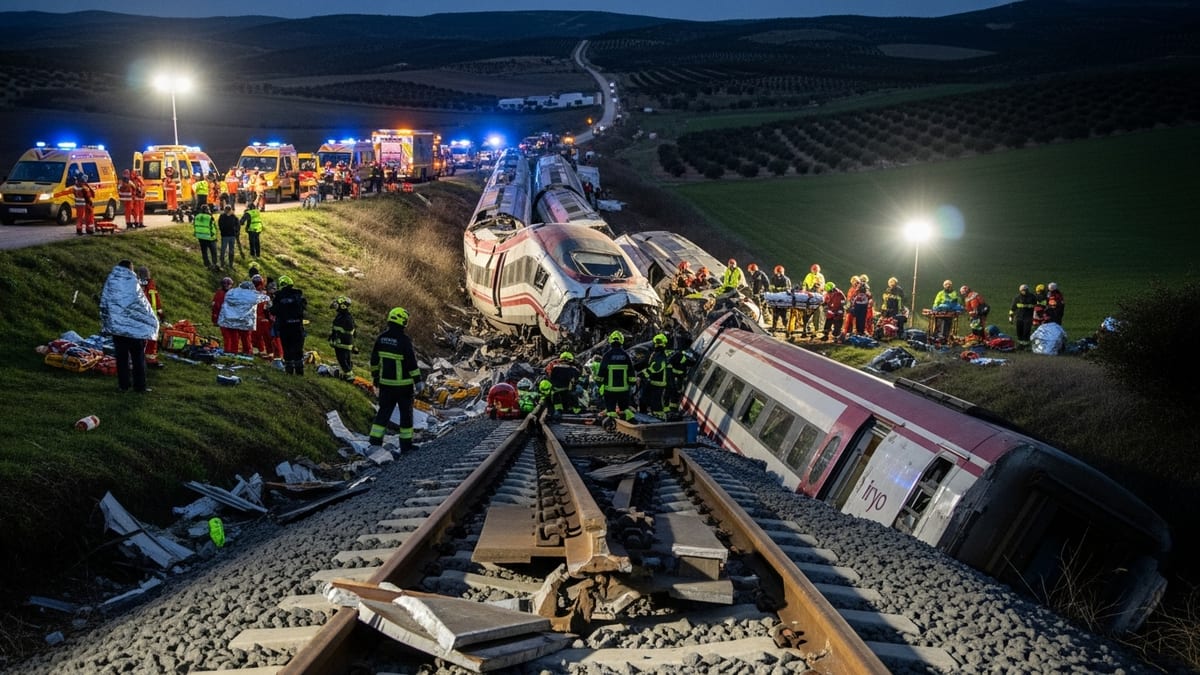
Preliminary report sheds light on sequence of events
According to publicly available information from the Rail Accident Investigation Branch’s initial findings, the crash occurred in the early evening of 19 June near Elstow, just south of Bedford, when a southbound East Midlands Railway service ran into the rear of another passenger train standing on the same track. The collision left one driver dead and around 100 people injured, including several reported to be in a serious condition.
The leading train, a London-bound intercity service from Nottingham, came to an unexpected stop at a signal identified in technical summaries as WH152. Industry-focused coverage indicates the train halted because of a malfunction affecting its Automatic Warning System, prompting the driver to stop and seek further instructions before proceeding.
Initial analysis released by rail specialists states that the following Corby to London St Pancras service then approached the same section and continued past a red aspect, described in railway terminology as a signal passed at danger. Data drawn from on-train recorders and lineside cameras, referenced in specialist reports, suggests the driver made an emergency brake application only seconds before impact.
Investigators have emphasised in published material that these findings are preliminary and that the full circumstances, including why the signal was not obeyed and how the protection systems performed, remain under detailed examination.
What ‘signal passed at danger’ means for rail safety
A signal passed at danger, often abbreviated to SPAD, occurs when a train moves beyond a stop signal without authority. Technical overviews of the UK network explain that such incidents are relatively rare compared with overall train movements, but are taken particularly seriously because they can remove a key safeguard designed to keep trains separated.
On Britain’s main lines, colour light signals, cab-based warnings and automatic train protection systems are layered to reduce the risk of a SPAD leading to a collision. When a signal is set at danger, a train should be brought to a halt before reaching it. If a driver does pass a red aspect, devices such as train stops, automatic warning equipment or more modern in-cab supervision systems may intervene to apply the brakes.
The Bedford collision has renewed scrutiny of how these defences worked in practice on this stretch of route. Rail industry commentators have highlighted the importance of understanding whether the signal aspects were displayed as intended, how far in advance warning indications were provided, and whether any technical, environmental or human factors contributed to the train proceeding beyond the stop signal.
Comparisons are already being drawn in public discussion with previous UK and European rail accidents where a SPAD played a central role. Safety analysts note, however, that each incident must be examined on its own evidence, and that modern railways typically respond by refining both technology and operating rules in light of investigation outcomes.
Impact on passengers and disruption to a key corridor
The collision near Bedford triggered a major emergency response across Bedfordshire, with images and eyewitness accounts in news coverage showing damaged rolling stock, smashed windows and passengers being led away from the site. Reports indicate that many people suffered minor injuries from sudden deceleration and falling luggage, while others required hospital treatment for more serious trauma.
The crash took place on the Midland Main Line, a trunk route linking London St Pancras with major cities in the East Midlands and beyond. In the immediate aftermath, all lines between Luton and Bedford were closed, with East Midlands Railway and Thameslink services suspended or heavily curtailed. Passengers described packed replacement buses, extended journey times and widespread cancellations rippling across the network.
For travellers, the incident has underlined how a single event on a busy mixed-traffic corridor can disrupt both long-distance and commuter flows. Regular users of the line, many of whom rely on it for daily work trips into London or regional journeys between Midland towns, faced several days of altered timetables and diversions while investigators examined the scene and engineers worked to repair infrastructure.
Travel advisories carried in national and regional media have urged passengers planning journeys through the Bedford area to check live operator updates, as timetables continue to be adjusted during the recovery and inspection phase.
Ongoing investigation and next steps for the network
The Rail Accident Investigation Branch’s initial release is expected to be followed by a fuller interim report and, eventually, a comprehensive final account including safety recommendations. Published statements from government representatives and rail organisations stress that the priority is to establish the factual sequence of events, the performance of equipment and the decision-making environment in the minutes leading up to the impact.
Areas likely to come under detailed scrutiny include the functioning of the Automatic Warning System on the stationary train, the signalling layout south of Bedford, driver workload and training, and any interface between human factors and the technical safeguards in place. The role of newer rolling stock types on the route, including the intercity unit involved, is also expected to be examined to understand how cab design and crashworthiness influenced outcomes.
For the wider network, lessons from the Bedford crash are likely to feed into ongoing programmes to modernise train protection technology and refine operational responses when a train is unexpectedly brought to a stand. Rail commentators point out that while UK rail travel remains one of the safest modes of transport, high-profile incidents such as this prompt renewed focus on risk management, signalling resilience and communication protocols between trains, signallers and control rooms.
Until the full investigation is complete, travel and industry publications note that many questions will remain open, particularly around why the signal was passed at danger and whether additional layers of protection could have prevented the collision or reduced its severity for those on board.
Implications for future journeys on the Bedford route
Even as normal services are gradually restored, the Bedford crash is expected to influence how passengers, operators and infrastructure managers view this corridor in the months ahead. Travellers may notice ongoing engineering works, altered stopping patterns or temporary speed restrictions as safety checks are completed and any immediate recommendations are implemented.
In the medium term, observers anticipate that the incident could accelerate investment in upgraded signalling, expanded use of in-cab train protection and additional driver training focused on responding to unexpected stops and signal sequences. Rail industry analysis suggests that such measures, while potentially disruptive during installation, are aimed at further reducing the already low risk of serious collisions on intensively used main lines.
For those planning rail journeys through Bedford, the message from publicly available operator information remains one of reassurance coupled with caution: services are operating, but travellers should allow extra time and remain alert to timetable changes as the investigation progresses. As the findings evolve, the line between London and the East Midlands will remain under close scrutiny, both for what happened on a single evening in June and for how the network adapts to prevent a repeat.