


Few cities charm travelers as quickly as Siena, yet many visitors step off the bus or park the car and realize they were not quite prepared for how this medieval hill town really works. From strict traffic rules and ticketed churches to surprising prices and quieter evening rhythms, Siena has its own logic. Understanding it before you arrive can be the difference between a rushed, confusing stop and a calm, memorable stay.
Get the latest updates straight to your inbox!
Getting Into Siena: Buses, Trains and That First Uphill Walk
Most first-time visitors picture arriving in Siena by train, but the reality is that the bus from Florence or Rome is often faster and more convenient. Direct regional buses from Florence’s bus station near Santa Maria Novella typically reach Siena in about 1 hour 15 minutes, while regional trains can take around 1 hour 30 minutes and usually require changing in Empoli. Tickets for these regional services commonly fall in the range of about 8 to 12 euros one way, and in many cases the bus drops you at Piazza Gramsci or the nearby bus terminal, already within walking distance of the historic center, instead of down by the railway station.
The Siena train station itself sits at the bottom of a hill beneath the walled old town. There are escalators inside the Porta Siena shopping center that help you climb part of the way, but you should still expect at least a 15 to 20 minute uphill walk to reach the heart of the centro storico. Visitors often underestimate this and end up dragging heavy luggage up cobblestone slopes in the midday sun. If you are staying inside the walls and traveling with big bags, consider a short taxi ride from the station; official taxis wait outside, and the ride into the old town is usually just a few minutes.
Another surprise is how quickly Siena’s streets become quiet once you move away from the main arteries. Even in high season, the lane that leads from the main bus stops toward Piazza del Campo can feel packed, yet one or two turns later you might be nearly alone. Plan on walking. The historic center is compact enough that you rarely need local buses once you are inside the walls, but the paving stones are uneven and some slopes are steep, so good walking shoes matter more here than in many flat Italian cities.
Driving, Parking and the ZTL: Avoiding Fines Before You Even Arrive
One of the most common regrets visitors voice after visiting Siena involves the Zona a Traffico Limitato, or ZTL, that surrounds the historic core. This restricted traffic zone wraps around the area that includes Piazza del Campo and the cathedral complex, and it is actively enforced by cameras every day, typically from early morning until evening. Many travelers drive their rental car up toward the medieval gates without understanding the signage, only to receive a steep fine weeks later back home.
The simplest way to avoid problems is to accept that you will not drive inside the walls unless your hotel has explicitly arranged a permit and given you exact directions. Instead, aim for the large paid parking lots just outside the ZTL, such as the parking structure at Santa Caterina near the San Francesco escalators, or the lots at San Francesco and Fortezza Medicea. Prices vary by lot but are generally in the range of a couple of euros per hour, with daily maximums that can be reasonable for full-day visits. During peak events like the Palio horse race in July and August, these lots can fill early and traffic around the city slows to a crawl, so it is wise to arrive in the morning or park further out and take a local bus in.
Real-world examples of parking stress crop up every Palio season. Visitors who have booked agriturismi in the countryside often try to “just pop into Siena” for the afternoon, then find themselves circling the outer ring road as the closest garages flash a red “completo” sign. Local advice in those weeks is pragmatic: park at a more distant lot near one of the main gates and walk in, or even leave the car at a nearby town on the rail line and take the train for the final stretch. Whatever you choose, build in extra time for finding parking, walking via escalators up into the center, and then navigating the narrow streets on foot.
Money, Tourist Tax and What Things Really Cost
Travelers who arrive expecting Siena to be a budget backwater compared with Florence often find the costs surprisingly similar, especially inside the old town. Coffee at a standing bar just off Piazza del Campo might be around 1.50 to 2 euros for an espresso, but sit down at a table on the square and that same coffee can easily double in price due to table service charges and the premium location. A simple plate of pici all’aglione, the thick local hand-rolled pasta with garlicky tomato sauce, might cost around 10 to 14 euros at a modest trattoria on a side street, while a more elaborate main course in a well-known place can run to 20 euros or more.
Accommodation also carries extras that catch some visitors off guard. Like other Italian cities, Siena applies a tourist tax per person, per night, which is normally collected in cash or card at your hotel, guesthouse or agriturismo. The amount varies by type and category of accommodation, and there is usually a maximum number of nights to which the tax applies. While the exact current figures depend on the city’s regulations and your booking, it is wise to factor in a few extra euros per person per night on top of your room rate. Families in particular sometimes misjudge this and find their first check-out bill a little higher than expected.
There are, however, simple ways to keep daily costs reasonable. Many bakeries and alimentari near Via di Città and Via Banchi di Sopra sell fresh focaccia, cured meats and cheese that you can combine into a picnic for a fraction of the price of a sit-down lunch on the Campo. Grocery stores in the newer parts of the city or near Porta Camollia offer bottled water at supermarket prices, though you can save further by refilling a reusable bottle at public drinking fountains around town. Wine by the glass at neighborhood enoteche can be surprisingly affordable compared with ordering branded international drinks at tourist-facing bars on the main piazzas.
The Duomo and Tickets: Why You Should Plan Ahead
Many visitors know that Siena’s black-and-white striped cathedral is one of Italy’s Gothic masterpieces, but fewer realize that entering is no longer as simple as pushing open the doors. The Duomo and its surrounding complex operate with ticketing options that can feel confusing on the spot, especially in high season queues. The basic cathedral ticket covers entry to the main nave and the rich Piccolomini Library, while the popular Opa Si Pass gives access not only to the cathedral but also to the crypt, Baptistery of San Giovanni, Museo dell’Opera del Duomo and the panoramic terrace on the unfinished facade. This pass is structured to be valid for multiple consecutive days, allowing you to spread visits out instead of rushing every site in one afternoon.
Prices for the Opa Si Pass vary slightly depending on the period, with a modest increase when the cathedral’s intricate inlaid marble floor is fully uncovered, usually from late summer into early autumn. During much of the year, adults pay in the mid-teens in euros for the full complex, with reduced prices for children and free entry for very young kids. The separate “Gate of Heaven” rooftop tour, which takes you up into the cathedral’s upper walkways and roof spaces, requires its own timed ticket that is more expensive but includes the Opa Si Pass elements folded into one combined experience during much of the season.
On a practical level, this means two things for visitors: first, buy your chosen ticket early in the day or in advance when possible, and second, allow more time than you think you need. Lines at the ticket office near the cathedral can grow long by late morning, particularly on weekends and festival days. A common regret is trying to squeeze the Duomo complex into the final hour before closing, only to discover that the crypt or museum stop admitting people earlier than the posted closing time. If you know you want the full experience, consider devoting a full morning or afternoon and starting with the cathedral interior before branching out to the side sites, so you do not end up skipping the main draw because of fatigue.
Piazza del Campo, Palio Season and Crowds
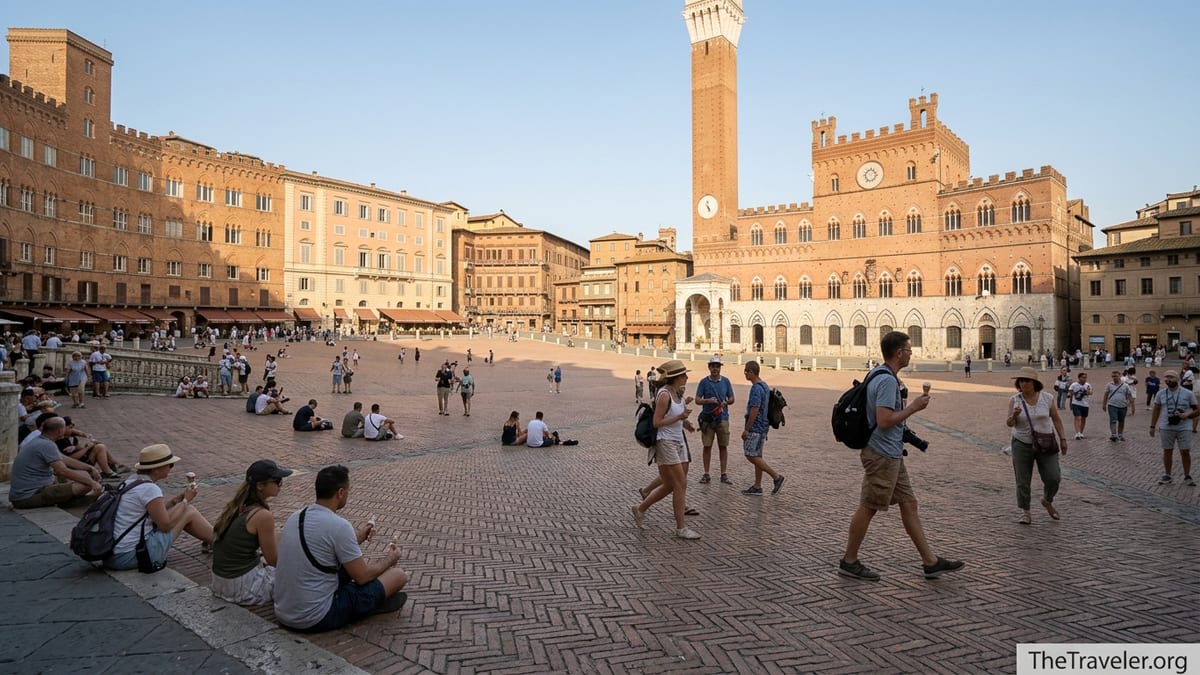
Almost every visitor to Siena imagines standing in the shell-shaped Piazza del Campo, yet few picture what it looks like on days leading up to the Palio. The famous horse race takes place twice a year, on or around July 2 and August 16, but the city’s rhythms shift for days on either side, and the square itself is transformed. Contractors lay down packed dirt along the perimeter where the horses will race, wooden safety barriers go up, and grandstands are built for paying spectators. For a visitor hoping to sit on the bricks at sunset with a gelato, this can come as a shock: the central space remains open, but much of the perimeter is fenced or filled with construction.
Even outside the race days, Palio rehearsals, trial runs and contrada events can dominate the atmosphere. It is not uncommon in late June or mid-August to have dinner on a quiet back street, only to be swept up moments later by the sound of drumming as one of the city’s 17 contrade parades through with flags and musicians. Many travelers say they wish they had understood just how busy and emotionally intense these periods would be. Hotel prices rise, minimum stays become common, parking becomes scarce and restaurant bookings harder to secure. At the same time, the chance to witness a contrada blessing its horse in a tiny neighborhood church, or to see the square fill hours before the race for a spectacle that lasts roughly a minute and a half, can become a lifetime memory.
If you are not specifically coming for the Palio, you may want to consider avoiding the core race days and the nights immediately around them, especially if you prefer quiet sightseeing and lower prices. Visiting in late May, early June or September usually means easier access to the Campo’s cafes and more flexibility around the Duomo. On the other hand, if your dream is to stand in the packed center of the Campo watching the race, plan far ahead, accept that you will stand for hours in the summer sun to hold your place, and prepare for a genuine local event rather than a polished tourist show.
Eating in Siena: Timing, Reservations and Local Dishes
Another thing many visitors wish they had known before arriving in Siena is how local dining hours and habits differ from those back home. Restaurants in the old town often open for dinner around 7:30 or 8 p.m., and locals tend to arrive later still. If you are used to North American or northern European habits of eating at 6 p.m., you may be surprised to find many kitchens still closed at that hour. At lunchtime, full-service restaurants generally serve from about 12:30 to 2:30 p.m.; outside those windows, you are more likely to find panini bars, bakeries and cafes than full hot meals.
In practice, this means planning ahead, especially in high season. A trattoria near Piazza del Campo that looks quiet at 6:30 p.m. may be fully booked by 8 p.m. A simple phone call or online reservation that morning can make the difference between a relaxed evening at a place like Osteria Le Logge or La Taverna di San Giuseppe and a frustrating search through crowded streets. Many classic Tuscan dishes are hearty and meat-forward, from bistecca alla fiorentina to wild boar ragù, but Siena also has its own specialties that visitors sometimes miss, like crostini topped with chicken liver pâté, pici pasta with black pepper and pecorino, or the dense, spiced fruit cake known as panforte.
Budget-conscious travelers often regret relying too heavily on the most visible, touristy restaurants along the main streets. While some are excellent, you generally pay a premium for location. Wander a block or two off Via Banchi di Sopra or the Campo and you will stumble on smaller osterie filled with locals on their lunch break. Ordering house wine by the carafe, splitting antipasti and focusing on pasta dishes rather than multi-course feasts can keep costs manageable while still allowing you to taste the region. Do pay attention to coperto, the per-person cover charge added in many Italian restaurants for bread and table service; it is normal, but first-time visitors are sometimes caught off guard when they see it on the bill.
Water, Heat and the Reality of a Hill Town
On a summer afternoon in Siena, the stone streets can radiate heat. Travelers often underestimate how much the combination of steep climbs, direct sun and crowd density will tire them. One simple way to cope is to make use of the city’s public drinking fountains and shaded corners. Siena has a long tradition of public water, from monumental historic fountains like Fontebranda just below the basilica of San Domenico to smaller modern spouts fed by the municipal aqueduct. Many of the newer fountains in and around the center are designed for people to refill bottles and are clearly marked when water is not suitable for drinking.
A practical rule used by locals and repeat visitors alike is that if a small street fountain is meant for drinking, there will be no “acqua non potabile” sign; if the water is not drinkable, that warning will be clearly posted. Monumental basins in the main squares are often decorative rather than for drinking, but simple silver or stone spouts set into walls at human height are often there precisely to keep people hydrated. Travel guides and local sustainable tourism documents highlight these fountains as part of an effort to reduce plastic bottle waste, and you will see residents, schoolchildren and hikers refilling bottles throughout the day.
Because Siena is built on ridges and slopes, plan your day to minimize unnecessary climbs in the hottest hours. One common strategy is to tackle higher sights like the Duomo complex and viewpoints in the cooler morning, then descend gradually toward lower neighborhoods and shady cafes after lunch. Duck into churches not only for their art but for a few minutes of cool air and quiet. A compact folding umbrella or hat can be as useful for blocking the midday sun in Piazza del Campo as it is for a passing shower.
Local Rhythm, Language and Respectful Behavior
Visitors who fall hardest for Siena often say that what finally made the city click for them was understanding its rhythm. This is not a place organised primarily around tourism, even though tourism is important. The contrada system, with its banners and neighborhood fountains, shapes local life far more deeply than many first-time visitors realize. You may see flags and emblems on street corners, neighborhood notice boards and even baby strollers, all indicating allegiance to one of the 17 districts. During Palio season and on various feast days, contrade hold dinners in the streets, sometimes with long communal tables stretching under the flags late into the night.
As an outsider, joining in respectfully can be rewarding, but pushing too hard to “experience the real Siena” can backfire. Many of these dinners and meetings are private community events, even if they happen in public space. If you are invited in by a local or if your accommodation arranges spots at an open contrada dinner, accept with gratitude and follow their lead. Otherwise, watch and listen from the sidelines without intruding. Inside churches, including the Duomo, dress codes are more actively enforced than some travelers expect: bare shoulders and very short shorts can lead to being turned away or asked to cover up with a shawl.
Language-wise, you can navigate Siena with basic English in most hotels, museums and central restaurants, but having a few Italian phrases ready changes interactions. A simple “buongiorno” when entering a shop, “per favore” when ordering, and “grazie, buona giornata” when you leave go a long way. Outside the very center and in small family-run places, staff may assume a more Italian rhythm of service, giving you time between courses and not presenting the bill until it is requested. Visitors used to rapid turnover sometimes interpret this as inattentiveness, when in fact it is a sign that you are welcome to linger.
The Takeaway
Siena rewards travelers who arrive with their eyes open to how the city truly functions. Understanding the practicalities of getting into town, respecting the ZTL and parking realities, planning for ticketed sights, and adjusting expectations around costs and crowds can remove most of the friction that frustrates first-timers. In exchange, you gain more time and mental space to notice the details that make Siena unforgettable: the way afternoon light hits the striped Duomo, the echo of footsteps in narrow alleys, a contrada flag fluttering above a hidden courtyard.
Perhaps the most useful mindset shift is to see Siena not as a quick day trip box to tick but as a living, layered city worth at least a night or two. Give yourself time to move at its pace, to get lost and then reorient toward the Campo, to discover a favorite cafe or view rather than rush from sight to sight. The more you align your plans with the city’s own rhythms, the more likely you are to leave not with a list of small frustrations but with the feeling that you have experienced something rare: a medieval Tuscan city that still belongs first to its residents and only second to the travelers passing through.
FAQ
Q1. Do I need a car to visit Siena, or is public transport enough?
Public transport is usually enough. Buses and regional trains connect Siena with Florence and other Tuscan towns, and once inside the historic center you will walk almost everywhere. A car becomes more useful if you plan to explore the surrounding countryside and hill towns, but you should still leave it in parking lots outside the walls when visiting the old town.
Q2. How strict is Siena’s ZTL, and what happens if I drive into it by mistake?
The ZTL around the historic center is actively enforced by cameras during operating hours, and unauthorized vehicles that cross into it are typically recorded and later fined. If you accidentally drive into the zone without a permit, you may receive a ticket weeks or months later via your rental company. To avoid this, follow signs carefully, rely on parking lots outside the walls, and only enter the ZTL if your accommodation has explicitly arranged access.
Q3. Is it better to stay overnight in Siena or visit as a day trip from Florence?
Both are possible, but staying overnight changes the experience. A day trip gives you time for the Duomo and Piazza del Campo, yet you may feel rushed. Spending one or two nights lets you enjoy quieter mornings and evenings after day-trippers leave, explore less crowded streets, and experience more of the city’s local rhythm and dining scene.
Q4. How much should I budget per day for food and basic expenses in Siena?
Budgets vary, but many visitors find that a moderate daily food budget might include around the cost of a simple cafe breakfast, a light lunch from bakeries or panini bars, and a sit-down dinner with house wine. Adding in gelato, coffee, and occasional aperitivi, plus museum or cathedral tickets, you may spend an amount comparable to or slightly less than in Florence, depending on how often you choose premium locations like the main square.
Q5. Are there free or low-cost things to do in Siena?
Yes. Wandering the medieval streets, people-watching in Piazza del Campo, visiting smaller churches, exploring viewpoint terraces near the Fortezza Medicea, and following sections of the old walls are all free. You can also enjoy inexpensive experiences like climbing to viewpoints in public parks or attending open-air events and markets when they coincide with your visit.
Q6. Is the tap water in Siena safe to drink, and can I use public fountains?
Tap water in Siena is considered safe to drink, and many residents freely refill bottles at home. Public drinking fountains meant for refilling are common in and around the center. As a rule, if a fountain’s water is not drinkable, it will be clearly labeled with a sign such as “acqua non potabile.” When in doubt, use obvious bottle-filling spouts rather than decorative basins.
Q7. What should I wear to visit the cathedral and other churches?
Dress modestly. Both men and women should cover shoulders and avoid very short shorts or skirts when entering churches. A light scarf or shawl is useful in summer to cover bare shoulders. Comfortable shoes are also important due to cobbled streets and steps. If clothing is deemed inappropriate, staff may ask you to cover up or deny entry.
Q8. How crowded does Siena get during the Palio, and should I plan around it?
During the days surrounding the Palio races in early July and mid-August, Siena becomes extremely crowded, with higher prices, busier restaurants, and limited parking. The main square is partially closed off for track construction and seating, and the atmosphere is intense. If you want a quieter visit, avoid those dates; if you are coming specifically for the Palio, book far in advance and be prepared for crowds and long wait times on race day.
Q9. Do I need to book tickets for the Duomo complex in advance?
Advance booking is not always mandatory, but it can save time, especially in high season and on weekends. For the basic cathedral ticket or the Opa Si Pass, you can often buy on the day, though you may face queues at busy times. For special experiences like the rooftop “Gate of Heaven” tour, advance reservations are strongly recommended due to limited capacity and timed entry.
Q10. Is Siena suitable for travelers with limited mobility?
Siena’s steep hills, steps, and uneven cobblestones can pose challenges for travelers with limited mobility. Some main routes between sights involve slopes and stairways, and not all older buildings have elevators. However, there are taxis, escalators from lower parking areas, and some accessible routes and facilities at major sights like the Duomo. If mobility is a concern, it is wise to contact accommodations and key attractions in advance to ask about specific access options.