


More news on this day
A wide ranging safety investigation is under way in Britain after two passenger trains collided near Bedford, killing a driver and injuring around 100 people on one of the country’s busiest intercity corridors.
Get the latest news straight to your inbox!
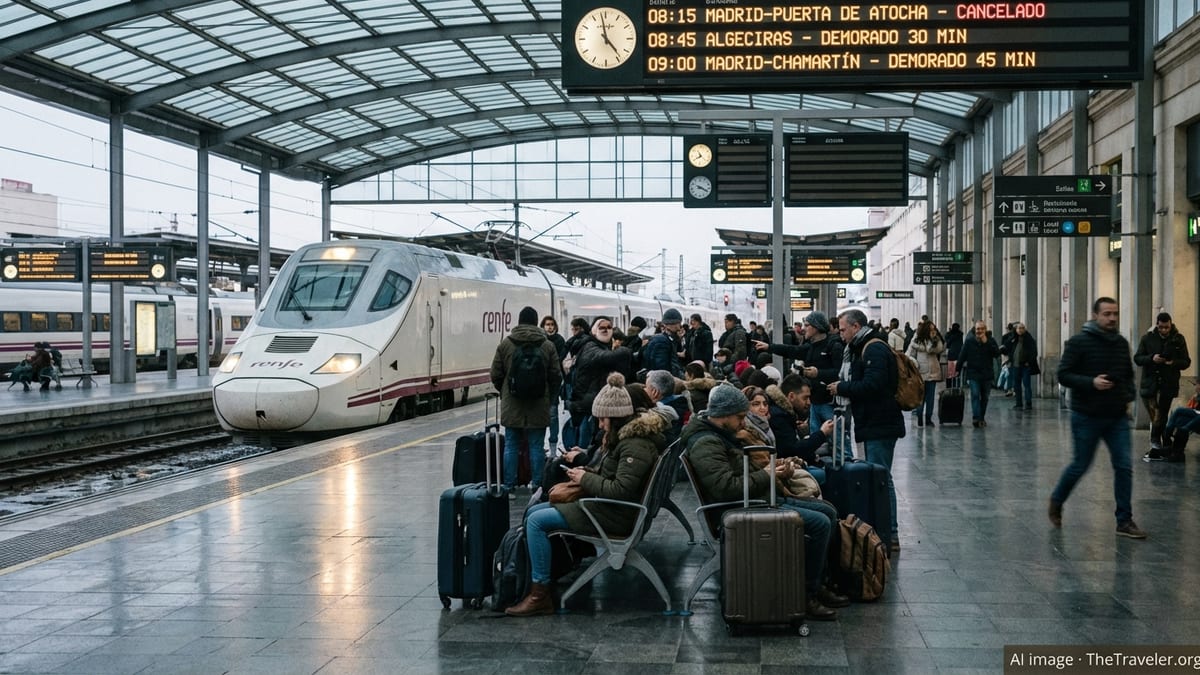
Rush hour collision on key London corridor
Publicly available information shows that the collision occurred on the Midland Main Line south of Bedford on Friday 19 June, during the evening rush hour. Both trains were East Midlands Railway services heading toward London St Pancras when one struck the rear of another train that was stationary or moving slowly on the same southbound track.
Reports indicate that the crash happened shortly after 17:15 local time, with carriages jolted off the rails and passengers thrown from their seats. Images and video shared by national and local outlets show at least one coach leaning at an angle, shattered windows and large numbers of emergency vehicles surrounding the scene.
According to figures reported by regional health services and police, about 100 people were treated for injuries. Around 11 passengers were initially classed as having very serious injuries, with several later confirmed to be in critical condition, while dozens more sustained serious or minor trauma ranging from fractures to cuts and bruises.
Rail operator statements cited in UK media describe the incident as a “major event” on the Midland Main Line, bringing traffic between Bedford, Luton and London to a standstill and leaving thousands of evening commuters stranded or forced onto diversionary routes.
Driver killed as investigators assess sequence of events
Coverage from national broadcasters and international outlets indicates that the person killed was the driver of the moving train that struck the rear of the other service. The collision occurred on a relatively straight and fast section of line that normally carries high speed intercity trains linking London with the East Midlands.
Early timelines compiled by news organizations suggest that a southbound service from Nottingham or Sheffield was brought to a halt or slowed near signals south of Bedford. A following southbound service from Corby to London then approached on the same line and impacted the rear of the first train at speed, severely damaging the leading cab and several carriages.
Specialist teams from the UK’s Rail Accident Investigation Branch have opened a formal inquiry, working alongside British Transport Police and regulators. Published updates from the investigation agencies emphasize that the focus is on understanding the precise sequence of events, including train movements, signalling conditions, and any technical or human factors that may have contributed.
Reports indicate that investigators are already examining on train data recorders, signalling logs and radio communications, as well as interviewing staff and passengers. A preliminary factual report is expected within weeks, although a full safety report with recommendations typically takes many months.
Rank and file staff call for thorough, transparent review
The scale of the collision and the loss of a working driver have prompted an intense reaction among rank and file railway workers and trade union members. Public statements from rail unions, cited widely in UK coverage, stress that front line staff want a comprehensive, transparent inquiry that looks beyond individual blame and addresses systemic issues in operations, staffing and technology.
Union representatives have highlighted long running concerns about workload, timetable pressure and the level of automation on Britain’s mainline network. Commentary from these groups points to the need to scrutinize whether existing protections against rear end collisions, such as signalling safeguards and automatic train protection systems, were available, active and used to their full potential on the Bedford route.
Rank and file voices also appear to be focusing on the support being offered to staff directly involved in the crash. Discussions reported in specialist rail media refer to trauma counselling for drivers, conductors and station teams, along with calls for guarantees that anyone raising safety concerns in the aftermath will be protected from any form of reprisal.
Campaigning groups representing passengers and transport workers are urging that any lessons learned from the Bedford collision are implemented quickly across the national network rather than limited to the Midland Main Line, particularly where issues of signalling design, rolling stock maintenance or crew training are identified.
Travel disruption and safety reassurances for passengers
The crash has caused significant ongoing disruption for travellers using the north south corridor between the East Midlands and London. According to service updates relayed by broadcasters and railway information platforms, all East Midlands Railway services through the affected section were initially suspended, with knock on delays and cancellations spreading to alternative routes via Leicester, Kettering and Luton.
Infrastructure teams have been working to rerail damaged carriages, repair track and overhead line equipment, and restore signalling. Industry forecasts referenced in travel advisories suggest that disruption is likely to continue for several days, with reduced timetables, diversions, and replacement bus services between Bedford, Luton and other nearby stations.
For passengers with upcoming journeys, rail operators are advising flexible travel plans, extra journey time and close attention to live departure boards and station announcements. Many tickets dated for the day of the crash are being accepted on alternative dates or on different routes, and some operators have relaxed peak travel restrictions to ease overcrowding.
In public messaging, railway companies and government transport bodies are emphasizing that serious collisions of this kind remain rare relative to the high volume of daily train movements in the United Kingdom. Nonetheless, the Bedford crash has renewed public debate about the pace of investment in modern signalling systems, on board safety technology and resilient timetabling, all crucial issues for travellers who rely on the rail network.
Spotlight on signalling, rolling stock and future safeguards
As investigators reconstruct the Bedford collision, attention is turning to the technical systems intended to prevent such events. Industry analysts quoted in specialist transport coverage note that various layers of protection generally exist on busy main lines, ranging from colour light signals and automatic warning systems in the cab to more advanced train control technologies on some routes.
One line of inquiry is expected to examine whether the signalling system correctly detected the position of both trains and whether any warnings or automatic interventions were available to prevent or mitigate a rear end impact. Another focus is likely to be the performance and crashworthiness of the rolling stock involved, including how well crumple zones, interior fittings and emergency exits functioned under high deceleration loads.
Past UK investigations have often led to recommendations for clearer operational rules, improved training and upgrades to trackside and on train equipment. Commentators suggest that the Bedford case may similarly result in new guidance on speeds, headways between closely spaced services, and the roll out of continuous automatic train protection on busy mixed traffic corridors.
For regular passengers, the inquiry’s findings will shape how the risks on high frequency intercity routes are managed in the coming years. The Bedford collision has underscored both the essential role of rank and file rail workers in day to day safety and the importance of sustained investment in the systems designed to back them up when something goes suddenly and catastrophically wrong.