


More news on this day
On a sprawling training ground at Kirkwood Community College, student responders moved through smoke, sirens and staged chaos in what reports describe as the institution’s largest emergency simulation to date, a high-stakes exercise designed to mirror the pressure and complexity of real mass-casualty events.
Get the latest news straight to your inbox!
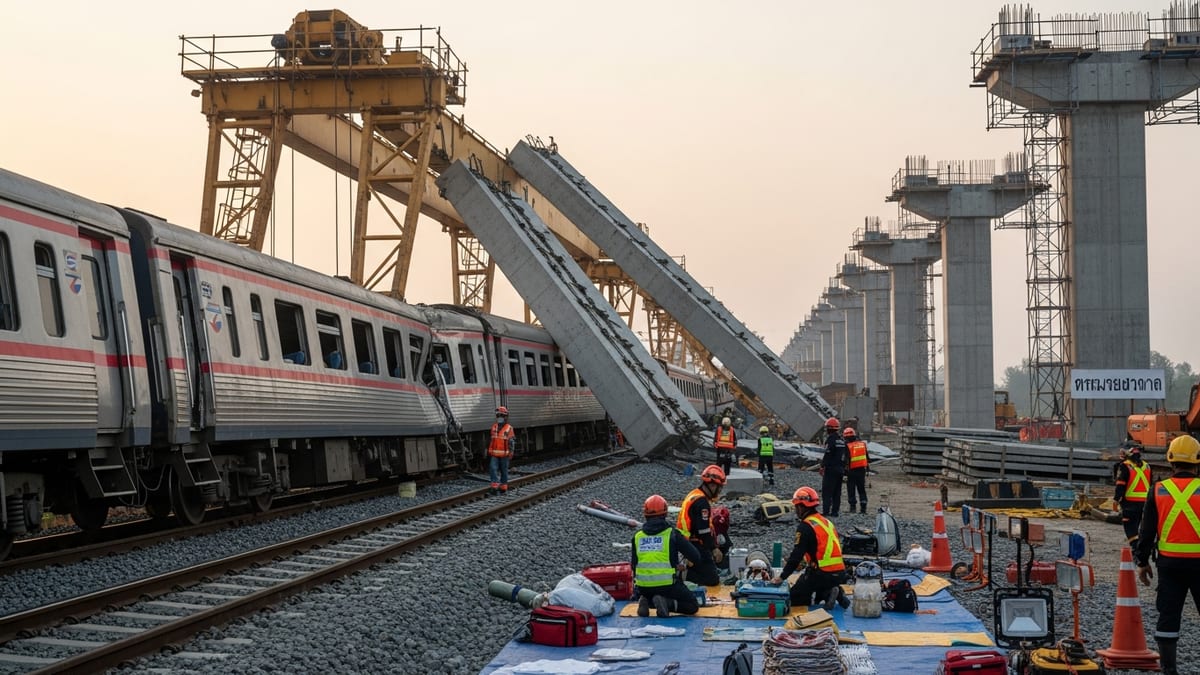
A Campus Transformed Into a Mock Disaster Zone
For a single intensive day, sections of Kirkwood’s Cedar Rapids campus are reported to have been reshaped into a realistic disaster scene, complete with mock patients, simulated wreckage and an incident command post. Organizers structured the drill to resemble large-scale exercises at other institutions, where hundreds of learners cycle through multiple stations that represent the full arc of an emergency response, from first contact in the field to advanced care in a simulated hospital environment.
Publicly available program information shows that Kirkwood’s emergency medical training facilities already incorporate high-fidelity simulators, a functional ambulance, and a simulated emergency department, giving students a controlled yet immersive environment to practice life-saving procedures. In the expanded, campus-wide drill, these assets were combined with additional staging, volunteer “victims,” and coordinated scenarios to push students beyond routine classroom simulations.
The exercise was framed as a capstone-style test of readiness for students in emergency medical technician and paramedic tracks, while also involving learners from other health and public-safety related programs. Reports indicate that this approach mirrors national trends in disaster education, where large, interdisciplinary simulations are increasingly used to prepare future professionals for complex incidents that cross traditional role boundaries.
Although the event was contained to campus, planners designed the scenario to approximate the sensory overload and unpredictability of an actual disaster. Siren audio, moulage makeup, and timed patient surges were used to force rapid prioritization, echoing large student-led drills at other universities that have become benchmarks for experiential emergency training.
High-Fidelity Training at the Katz Family Healthcare Simulation Center
Central to Kirkwood’s emergency education infrastructure is the Katz Family Healthcare Simulation Center, a facility highlighted in college materials as a hub for realistic clinical training. The center houses advanced manikins and monitoring systems that can simulate respiratory distress, cardiac events, trauma, and rapid changes in a patient’s condition, allowing instructors to script complex cases that unfold minute by minute.
Paramedic program information notes that students train on advanced assessment techniques, medication administration, cardiac monitoring and defibrillation using these simulators, as well as an on-site ambulance that can be dispatched and “driven” to a simulated emergency room. By integrating this environment into the larger disaster drill, planners were able to shift learners from field triage to in-hospital care without breaking the flow of the scenario.
Reports on similar large-scale simulations at other institutions emphasize that the realism of the environment is a key factor in building confidence and competence. In those settings, students practice working under pressure while still having the safety net of faculty debriefings and structured feedback. Kirkwood’s use of high-fidelity simulation technology appears aligned with this model, providing a bridge between classroom instruction and real-world emergency calls.
The center is also described as a shared resource for multiple health programs, which supports interprofessional learning. That structure allows paramedic, nursing and other health students to encounter each other in staged crises, approximating the interdisciplinary teams they are likely to join after graduation.
Students Practice Triage, Communication and Command
While advanced medical procedures are an important component of the exercise, the Kirkwood drill placed equal emphasis on decision making, communication and command structure. According to research on mass-casualty simulations, these non-technical skills often determine how effectively teams move patients from chaotic scenes to definitive care.
In the Kirkwood scenario, student responders were tasked with conducting rapid triage, assigning priority levels to each mock patient and relaying information to a central incident command team. Published studies of similar exercises show that learners are often evaluated on how quickly they identify life-threatening conditions, how accurately they classify patients, and how well they coordinate handoffs to transport and hospital teams.
The drill also exposed students to the National Incident Management System framework that guides real emergency responses across agencies. By operating within a structured chain of command, participants practiced the language and roles they will encounter when working alongside fire services, law enforcement and hospital staff. Publicly available planning documents for institutions that run comparable drills highlight this familiarity as a crucial factor in reducing confusion during actual emergencies.
After each phase of the simulation, students typically move into debrief sessions where facilitators walk through what went well and where hesitation or miscommunication occurred. Although details of Kirkwood’s specific debriefing format have not been widely publicized, educational literature on disaster drills indicates that structured reflection is where many participants consolidate their learning and translate moment-to-moment reactions into lasting skills.
Part of a National Movement Toward Immersive Disaster Education
Kirkwood’s largest emergency simulation fits within a broader national movement toward immersive, scenario-based education for health and public safety students. Across the United States, universities and colleges have expanded disaster days, mock mass-casualty incidents and virtual-reality simulations that challenge learners to respond to events such as explosions, chemical releases, severe storms and large public-gathering emergencies.
Reports from other campuses describe student-led exercises that bring together hundreds of participants from medicine, nursing, pharmacy, public health, veterinary medicine and social work. These drills often unfold in purpose-built training environments designed to resemble real neighborhoods, industrial sites or transportation hubs. Kirkwood’s use of its own simulation center, combined with campus spaces adapted for field scenarios, reflects this emphasis on situational realism.
Recent academic studies on disaster preparedness training suggest that such immersive experiences can improve perceived readiness, teamwork and understanding of emergency protocols. Some programs have begun incorporating virtual reality and serious gaming to complement live drills, indicating that the landscape of emergency education is evolving quickly. Kirkwood’s large-scale exercise appears to position its students within this cutting edge of experiential learning.
Community colleges have a particular role in this ecosystem, as many paramedics, emergency medical technicians and allied health professionals begin their education in these settings. By investing in ambitious, high-impact simulations, institutions such as Kirkwood aim to ensure that graduates are not encountering mass-casualty principles for the first time on an actual call.
Building Confidence Before the Real Call Comes
Behind the staged chaos of Kirkwood’s largest emergency drill lies a straightforward objective: to help students feel prepared the moment they encounter real patients in distress. Program descriptions emphasize that early, repeated exposure to realistic scenarios can ease the transition from training to practice, particularly in high-pressure roles such as emergency medical services.
For many participants, the exercise may be the first time they experience managing multiple critical patients at once, coordinating with unfamiliar teammates, or making treatment decisions while conditions change rapidly. Educational reports from comparable simulations at other institutions note that these experiences often reveal gaps in knowledge or confidence that can then be addressed before students graduate.
The Kirkwood drill also underscores how emergency preparedness on campus extends beyond classroom walls. The college maintains an emergency operations plan that outlines how it would respond to large-scale incidents, and this framework informs how simulations are designed. By rehearsing disaster scenarios in a controlled environment, students gain insight into how institutional plans translate into on-the-ground action.
As public agencies and healthcare systems increasingly highlight the importance of readiness for natural disasters, mass-casualty events and public-health emergencies, large-scale academic simulations like Kirkwood’s are emerging as key training grounds. The hope is that when the next real emergency unfolds, today’s student responders will recognize the patterns, recall the protocols practiced in drills such as this one, and move more confidently to save lives.