


When you start planning a Central Europe trip, one of the first practical questions is whether to fly into Prague or Vienna. Both cities sit on major air corridors, both are popular city break destinations, and both airports compete aggressively for long haul and low cost routes. Yet the experience on the ground, the cost of reaching the city, and the types of onward connections you get from each airport are quite different. This comparison looks at Prague’s Václav Havel Airport and Vienna International Airport side by side so you can decide which works better for your itinerary and travel style.
Get the latest updates straight to your inbox!
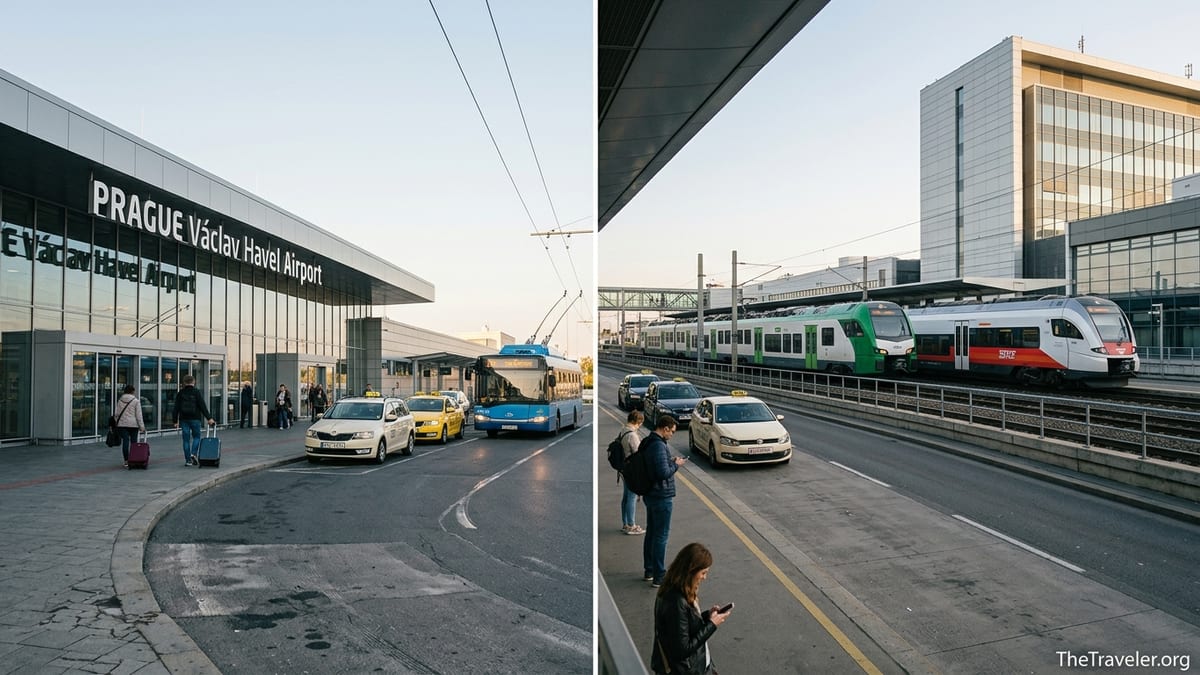
Airport scale and route networks
Vienna International Airport is the larger of the two and functions as a true network hub. It is the primary hub for Austrian Airlines, part of the Lufthansa Group and Star Alliance, with a dense web of connections across Europe and to long haul destinations in North America, Asia and the Middle East. Several low cost and leisure carriers, including Ryanair and easyJet Europe, also use Vienna as a base, which translates into a wide choice of European point to point routes on any given day.
Prague’s Václav Havel Airport is smaller but has been expanding its network quickly. The airport advertises flights to roughly two hundred destinations in peak season, and recent years have brought a wave of new long haul services, including routes to Seoul, Toronto, Abu Dhabi and Taipei. For a traveler coming from North America or East Asia, this means that Prague is increasingly reachable on a single ticket without a forced change in Frankfurt, London or Paris.
In practice, Vienna will still feel more like a classic connecting hub. If you fly from a smaller city such as Krakow or Ljubljana to North America, you are more likely to find a smooth connection through Vienna on Austrian or Lufthansa Group partners. Prague, on the other hand, is often stronger for origin and destination traffic: people whose trip starts or ends in the Czech Republic or neighboring regions using a mix of full service carriers and low cost airlines like Ryanair, Eurowings or Wizz Air.
This difference in role matters when you shop for tickets. Travelers who prioritize a single through ticket with protected connections and alliance benefits often find more options via Vienna, while those focused on price and direct links to Prague and nearby Central European cities may see better value by using Prague as their entry point and then continuing overland by train or bus.
Airfare patterns and where you save money
Airfares move constantly, but some general patterns emerge if you compare similar dates. Long haul economy tickets from North America to Vienna tend to be slightly more expensive than to Prague in shoulder seasons, in part because Vienna is a major hub with strong business demand. For instance, a sample one week trip in October from New York might price around the mid 700s to low 800s US dollars to Vienna on a full service carrier, while comparable dates to Prague often show options in the high 600s to low 700s with a change in a European hub.
On the other hand, Vienna’s role as a hub can make certain complex itineraries cheaper. If you are flying from a US city such as Chicago or Washington to a Balkan destination like Skopje or Tirana, a through fare on Austrian Airlines via Vienna may undercut separate tickets via Prague plus a regional low cost flight. The same applies for travelers connecting between Western Europe and Southeastern Europe or the Caucasus region, where Vienna offers substantial capacity.
For intra European point to point trips, Prague can be very price competitive thanks to low cost carriers and seasonal promotions. Examples include weekend returns from London, Brussels or Paris, where fares during off peak months often drop below 100 US dollars including a small cabin bag. Vienna also has low cost presence, but peak demand from business and conference travelers can keep prices firmer around common business routes such as Frankfurt, Zurich or Brussels.
If your itinerary is flexible, one practical strategy is to price open jaw tickets such as “home city to Prague, return from Vienna” and compare that to a simple round trip to a single airport plus train tickets between the two cities. Because Prague and Vienna are connected by frequent rail services, you can sometimes save by using the cheaper inbound or outbound airport in combination with a cross border train, especially in shoulder seasons when advance purchase rail fares are low.
Getting from the airport to the city center
For many travelers, the first hour after landing sets the tone for the whole trip. On this measure, both airports perform well, but they work differently. Prague currently does not have a direct heavy rail line into the city center. Instead, the backbone public transport link is trolleybus 59, which runs from both terminals to the Nádraží Veleslavín metro station on Line A. The trip to the metro takes roughly 15 to 20 minutes, and from there it is another 10 to 15 minutes by metro to central stops such as Staroměstská or Můstek. In normal daytime conditions you are in the historic center in around 35 minutes.
The key advantage in Prague is price. A standard 90 minute public transport ticket, valid across trolleybus, tram and metro within the city, costs the equivalent of only a few US dollars. This means a solo traveler can get from the airport to the center for less than the price of a coffee in many Western European capitals. There is also an Airport Express bus that runs directly to the main railway station for a higher fare, aimed at passengers connecting to intercity and international trains.
Vienna Airport, by contrast, is plugged directly into the national rail network and the city’s S Bahn suburban system. Travelers have three main rail options into town. The dedicated City Airport Train runs non stop between the airport and Wien Mitte station in about 16 minutes, with modern rolling stock, luggage racks and airline style branding. A one way ticket costs in the mid teens in euros, so it is the premium choice. Suburban S7 or REX7 trains take around 25 minutes to reach central stations and cost roughly a third of the dedicated train if you buy a standard two zone ticket. Intercity Railjet services operated by the national railway company link the airport with Wien Hauptbahnhof, the main station, in a similar time frame and are often convenient for travelers continuing by rail to Salzburg, Graz or Budapest.
From a convenience perspective, Vienna’s integrated rail options give it the edge for travelers who prefer to avoid buses and want a straightforward train ride directly from the terminal building. However, if you are budget conscious and traveling solo or as a couple, Prague’s very low public transport fares usually make your total door to door cost smaller, even after adding a metro transfer, especially if your hotel is near a Line A station.
Connectivity onward by train and bus
Central Europe is compact, and many travelers combine cities by rail. Here, it is important to think not only about how you get from the airport to the city, but also how the city integrates into the regional rail network. Vienna has a decisive advantage in long distance rail connections, with Wien Hauptbahnhof serving as a major Central European hub. Once you reach the main station from the airport, you can board frequent Railjet services to Salzburg, Innsbruck, Munich and Zurich to the west, and to Budapest, Bratislava and sometimes Prague to the east and north. For example, it is common to step off an intercontinental flight in the morning, catch a midday Railjet, and be in Budapest in around three hours or Salzburg in around two and a half.
Prague’s main station, Praha hlavní nádraží, is also well connected, but the network is somewhat more radial with slightly fewer international high speed options. From Prague, direct trains run to Berlin, Dresden, Vienna, Budapest and Krakow, among others, though often at lower speeds than comparable Western European routes. Typical journey times are about four hours to Berlin, around four hours to Vienna, and seven hours or more to Budapest depending on the service. For travelers who enjoy scenic routes and do not mind slower speeds, these daytime trains can be a highlight of the trip.
Bus networks add another layer. Both cities are major stops for long distance coach operators, including routes to cities like Bratislava, Munich, Krakow and Warsaw. However, the fact that Vienna Airport is directly on the main motorway toward Hungary and Slovakia makes express buses from the airport itself more common, while in Prague most long distance buses depart from Florenc or other city terminals, requiring a change after the airport bus or trolleybus.
If you plan a trip that strings together several cities in the region, using Vienna as your aviation gateway can simplify onward travel if you want higher speed trains and fewer changes. Prague works particularly well as the first or last stop on a loop that includes Germany and Poland, where there is dense rail and bus coverage but fewer very high speed services.
Terminal layout, transfers and passenger experience
Inside the terminals, the two airports feel quite different. Vienna has multiple terminals and concourses that reflect its role as a hub. Gate areas can feel busy during banks of connecting flights, and signage sometimes requires attention when moving between Schengen and non Schengen zones. On the positive side, Vienna offers a wide selection of lounges, including several airline operated lounges for Star Alliance carriers and independent lounges that can be accessed with paid passes. This makes a difference if you have a longer layover or arrive early for an intercontinental departure.
Prague’s layout is more compact, with two main passenger terminals that are relatively easy to navigate. For most travelers arriving on a European flight, the route from aircraft door to landside public area is short, with immigration and baggage claim generally regarded as efficient outside of occasional peak times in summer. There are fewer lounges overall, but for many origin and destination passengers the simplicity and shorter walking distances compensate for the smaller amenity range.
When it comes to transfers between flights, Vienna again shows its hub character. Minimum connection times can be as low as 25 to 35 minutes for certain Schengen to Schengen itineraries on Austrian Airlines, making tight but legal connections viable. This can be useful for travelers piecing together complex multi city trips on a single ticket. Prague handles some connecting traffic, especially on flag carriers and long haul services, but its schedules are less tightly banked, so you may find longer planned layovers.
For families and less frequent flyers, the experience of landing in Prague, quickly clearing the formalities and boarding a clearly marked trolleybus or airport bus into town can feel pleasantly straightforward. In Vienna, the trade off is between convenience and choice: you have more transport options, duty free shops and lounges, but also more decisions and potentially longer walking distances between gates and modes of transport.
Access costs, taxis and ride hailing
Beyond public transport, taxis and ride hailing can change the value equation, especially for small groups. In Prague, licensed taxis and app based services such as Bolt or Uber operate from the airport. A typical fixed fare or metered ride to central districts like Staré Město or Malá Strana often ranges in the equivalent of 25 to 35 US dollars, depending on traffic and the exact drop off point. For three or four travelers with luggage, this can be competitive with multiple public transport tickets, particularly late at night when standard daytime routes are limited and journeys by night buses and trams take longer.
Vienna’s taxi fares to the inner districts generally sit higher. A ride from the airport to central neighborhoods such as Innere Stadt or Neubau often comes to the equivalent of 40 to 55 US dollars, again depending on traffic and whether you pre book a flat rate transfer. Some travelers choose to combine modes by taking an S Bahn or Railjet train into town and then a short taxi ride or rideshare to their hotel, which can significantly reduce the cost compared with a door to door cab from the terminal.
For cost conscious solo travelers, both cities reward using public transport unless you arrive with very heavy luggage or outside normal public transport hours. For families, small groups or those arriving late at night, Prague’s generally lower taxi and ride hailing prices can tip the balance in favor of using a car from the airport, particularly if you are staying in areas less directly served by metro lines.
An extra factor to consider in Vienna is ticketing complexity if you are unfamiliar with local zones. Purchasing the right two zone ticket for the S Bahn plus a city ticket can confuse some first time visitors, whereas Prague’s integrated ticket system for the trolleybus and metro is simpler. In both cases, using contactless payment machines or official ticket counters in the arrivals hall is the safest way to avoid unlicensed operators or unofficial ticket sellers.
Which airport suits different types of trips
Choosing between Prague and Vienna is often less about which airport is objectively better and more about what kind of trip you are planning. If your primary aim is to explore the Czech Republic, especially if you plan to spend most of your time in Prague with maybe a side trip to Český Krumlov, Brno or the Bohemian countryside, then flying directly into Prague Airport usually makes the most sense. You minimize overland travel upon arrival, and you benefit from the city’s extremely affordable public transport and compact airport experience.
Conversely, if your Central Europe trip covers several countries with an emphasis on rail travel, Vienna Airport is probably the stronger gateway. For example, a two week itinerary that includes Vienna, Salzburg, Hallstatt, Budapest and Bratislava can be built around flying into and out of Vienna, using fast Railjet and regional trains between cities with minimal backtracking. The direct train and motorway links from the airport align well with this kind of multi city loop.
For long haul travelers with status or lounge access on Star Alliance carriers, Vienna’s position as an alliance hub and the presence of Austrian Airlines as a home carrier add value. You are more likely to enjoy streamlined through check in, priority services and a wider choice of premium class products. Prague is catching up in terms of long haul connectivity, but it still relies more on a mix of carriers feeding through different European hubs, which can mean an extra connection or an overnight in a hub city for some routes.
Budget driven travelers and digital nomads who mix flights with long distance buses often appreciate Prague’s combination of low cost air links and relatively cheap onward coach services to cities such as Dresden, Wrocław or Krakow. In that scenario, the slightly smaller route network at Prague Airport is offset by the affordability and variety of overland options once you reach the city.
The Takeaway
For travelers choosing a Central Europe gateway, Prague Airport and Vienna Airport each offer distinct strengths. Vienna is the classic hub with a broad route network, strong Star Alliance presence and excellent direct rail links from the terminal to both the city center and the wider region. It shines for complex itineraries, rail focused trips and travelers who value through tickets and premium services. The trade off is generally higher local transport and taxi costs and a busier, more sprawling terminal environment.
Prague, by contrast, offers a compact airport, low cost and straightforward public transport into the city, and an increasingly impressive set of direct long haul routes. It works particularly well if Prague is your main destination or your trip continues into neighboring parts of Germany and Poland. Taxi and ride hailing prices are often lower than in Vienna, which can matter for late night arrivals or small groups with luggage.
If your plans are flexible, comparing airfares to both airports for your dates and then factoring in the cost and time of airport transfers and onward rail travel is the smartest approach. Sometimes a slightly more expensive ticket into Vienna will save hours on trains later, while in other cases a cheaper flight into Prague plus an affordable intercity train or bus will produce the best overall value. Thinking in terms of the whole journey rather than just the flight usually reveals whether Prague Airport or Vienna Airport is the better Central Europe entry point for you.
FAQ
Q1. Is it cheaper to fly into Prague or Vienna for a Central Europe trip?
In many cases, Prague shows slightly lower average fares for simple return trips, especially outside peak business periods, while Vienna can be competitive or cheaper for complex itineraries with several connections on the same airline group. It is worth pricing both options for your exact dates and then adding estimated airport transfer and rail costs before deciding.
Q2. Which airport has better transport into the city center?
Vienna has the more seamless rail access, with dedicated airport trains, suburban S Bahn services and long distance Railjet trains running directly from the terminal to central stations. Prague uses a trolleybus and metro combination for most travelers, which involves a transfer but is very inexpensive and still gets you into the center in roughly half an hour under normal conditions.
Q3. How long does it take to reach downtown from each airport by public transport?
From Prague Airport, the trolleybus to Nádraží Veleslavín plus metro ride typically takes about 35 minutes door to door to central stops, depending on waiting times. From Vienna Airport, the fastest option is the dedicated airport train at about 16 minutes to Wien Mitte, while suburban and Railjet services typically take 20 to 30 minutes to major central stations.
Q4. Are taxis much more expensive in Vienna than in Prague?
On average, yes. Typical taxi or rideshare fares from Prague Airport to central districts are often in the mid two digit US dollar range, while comparable rides in Vienna frequently land in the higher two digit range. Exact prices vary by time of day, demand and whether you pre book a flat rate transfer.
Q5. Which airport is better for connecting flights outside Europe?
Vienna generally offers more connecting possibilities on a single ticket, especially with Star Alliance carriers, including Austrian Airlines as the home carrier. Prague’s long haul network is improving rapidly, with new routes to Asia and North America, but it still offers fewer total long haul frequencies and onward combinations than Vienna.
Q6. If I want to visit both Prague and Vienna, which airport should I use?
If prices are similar, a convenient option is to fly into one city and out of the other, using a direct train between them during your trip. If you prefer a simple round trip, flying into Vienna may be better if your itinerary extends further into Austria or Hungary, while flying into Prague is ideal if you plan to include Germany or Poland.
Q7. Is public transport from the airports safe for solo travelers at night?
Both Prague and Vienna have generally safe and well used public transport systems. In the late evening, frequencies drop and journeys may involve more transfers, so some travelers prefer pre booked taxis or ride hailing after midnight, especially with heavy luggage. Checking scheduled last departures for airport buses or trains before travel is a sensible precaution.
Q8. Which airport is easier to navigate for a first time visitor?
Prague’s airport is smaller and more compact, which many first time visitors find straightforward, especially if they are arriving on a point to point flight and heading straight into the city. Vienna is larger and more complex because of its hub role, but signage is clear, and staff are used to helping transfer passengers find their gates and transport options.
Q9. Do either of the airports have direct train lines to other countries?
Vienna Airport connects via Railjet and other long distance services that continue beyond Vienna to cities in Austria and neighboring countries, making it possible to land and continue toward places like Budapest or Salzburg with just one change or sometimes none. Prague Airport does not yet have a direct heavy rail connection, so international trains depart from the city’s main station after a bus or trolleybus ride from the airport.
Q10. For a tight budget, which airport usually offers the lowest overall trip cost?
If every euro counts and your main destination is one of the two cities themselves, Prague often delivers a lower combined cost when you add together airfare, airport transfers, local transport and taxis. However, for multi country trips where Vienna’s fast rail links reduce the number of extra travel days or overnight stays, the slightly higher local costs around Vienna Airport can be offset by saving time and accommodation expenses.