


More news on this day
Canada has strengthened its travel advisory for France as weeks of protests, vandalism and sporadic violence disrupt major cities, prompting tighter security measures and renewed calls for travelers to exercise greater caution.
Get the latest news straight to your inbox!
Advisory Raised as Demonstrations Spread Across France
Global Affairs Canada now lists France with a risk level that urges travelers to exercise a high degree of caution, citing the threat of terrorism alongside a deteriorating public order situation. The country entry on Canada’s official Travel Advice and Advisories portal was most recently updated on October 28, 2026, reflecting a series of nationwide demonstrations and episodes of unrest.
Publicly available information indicates that France has seen sustained protests since mid-September, including large student-led demonstrations and broader rallies over education funding and cost of living pressures. In several cities, these events have escalated into clashes with security forces, with reports of vandalism, looting and arson in commercial districts and near public buildings.
The Canadian advisory for France stops short of recommending that travelers avoid non essential travel, but it highlights a fluid security environment. Officials have updated the safety and security section to warn that the situation can change quickly, advising travelers to monitor local news and be prepared to adjust itineraries at short notice if conditions worsen in their destination city.
The heightened language places France among a group of European countries where Canada urges elevated vigilance due to a combination of civil unrest and terrorism concerns. The advisory notes that demonstrations can emerge with limited warning and that even peaceful gatherings have the potential to turn confrontational.
Curfews, Disruption and Heightened Security Presence
France has responded to the unrest with stepped up security measures, including local curfews in some municipalities and a reinforced police and military presence in public areas. Travel advisories compiled by Canada and several partner countries describe heavily policed city centers, particularly around government buildings, major transport hubs and symbolic landmarks that attract large crowds.
Global Affairs Canada’s France page singles out demonstrations as a key risk factor, pointing to a nationwide “day of action” on October 24 that brought marches to multiple cities and disrupted public services and transportation throughout that weekend. Canadian guidance notes that security forces in recent incidents have used measures such as tear gas and crowd control tactics to disperse gatherings when protests have turned violent.
Other foreign ministries have issued similar warnings. Updated advisories from European and Australian governments reference an elevated likelihood of demonstrations and an increased security posture near popular tourist sites. Canada’s own guidance suggests that travelers should expect more visible policing and tighter access controls at major events, including bag checks and temporary closures around rally points.
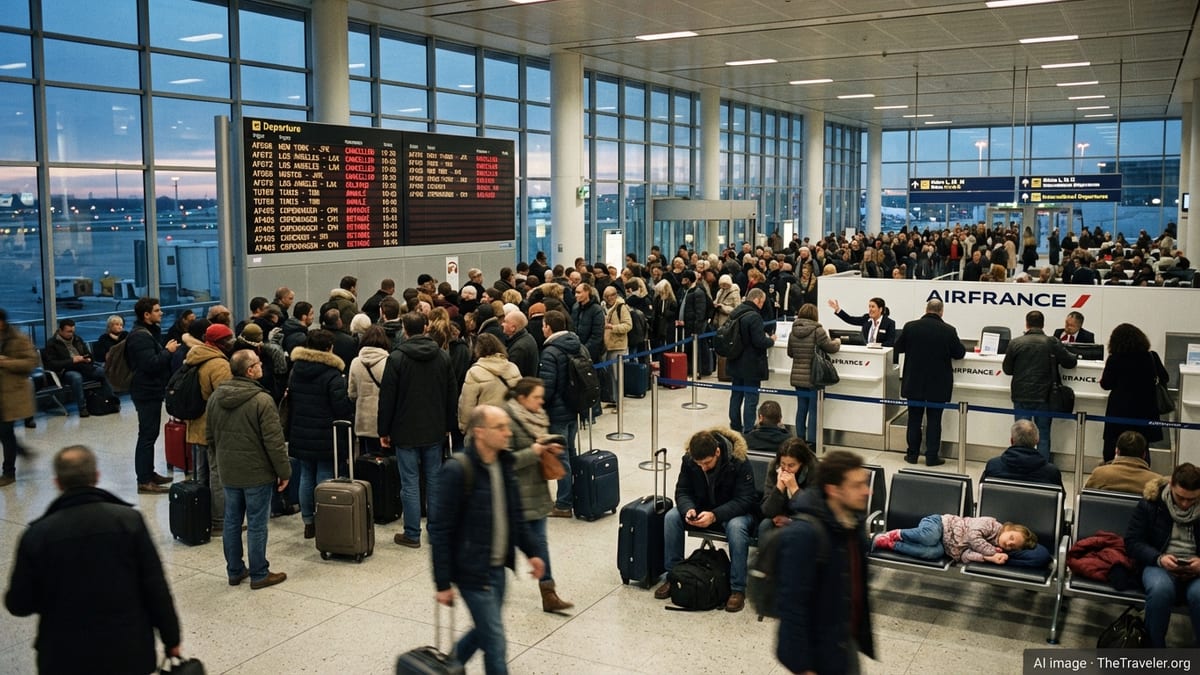
While commercial flights, intercity rail and key tourist attractions remain in operation, travelers are being advised to anticipate last minute changes. Some sporting fixtures and cultural events scheduled in late October have been postponed or relocated as local authorities attempt to separate mass gatherings from areas already under strain from protests.
What the New Guidance Means for Canadian Travelers
For Canadians planning trips to France, the revised advisory has practical implications both for safety planning and for travel logistics. The “exercise a high degree of caution” designation signals that travelers should go beyond routine preparations, taking time to review local conditions before departure and throughout their stay, particularly in larger urban centers such as Paris, Lyon and Marseille.
Government travel resources recommend that visitors avoid areas where demonstrations are announced or underway, even if gatherings appear peaceful at first. Travelers are urged to watch for announcements of marches or strikes that could affect metro lines, regional rail services, airports or major road corridors, and to allow additional time when moving between city districts.
The advisory also underscores the importance of contingency planning. Canadians are encouraged to maintain flexible itineraries, consider refundable tickets where possible, and keep accommodation plans adaptable in case a neighborhood becomes subject to curfews or transport disruptions. Those already in France are asked to monitor local media and official announcements so they can react promptly if routes are blocked or if restrictions are imposed.
Despite the elevated caution, Canada’s guidance does not advise travelers to leave France or cancel existing trips solely on the basis of the current unrest. Instead, it frames the updated language as a call for increased awareness and preparation, particularly for visitors unfamiliar with the scale and frequency of large public protests in the country.
Insurance, Itineraries and Risk Management
The change in Canada’s advisory level can also affect travel insurance coverage and trip planning for the winter and spring seasons. The federal explanation of advisory categories notes that higher risk ratings, such as “avoid non essential travel” or “avoid all travel,” may trigger coverage limitations under some policies if those levels are in place when a trip is booked. While France is not currently in those categories, travelers are being encouraged to review policy conditions related to civil unrest and security incidents.
Published guidance on Canadian government sites stresses that travel advisories are intended as a decision making tool rather than a prohibition. Travelers are advised to consult the official advisory page for France both when planning and again shortly before departure, to ensure that any later changes are factored into their insurance choices, reservations and on the ground plans.
Some Canadian school boards and group travel organizers have already reassessed itineraries involving France, citing the evolving global context and the experience of recent student trips that encountered street protests abroad. Decisions to cancel or reroute group travel are being taken case by case, with particular attention to the age of participants and the likelihood that demonstrations could intersect with planned urban visits.
Independent travelers and families, meanwhile, are being encouraged to map out routes that minimize time spent in areas known for frequent rallies, especially on dates flagged locally as days of national action. Simple steps such as traveling earlier in the day, staying clear of large plazas when marches are scheduled and keeping photocopies of key documents in a separate location are highlighted as part of a broader risk reduction strategy.
Monitoring a Fast-Moving Situation
Canadian consular publications emphasize that travel advisories are reviewed continuously and can be updated at short notice when unrest intensifies or spreads to new regions. Recent changes to the France advisory have followed this pattern, with multiple updates in October aligned with growing protest activity and the introduction of curfews in certain municipalities.
Travelers are therefore encouraged to think of the advisory as a living snapshot rather than a static document. Checking for the latest revision date on the France page, subscribing to government email updates where available, and following local broadcast and print coverage in France are presented as key tools for staying informed while on the move.
The French government’s own security alert framework remains at an elevated level, and international partners note that terrorism and unrest are being tracked together as overlapping risk factors. For visitors, this combination translates into more routine screening at transport hubs, visible patrols near tourist attractions and, during periods of tension, temporary closures or access restrictions in affected districts.
As the situation in France continues to evolve, Canada’s tightened advisory underscores a broader message to international travelers: popular destinations can experience sudden shifts in security conditions, and careful preparation, flexible planning and real time information remain essential parts of any trip.