


Few hotel names feel as synonymous with American travel as Best Western. For generations of drivers pulling off the interstate at dusk or families checking into a city hotel for a long weekend, the blue and yellow sign has promised something simple but important: a decent room, fair value, and a sense of familiarity in unfamiliar places. Today, under the broader BWH Hotels umbrella, the brand has evolved into a surprisingly diverse collection of properties that range from classic roadside stops to boutique-style addresses in major urban centers. This is a look inside what the modern Best Western experience really feels like, and how to make the most of it whether you are cruising Route 66 or checking into a downtown high-rise.
Get the latest updates straight to your inbox!
The Best Western Brand Today
Best Western has come a long way from its roots as a postwar network of independent roadside motels in the American West. Today it sits within BWH Hotels, a global hospitality group that includes Best Western Hotels & Resorts, WorldHotels and SureStay. Together, the portfolio encompasses thousands of independently owned and operated properties in more than 100 countries, and Best Western remains one of the most recognizable midscale names on American highways and in many international cities.
For travelers, that scale matters. It means you can drive from Chicago to Los Angeles, or hop between business meetings in New York, Dallas and Phoenix, and find a familiar brand standard at each stop, even though every hotel is owned and designed by a local operator. It also means a wide range of nightly rates: budget-conscious drivers might see midweek highway properties in the Great Plains or Southwest start somewhere in the 90 to 130 dollar range before taxes, while a peak-season city stay near a major stadium or convention center can run several times that.
Another key feature of the modern Best Western ecosystem is segmentation. What was once a single logo has expanded into multiple sub-brands that cover everything from traditional midscale hotels to design-led boutique concepts and soft-branded collections of upscale independents. For guests, that translates into more choice: you can decide whether you want straightforward value, a little extra polish, or a stay that feels more like a distinctive local hotel which simply happens to participate in the Best Western network.
Despite this growth, the promise that originally made the chain popular with motorists still underpins the experience: clean rooms, dependable service, and amenities like Wi-Fi and parking positioned at a fair price point. The difference now is that you can find those basics packaged in very different ways depending on where your trip takes you.
From Route 66 to the Interstate: Road Trip Best Westerns
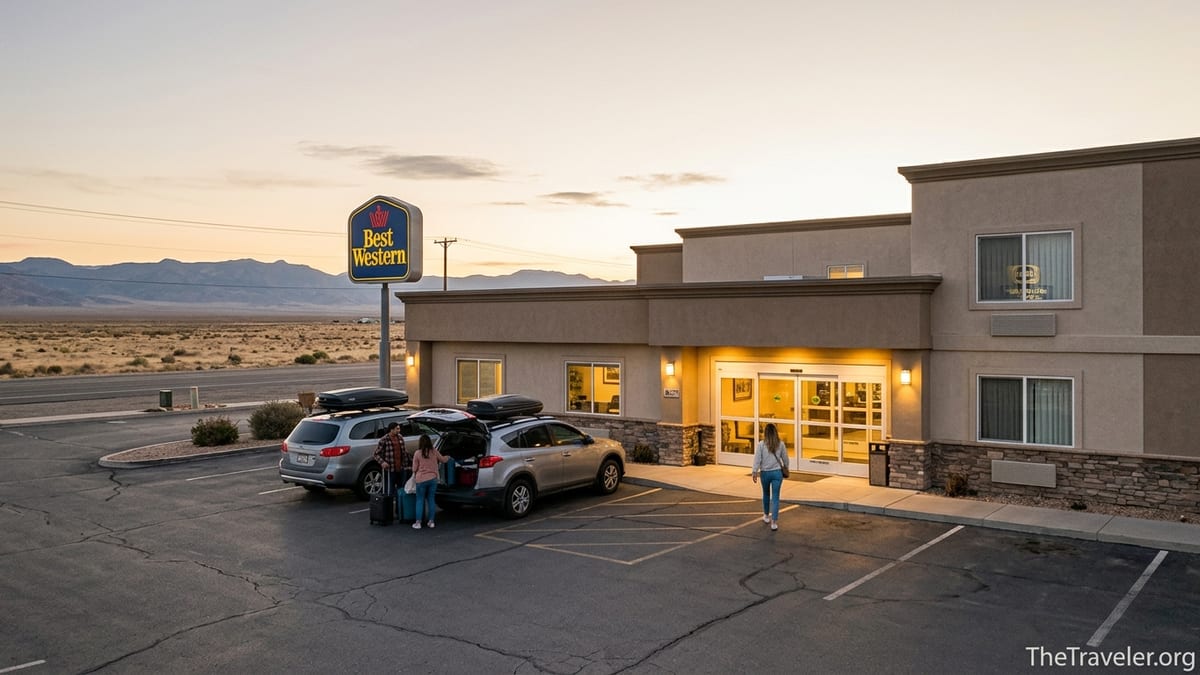
Best Western’s DNA is firmly tied to road travel, and you can still feel it the moment you pull into the parking lot of a low-rise property set just off a highway exit. Along legendary corridors such as Route 66, you will find classic examples like a Best Western Plus in Kingman, Arizona, which often serves as an overnight base for travelers threading the desert between Las Vegas and the Grand Canyon. Here the experience is tailored to drivers: easy access from the highway, ample free parking, and an included hot breakfast that lets you get back on the road quickly the next morning.
On cross-country interstates, similar patterns emerge. A Best Western near an I-70 exit in Kansas or an I-40 stop in New Mexico typically offers exterior or easily accessible interior corridors, on-site guest laundry, and rooms equipped with microwaves and mini-fridges. These details matter on long drives. Being able to reheat leftovers from a roadside diner, chill drinks for the cooler, or wash a bag of clothes after a week on the road can make a mid-priced hotel feel vastly more functional than a bare-bones budget option.
Pricing on these corridor properties can be appealing, especially outside school holidays and major events. In many smaller towns you may see rates in the low 100 dollar range or below for a standard king or two-queen room, particularly if you book a few days ahead or use a member discount. That compares favorably with some newer budget brands that may advertise lower base prices but charge extra for parking or breakfast. For families driving from the Midwest to national parks in the Rockies or Southwest, the combination of free parking, breakfast and Wi-Fi can shave a notable amount off the total trip cost.
Equally important is predictability. After ten hours of driving through rain or heat, most people are not looking for experimental design. They want a quiet room, a hot shower, and working air conditioning. Well-run highway Best Westerns tend to deliver exactly that, along with small but welcome comforts like lobby coffee, a bowl of fruit at check-in, or staff who can point you toward the local pizza place that still delivers at 9 p.m.
City Hotels and Urban Experiences
If your mental picture of Best Western stops at freeway exits, a stay in one of the brand’s urban properties can be eye-opening. In cities such as Chicago, Seattle, or San Francisco, Best Western hotels are often mid-rise or high-rise buildings embedded in dense neighborhoods. A Chicago property near Grant Park, for example, positions you within walking distance of the lakefront, museums, and transit lines, with room categories that range from compact doubles for budget-minded couples to larger city-view rooms suitable for longer stays.
Urban Best Westerns usually lean harder into business and leisure city needs than their highway counterparts. Instead of wide parking lots, you are more likely to find valet service or nearby garages with negotiated nightly rates. Guest rooms tend to offer better soundproofing, multiple charging outlets at the desk and bedside, and stronger Wi-Fi, reflecting the needs of remote workers and conference attendees. Many city properties include small fitness centers and business corners with printers, which can be helpful if you are fitting a workout around meetings or printing event tickets at the last minute.
Rates in major cities vary widely by date, neighborhood, and local events. A Best Western in downtown Los Angeles or Manhattan might be several hundred dollars per night during a major convention or sports playoff run, while a shoulder-season weekend in a secondary neighborhood could be much closer to midscale territory. Compared with upscale lifestyle brands in the same districts, Best Western often aims to provide a slightly simpler but more affordable alternative, trading ultra-luxury amenities for practical comforts like complimentary breakfast or in-room coffee machines.
The city experience is also where Best Western’s soft brands become visible. Properties aligned with BW Premier Collection or BW Signature Collection tend to be distinctive independent hotels that retain their own name and design style while participating in the Best Western distribution and loyalty system. In practice, that might mean checking into a renovated historic building in a European capital or a design-forward boutique near a US tech hub that feels a world away from the classic freeway motel, yet still grants you points and status benefits.
Decoding the Sub-Brands: Classic, Plus, Premier and Boutique
To understand what you are likely to get at a given Best Western, it helps to know the main sub-brands. The core Best Western flag sits in the midscale segment, offering essential amenities at a solid value. Best Western Plus steps that up with more contemporary décor, expanded breakfast selections, and often slightly larger rooms or additional facilities such as a modest bar or improved fitness center. For road trippers, the difference between a straightforward Best Western and a Plus property can translate into details like upgraded bedding, extra seating in the room, or more appealing pool and spa areas.
Best Western Premier occupies the upper midscale to upscale space, often in city or resort locations. Here you are more likely to see polished lobbies with lounge seating, a proper restaurant and bar, and design that feels closer to a full-service business hotel than a motel. Premier properties can appeal to travelers who appreciate the Best Western value proposition but want a step up in atmosphere, such as a couple spending a long weekend in an arts district or a corporate traveler hosting clients for drinks after a day of meetings.
In recent years, the brand has also entered the boutique arena with concepts like Vīb, Aiden and Sadie. A Vīb property might feature compact, highly functional rooms, social lobbies with communal worktables and grab-and-go food options, and bright, tech-focused décor aimed at younger, urban travelers. Aiden hotels lean into a more laid-back, neighborhood-centric vibe, often in suburban or secondary-city locations, with playful design cues, local artwork and a small but lively bar area. Sadie, positioned higher, focuses on edgy, upscale style in select city markets.
For travelers, the proliferation of sub-brands is less about memorizing every name and more about calibrating expectations. If you are driving long distances with kids and simply want a place with a pool and breakfast near the interstate, a classic Best Western or Best Western Plus in a convenient location will usually do the job well. If you are planning an anniversary weekend in a downtown theater district, seeking out a Premier, Vīb, Aiden or a property in the BW Premier Collection may yield a hotel that feels more in tune with the occasion.
What a Stay Actually Feels Like
Beyond the brand diagrams, what does a modern Best Western stay really feel like on the ground. Upon arrival, the first difference you often notice is the scale: many properties are mid-sized, with 70 to 150 rooms rather than the hundreds you might find in a convention mega-hotel. That can translate into faster check-in, a quieter lobby, and staff who quickly recognize repeat guests. In smaller towns, it is not unusual for a front desk associate to remember that you prefer a top-floor room away from the elevator after only a couple of visits.
Rooms at most Best Westerns tend to follow a familiar template: either one king or two queen beds, a desk or table, a comfortable chair, and practical touches like blackout curtains and multiple lighting options. Décor ranges from simple and traditional at older roadside properties to fully modern at recently built or renovated hotels, especially in the Plus and Premier tiers. Travelers used to ultra-minimalist rooms may appreciate that many Best Westerns still offer dressers, full-sized closets or wardrobes, and generous counter space in the bathroom.
Amenities are focused on the essentials that frequent travelers actually use. Free Wi-Fi is standard across the brand, and many properties now offer enough bandwidth for families to stream on multiple devices. Breakfast varies from region to region, but a typical spread at a midscale property might include eggs, breakfast meats, make-your-own waffles, cereals, yogurt, fruit and pastries, along with coffee and juice. In city hotels or higher-end brands, breakfast may shift toward a paid restaurant model with more à la carte or buffet options.
Service culture, like the physical product, varies by owner and location, but many guests find that midscale chains like Best Western often deliver a straightforward, friendly approach. It is less about scripted formality and more about problem-solving: helping you find a forgotten phone charger, holding a package at the front desk, or suggesting a family-friendly restaurant within a five-minute drive. While consistency is not perfect across thousands of properties, the overall experience aims to deliver more substance than flash.
Maximizing Value with Best Western Rewards
For travelers who stay in hotels several times a year, Best Western Rewards is a useful component of the experience. Membership is free, and even entry-level members typically earn points on eligible stays that can be redeemed for future nights. While the exact earning and redemption structure can change over time, it is common for midscale chains to award points based on dollars spent before taxes, with periodic promotions that offer bonus points for multiple stays during a season.
One practical advantage of Best Western Rewards is its reach into smaller markets. Where some global loyalty programs concentrate their properties in big cities and major resort destinations, Best Western’s network often covers the kinds of roadside towns and regional centers that feature heavily on long road trips. That means a family driving from St. Louis to the Rockies and back might earn enough points from a string of overnight stops to offset a future weekend stay closer to home.
Status tiers introduce additional perks. At higher levels, members may be eligible for room upgrades when available, bonus points, or small welcome amenities such as bottled water and snacks. While these benefits tend to be modest compared with luxury programs, they can make repeat stays more pleasant, especially when combined with member-exclusive rates that are a few percentage points below the publicly displayed price.
To maximize value, frequent guests often combine several tactics: enrolling in the rewards program, booking directly through brand channels when that yields lower rates or additional perks, watching for seasonal promotions such as “stay two nights, get a free night” style offers, and choosing properties where free parking and breakfast are included. Over the course of a year, especially for travelers who mix road trips with occasional city breaks, the savings can add up.
Choosing the Right Best Western for Your Trip
Because the Best Western umbrella now covers so many property types, choosing the right hotel starts with clarifying the kind of trip you are planning. For a classic multi-day drive such as a summer run along Route 66 or a fall foliage tour through New England and eastern Canada, prioritize properties just off your route that offer free parking, included breakfast, and easy access to fuel and casual dining. In practice, that often means a standard Best Western or Best Western Plus in a service town spaced three to four hours apart, so you can adjust your stopping pattern as energy levels and weather dictate.
For urban getaways, business travel, or events, focus more on neighborhood and brand tier. A BW Premier Collection hotel in a historic European city center or a Best Western Premier in a US downtown can deliver a more polished arrival experience and better evening options, like a lobby bar for a nightcap, while still coming in below the price of many fully upscale competitors. In cities where parking is expensive, it is worth weighing the cost of a slightly higher room rate at a hotel that includes breakfast against one that charges for every extra.
Travelers with a taste for contemporary design or social lobbies might gravitate toward Vīb or Aiden properties where available, particularly in growing tech corridors or creative districts. These hotels often position themselves as neighborhood hubs, with communal workspaces, locally inspired art, and a bar or café that doubles as a hangout spot for residents as well as guests. If you plan to spend significant time working remotely during your stay, that environment can be more stimulating than a conventional lobby.
Regardless of trip type, it is wise to look beyond the logo and scan recent guest feedback for specifics: mentions of strong or weak Wi-Fi, noise levels from nearby highways or nightlife, the quality of breakfast, and the reliability of air conditioning and heating. Because Best Western properties are individually owned and operated, two hotels under the same flag can feel quite different. Doing a few minutes of homework before you book helps ensure that the particular property you choose aligns with your expectations for comfort, style and budget.
The Takeaway
The modern Best Western experience is more varied than its old-school motel image suggests. On the open road, the brand still excels at what first made it famous: providing clean, comfortable rooms, straightforward amenities and reasonable rates to travelers who simply need a good night’s sleep between miles. In cities, it has grown into a layered portfolio that ranges from midscale business hotels to boutique-style addresses, often at price points that undercut flashier competitors while delivering many of the same practical benefits.
For travelers, the key is understanding how to match those options to your own plans. A family road trip might lean heavily on highway Best Western and Best Western Plus properties with pools and parking, while a romantic weekend in a cultural district could be better served by a Premier, Vīb or soft-branded collection hotel. Layer in the advantages of Best Western Rewards, pay attention to location and recent property reviews, and you can assemble an itinerary that balances comfort, character and cost across both dusty backroads and bright city streets.
FAQ
Q1. What is the main difference between Best Western, Best Western Plus and Best Western Premier.
The core Best Western brand offers solid midscale stays, Best Western Plus adds updated décor and expanded amenities, and Best Western Premier provides a more upscale, full-service feel in select locations.
Q2. Are Best Western hotels good for long road trips across the United States.
Yes, many properties are located just off major interstates and classic routes, with free parking, breakfast and Wi-Fi that make them practical bases for multi-day drives.
Q3. How much does a typical night at a roadside Best Western cost.
Prices vary by location and season, but in smaller towns along major highways you may often find midweek rates in roughly the 90 to 130 dollar range before taxes.
Q4. Do Best Western city hotels offer the same free breakfast as highway properties.
Not always. Many roadside and suburban hotels include breakfast, while some urban and higher-tier properties use a paid restaurant or à la carte model instead.
Q5. Is Best Western Rewards worth joining if I only travel a few times a year.
Membership is free, and even occasional stays can earn points and access to member-only rates, so it is generally worthwhile for most travelers.
Q6. Can I earn and use Best Western Rewards points at all of the different sub-brands.
In most cases, yes. Points typically accrue and can be redeemed across participating brands under the Best Western umbrella, including many boutique and soft-branded hotels.
Q7. Are Best Western hotels independently owned.
Yes, the vast majority are independently owned and operated, which is why properties can feel quite different even though they follow shared brand standards.
Q8. How can I tell if a Best Western hotel will be more modern or recently renovated.
Looking for Plus, Premier, Vīb, Aiden or collection branding helps, and recent guest reviews often mention renovation dates, décor, and the condition of rooms and public spaces.
Q9. Do Best Western hotels generally have good Wi-Fi for remote work.
Wi-Fi is standard across the brand and many properties support streaming and video calls, but speeds can vary, so checking recent reviews is wise if connectivity is critical.
Q10. Is parking usually included at Best Western city hotels.
At roadside and suburban locations parking is often free, while downtown and dense urban properties may charge nightly fees or use nearby garages or valet services.