


Best Western has grown far beyond the old roadside-motel image many travelers still have in mind. With thousands of properties spread across multiple sub‑brands and a global loyalty program, it can be a smart value choice. Yet frequent travelers still get basic things wrong before they ever click “confirm.” From misunderstanding the brand tiers to overlooking fees, cancellation rules, and rewards, these missteps can quietly cost you money, comfort, and flexibility. Here are the most common pitfalls to avoid when booking a Best Western stay, and how to get the best value out of your reservation in the real world.
Get the latest updates straight to your inbox!
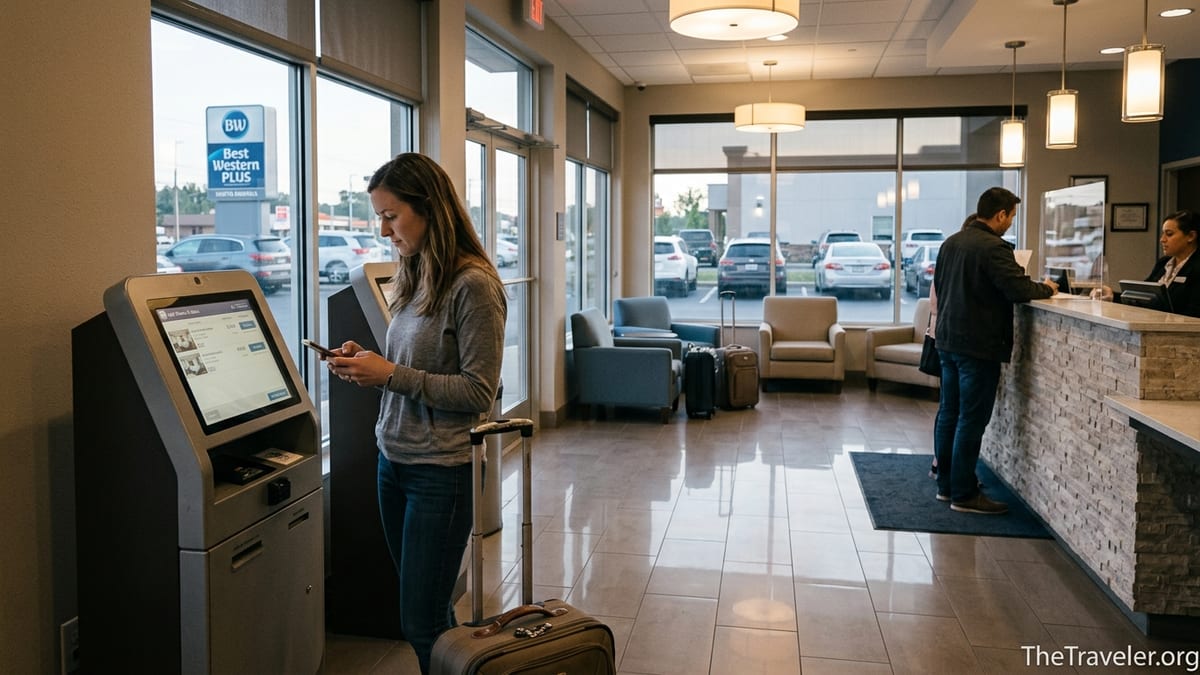
Misunderstanding Best Western’s Different Brands
One of the biggest mistakes travelers make is treating every Best Western as if it were the same. In reality, the company now operates several distinct brand families that range from budget to upscale boutique. A highway-side SureStay in rural Kansas, for example, will feel very different from a BW Premier Collection hotel in downtown Vancouver. Expecting uniform standards across these tiers is a recipe for disappointment.
At the budget end, brands like SureStay and some classic Best Western properties usually focus on value: a basic room, free Wi‑Fi, and often a simple breakfast. A SureStay near Dallas–Fort Worth Airport might advertise rooms around 80 to 100 dollars on weeknights, with outside corridors and limited amenities. Move up to Best Western Plus and you typically see interior corridors, more modern furnishings, and extras like fitness rooms and larger breakfast areas. In busy suburban areas, rates might run 140 to 180 dollars for a Plus property because of the upgraded experience.
Above that are Best Western Premier, BW Premier Collection, and BW Signature Collection hotels, which can feel closer to a soft-branded boutique property. A BW Premier Collection hotel in Paris or Seattle, for example, might have a locally inspired design, on‑site restaurant, and upgraded bedding that is miles away from the budget image many guests still expect. Nightly rates at these properties can easily exceed 250 dollars, especially in peak season or central locations, which often surprises travelers who assumed “Best Western” meant one fixed price bracket.
The key is to read the exact brand name in the listing and then check a few real photos from recent guests to confirm what you are getting. If you pick a SureStay for a milestone anniversary trip expecting a chic urban hotel, the issue is not the brand but the mismatch between expectation and reality. Knowing the difference between “Best Western,” “Best Western Plus,” and “Premier” alone can help you sort budget stays from special‑occasion properties long before you pay.
Ignoring Rate Types, Cancellation Rules, and Fine Print
Another common misstep is focusing only on the bold nightly price and ignoring the smaller text around it. Best Western properties, like most chains, typically offer several rate types for the same room: prepaid non‑refundable, semi‑flexible, and fully flexible. The cheapest rate can be 10 to 30 percent lower but might lock you in with no changes allowed. For example, a Best Western Plus in Orlando might show 139 dollars for a non‑refundable advance purchase rate and 169 dollars for a flexible rate that you can cancel up to 4 p.m. on the day of arrival.
Many guests click the cheapest option during a quick search, assuming they will be able to cancel if their plans change, only to discover later that the hotel will charge one full night or even the entire stay. Best Western’s own policy makes clear that each hotel sets its cancellation rules individually, and they can range from same‑day cancellation to 7 days or more in busy resort destinations. That means the Orlando airport hotel may be lenient, while a Best Western on the California coast for a holiday weekend might require cancellation a week in advance to avoid fees.
Travelers also forget to check for minimum-stay requirements or special conditions attached to deals like “Stay 3 nights, save 20 percent.” If you shorten your trip from 3 nights to 2 after booking such a rate, the hotel may reprice the stay at the standard nightly cost, wiping out the discount and sometimes making it more expensive than if you had booked two nights at a flexible rate from the start. This becomes especially painful in popular summer destinations such as beach towns or national park gateways where last‑minute changes are common.
Before booking, read the cancellation and change policy line by line, especially for advance purchase rates. If you are booking several months out for a family trip, the slightly higher flexible rate is usually cheap insurance compared to losing hundreds of dollars because a child gets sick or a flight schedule changes. When in doubt, choose the rate that lets you cancel at least 24 to 48 hours before check‑in without penalty.
Focusing on Room Rate and Forgetting Fees
A surprisingly frequent mistake is comparing Best Western prices only at the headline “per night” level, without digging into taxes and extra fees that significantly change the total. Many travelers see a room advertised at 129 dollars at a Best Western near Phoenix Sky Harbor Airport, then are shocked at checkout when the bill shows over 160 dollars per night. The difference often comes from local occupancy taxes, state lodging taxes, and optional extras that were easy to overlook at booking.
Parking is one of the biggest blind spots. In small towns and many highway locations, parking at Best Western properties remains free, which is good news for road‑trippers. In city centers, though, nightly parking can run 20 to 40 dollars or more. A Best Western in downtown San Diego or Chicago may advertise a competitive room rate, but parking your rental car for three nights could quietly add 100 dollars to the bill. Travelers who filter only by room price on comparison sites often miss this when deciding between a suburban hotel with free parking and a downtown property with fees.
Breakfast is another area where assumptions go wrong. Many classic Best Western hotels in North America still include a complimentary hot breakfast with items like eggs, waffles, and cereal. However, some of the newer or more upscale brands within the group, especially abroad, may not. A BW Premier Collection hotel in central Rome or London, for example, might charge 15 to 25 euros or pounds per person for breakfast, or offer only a discounted rate if you add it at booking. If you book thinking breakfast is included because “it always was at that Best Western by the interstate,” you can add a surprise 50 to 80 dollars per day for a family of four.
Finally, travelers forget about incidental holds and potential resort or facility fees. While Best Western properties are generally less aggressive about resort fees than some resort chains, a few locations, particularly in ski or beach destinations, charge daily fees that cover amenities such as pool access, shuttle services, or “destination” benefits like bike rentals. Even when there is no separate fee, most hotels will place a temporary hold on your card for incidentals, sometimes 50 to 150 dollars per stay. If your credit limit is tight or you are using a debit card, that hold can affect your available funds for the rest of the trip.
Overlooking Best Western Rewards and Status Benefits
Many guests staying at Best Western properties multiple times per year never bother to join Best Western Rewards, assuming it is too complicated or not valuable. In practice, the program is relatively straightforward and can offer meaningful savings once you understand a few basics. Members typically earn points for every eligible dollar spent on room rates at participating hotels, and periodic promotions can boost that earning significantly.
For example, a road‑warrior who spends four nights at 130 dollars per night across three different Best Western Plus hotels in the Midwest might easily earn enough points for a free night at a lower‑tier SureStay or a significant discount off a more expensive urban stay. Travelers who hold a co‑branded Best Western credit card often earn additional points per dollar on Best Western stays, which can be attractive for those who regularly visit smaller cities where other chains have limited options.
A frequent mistake is forgetting that most hotel loyalty programs, including Best Western Rewards, provide better recognition and benefits when you book directly instead of through an online travel agency. A guest who books a Best Western Premier in Toronto through a major third‑party site may find that their stay does not earn points at all, or that elite benefits like room upgrades, late checkout, or welcome amenities are not honored. Another traveler who booked the exact same room directly on Best Western’s website with their Rewards number attached could walk away with points, a slightly better room, and more flexible support if something goes wrong.
There is also the issue of point redemptions. Many travelers assume that redeeming points is complicated or not worth the effort, but at certain properties and dates, it can provide excellent value. A BW Premier Collection hotel in a shoulder‑season European city might cost 260 dollars per night in cash or a moderate number of points. If you have built up a balance from business trips at more affordable U.S. properties, cashing those points in for a high‑season city break can make a very real dent in your travel budget. Ignoring the program is essentially leaving money on the table, especially if you already gravitate toward Best Western for its locations.
Assuming Third‑Party Sites Always Have the Best Deal
Another mistake that trips people up is assuming that online travel agencies always have the lowest price, or that all rates across sites are identical. In reality, Best Western often runs its own promotions, member‑only sales, and best‑rate guarantees that only apply if you book directly. On a typical weeknight, you might see a Best Western Plus in Denver listed at 159 dollars on a major comparison site, but at 149 dollars for members on Best Western’s own site, with an additional offer of bonus points for stays of two nights or longer.
In other cases, the public room rate may be nearly identical across direct and third‑party bookings, but the value diverges when something goes wrong. If your flight to Seattle is canceled due to a storm and you need to arrive a day later at a Best Western near the airport, having booked directly often means you can call the front desk or customer service and negotiate a change within the hotel’s existing policy. If you booked through a third‑party platform with a non‑refundable rate, the hotel may be unable or unwilling to adjust your reservation, and you will need to go through the online agency’s customer support queue. In peak disruption periods, that can mean hours on hold and little flexibility.
That said, online travel agencies are not always more expensive. During low‑demand periods, a package deal or flash sale might undercut the direct price by a few dollars per night. A Best Western in a secondary airport market might appear at 99 dollars including free cancellation on a third‑party site while direct booking lists 104 dollars. Travelers who only check one channel or the other miss opportunities either way. The smarter move is to compare at least one major comparison site and the official Best Western site side by side, taking into account total cost, cancellation rules, loyalty earnings, and perks.
For longer stays of five nights or more, or when you need special arrangements such as connecting rooms, many hotels are more willing to work with guests who book direct. For instance, a family staying a full week at a Best Western Plus in Anaheim for theme park visits might secure a better room placement or a crib guarantee more easily by calling the hotel after booking directly. If you reserve through an online intermediary, the front desk can be limited by what the third‑party rate allows and may refer you back to the booking site even for simple changes.
Not Verifying Location, Transport, and Surroundings
It is surprisingly easy to see “Best Western Tokyo” or “Best Western near Yellowstone” in a search result and assume you are right where you want to be. In reality, some properties that use major city names or landmark references in their marketing may be 20 to 40 minutes away by train or car. Travelers then arrive late at night to discover that the “airport” hotel requires a 25‑dollar taxi ride each way or that the “Yellowstone” property is in a gateway town and still a substantial drive to the park entrance.
Take a Best Western branded hotel in the wider Los Angeles area as an example. One property might be called “Best Western Los Angeles Worldport” but actually sit in a harbor district far from the tourist neighborhoods visitors usually associate with Los Angeles. Another near LAX might be on a busy boulevard with limited dining within walking distance. If you booked mainly on price, without checking a map or reading two or three recent reviews about noise and neighborhood feel, you might spend much of your trip in rideshares or feel uncomfortable walking back at night.
Internationally, the gap between marketing language and location can be even larger because of how foreign visitors interpret city names. A Best Western in “Greater London” may technically be in a commuter suburb requiring a 45‑minute commuter rail journey plus a subway transfer to reach central sights. In contrast, a slightly more expensive BW Premier Collection hotel halfway between major attractions might save you two hours of daily travel time and the cost of transit tickets. Over a four‑day trip, that difference adds up quickly in both money and energy.
The solution is simple but often skipped: always open a map view and check the exact address, transit options, and estimated travel time to the places you care about. Look for phrases like “free airport shuttle” and then verify shuttle frequency and hours in recent reviews. If no shuttle is offered, mentally add the cost of daily rideshares or parking before deciding whether the cheaper rate truly makes sense.
Assuming All Best Westerns Feel the Same Worldwide
Another thing travelers get wrong is assuming that a Best Western in one country will feel exactly like one in another. Best Western operates many properties under a membership or franchise model, which means local owners have latitude in design, amenities, and even room layouts. A Best Western in rural Montana may feature large rooms, free parking, and a self‑serve waffle station in a casual breakfast room. Meanwhile, a Best Western in downtown Tokyo might have compact rooms, paid parking at a nearby garage, and a modest breakfast with more local dishes and fewer Western staples.
This variation can be delightful if you expect it. A BW Signature Collection hotel in Lisbon might live in a converted historic building with unique quirks, original tiles, and a small, stylish bar. It will feel nothing like a purpose‑built roadside Best Western in Arizona, even though both are under the same umbrella. Problems arise when guests assume U.S.‑style room sizes, air conditioning, or 24‑hour front desks are universal. In parts of Europe, for instance, it is still common for some midrange hotels to have smaller elevators, more limited air conditioning, or fewer power outlets than their North American counterparts.
Travelers also misjudge what “family‑friendly” means in different markets. A Best Western Plus near a U.S. theme park might have bunk‑bed suites, self‑service laundry, and a pool with slides. A similarly priced Best Western in a historic European center may welcome children but offer only standard double rooms and no pool at all. If you book based on the brand name alone, you may arrive with kids who expected an amenity‑rich resort and find a charming but compact city hotel instead.
Reading several recent reviews from travelers who visited in the same season and for a similar purpose is essential. Filter reviews that mention specific details you care about, like air conditioning, elevator reliability, noise levels, or family stays. The more you treat each property as a unique hotel that happens to carry the Best Western flag, rather than a guaranteed cookie‑cutter experience, the fewer surprises you will face at check‑in.
The Takeaway
Booking Best Western can be a smart choice for value, especially in smaller cities, along road‑trip routes, and in parts of Europe where mega‑chains are less common. Yet travelers routinely leave savings and comfort on the table by misunderstanding brand tiers, ignoring rate conditions, skipping the loyalty program, and overlooking fees or location details. The difference between a smooth, affordable stay and a frustrating one often comes down to ten extra minutes of research before you book.
To get the most from your next Best Western reservation, always confirm which brand tier you are booking, read the cancellation policy carefully, compare direct prices with at least one major third‑party site, and enroll in Best Western Rewards if you plan to stay even occasionally. Check maps and recent guest reviews, estimate real‑world costs like parking and breakfast, and be realistic about how much flexibility you need. With those steps, the familiar blue and gold sign can still signal good value, rather than unexpected compromises, no matter where your travels take you.
FAQ
Q1. Is it better to book Best Western directly or through a third‑party site?
Booking directly often provides better access to Best Western Rewards points, clearer cancellation policies, and easier changes if plans shift, while third‑party sites sometimes offer slightly lower headline prices or bundled deals. Comparing both and weighing flexibility, perks, and total cost usually leads to the best decision.
Q2. Do all Best Western hotels include free breakfast?
No. Many traditional Best Western and Best Western Plus properties in North America include a complimentary breakfast, but some BW Premier, BW Signature Collection, and international hotels charge separately. Always check the “includes breakfast” line in the rate details before you book.
Q3. Are Best Western Rewards points worth collecting if I only travel a few times a year?
Yes, as long as you stay at Best Western properties occasionally. Points do not require constant travel to be useful, and even a couple of paid stays per year can eventually add up to a free or discounted night, especially during off‑peak periods or at lower‑priced properties.
Q4. What is the main difference between Best Western, Best Western Plus, and Best Western Premier?
In general, classic Best Western hotels focus on solid value, Plus properties add upgraded decor and amenities like better bedding and public spaces, and Premier or BW Premier Collection hotels aim for a more upscale, sometimes boutique feel. Exact quality still varies by property, so recent photos and reviews matter.
Q5. Can I earn Best Western Rewards points if I book through an online travel agency?
Often you will not, or your eligibility for points and elite benefits may be restricted when you book through third‑party sites. To maximize earning and status recognition, it is safer to book directly on Best Western’s website or app and attach your Rewards number.
Q6. Why was my card not charged when I booked a Best Western room online?
Many flexible and pay‑at‑hotel rates use your card only to guarantee the room, with actual charges applied at check‑in or checkout. However, advance purchase and some special offers may charge immediately or place a larger pre‑authorization. The confirmation email should specify how and when payment occurs.
Q7. Are Best Western hotels consistent in quality worldwide?
Not entirely. While there are brand standards, local ownership and building types mean that room sizes, design, and amenities can vary significantly between countries and even between cities. Treat each hotel as an individual property and confirm details that matter to you.
Q8. How can I avoid surprise parking or resort fees at Best Western?
Before you book, read the amenities and hotel description carefully and, if needed, check a recent guest review mentioning parking charges or facility fees. For city‑center or resort locations, assume there may be extra charges and verify them with the property if they are not clearly listed.
Q9. What should I watch for in Best Western cancellation policies?
Check the deadline to cancel without penalty, whether it is same‑day, 24 hours, 48 hours, or longer, and whether the rate is fully non‑refundable. For special events, holidays, and resort areas, be especially careful, as cancellation windows can be stricter and some promotional rates cannot be changed at all.
Q10. Do all Best Western hotels allow pets, and are there extra fees?
No. Some Best Western properties are pet‑friendly and may charge a nightly or per‑stay pet fee, while others do not allow animals at all. If you are traveling with a dog or cat, confirm the pet policy, size limits, and any required deposits directly with the specific hotel before booking.