


More news on this day
United Airlines is turning its Denver Flight Training Center into an even larger global hub for pilot instruction, adding simulators, classrooms and long-term expansion capacity as the carrier prepares for a sustained wave of fleet growth and crew hiring.
Get the latest news straight to your inbox!
World’s Largest Pilot Training Campus Grows Again in Denver
Publicly available information shows that United’s Flight Training Center in Denver is already considered the largest facility of its kind, and it is still growing. In February 2024 the airline opened a new building on its 23-acre campus in the city’s Central Park neighborhood, extending a complex that serves as the recurrent training home for every active United pilot.
The latest addition, often referred to as Building H in industry coverage, adds roughly 150,000 to 155,700 square feet of space, depending on the source, and brings new training bays, office areas and support facilities. Reports indicate that the project represents about 145 million dollars of investment and is designed to keep pace with United’s long-term fleet and route expansion plans anchored around Denver International Airport.
Local planning and economic development documents describe the Flight Training Center as a key employer in the region, with nearly 1,500 people based at the site and more than 18,000 United pilots rotating through the campus for training every nine months. As Denver has grown into one of United’s busiest hubs, the training complex has become central to the carrier’s operations as well as to the city’s broader aviation cluster.
New Simulators, More Capacity and a Focus on High-Tech Training
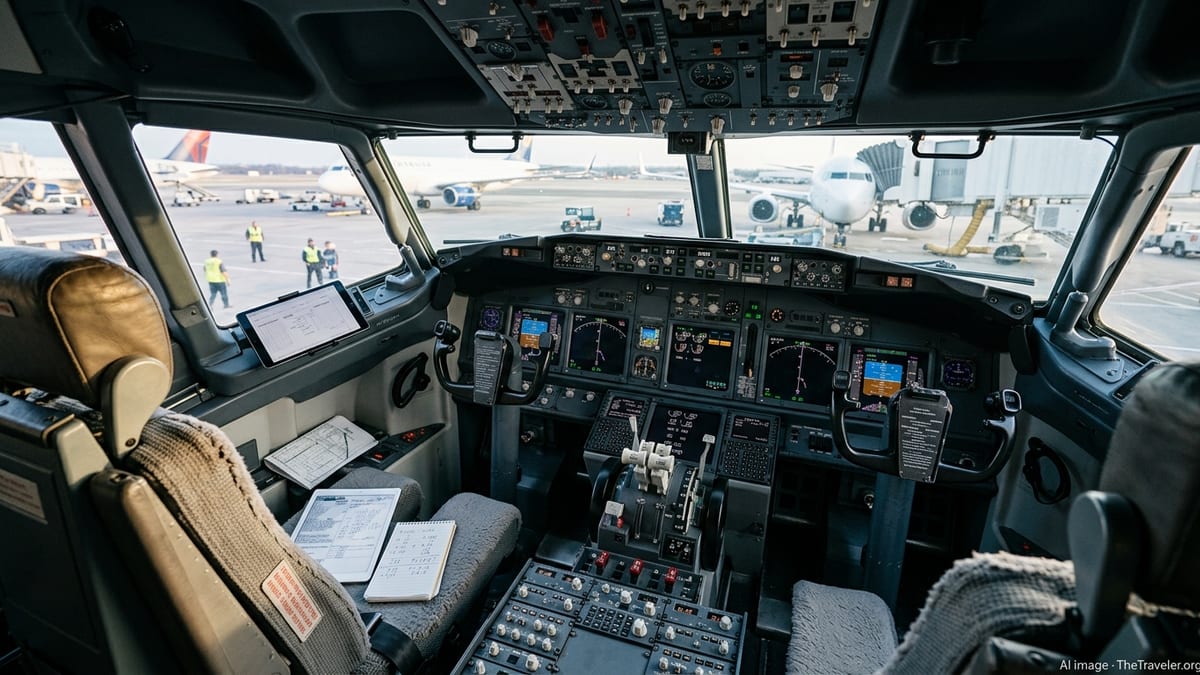
The expanded facility is built around a new generation of advanced full-motion flight simulators. Coverage in regional business publications indicates that the new building can house up to 12 full-flight simulator bays, along with 12 fixed training devices that replicate cockpits and aircraft systems for procedure practice and systems training.
United has already installed at least six state-of-the-art simulators in the new structure, with devices configured for aircraft such as the Boeing 737 family and other key types in the airline’s fleet. These high-fidelity simulators allow pilots to train for normal procedures, complex approaches, adverse weather and rare emergency situations in a controlled environment that mirrors real-world operations.
The additional bays significantly increase throughput. Company disclosures and local reports suggest that the new building alone can support up to 240 additional pilots per day at full utilization, on top of the thousands who already pass through the campus for initial and recurrent training. The expansion is designed so more simulators can be added over time as United takes delivery of new aircraft models and updates its fleet.
Engineering case studies on the project point to features such as vibration isolation, precise climate control and integrated digital classrooms that connect simulator sessions with briefing and debriefing spaces. The technical design is intended to minimize downtime between training events and support intensive schedules as pilot hiring continues.
Denver at the Center of United’s Long-Term Pilot Strategy
The Flight Training Center expansion is closely tied to United’s broader growth strategy. Public filings and news coverage highlight that the airline hired more than 2,300 pilots in 2023 and had already brought on hundreds more by early 2024, with further recruitment planned in the coming years. Additional pilot capacity is seen as essential as United brings in large orders of new-generation narrowbody and widebody aircraft.
Denver plays an increasingly important role in that strategy. Recent aviation data shows that Denver International Airport has emerged as one of United’s largest hubs by departures and seats, benefiting from its central location in the U.S. and connections to both domestic and international markets. The proximity of the Flight Training Center to the hub simplifies logistics for crews cycling in for several days of simulator sessions and classroom instruction.
United has also been active in the surrounding area. Reports from local media note that the airline purchased more than 100 acres of land near Denver International Airport in 2023, with part of that property earmarked for additional training or support facilities that could come online later this decade. Internal projections referenced in planning documents indicate that the airline is preparing for continued pilot hiring into at least the mid-2020s.
Regional economic development agencies frequently cite the training center as an anchor for aviation employment, not just for flight crew but also for technical staff, curriculum developers and support roles. As the campus grows, it reinforces Denver’s position as a national hub for aviation careers.
Linking Denver’s Flight Training Center to a Wider Training Network
While the Denver Flight Training Center is the central hub for United’s mainline pilot instruction, it sits within a wider training ecosystem that extends across the country. Publicly available information shows that United operates the United Aviate program, which offers several pathways for aspiring pilots to move from early training through to the airline’s flight deck.
A key component of that pipeline is United Aviate Academy, a wholly owned flight school based at Phoenix Goodyear Airport in Goodyear, Arizona. Academy materials describe a 340,000-square-foot campus focused on ab initio training, taking students from little or no flight time through the ratings needed to build experience in general aviation and regional operations. Graduates who meet the program’s standards can progress into the broader Aviate network and ultimately to United’s mainline training in Denver.
United has also invested in separate inflight training facilities for cabin crew and safety training, including a renovated global inflight training center in Houston and additional investments near Washington Dulles International Airport. Together with the Denver pilot hub, these sites form a multi-state network that supports flight operations, cabin safety and service standards.
Industry observers note that this distributed model allows United to tailor training to different stages of a crew member’s career while keeping Denver concentrated on high-end simulator work and recurrent instruction. The arrangement is intended to streamline the transition from regional or affiliate flying to full United mainline operations.
What Expansion Means for Travelers and the Denver Region
For travelers, the expansion of United’s Flight Training Center is part of a larger pattern of investment that supports new routes, higher frequencies and more reliable operations. By increasing simulator capacity and classroom space, the airline can qualify more pilots on new aircraft types and ensure timely recurrent training, which in turn can help reduce cancellations and delays linked to crew availability.
In Denver, the training center’s growth aligns with broader airport infrastructure plans, including long-range projects to add gates and concourses at Denver International Airport. As the hub expands, the presence of a large training campus nearby allows United to base more crews in the region and operate more complex schedules across North America and beyond.
Local economic analysis cited in city planning documents highlights the quality of the jobs tied to the training center, ranging from highly skilled simulator technicians and instructors to administrative and support staff. The facility also attracts a constant flow of visiting pilots who stay in area hotels, dine at local restaurants and use transportation services during multi-day training sessions.
For prospective pilots, the Denver campus represents the final stage of a longer journey that may begin in smaller training aircraft at schools such as United Aviate Academy in Arizona or at partner universities. As the Flight Training Center continues to add simulators and potentially new buildings in the years ahead, it is expected to remain a focal point for pilots moving into one of the world’s largest airline fleets.