


More news on this day
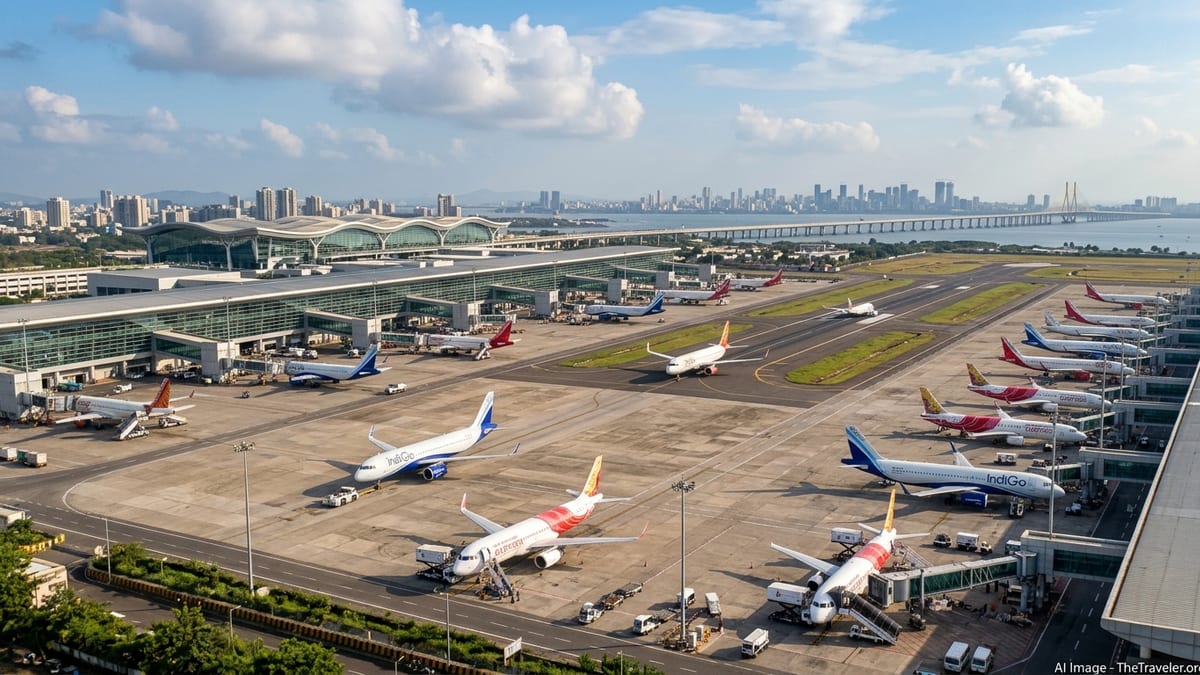
Navi Mumbai International Airport (NMIA) has recorded its busiest day since opening, handling 212 aircraft movements on 20 November 2026, a single-day high that signals how quickly the new airport is ramping up as it begins to share traffic with Mumbai’s main Chhatrapati Shivaji Maharaj International Airport (CSMIA).
Get the latest news straight to your inbox!
What the 212-movement milestone shows
Airport officials confirmed that NMIA handled 212 aircraft movements on 20 November 2026, with Jeet Adani, director at Adani Airports, describing it as the airport’s highest-ever daily figure and noting that the facility has now handled “over 200 flights in a day” for the first time. One movement is counted as a single landing or a single take-off, so 212 movements reflects a combined total of arrivals and departures on the day.
The figure is notable against plans shared with India’s Ministry of Civil Aviation earlier in 2026, which envisaged NMIA stepping up from roughly 150 to around 250 daily movements from late 2026, with 10 to 15 per cent of those expected to be international as services roll out. Crossing 200 movements puts the airport into the upper end of that ramp-up range, even if only for a single day, and offers an early indication of the levels of traffic the new facility is beginning to accommodate.
Authorities and the operator have not indicated that 212 movements will be sustained every day in the immediate term, and travellers should see the number as a milestone rather than a new base level. Daily activity can fluctuate with airline schedules, seasonal peaks and operational constraints as the airport continues its first full year of commercial flying.
Rapid growth less than a year after launch
Commercial operations at Navi Mumbai began in late December 2025, giving the airport roughly ten months of traffic history by late October 2026. In an official update dated 23 October 2026, NMIA reported that it had handled 3,588,675 passengers and 27,185 scheduled aircraft movements over that period, underscoring how quickly regular services have built up from a standing start.
Those October figures also show how dominant domestic demand remains at this stage. Of the 3.59 million passengers handled since launch, 3,580,233 were domestic and 8,442 were international, while 27,111 of the 27,185 scheduled movements were domestic flights. The 212-movement record day sits on top of that base, reflecting a growing bank of departures to Indian cities rather than an immediate shift to long-haul international flying.
For context, NMIA’s initial phase has been designed for up to 20 million passengers a year, according to official planning documents and operator material. The airport is therefore still in an early ramp-up phase, but the combination of multi-million passenger volumes within ten months and a new daily peak above 200 movements suggests that utilisation of the first-phase capacity is accelerating.
Who runs NMIA and how it connects with CSMIA
Navi Mumbai International Airport is developed and operated by Navi Mumbai International Airport Ltd (NMIAL), a public-private partnership between Mumbai International Airport Ltd, itself part of Adani Airport Holdings Ltd, and the City and Industrial Development Corporation of Maharashtra (CIDCO). Adani Airport Holdings, a subsidiary of Adani Enterprises, holds a majority stake in the project company via Mumbai International Airport Ltd, while CIDCO retains a 26 per cent share and acts as the concessioning authority.
The airport is intended to complement, rather than replace, Mumbai’s existing Chhatrapati Shivaji Maharaj International Airport on the opposite side of the harbour. Government and operator documents describe NMIA as a second airport for the metropolitan area, designed to share traffic with CSMIA and relieve some of the pressure on the older hub as demand grows. In practice, that sharing is expected to come through a gradual shift of selected services rather than an abrupt transfer of all flights.
For now, NMIA’s traffic mix is heavily domestic and weighted toward narrowbody operations, while CSMIA continues to handle the bulk of Mumbai’s international and long-haul flying. As airlines add more domestic frequencies and begin or expand international services at Navi Mumbai, travel patterns between the two airports are likely to become clearer, but no comprehensive long-haul relocation has been announced.
What this means for travellers in Navi Mumbai and eastern Mumbai
For travellers living in Navi Mumbai, Panvel, the Konkan belt or eastern suburbs connected via the Mumbai Trans Harbour Link, higher daily movements at NMIA translate into a denser schedule of flights closer to home. As more services are added, passengers can expect additional departure time choices on key domestic routes, which may help with same-day business trips and better connections to onward flights elsewhere in India.
Airlines are already adding new points to the NMIA network. By late October the airport had announced nine additional domestic destinations, extending links into states such as Rajasthan, Bihar, Assam, Jharkhand and West Bengal, as well as Lakshadweep and coastal Maharashtra. Combined with the 212-movement record day, this indicates a maturing domestic network that offers alternatives to flying from CSMIA for many routes.
As some carriers gradually move selected services across the harbour, passengers who previously routed via CSMIA may see timetable adjustments or a choice of departure airport within the Mumbai region. For residents of Navi Mumbai and nearby districts, this could mean shorter surface journeys and the ability to compare fares and schedules between the two airports on overlapping routes, although pricing will still depend on airline competition and demand rather than the airport change alone.
International services and what to watch next
International flying from Navi Mumbai remains at an early stage. By late October 2026 the airport had recorded 74 scheduled international aircraft movements against more than 27,000 domestic, and fewer than 10,000 international passengers, according to data released by the operator. These numbers are consistent with prior plans indicating that 10 to 15 per cent of movements could be international as the airport’s ramp-up continues, but that target has not yet been reached.
For now, long-haul and widebody patterns remain limited, and most international itineraries from the Mumbai region still route through CSMIA. Travellers considering NMIA for overseas trips should check whether their preferred airline and route are offered from Navi Mumbai or continue to operate solely from the older airport, and factor in transfer times between the two if they are connecting from one to the other.
Looking ahead, the 212-movement day provides a reference point for how busy NMIA could become as it pushes toward the previously signalled medium-term target of around 250 daily movements. Airlines are likely to keep adjusting schedules and launching new routes through the rest of the 2026–27 winter season, so passengers booking from the Mumbai area should closely review airport, time and terminal details on their tickets and keep an eye on airline updates as the region’s dual-airport system beds in.