


International schools in Germany play a central role in relocation planning for globally mobile families, particularly those seeking continuity of curriculum and English or bilingual instruction. Understanding where these schools are located and what they cost is critical for assessing whether a move to Germany is feasible within a given family or corporate education budget.
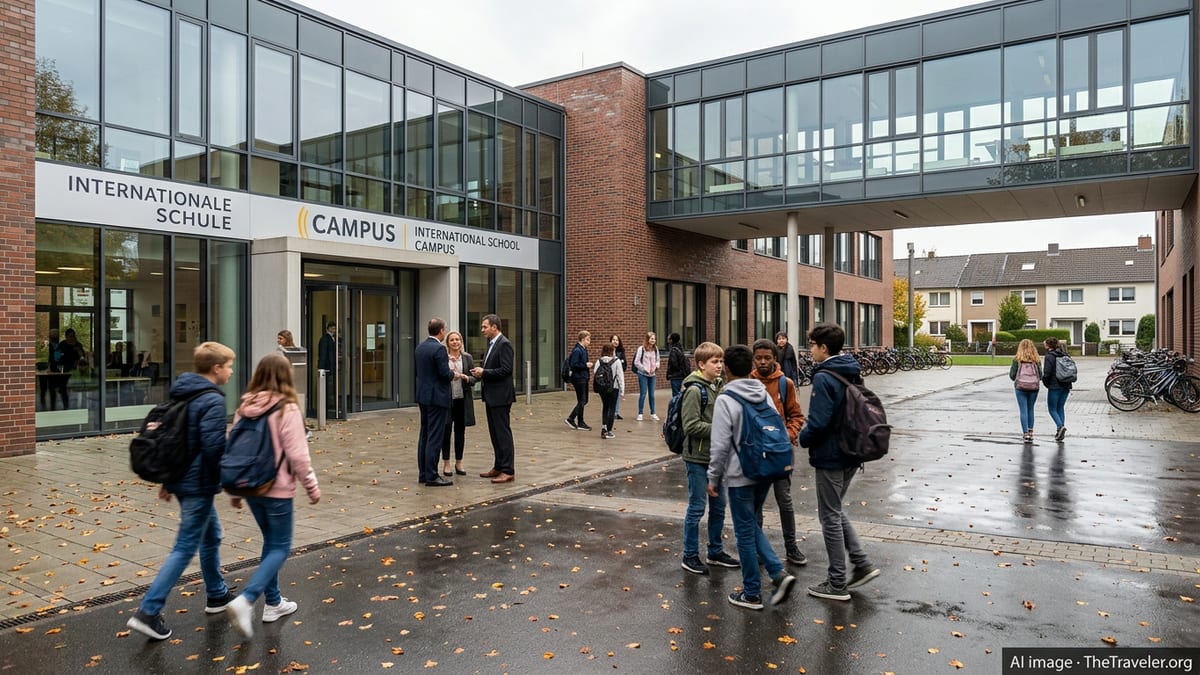
Overview of the International School Landscape in Germany
Germany has a mature and steadily expanding international school sector, driven by multinational corporations, diplomatic missions, and international organizations. Estimates from sector analyses indicate roughly 160 to 180 international and bilingual schools nationwide, depending on definition and inclusion of smaller bilingual Grundschulen and Gymnasien.([rentechdigital.com](https://rentechdigital.com/smartscraper/business-report-details/list-of-international-schools-in-germany?utm_source=openai))
Most international schools in Germany are privately run and funded almost entirely by tuition and fees, with limited or no state subsidy. As a result, tuition at fully private international schools is significantly higher than in the tuition-free public system, even though both culminate in qualifications that can lead to German or international universities. Education is typically offered from early years through Grade 12, often with the International Baccalaureate (IB), British IGCSE and A-levels, or US-style diplomas.
The international school market is concentrated in and around major economic hubs, particularly Berlin, Munich, Frankfurt, Hamburg, Düsseldorf, Stuttgart, and smaller regional centers such as Bonn and Leipzig. These locations align closely with concentrations of international employers and expatriate communities, meaning that school access and costs in these cities are integral components of relocation feasibility.
From a policy and budgeting perspective, families and corporate mobility teams must treat international school fees as a separate, material cost category distinct from general cost of living. In many cases, annual tuition for one child in a top-tier international school can exceed typical net residential rents for a family apartment in the same city.
Geographic Distribution of International Schools
International schools are not evenly spread across Germany. The greatest density is found in large cities and economically significant regions. Berlin, as the capital and a major international hub, offers multiple English-medium and bilingual schools, including long-established institutions and newer bilingual projects supported by local authorities.([expatica.com](https://www.expatica.com/de/education/children-education/international-schools-in-germany-106612/?utm_source=openai))
In southern Germany, Munich and Stuttgart are key nodes. Munich International School and several other institutions in the wider metropolitan area serve corporate clusters such as automotive, technology, and insurance. Stuttgart hosts the International School of Stuttgart across two campuses, alongside additional bilingual and international options catering to the automotive and engineering sector.([scribd.com](https://www.scribd.com/document/875025796/MIS-School-Fees-2024-2025?utm_source=openai))
In central and western Germany, Frankfurt and the Rhine-Main region form another major concentration. Frankfurt International School, one of the oldest and largest international schools in the country, anchors a network of other international and bilingual schools spread across Frankfurt, Wiesbaden, and surrounding towns.([fis.edu](https://www.fis.edu/join-us/tuition-fees?utm_source=openai))
Secondary clusters exist around Hamburg, Düsseldorf, Cologne and Bonn, and in some mid-sized cities such as Leipzig, where Leipzig International School serves a sizable international and local population. Families relocating to smaller towns or rural areas often face significantly more limited access to international schools and may need to consider long daily commutes, boarding options, or alternative bilingual public schools.
Tuition Levels and Typical Fee Ranges
International school tuition in Germany varies widely by city, curriculum, age group, and whether the school operates on a not-for-profit or for-profit basis. Broadly, full-fee international schools with IB or British curricula tend to fall into three indicative bands for day students in primary and lower secondary grades:
• Lower to mid-range bilingual schools: roughly 4,000 to 10,000 euros per year, often income-related or partially subsidized, particularly in some Berlin bilingual schools where monthly fees can range from around 100 to just over 500 euros depending on family income.([berlin-bilingual-school.de](https://berlin-bilingual-school.de/secondary-school/fees?utm_source=openai))
• Mid-tier international schools: approximately 12,000 to 20,000 euros per year for primary grades, with fees often rising in secondary. Berlin-focused fee comparisons place many mid-tier schools in the 15,000 to 21,000 euro range annually for primary years.([tutopiya.com](https://www.tutopiya.com/blog/international-school-fees/berlin-international-school-fees-comparison/?utm_source=openai))
• Premium international schools: around 20,000 to above 30,000 euros per year in upper secondary. For example, Frankfurt International School lists annual tuition for Grades 6 to 8 at just over 29,000 euros and for Grades 11 to 12 close to 31,000 euros for the 2025/2026 school year.([fis.edu](https://www.fis.edu/join-us/tuition-fees?utm_source=openai))
These figures exclude additional one-off and recurring fees, which can be substantial. A family relocating with two children to a premium international school in a high-demand city should plan for combined annual tuition in the range of roughly 50,000 to 60,000 euros when including both primary and secondary students, with higher totals for older students in top-fee bands.
Representative Costs in Major Cities
Specific fee structures differ by school and year, but published tuition schedules provide indicative benchmarks for key locations. In the Frankfurt region, Frankfurt International School’s 2025/2026 schedule shows annual tuition of about 25,000 euros in the early primary grades, rising to around 30,000 euros in upper secondary, plus registration and capital assessment fees.([fis.edu](https://www.fis.edu/join-us/tuition-fees?utm_source=openai))
In Berlin, fee data for Berlin International School and other institutions show annual tuition levels of roughly 12,000 to 14,000 euros for primary grades, with separate registration and capital fees. Independent comparisons of Berlin schools for the 2025/2026 year identify a band of mid-range schools around 15,000 to 21,000 euros, while bilingual schools such as Berlin Bilingual School and Berlin Metropolitan School apply income-based monthly fees that can be significantly lower but still represent a notable recurring cost.([berlin-international-school.de](https://www.berlin-international-school.de/en/admissions-2/?utm_source=openai))
Munich’s international schools typically fall into the upper mid-range to premium categories, reflecting strong demand and high local living costs. Fee schedules for Munich International School for 2024/2025, for example, indicate tuition that can approach or exceed 20,000 euros annually for many year groups, with additional one-time entrance and registration fees.([scribd.com](https://www.scribd.com/document/875025796/MIS-School-Fees-2024-2025?utm_source=openai))
Other cities such as Stuttgart, Hamburg, Düsseldorf, Cologne and Bonn show similar patterns: at least one premium or near-premium international school charging in the upper teens to low 30,000 euro range for older students, and a small number of lower-cost bilingual or partially subsidized options. The relatively small number of providers in some cities can limit price competition and result in waiting lists, particularly in popular grade levels.
Fee Structures and Ancillary Charges
Headline tuition is only one component of the financial commitment. International schools in Germany commonly charge a range of non-tuition fees that can significantly affect the first-year and ongoing cost profile. These may include one-off registration fees, capital contributions, re-enrollment fees, testing fees, and service charges for transport, meals, and activities.([fis.edu](https://www.fis.edu/join-us/tuition-fees?utm_source=openai))
Typical additional cost categories include:
• Application or assessment fee, often non-refundable and typically ranging from around 100 to 500 euros per application according to comparative analyses of Frankfurt-area schools.
• Registration or enrollment fee, which in some premium schools can run to 1,000 euros or more for new students.([fis.edu](https://www.fis.edu/join-us/tuition-fees?utm_source=openai))
• Capital assessment or development fee, sometimes spread over the first one or two years and amounting to several thousand euros in total per student.
• Annual re-enrollment fee, usually smaller but still material when multiplied across siblings.
• Service fees for bus transport, school lunches, after-school care, excursions, and exam registration (particularly for IB and IGCSE), which together can add several thousand euros per year per child depending on usage.
Because fee structures and inclusions vary widely, corporate mobility policies and family budgets should be built on the total annual cost of attendance rather than headline tuition alone. It is also important to verify whether listed fees include value-added tax where applicable and to clarify payment schedules, as many schools require tuition to be paid in advance for each semester or for the full year.([fis.edu](https://www.fis.edu/join-us/tuition-fees?utm_source=openai))
Curricula, Grade Coverage and Admission Considerations
Most international schools in Germany offer at least one internationally recognized curriculum. The International Baccalaureate is particularly prominent, often with the Primary Years Programme, Middle Years Programme, and Diploma Programme in sequence, while others follow British, American, or mixed curricula leading to IGCSE, A-level or US high school diplomas.([expatica.com](https://www.expatica.com/de/education/children-education/international-schools-in-germany-106612/?utm_source=openai))
Grade coverage typically spans from early childhood (age 3 or 4) to Grade 12 or Year 13, although some bilingual schools concentrate on primary or lower secondary levels only. In regional centers such as Leipzig or in some Berlin bilingual schools, provision begins as early as nursery and continues through to Abitur-equivalent or international diplomas, offering long-term continuity for relocating families.([en.wikipedia.org](https://en.wikipedia.org/wiki/Leipzig_International_School?utm_source=openai))
Admission policies usually require placement assessments, previous school reports and, for older students, proof of language proficiency. Waiting lists can exist in high-demand grades, especially in cities with a single dominant international school. Application deadlines may be rolling, but priority is often given to siblings, corporate partners, or specific national groups, so timing is a non-cost factor that interacts with budgeting decisions.
Smaller numbers of German public or state-supported schools offer bilingual programs with lower fees, but these may prioritize local residents or require stronger German language skills. For families relying on these lower-cost options, admission criteria and the risk of not securing a place must be weighed against the certainty and higher cost of private international schools.
Financial Support, Discounts and Corporate Policies
Although international schools in Germany generally receive little state funding, many operate limited fee reduction, scholarship, or bursary schemes. Sector overviews note that a small number of places in some schools are reserved for children from lower-income families at reduced fees, though these are not widespread and are subject to strict eligibility criteria and limited capacity.([expatica.com](https://www.expatica.com/de/education/children-education/international-schools-in-germany-106612/?utm_source=openai))
Discount mechanisms that may be available include sibling discounts, income-related tuition brackets, and occasional corporate partnership discounts. Some Berlin bilingual schools, for example, explicitly link tuition to household income, which can significantly lower fees for some families but may also require extensive documentation.([berlin-bilingual-school.de](https://berlin-bilingual-school.de/secondary-school/fees?utm_source=openai))
In corporate relocations, many employers offer education allowances that partially or fully cover international school fees for eligible dependants. Published anecdotal data from expatriate and teacher communities suggests that some corporate packages in Germany can fund international school places valued at around 12,000 euros per child per year or more, but this varies widely by sector and seniority.([reddit.com](https://www.reddit.com/r/IBO/comments/14kfuza?utm_source=openai))
Relocating families should carefully align school choices with any employer education policy caps. If tuition at the chosen school exceeds the corporate allowance, the family usually bears the difference as an out-of-pocket cost, which can significantly reduce disposable income.
The Takeaway
International schools in Germany offer high-quality, globally recognized education and strong continuity for internationally mobile children, but they represent a major cost driver in relocation decisions. With annual tuition commonly ranging from the mid-four figures into the low thirty-thousand-euro bracket per child, and additional fees adding several thousand euros more, education can quickly become one of the largest components of a family’s overall Germany cost profile.
The international school network is concentrated in major metropolitan and economic centers, with limited provision in smaller cities and rural regions. Families targeting lower-cost or income-dependent bilingual schools need to factor in stricter admissions, potential waiting lists, and the need for German language integration. Those opting for premium IB or British-curriculum schools must plan for substantial annual tuition and one-off fees, particularly in Frankfurt, Munich, Stuttgart, and Berlin.
For decision-makers, the key analytical task is to map likely school options by city, determine realistic total attendance costs for each child, and compare these against employer education allowances and overall household budgets. Completing this analysis early in the relocation planning process is critical to avoid unexpected shortfalls and to ensure that chosen locations within Germany align with both educational needs and financial constraints.
FAQ
Q1. How many international schools are there in Germany?
Estimates from education sector analyses suggest roughly 160 to 180 international and bilingual schools across Germany, depending on how broadly bilingual and private schools are defined.
Q2. What is the typical annual tuition for an international school in Germany?
Annual tuition commonly ranges from about 4,000 to 10,000 euros for some income-based bilingual schools up to around 20,000 to more than 30,000 euros for premium international schools, particularly in upper secondary grades.
Q3. Which German cities have the most international school options?
The greatest concentration is in Berlin, Munich, Frankfurt and the Rhine-Main region, Stuttgart, Hamburg, Düsseldorf, Cologne and Bonn, with additional schools in regional centers such as Leipzig.
Q4. Are there lower-cost bilingual or semi-public options?
Yes. Some bilingual schools, especially in Berlin, operate with income-related fee scales that can be significantly lower than full-fee international schools, although places are limited and demand is high.
Q5. Do international schools in Germany offer the International Baccalaureate (IB)?
Many major international schools offer one or more IB programmes, particularly the IB Diploma in upper secondary, often alongside or instead of British or US-style curricula.
Q6. What additional fees should families expect beyond tuition?
Common extras include registration and capital fees, re-enrollment charges, assessment fees, transport, meals, after-school care, excursions, and exam fees, which together can add several thousand euros per child per year.
Q7. How do corporate education allowances typically interact with these costs?
Employers that support schooling usually define a maximum annual allowance per child. If tuition and related fees exceed this cap, the family is responsible for the difference, so school selection must align with the specific policy limits.
Q8. How early should families apply for international school places in Germany?
Families are generally advised to start applications at least six to twelve months before the intended start date, particularly for high-demand cities and year groups, as waiting lists are common.
Q9. Are discounts available for siblings?
Many international schools offer sibling discounts or slightly reduced fees for third and subsequent children, though the level of reduction and eligibility criteria differ by institution.
Q10. Can international school qualifications lead to German universities?
Yes. Recognized qualifications such as the IB Diploma, certain A-level combinations, and some school-leaving certificates from international schools are generally accepted for entry to German universities, subject to specific academic and subject requirements.