


More news on this day
Iran’s decision to reject a United States backed proposal to fully reopen the Strait of Hormuz is prolonging uncertainty in a region that underpins global energy flows and Gulf travel networks, raising practical questions for residents and travelers in the United Arab Emirates.
Get the latest news straight to your inbox!
What the rejected Strait of Hormuz deal involved
The latest proposal promoted by Washington aimed to link an easing of military tensions with the phased reopening of the Strait of Hormuz, the narrow waterway between Iran and Oman through which a significant share of the world’s seaborne oil and gas has historically passed. Publicly available reporting indicates that the plan was framed as part of wider ceasefire efforts tied to the ongoing conflict between Iran, the United States and their respective partners across the region.
According to regional news coverage and international analysis, the package reportedly included time bound steps to scale back attacks on shipping and infrastructure in exchange for Iran allowing commercial traffic to resume under enhanced monitoring and security guarantees. Maritime insurers and energy traders had been watching closely, in the expectation that a deal could stabilize freight costs and restore a more predictable flow of tankers and container vessels through the chokepoint.
Tehran’s response, however, has been consistent with its earlier public stance. Iranian statements carried by state linked media and summarized by global outlets describe the proposal as insufficient, particularly where it involves only temporary ceasefire measures or limited sanctions relief. Iranian officials have insisted on broader guarantees, including an end to strikes on Iranian territory and recognition of its role in managing the Strait, conditions that go beyond what the US backed draft appeared ready to offer.
The result is that the Strait remains only partially open and subject to abrupt changes in security posture, with naval deployments, no sail advisories and routing adjustments still shaping how and when ships can move through the corridor.
Energy markets and the UAE’s fuel prices
For residents of the UAE, one of the most immediate concerns is how continued friction around the Strait of Hormuz affects energy markets and, ultimately, the cost of living. The UAE is itself a major oil and gas producer with export routes that do not rely entirely on the Strait, including pipelines that bypass the chokepoint. This diversification has given the country a measure of resilience compared with some neighbors.
Even so, global benchmarks for crude and liquefied natural gas are heavily influenced by perceived risks in the Strait. When shipping is threatened or constrained, traders often factor in a “risk premium,” driving up futures prices. That can translate into higher wholesale fuel costs, and over time may influence what residents pay at the pump or in electricity tariffs, depending on domestic pricing policies and hedging strategies followed by local utilities and fuel distributors.
Market commentary from energy analysts in recent weeks suggests that prices have reacted in short bursts to each new headline about ceasefire proposals and threats of further strikes. Spikes have tended to be sharp but uneven, reflecting both the seriousness of the confrontation and confidence that Gulf producers, including the UAE and Saudi Arabia, will try to keep export volumes steady.
For households in the Emirates, this means that day to day fuel prices may show volatility but are unlikely to be dictated solely by developments in the Strait. Government policy, long term supply contracts and the strength of the US dollar all remain important drivers. Nonetheless, residents planning big road trips or cost sensitive commutes may wish to keep an eye on official monthly fuel price announcements, which can reflect broader market turbulence tied to Hormuz.
Flight routes, airspace safety and travel planning
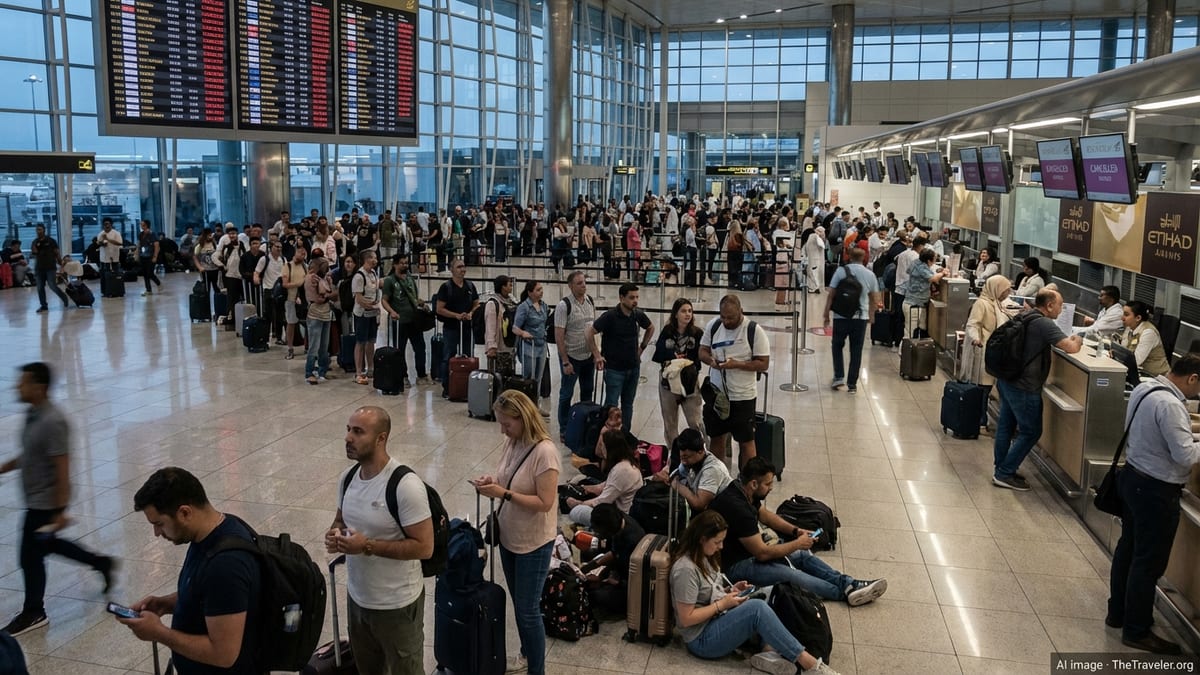
While the Strait of Hormuz crisis is primarily maritime, it has also raised questions about air travel patterns in and out of the UAE, given the proximity of key hubs such as Dubai and Abu Dhabi to Gulf airspace that has been subject to various advisories over the course of the conflict. Aviation regulators and airlines have been adjusting routings since tensions escalated, sometimes adding extra flying time to avoid zones judged to be at higher risk.
Major carriers based in the UAE have experience managing such scenarios, having previously rerouted flights around conflict zones in parts of the Middle East and Eastern Europe. Publicly available flight tracking data indicates that commercial services continue to operate at high frequency to Europe, Asia, Africa and the Americas, although some paths over the Gulf and Iran have been modified in line with evolving safety guidance.
For travelers, the most noticeable impacts are more likely to be occasional schedule changes, slightly longer flight times on certain routes, and potential adjustments in ticket pricing if airlines face higher fuel and insurance costs. Booking platforms and airline notifications currently remain the best way to track any disruptions, as changes are typically communicated close to departure.
Travel experts cited in regional media recommend that passengers departing from or arriving in the UAE build in a little extra time for connections on itineraries that cross the Gulf, particularly when traveling during periods of heightened tension. Flexible or changeable tickets may also be more attractive for frequent travelers while the diplomatic situation remains unsettled.
Shipping, trade links and consumer goods in the UAE
The UAE’s role as a logistics and trading hub means that anything affecting freight flows through the Strait of Hormuz can ripple into port operations and supply chains anchored in Jebel Ali, Khalifa Port and other Gulf facilities. Container ships and bulk carriers serving the wider Middle East, East Africa and South Asia often pass near or through the Strait, making them sensitive to security alerts, naval inspections and insurance restrictions that have become more common since the closure and partial reopening of the waterway.
Reports from shipping industry outlets suggest that some operators have rerouted vessels or delayed sailings at times of acute risk, while others have accepted higher insurance premiums to maintain schedules. For the UAE, which imports a wide range of consumer goods and food products and re exports them across the region, these adjustments can lead to modest delays in deliveries or temporary cost increases for certain items.
So far, retail disruptions inside the Emirates appear limited, with supermarket shelves broadly well stocked and major logistics parks continuing to function. The country’s investment in diversified supply chains, multiple ports and air freight capacity has helped cushion against the sharpest shocks linked to Hormuz. However, small businesses that rely on just in time shipments or thin margins may feel pressure if freight rates remain elevated.
Residents might notice price swings or occasional shortages in specific imported products, especially those sourced from markets that depend heavily on smooth passage through the Strait. Planning ahead for large purchases, keeping some flexibility on brand choices and monitoring local news for updates on shipping conditions can help consumers navigate any short term volatility.
What UAE residents should watch in the weeks ahead
Iran’s rejection of the US backed reopening plan does not close the door on future negotiations. Public statements from regional mediators and international organizations indicate that diplomatic channels remain active, with further proposals and counterproposals expected. For people living in the UAE, the key question is whether these talks eventually produce a more durable framework for keeping the Strait of Hormuz reliably open.
Several indicators will be important to monitor: the pace and severity of any new attacks on commercial shipping, announcements from major energy producers about output or export adjustments, and advisories from maritime and aviation authorities regarding security conditions in Gulf waters and airspace. Significant escalation on any of these fronts could have more visible effects on daily life in the Emirates.
At the same time, the UAE’s relatively diversified economy, strong logistics sector and experience in managing regional risk provide buffers against immediate disruption. Tourism, trade and aviation have all continued operating throughout previous periods of tension, even when risk perceptions were elevated. Many international businesses continue to view the country as a stable base for operations despite turbulence in surrounding waters.
For now, the practical advice for residents and visitors is to stay informed through reputable news outlets, follow any guidance issued by airlines and travel providers, and be prepared for occasional price or schedule shifts rather than sweeping changes. The strategic contest over the Strait of Hormuz is likely to remain a defining feature of Gulf geopolitics, but its day to day impact in the UAE will continue to be shaped by the country’s own policies and planning as much as by developments in Tehran and Washington.