


More news on this day
Published coverage in Nigeria says the chief operating officer of Murtala Muhammed Airport Terminal 2 (MMA2) in Lagos has called for a more coordinated slot system to address recurring flight delays and terminal congestion, spotlighting a debate that affects travelers most during peak departure banks.
Get the latest news straight to your inbox!
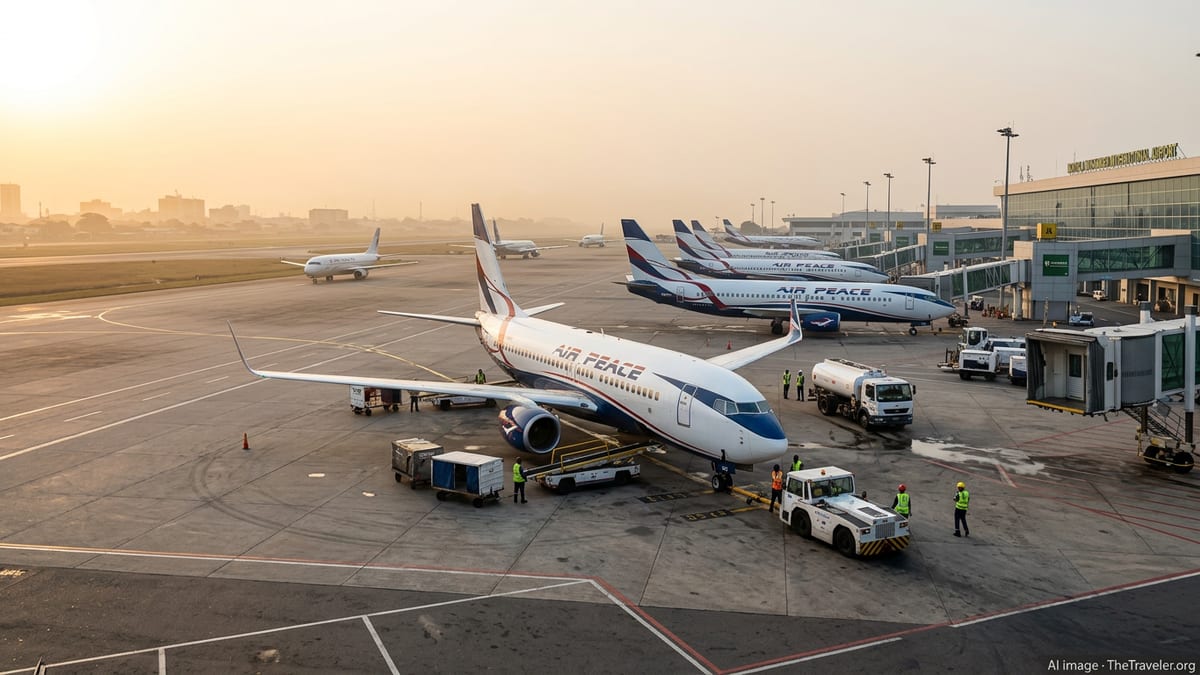
Why the slot debate is resurfacing at MMA2
MMA2 is one of the two main domestic passenger terminals serving Lagos, Nigeria’s busiest air gateway, and it often absorbs surges in demand tied to business travel, holiday peaks, and tight turnaround schedules. Reports describing the latest remarks from MMA2 COO Remi Jibodu frame slot coordination as an operational tool to match scheduled movements with what airport and airspace constraints can reliably handle.
In published reporting earlier this year, Jibodu described MMA2 as handling roughly 60 to 65 flight departures daily on average, with passenger processing supported by an automated monitoring system designed to track flow through check-in, screening, and boarding in real time. The COO’s argument, as reported, is that airport processes can be streamlined, but persistent bunching of arrivals and departures in short windows can still overwhelm gates, ramps, and passenger areas.
A separate report from The Guardian said Bi-Courtney Aviation Services Limited, the concessionaire that operates MMA2, has been considering a structured slot allocation approach intended to balance demand and capacity, reduce terminal crowding at peak times, and improve on-time performance for airline partners while helping ground handlers plan staffing and equipment deployment.
What “coordinated slots” can change for travelers
Slot coordination is widely used at constrained airports globally, particularly where runway capacity, terminal gates, or air traffic flow limits make it difficult to accommodate all requested schedules at the same times. Industry guidance published by IATA describes “coordinated airports” as those where arrivals and departures require allocated slots through an independent coordinator, and where a formal coordination calendar governs how schedules are adjusted seasonally to stay within declared capacity.
For travelers, the most visible impact is often the reduction of predictable peak-hour gridlock: long check-in lines, congested security queues, limited gate seating, and ramp bottlenecks that delay boarding and push back departure times. A coordinated slot framework does not eliminate weather disruptions or technical issues, but it can reduce self-inflicted congestion by smoothing out schedules and limiting unrealistic turn times.
Published coverage also links the slot discussion to transparency. If airlines receive confirmed operating windows that reflect actual capacity, it becomes easier to identify where delays are caused by late aircraft rotations, gate constraints, air traffic flow restrictions, or downstream disruptions from other airports on the same route network.
The Lagos reality: multiple terminals, shared airspace, and peak-hour bunching
Congestion challenges around Lagos are not only about one terminal building. Recent local reporting has highlighted passenger confusion and missed flights caused by the split of domestic operations between the General Aviation Terminal (often referred to as MMA1) and MMA2, which are physically separated. That coverage lists different carriers operating from each terminal, underscoring how travelers can be affected by last-minute terminal changes, surface-traffic delays, and unclear information flows.
Even when passenger processing inside a terminal is efficient, the airside side of the operation can still bottleneck. High-density departure banks can strain stands, buses, ramp equipment, and turnaround staffing, while runway and taxiway congestion can generate departure queues that compound delays across the day. Slot coordination, as described in global standards, is typically intended to coordinate not just terminal capacity but also runway and airspace constraints that can limit movement rates.
For MMA2 specifically, published reporting on the terminal’s busiest domestic routes has pointed to strong demand on trunk corridors such as Lagos to Abuja, as well as high-traffic links to cities including Port Harcourt and Asaba. Concentrated demand on these routes can amplify the temptation for airlines to schedule flights in the same high-demand time bands, increasing the risk of system-wide knock-on delays when one rotation slips.
Who would need to align to make a slot system work
Slot coordination is not a single-operator decision when an airport ecosystem includes regulators, airport authorities, airlines, and air navigation services. Nigeria’s aviation regulatory framework includes provisions for slot-related structures: publicly available Nigeria Civil Aviation Regulations reference an Airport Slot Allocation Committee composition that includes the NCAA and FAAN, indicating that a coordinated approach would sit within a broader institutional setup rather than being solely a terminal-level policy.
Industry guidance under the Worldwide Airport Slot Guidelines, published jointly by IATA and airport and coordinator organizations, emphasizes declared capacity, transparent coordination processes, and monitoring of slot performance. In practice, that implies a multi-party mechanism that can set realistic hourly limits, allocate times fairly, and track whether allocated slots are being used as planned.
For airlines and ground handlers at MMA2, the immediate operational changes would likely revolve around tighter discipline on schedule filings, improved predictability for counter and gate allocations, and clearer triggers for retiming flights when congestion is forecast. For passengers, that could translate into fewer simultaneous boarding calls, less crowding in departure halls, and reduced frequency of rolling delays that stack up through the afternoon and evening.
What travelers should watch next
The next signal for passengers will be whether a formal slot coordination framework is announced with clear rules on how schedules are filed, approved, monitored, and adjusted, and whether it applies only to MMA2 or extends across Lagos domestic operations more broadly. Travelers are also likely to watch for improvements in real-time flight information displays and communication practices, because a more structured schedule is most effective when passengers receive consistent, timely updates.
In the near term, the slot conversation may also intersect with broader domestic aviation reliability debates, where published coverage has pointed to congestion, infrastructure constraints, and weather as recurring contributors to disruptions. A coordinated slot approach would primarily target congestion-driven delays, and its effectiveness will depend on how rigorously capacity limits are declared and respected across airlines, terminal operations, and air traffic flow management.
Until any new system is formally implemented, passengers flying through Lagos domestic terminals can still reduce trip risk by confirming the correct terminal for their carrier on the day of travel, arriving earlier during morning and evening peaks, and monitoring carrier notifications closely when weather or aircraft rotation issues elsewhere in the network threaten to cascade into Lagos.