


More news on this day
Flight punctuality in Nigeria’s domestic market is back under scrutiny after United Nigeria Airlines Chief Commercial Officer Adedayo Olawuyi linked recurring delays to airport congestion, infrastructure constraints and bad weather, framing the issue as a system-wide challenge that can ripple across airline schedules.
Get the latest news straight to your inbox!
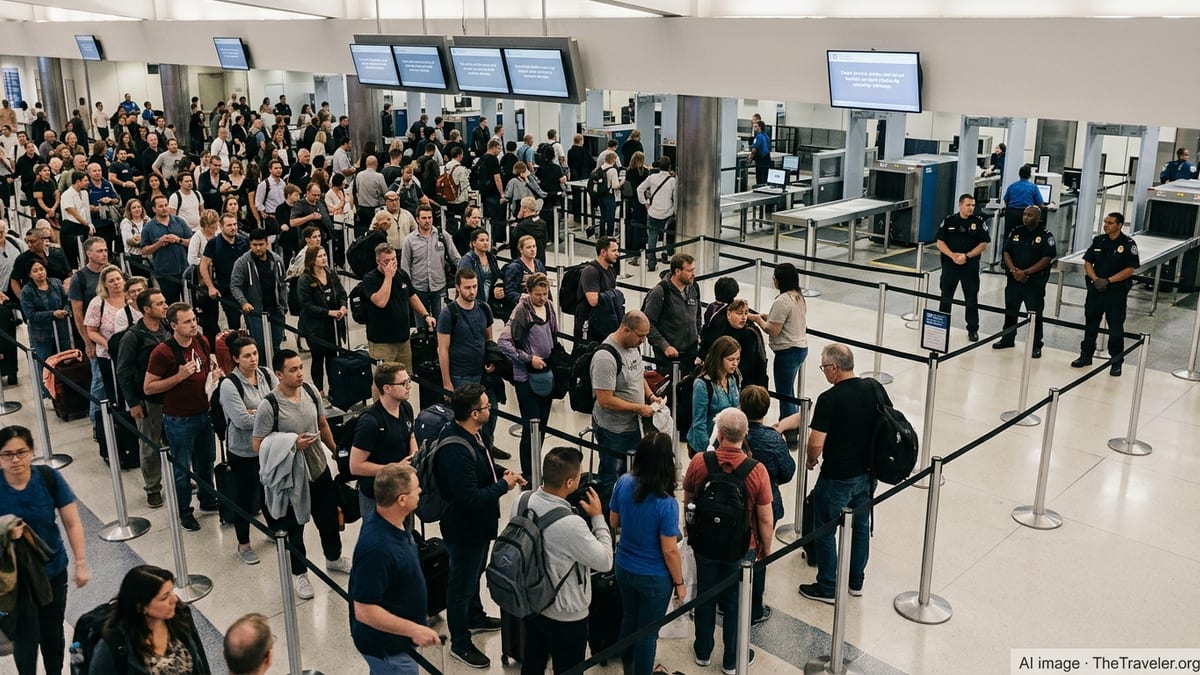
Remarks spotlight pressure points at busy airports
Published coverage indicates Olawuyi raised the issue during the Aviation Day session of the 23rd Akwaaba African Travel Market in Lagos, a forum that focused on delayed and cancelled flights and passenger rights. The comments align with a long-running tension in Nigeria’s aviation ecosystem: passengers often experience a delay as an airline failure, while operators argue that constraints at airports and in the operating environment can trigger knock-on disruptions across multiple rotations.
In his comments at the event, Olawuyi emphasized that several delay drivers can be outside an airline’s direct control, pointing to congestion and infrastructure limitations as recurring operational bottlenecks. In practice, those constraints can surface as long taxi times, limited ramp space, gate availability pressures, or sequencing challenges when multiple flights are trying to depart and arrive within narrow peak-hour windows.
Recent reporting has also pointed to discussions in Lagos around mechanisms intended to manage demand, including renewed talk of slot coordination at certain terminals. While airlines can adjust schedules, the effectiveness of those changes can depend on consistent airport-side capacity, air traffic management, and predictable turnaround conditions.
Infrastructure constraints extend beyond terminals
Infrastructure is often discussed in passenger-facing terms such as terminal comfort and processing time, but disruption frequently originates airside. Constraints related to taxiways, apron space, lighting systems, ground handling equipment, and the resilience of supporting utilities can all affect whether flights can maintain planned departure sequences, particularly when traffic builds up at the same time of day.
In Lagos, publicly available coverage from mid-2026 highlighted how severe weather and drainage issues at the Murtala Muhammed International Airport’s temporary terminal disrupted operations and prompted temporary relocations for some airlines while corrective steps were taken. Even when flights are not cancelled outright, irregular operations can create delays that cascade across the network, especially for airlines operating tight aircraft utilization on domestic routes.
More broadly, FAAN indicates it manages 21 airports across Nigeria, underscoring how uneven infrastructure and operational maturity across a wide network can shape reliability. When a disruption occurs at a major node, it can affect aircraft positioning, crew duty time planning, and downstream connections that rely on the same aircraft later in the day.
Weather remains a persistent operational constraint
Bad weather is a common disruption factor worldwide, but Nigeria’s rainy season patterns and localized storms can produce particularly sharp operational impacts when combined with limited redundancy in airside capacity. Reduced visibility, thunderstorm activity near approach paths, and water-related disruptions can slow arrival rates, restrict departures, or require holding and diversions that compress schedules and strain turnaround plans.
The Lagos flooding incident reported in late June 2026 became a clear example of how weather can expose vulnerabilities beyond the runway itself, including drainage and construction-adjacent impacts. When airport infrastructure is stressed by heavy rainfall, even short interruptions can create a backlog that takes hours to unwind.
For travelers, the most visible effect is extended waiting time and repeated schedule changes. For airlines, weather-driven disruption can also reduce the ability to recover quickly, particularly when there are fewer spare aircraft and limited time buffers between rotations.
Passenger rights and compensation rules shape the response
As debate continues over what drives delays, Nigeria’s consumer-protection framework remains a central reference point for what airlines owe passengers during disruptions. NCAA’s published guidance outlines expectations for assistance during delays, including refreshments after two hours on domestic flights, and reimbursement beyond three hours. For international flights, NCAA guidance includes escalating assistance, and hotel accommodation when the reasonably expected departure time is at least six hours after the previously announced time.
NCAA’s published compensation guidance also addresses cancellations, stating domestic passengers may be entitled to 25% of the fare unless they are informed at least 24 hours before scheduled departure, alongside a right to reimbursement of the full ticket value. For international cancellations, NCAA guidance references 30% of the fare unless passengers are informed seven days before scheduled departure, with rerouting options in certain notice windows.
Those rules influence airline decision-making during irregular operations, because what begins as a congestion- or weather-driven delay can quickly become a customer-care and cost issue if it extends. For passengers, the guidance underscores the practical steps to take, including first lodging a complaint with the airline and then escalating through NCAA’s consumer-protection channels if the issue remains unresolved.
What this means for travelers booking Nigeria domestic flights now
Olawuyi’s comments, as reported, reflect a broader push by operators to distinguish between airline-controlled factors and structural constraints in the operating environment. For travelers, the immediate takeaway is that reliability can depend on conditions at both ends of the route, not just the airline’s published timetable, especially on heavily trafficked corridors where a single disruption can reset the day’s flow of aircraft.
Practical planning remains important during peak periods and in adverse-weather windows. NCAA’s published advice also emphasizes arriving early at the airport, with guidance that passengers should be at the airport two hours before domestic departures and three hours before international departures. That does not prevent delays, but it can reduce the risk of missing a flight that departs on time during a day when other services are running late.
With airport authorities and regulators continuing to emphasize safety, infrastructure improvements, and consumer protections, the delay conversation is likely to remain active. In the near term, published coverage suggests the core challenge is still matching growing travel demand with resilient airport capacity and weather-ready operations, so that disruptions do not cascade across Nigeria’s domestic network.