


More news on this day
Iran’s rejection of a United States backed proposal to immediately reopen the Strait of Hormuz is prolonging one of the most consequential maritime disruptions in decades, raising fresh concerns for residents and travelers in the United Arab Emirates who rely on stable flight schedules, shipping links, and fuel supplies connected to the strategic waterway.
Get the latest news straight to your inbox!
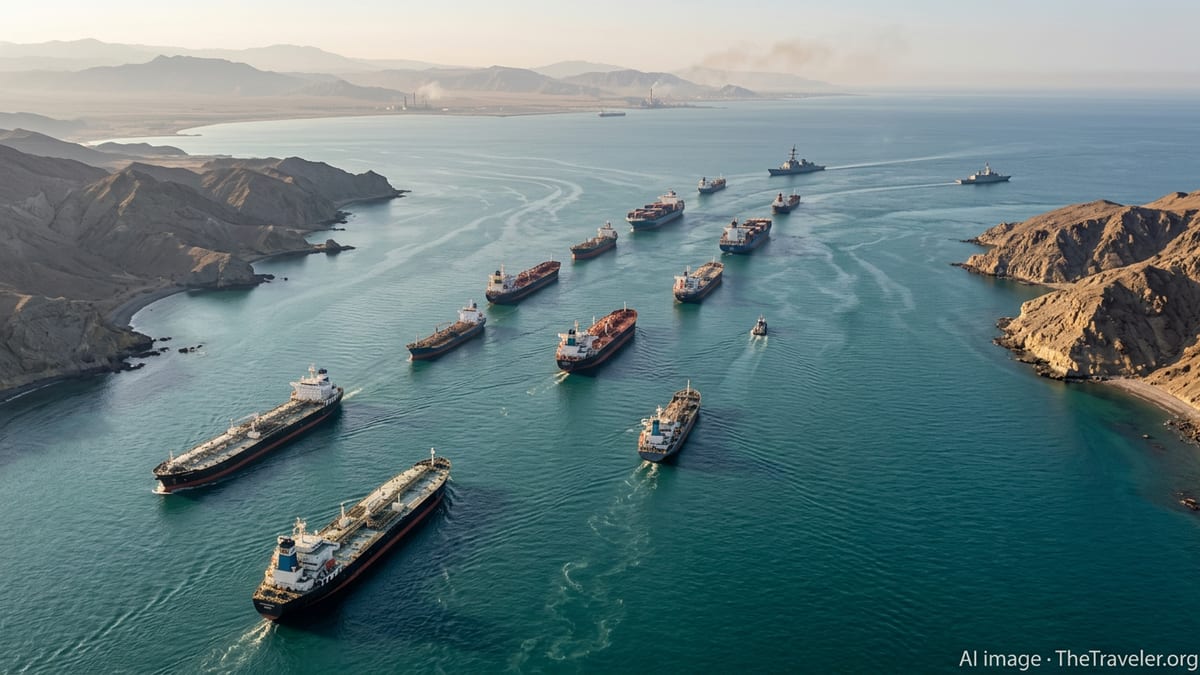
What Iran’s Decision Means for the Strait of Hormuz
The Strait of Hormuz is a narrow choke point at the mouth of the Gulf through which a significant share of the world’s seaborne oil normally passes. Publicly available background information describes it as a critical artery for energy exports from producers such as Saudi Arabia, the UAE, Qatar, and Kuwait. Any prolonged disruption there tends to send ripples through global energy and transport markets.
Over recent months, the strait has been at the center of a confrontation between Iran and the United States. According to open-source coverage of the ongoing negotiations, Washington and its regional partners have pushed a framework that would see Iran reopen the waterway to commercial traffic in exchange for a phased ceasefire and limited sanctions relief. Reports from regional media and international outlets indicate that Tehran has dismissed this as insufficient and has linked any reopening to broader guarantees on ending the war and compensation for damage.
By rejecting the latest US backed proposal, Iran is signaling that it is not prepared to trade an immediate reopening of the strait for what it views as temporary or reversible concessions. Statements attributed in public reporting to senior Iranian figures emphasize demands such as an end to attacks, mechanisms to prevent renewed conflict, and recognition of Iran’s leverage over the waterway. This stance keeps the strait in a state of partial or intermittent closure and preserves a major pressure point in Iran’s confrontation with the United States.
For the UAE, which lies just a short distance from these contested waters, the stakes are especially high. While ports such as Jebel Ali and Khalifa Port sit outside the strait itself, much of the region’s tanker traffic and some container routes still rely on safe passage through Hormuz. The longer the dispute persists, the more it complicates planning for airlines, shipping firms, and logistics operators serving the Emirates.
Potential Effects on Flights and Travel Itineraries
For UAE residents and visitors, one of the most immediate questions is whether air travel will be disrupted. Commercial aviation routes over and around the Strait of Hormuz have already been subject to periodic adjustments during previous regional crises, as airlines respond to advisories and risk assessments. Industry coverage suggests that carriers based in the UAE have diversified flight paths where necessary, routing some services further south over the Arabian Sea or adjusting cruising altitudes to avoid potential flashpoints.
At present, there is no broad indication in open reporting of a blanket suspension of flights in and out of UAE hubs such as Dubai, Abu Dhabi, or Sharjah as a direct result of Iran’s latest rejection of the deal. However, travelers may see changes that are less visible on a booking screen, including slightly longer flight times on selected routes, re-routings that add fuel costs, or schedule tweaks as airlines respond to evolving airspace guidance.
Travelers departing from or transiting through the UAE are therefore advised, based on general industry practice during geopolitical tensions, to monitor airline notifications closely and to allow extra time for connections. Long haul routes that usually track close to the Strait of Hormuz or the northern Gulf could be adjusted at short notice if risk assessments change or if new advisories are published by civil aviation regulators.
For now, most tourism activity within the UAE itself continues largely unaffected. Hotels, attractions, and domestic transport are operating under normal conditions according to publicly available travel and hospitality reports. The key uncertainty lies not in movement within the Emirates, but in how global air corridors and schedules might flex if tensions around Hormuz increase.
Rising Energy Costs and Daily Life in the UAE
The more significant medium term impact of Iran’s move is likely to be on energy prices. The Strait of Hormuz is central to the export of crude oil and liquefied natural gas from the wider Gulf region. When shipping through the strait is constrained by conflict or threats to tankers, oil markets typically react with higher prices or increased volatility. Financial and energy market analyses in recent weeks have already highlighted how concerns over Hormuz are feeding into global benchmarks.
For UAE residents, higher energy prices can filter through in several ways. Fuel at the pump in the Emirates, while often more affordable than in many other parts of the world, is not fully insulated from international price movements. Local media monitoring has previously shown that sustained spikes in global crude prices can lead to incremental monthly adjustments at UAE petrol stations.
Electricity and water tariffs are more shielded, but businesses that depend heavily on transport and logistics, such as delivery companies, construction firms, and tour operators, may face rising operating costs. Over time, these costs can be passed on to consumers through higher prices for goods and services. Travelers planning trips that involve significant driving, boat excursions, or energy intensive activities may notice modest price increases if current tensions persist.
Analysts quoted in publicly available think tank commentary have also warned that prolonged uncertainty over Hormuz could delay some investment decisions in the wider region’s energy and infrastructure projects. For the UAE, which has positioned itself as a stable hub despite regional turbulence, any slowdown in regional investment could be offset by efforts to attract more capital to onshore projects and alternative routes that bypass the strait.
Shipping Routes, Supply Chains, and Port Activity
Beyond energy, the Strait of Hormuz connects key shipping lanes that serve container traffic, bulk cargoes, and regional feeder services. While many vessels calling at UAE ports can in theory reroute or adjust schedules, uncertainty around the safety and predictability of passage near Hormuz introduces added complexity for supply chains that rely on just in time delivery.
Logistics and shipping bulletins have reported that some operators are factoring in extended voyage times, higher insurance premiums, and potential detours. For example, vessels that might otherwise pass close to contested waters may slow down, alter routes, or wait for naval escorts where available. These measures raise costs and can lead to delays in the arrival of goods, from consumer products to industrial components.
In the UAE, major ports such as Jebel Ali, one of the region’s busiest container hubs, have experience managing through past regional disruptions. Publicly available statements from port operators in earlier crises emphasized flexibility in scheduling, use of alternative feeder routes, and close coordination across the supply chain. Similar approaches are likely to be used again as the situation around Hormuz evolves.
For residents and businesses, the most visible effects could be slightly longer delivery times for imported products or sporadic shortages of specific items if shipping schedules are disrupted. Retailers and importers may respond by increasing buffer stocks of critical goods, particularly if they anticipate a drawn out negotiation over the reopening of the strait.
Practical Steps for UAE Residents and Travelers
With Iran’s rejection of the US backed proposal adding a new layer of uncertainty, UAE residents and visitors can take several practical steps to stay prepared without overreacting. Monitoring official travel advisories issued by national governments, airlines, and reputable travel organizations offers a straightforward way to track any changes relevant to specific routes or destinations.
Travelers booking flights in the coming weeks may prefer flexible tickets or options that allow for changes with minimal penalties, a common recommendation when geopolitical tensions affect major transport corridors. Keeping contact information updated with airlines and travel agencies ensures that notifications of schedule changes or reroutings are received promptly.
For those concerned about potential increases in living costs, basic budgeting measures can help cushion the impact of higher fuel or transport related prices. Residents who rely heavily on private vehicles may wish to factor possible fuel price fluctuations into their monthly expenses, while businesses with significant logistics exposure can review contracts and insurance coverage in light of evolving shipping risks.
Most importantly, observers note that the situation around the Strait of Hormuz is fluid and subject to rapid shifts as negotiations continue. While Iran’s latest move has clearly complicated efforts to secure a quick reopening, diplomatic channels remain active. For UAE residents, the key is to stay informed through reliable news and official advisories, while recognizing that the country’s transport and logistics infrastructure has a strong track record of adapting to regional shocks.